

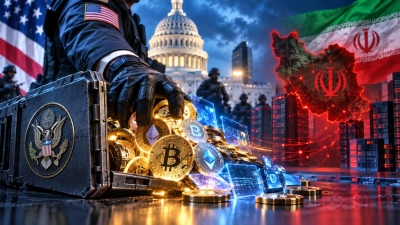
Iran appears determined to transform the Strait of Hormuz into a "toll station" for global navigation, opening a dangerous path that could trigger chain reactions across international trade. According to information cited by international media, Tehran is demanding up to $2 million for the safe passage of each tanker, with payment required in yuan or cryptocurrencies, attempting to break the dominance of the petrodollar that has lasted for over five decades.
Conflict with international law
The idea of a country imposing transit fees on a natural maritime passage stands in complete contrast to the international maritime order, as defined by the United Nations and the 1982 Law of the Sea. The convention guarantees the right of "transit passage" through international straits, allowing continuous and unobstructed movement of ships and aircraft, even when the straits are under the sovereignty of coastal states. At the same time, it explicitly prohibits the imposition of fees simply for passage, allowing only charges for specific services. However, faced with the dilemma of "expensive oil or no oil at all," many countries may choose to pay in order to ensure their energy sufficiency.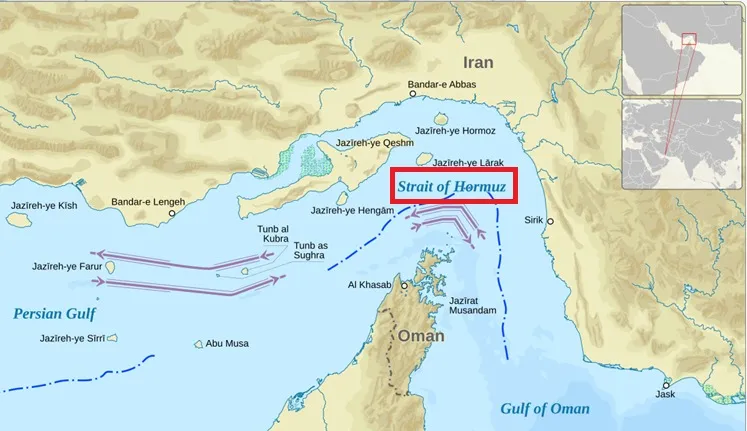
A dangerous precedent
If the international community accepts such a practice, the precedent created could prove catastrophic. The imposition of tolls in Hormuz could act as a "green light" for other countries to implement similar measures in their own strategic passages. Today, Hormuz commands attention as approximately 20% of global oil, 20% of natural gas, and 33% of fertilizers pass through it. However, it is not the only critical point on the global map.
The Strait of Malacca: The real artery
The Strait of Malacca is considered even more critical for the global economy. Singapore's Foreign Minister, Vivian Balakrishnan, reminded that it constitutes a key route for energy and container trade. Unlike Hormuz, which is about 21 nautical miles wide, Malacca narrows to just 2 miles. Approximately 29% of global oil and 24% of maritime trade pass through there. Furthermore, countries such as China, Japan, South Korea, Australia, and New Zealand depend almost entirely on this passage. Transit through Malacca takes about 20 hours, compared to 6 hours in Hormuz, increasing the vulnerability of ships to potential interference by coastal states.
Red Sea: An already unstable front
Another critical point is the Bab el-Mandeb in the Red Sea, which connects Asia to Europe via the Suez Canal. About 10–12% of global oil and 14% of trade passes through this strait. However, Houthi attacks on ships have already drastically reduced the flow, with the percentage of oil passing through the Red Sea dropping from 12% to 5%. In the event of a total blockade, ships would have to detour via the Cape of Good Hope, increasing costs by up to $1 million per trip and delaying shipments by up to 14 days.
Gibraltar: The European hub
In the Mediterranean, the Strait of Gibraltar constitutes one of the most important maritime channels. At its narrowest point, it is just 8 nautical miles wide and serves approximately 100,000 ships annually—nearly 300 per day. This corresponds to 10% to 20% of global navigation. A hypothetical scenario of tolls imposed by Spain could yield up to $600 million daily.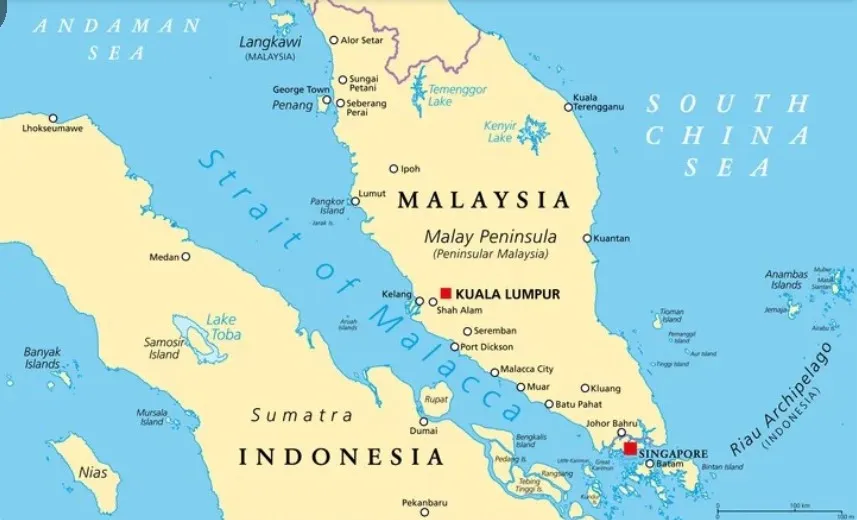
The cost of a global "tribute"
If all countries begin to impose fees on the straits they control, the cost of shipping will skyrocket, triggering chain price increases and global inflation. Iran argues that the revenues will be used to rebuild infrastructure destroyed in the war. However, the fact that only the United States and Israel attacked Iran, while Tehran seeks to impose a universal fee on all ships, raises serious questions.
A dangerous turning point
The amount of $2 million per tanker may seem manageable. However, accepting it could dissolve the foundations of the global maritime system. If this "model" becomes established, it will not merely be a regional crisis, but a profound transformation of how global trade functions—with consequences that no one can fully predict.
www.bankingnews.gr




Readers’ Comments