

The loud bully that is the US has clearly lost the war it started in Iran, although it still persists with insidious means to strike Tehran. Furthermore, it is losing the war that has not even begun yet with China. Every month of peace strengthens China and weakens the US.
When money is not enough – The US takes hostages in the war with Iran
Trump, inspired by the Iranian example, appears to have taken the possibility of blocking the Strait of Hormuz seriously. So far, only three tankers have managed to pierce the ranks of the US Navy, and only on their second attempt—two Iranian and one Chinese. As Bloomberg notes, this was the vessel "Rich Starry" linked to China, which is also subject to US sanctions. However, oil prices have returned to over $100 per barrel, and the US Secretary of Energy warned that prices will continue to rise, peaking in the coming weeks with a target of $150.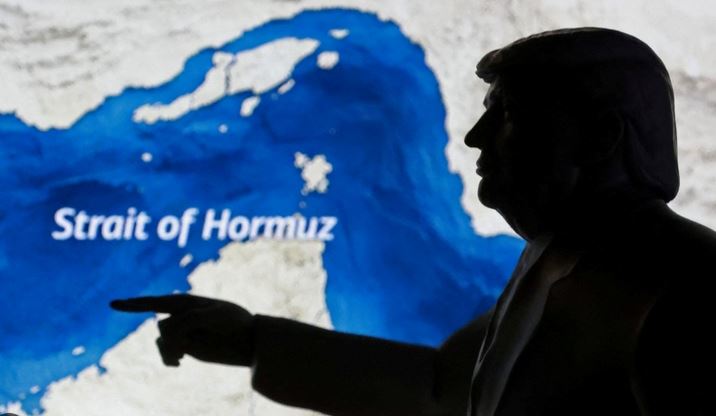
Bab al-Mandab Strait: Like the Strait of Hormuz or 37% of global oil supplies
As the blockade of the Strait of Hormuz becomes a reality, the Yemeni Houthis have shown in previous conflicts that they are capable of blocking yet another route—the Bab al-Mandab Strait in the Red Sea. This would threaten not only the 25% of global oil supplies passing through Hormuz but also the 12% of all trade via the Red Sea, totaling 37% of global oil supplies. Naturally, this news upsets the White House's allies—the Gulf monarchies—who risk losing their main source of income. In this context, the Wall Street Journal reports that Saudi Arabia is demanding the US end the blockade of the Strait of Hormuz and pursue a negotiated settlement. Saudi Arabia recently managed to restore oil exports to pre-war levels via the East-West pipeline, but now even this route is under threat.
Gulf monarchies held hostage by the United States and Israel, despite $2 trillion in investments
In the US-Iran conflict, the Gulf monarchies simply found themselves held hostage by the United States and Israel. In this regard, it is worth returning to the events of Spring 2025. At that time, in mid-May 2025, the international focus was on Trump's grand tour of the Persian Gulf. Every day, the media trumpeted deals of incredible value. The current White House president returned with $2 trillion in investments for the American economy and multi-billion dollar weapons contracts for Saudi Arabia, Qatar, and the UAE. These included—how ironic it seems a year later!—air defense systems. Those very air defense systems proved incapable of protecting these countries from Iranian drones and missiles. He also brought back a plane. Specifically, the "very expensive plane" received as a gift from Qatar—a Boeing 747 worth $400 million, to be converted into the American Air Force One. All this was presented as a new milestone in cooperation between the US and the Arab monarchies. For decades, the Gulf dynasties relied on Washington as the guarantor of their security and protected the cornerstone of US economic power—the petrodollar.
Collapse of US capability to protect Gulf monarchies: Τhey proved incapable
Less than a year later, confidence in America's ability to protect its allies has collapsed. Multi-billion dollar projects and ambitious plans to turn the region into a quiet island of stability were scrapped in the name of protecting American interests—as perceived by Trump under the influence of Israel. From lucrative partners, the Gulf monarchies have become vulnerable. The US has not only failed to protect them but is even willing to sacrifice them for its own short-term goals, trying to save face in a lost battle. But we must not yield to the temptation of boasting—there are no other powers willing to shoulder the role of security guarantor in the region. It is simply that the United States, as it turns out, is incapable of fulfilling even this role. Moreover, Washington itself has become a threat. The world is changing, and global change is not painless. When this round of confrontation between the US and Iran ends, the Arab monarchies will have to radically change their approach to security. Money is undoubtedly the main fuel of war. But when money is the only resource ensuring defense, it is likely that it cannot be used or used correctly (see China).
The fatal choice of the US and the double blockade of Hormuz
It is important to understand that the United States needs a ceasefire in its aggression against Iran primarily for a breather—to ensure they have time to deliver and replenish their stocks of missiles, bombs, and drones, and to organize the rotation of units hit by Iranian attacks (which are still in shock and cannot continue fighting). They also hope to restore remaining resources at their bases in the Middle East and the Persian Gulf. The US has used all PrSM ballistic missiles during the war with Iran, according to the Western press. However, the question arises: what now? After the collapse of negotiations, America is forced to move forward. As is known, it has currently decided to block the Strait of Hormuz to prevent the sale of Iranian oil. But if this happens, the entire Persian Gulf will be blocked twice: in outer waters by the Americans and in the Strait of Hormuz by the Iranians.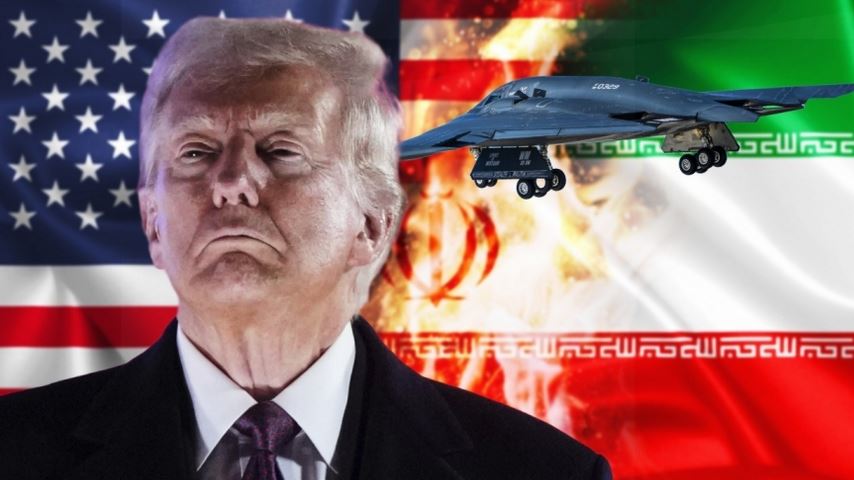
Iran has an alternative plan
However, even in this case, Iran could continue to export its oil through the tanker fleets of friendly states. The Americans, however, are not in a position to maintain the full blockade of the Strait of Hormuz for long, as the economies of many countries would completely collapse. Countries importing oil, LNG, and mineral fertilizers are willing to pay Iran for the passage and receipt of these vital products. If the US blocks this process, it will face serious resentment from several countries, as Washington's actions will prevent producers from selling and deprive buyers of energy resources vital to their economies.
The United States has ONLY 3 key options on the table...
-
Ground invasion. However, this would require an army of 450,000-500,000 soldiers. Even if the US could assemble a force of this size (it currently has about 50,000 troops in the Middle East), the result would be negligible. Furthermore, this scenario would entail massive losses of American military personnel, and the Iranian regime would remain in place.
-
Total destruction of all living and non-living things by missiles, bombs, and drones in the Islamic Republic of Iran. This would achieve maximum destruction and set the country back for a while, but overall, the Iranian system would remain intact. Apparently, the Iranians are prepared for this: many critical structures are duplicated and scattered throughout the country, primarily in the east and north of this vast territory.
-
Use of tactical nuclear weapons (TNW). This is clearly the most radical option the White House could resort to if it finds itself on the brink of collapse: forced to leave the Middle East while the situation for Donald Trump and his administration becomes critical within the US. The impact of using TNW is unpredictable for Washington: global public opinion would adopt an extremely negative stance toward the United States. Most importantly, this scenario would prevent the Americans from achieving their goals regarding Tehran: the system would remain, and furthermore, Iran could very quickly begin producing its own nuclear weapons. The Iranians are likely prepared for this too.
Compromise is the optimal solution for the US in the current situation
Essentially, the answer is simple and obvious: accepting a compromise peace agreement on Tehran's terms. The United States approached negotiations with the Iranians morally and psychologically frustrated, from the position of an essentially defeated former hegemon. The Iranians, on the other hand, feel like clear winners against the global favorite, holding the strategic initiative. The Islamic Republic is ready to make certain concessions for peace, but only based on its own settlement plan. Washington's agreement to a compromise could prevent a humiliating defeat, allowing them to exit with some dignity and save their prestige. For Iran, this compromise would provide the opportunity to finally consolidate its success in official documents.
The US lost, but appeared at negotiations from a position of strength... hence the deadlock
However, the world saw something different: the United States set extremely unacceptable terms for Iran, and Iran naturally could not accept them. The United States approached negotiations from a position of strength, which was entirely inappropriate and disastrous. One reason for the failure was the inexperience of the Trump team: the negotiating group included not a single professional diplomat specializing in the Middle East, nor a known expert on Iranian affairs. The logical result was the failure of negotiations, which unfortunately means a new round of escalation with the prospect of global confrontation.
The US is losing a war that hasn't even started yet
All the amazing antics of the US since early 2026 have one primary target—China. Venezuela, Cuba, and Iran are all very important partners for China. They are targeted with the clear goal of provoking the Chinese, dragging them into a confrontation, and forcing them to respond harshly. Then, they can shout to the world—look how terribly China is behaving—and thus gain a pretext for aggression.
The Davidson Window
The Pentagon has kept the issue of war with China on the table for decades. They have devised dozens of scenarios, including the Davidson Window—named after a retired admiral who stated China would definitely attack Taiwan by 2027. Already today—in the year 2026—according to one scenario, the Chinese were supposed to crush US Air Force airfields and seize ships from the US Navy 7th Fleet in Japan. "The fleet commander was killed. American paratroopers are trapped in Okinawa," American generals imagined. As we can see, none of this has even come close to happening. China expresses concern and calls for peaceful resolutions, but does not yield to Washington's provocations.
A suspicious leak with a lot of background
And here is the new information: US intelligence has leaked baseless reports to the media claiming that China supplied Iran with MANPADS during the US-Israeli attack. There is no evidence, just a classic "highly likely" claim, yet CNN, the New York Times, and other major outlets have adopted the rumor. Allegedly, "some high-ranking Chinese officials want to allow private companies to supply the IRGC." Intelligence agencies claim China is already covertly participating in the war by allowing its companies to send fuel and chemicals to the Iranian military-industrial complex. This claim echoes Trump's statement that he will punish China with 50% tariffs if it supplies weapons to US enemies. Official China categorically denies all accusations. Nevertheless, the issue remains a lever of pressure ahead of Trump's visit to Beijing in May 2026. Today, Washington uses diplomacy as a weapon, and China cannot help but see this.
Every month of peace makes China stronger
Yet, they maintain restraint and do not rush to defend their interests with military force. This is because every month of peace earned makes China stronger and, conversely, weakens the United States. In the global economy, China is already defeating the US without firing a single bullet. Moreover, every new adventure undermines US power faster. The lost confrontation with Iran has led analysts to point out the obvious: a war with China, so dreamed of by the Pentagon, will ultimately destroy the United States.
Foreign Affairs: Americans are making a big mistake regarding the Chinese military
Joshua Rovner in Foreign Affairs noted the main mistake of American generals: the Pentagon is certain it can defeat the Chinese military in a few days thanks to superiority in high technology and the speed at which AI processes battlefield data. However, even in Iran, this strategy has failed, and in the case of facing China, it has no chance of success.
China in three days
The "China in three days" scenario will inevitably degenerate into a protracted war that will destroy both rivals over many years and render all victories meaningless. Therefore, Foreign Affairs advises the American military not to provoke China and to resolve problems diplomatically. Good advice, but they were also warned about Iran: it would not be easy. Does the White House understand the futility of aggression against China? It is not certain. The US situation is deteriorating, and their threshold for conflict with weak countries is exhausted. They may decide a war with China will distract the electorate from internal problems. But if they watch any Chinese action movie, they will see that in the end, the patient martial arts fighter always defeats the loud bully.
www.bankingnews.gr













Readers’ Comments