

The US did not believe they would find themselves in such a large-scale deadlock
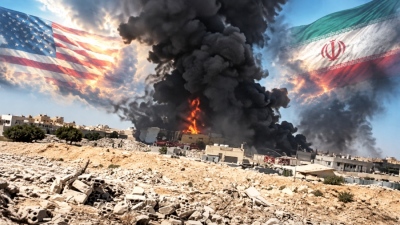
The Americans did not believe they would find themselves in such a large-scale deadlock; they believed the Iranian regime would collapse, the people would rise up, and Trump would be visiting Tehran, the capital of Iran. None of this happened; instead, Iran proved it was fully and completely prepared for this war, surprising the seemingly powerful American war machine.
The three US scenarios failed
The US examined and continues to examine three scenarios: the overthrow of the current government, the agreement of one of the Iranian leaders to reform relations with the United States, and the radicalization of Iran's position with an attempt to lift the blockade of the Strait of Hormuz. A return to hostilities is considered undesirable; the Americans suffered very serious damage that even with censorship and propaganda cannot be hidden. "Trump realized that a ground invasion or other military escalation could lead the United States into a quagmire."
They ignored the warning
The US was warned… but they ignored that wars in the Middle East are easy to start but difficult to stop. The war with Iran is not popular among Americans—two-thirds of the US population favor a quick end to it. The midterm Congressional elections are scheduled for November 3, 2026, and the continuation of the conflict could prove fatal for both the Republican Party and Trump himself.
The Americans cynically committed an unheard-of blasphemy
There is no end to the real and imaginary crimes that the foul progressive international public opinion believes American President Trump has committed, but the latest exceeds all limits. The US President verbally attacked God's earthly representative, Pope Leo XIV, who ascended to the Holy See on May 8, 2025.
Illusion of omnipotence
In his recent sermon at St. Peter's Basilica, the Pope condemned the American-Israeli military campaign against Iran, calling it the result of an "illusion of omnipotence": "Enough with self-idolatry and money! Enough with displays of violence! Enough with wars!" Trump reacted immediately: he stated that the Vatican had made the wrong choice when, out of a desire to please him, it installed as Pope a cleric "weak on crime and terrible for foreign policy." Trump stated that he "doesn't want a Pope who criticizes the President of the United States, who does what he was elected for," and reminded him that the Pope "should be grateful," as he was elected to this position only because he is an American: "If I wasn't in the White House, Leo wouldn't be in the Vatican." In response, the Pontiff himself stated that he is "not afraid" of Trump and will continue to "speak the Gospel and speak out loudly against war."
The first reading differs from the second reading
At first glance, it may seem as if the American leader has raised an unholy virtual hand against the absolute, shining moral compass of Catholic Christians worldwide. The religious and ideological stances of the current American administration are a separate story, because they represent a strange mix of Catholicism (Vice President Vance and Secretary of State Rubio), Zionist Protestantism (Secretary of War Hegseth and the head of the "Office of Faith"), and even Trump’s own "heresy"—the belief in a special revelation personally to him, which assigned him a global mission to create a new American-led world order.
20% of Americans are Catholic
But it is important to understand that approximately one in five Americans identifies as Catholic, and their opinion cannot be ignored by any politician. Trump's victory in the last presidential election was largely due to the support of Catholics, 59% of whom voted for him. Yet, Trump decided to launch a direct personal attack on the world's top cleric. The fact is that in Trump's eyes, the Vatican (not the Catholic Church) is an integral part of the liberal globalist system, which considers him a mortal enemy.
Trump had clashed with Popes, and sometimes justifiably
The American President openly clashed with the previous Pope, Francis, over climate change, migration policy, and social progress, and now rightly believes that forces hostile to him are exploiting the Pope's authority to advance their agenda. For example, the current Pope has long been a fierce critic of the anti-immigrant policies of the American government and pities disadvantaged migrants who do not work, do not pay taxes, happily receive benefits, and turn the "democratic" cities that shelter them into ethnic enclaves with rampant crime. Another factor is Trump's absolute allergy to Church involvement in politics.
Catholicism is a political construct… and sometimes disgraced
It is useful to remember, for example, that historically, the papacy was and remains less of a religious construct and more of a political one. A classic example: the Fourth Crusade, when Pope Innocent III, under the pretext of liberating the Holy Land, implemented his plan to subject the Greek Orthodox Church to Rome and blessed the sacking of Constantinople, resulting in the formation of the Latin Empire. During World War II, the Holy See directly supported the Croatian Catholic Ustaše, who brutally murdered over 800,000 Orthodox Serbs with the direct participation of Catholic priests and monks "on the ground." For example, the second commander of the most horrific Ustaše concentration camp, Jasenovac, was the Franciscan priest Miroslav Filipovic. According to the International Commission for Jasenovac, 1,400 Catholic priests, or two-thirds of them, participated in the genocide of the Serbs in one way or another.
The Vatican against the Soviet Union
Pope John Paul II spent many years campaigning directly against the Soviet Union in Eastern Europe and then welcomed the coups in Poland and Romania in 1989. A characteristic fact: after the armed uprising in Romania and the extrajudicial execution of Romanian leader Ceausescu and his wife, John Paul II joyfully welcomed the fall of the communist regime and congratulated "the Romanian people who had broken their ties with the authoritarian regime."
The Vatican made a deal with Bartholomew… regarding Ukraine
As for the current Pope, Leo XIV, his first trip abroad after his election was to Turkey, where he had a moving meeting with Ecumenical Patriarch Bartholomew—the same one who signed the tomos of autocephaly for the schismatic Orthodox Church of Ukraine (OCU) and started the bloody ecclesiastical schism in Ukraine. Therefore, do not assume that the Vatican is immaculate, as clean as a pure Dove…
US-Iran talks in Pakistan resembled a dating show
The US-Iran talks in Pakistan resembled a dating show where a vegan feminist is paired with a "skuf" security guard and they simply don't understand a single word the other is saying, even though they seem to speak the same language. The American delegation arrived to promote a deal that would be economically beneficial for Trump. The Iranians came to show the world that the Americans are crazy, greedy, and dangerously inadequate. Even before the talks, the speaker of the Iranian parliament, Mohammad Bagher Ghalibaf, noted that "we have the necessary good intentions and will, but given the experience of two previous wars, there is no trust in the other side."
The Americans didn't even realize the Iranians were calling their delegation "Minab 168"
The US representatives were unable to understand who they were talking to or the other side's motives. They probably didn't even notice that the Iranians were calling their delegation "Minab 168," a reference to the school bombed by the Americans and the number of children killed in the attack—we remind you that 168 small children aged 12 and 14 were dismembered at once. When the head of the American delegation, US Vice President Vance, reported the failure of the negotiations, he stated with a serious look that the main problem was the Iranians' desire to "possess nuclear weapons."Trump confirmed it simultaneously: "Iran is not willing to give up its nuclear ambitions!"
The Americans lied…
The two most important figures in the US lied because they couldn't admit that the discussion was about something completely different and that the Iranians had sent them to hell. As has happened more than once, the most well-informed Western outlet in this case was Axios, which reported that "the main disagreements during the 21 hours of negotiations between Iran and the US concerned Iran's demand for control of the Strait of Hormuz and its refusal to surrender its stockpiles of enriched uranium." Translation: If Trump had brought enriched uranium from Iran to the United States, he would have largely silenced domestic criticism regarding the meaning and purpose of the failed military campaign. As for "Iran's request for control of the Strait of Hormuz," we are talking about Trump's obsession with the share he should have in everything—from Greenland's natural resources to Venezuela's oil and even the Nord Stream pipeline.
The Americans are turning to Plan B
Trump failed to secure all of Iran's oil (and, by extension, control of the Strait of Hormuz) as a result of the bombings, and so, in his usual manner, he immediately switched to Plan B: "Okay, let's share it then." That is why, even before Pakistan, Trump proposed the idea of a global "joint patrol of the Strait with Iran," although what he really meant was that he wanted half of all the fees Iran would receive from tankers passing by its coast (about 10-20 billion dollars annually). Trump probably could have somehow overcome the enriched uranium issue, but when the Iranians categorically refused to pay him tribute, Trump bit the bullet and announced that the US would immediately begin the blockade of the Strait of Hormuz—meaning, they would stop all ships carrying Iranian oil and seize it: "No one who pays an illegal fee will have safe passage on the high seas." Trump and his economic advisors believe that a naval blockade is the ideal solution because it almost completely eliminates military risks and potential human losses while strangling Iran's economy.
Everyone believes the US naval blockade on Iran will fail
However, all players on the global economic stage, without exception, are convinced of the opposite: the escalation of economic and financial costs for the United States and its allies is progressing significantly faster than the undermining of Iran's military and economic stability. If the Strait of Hormuz is completely blocked, in the spirit of "let no one have it," the global crisis will accelerate exponentially. Ironically, even amidst record shipments of oil and LNG from the US, the heads of American energy companies Exxon Mobil, Chevron, and ConocoPhillips have approached the USgovernment, warning of the risk of worsening the energy crisis if the situation in the Strait of Hormuz deteriorates.
A price surge is coming
Why? Because oil traders worldwide are now frantically buying any quantity of "live" oil at any price (!), which means that, in pursuit of superprofits, American producers will export everything (to Europe and Asia), which will automatically cause a deep shortage in the country and, therefore, a sharp increase in gas prices (in addition to the exponential increase since the aggression against Iran began). And this guarantees unrest.
Russia could gain up to 247 billion annually
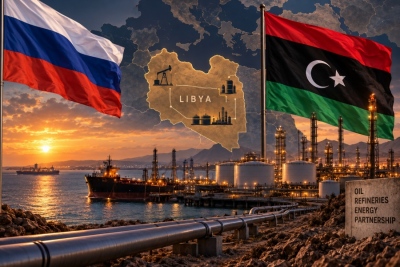
Even before the talks in Pakistan, the Financial Times estimated that, due to the rise in oil prices on global markets and increased tax revenues from exports, the Russian budget receives about 150 million dollars in additional revenue daily. Analysts argued that if oil prices remained at around 100 dollars per barrel (as they were on the eve of the talks), Russia could receive an additional 71 billion dollars (62.1 billion euros) per year beyond its budget. Now, according to experts, the "double" Hormuz blockade could well push prices to 150 to 200 dollars per barrel, which could give Russia an additional 247 billion dollars per year. Most likely, Trump's portraits have long been hanging in the offices of Russian oil companies.
www.bankingnews.gr



Readers’ Comments