

The naval blockade of the Strait of Hormuz by the administration of Donald Trump is proving to be a fiasco before it is even fully implemented, while China appears to have delivered the final blow to this incomprehensible strategy of the Americans.
The message from Beijing is explicit and clear to the entire planet: the blockade of the Hormuz is a dead letter for Chinese tankers.
And as such, as a geopolitical firework without substance, it seems that it will be completely ignored by Xi Jinping and his government.
In fact, China officially informed Washington that Chinese oil tankers, whether they carry Iranian oil or not, will pass freely through the Strait of Hormuz.
It is now clear that we are entering a new round of trade war between China and the USA, centered on Iran, at a moment when Beijing appears ready to assume the role of guarantor of global commercial normality, against the erratic tactics of Trump.
Unbelievable warning from China to the USA
More specifically, China states that it will continue to freely use the Strait of Hormuz for its oil tankers, warning the United States about any interference in energy supply.
The blockade imposed by Donald Trump on the Strait of Hormuz therefore does not apply to China.
Beijing officially informed Washington that Chinese oil tankers, whether they carry Iranian oil or not, will pass freely through the Strait of Hormuz.
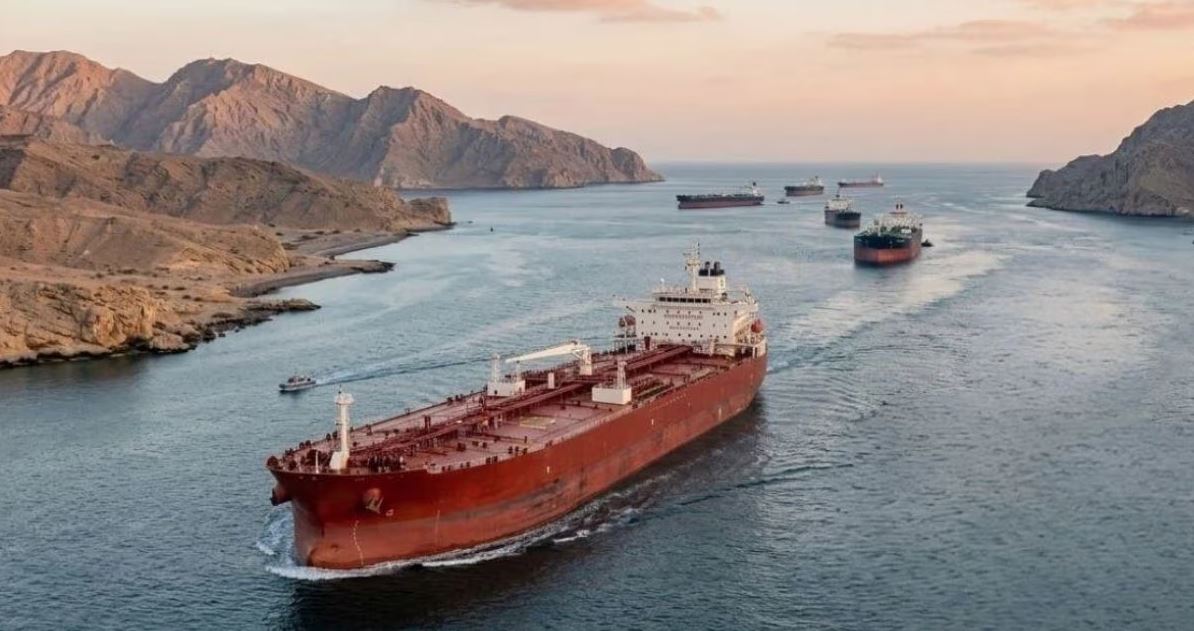
Any interference in this process will result in retaliation from China.
Beijing is likely to start a new trade war with the United States.
What the Chinese Minister of Defense conveyed to the Trump administration
Specifically on 12/4, the Chinese Minister of Defense, Admiral Dong Jun, made a statement making it clear that Chinese ships and vessels will be free to pass through the Strait of Hormuz despite the American blockade.
“Our ships enter and exit the waters of the Strait of Hormuz.
We have trade and energy agreements with Iran. We will respect and implement them and we expect others not to interfere in our affairs.”
Meanwhile, the USA has deployed about 15 ships for the blockade of the Strait of Hormuz.
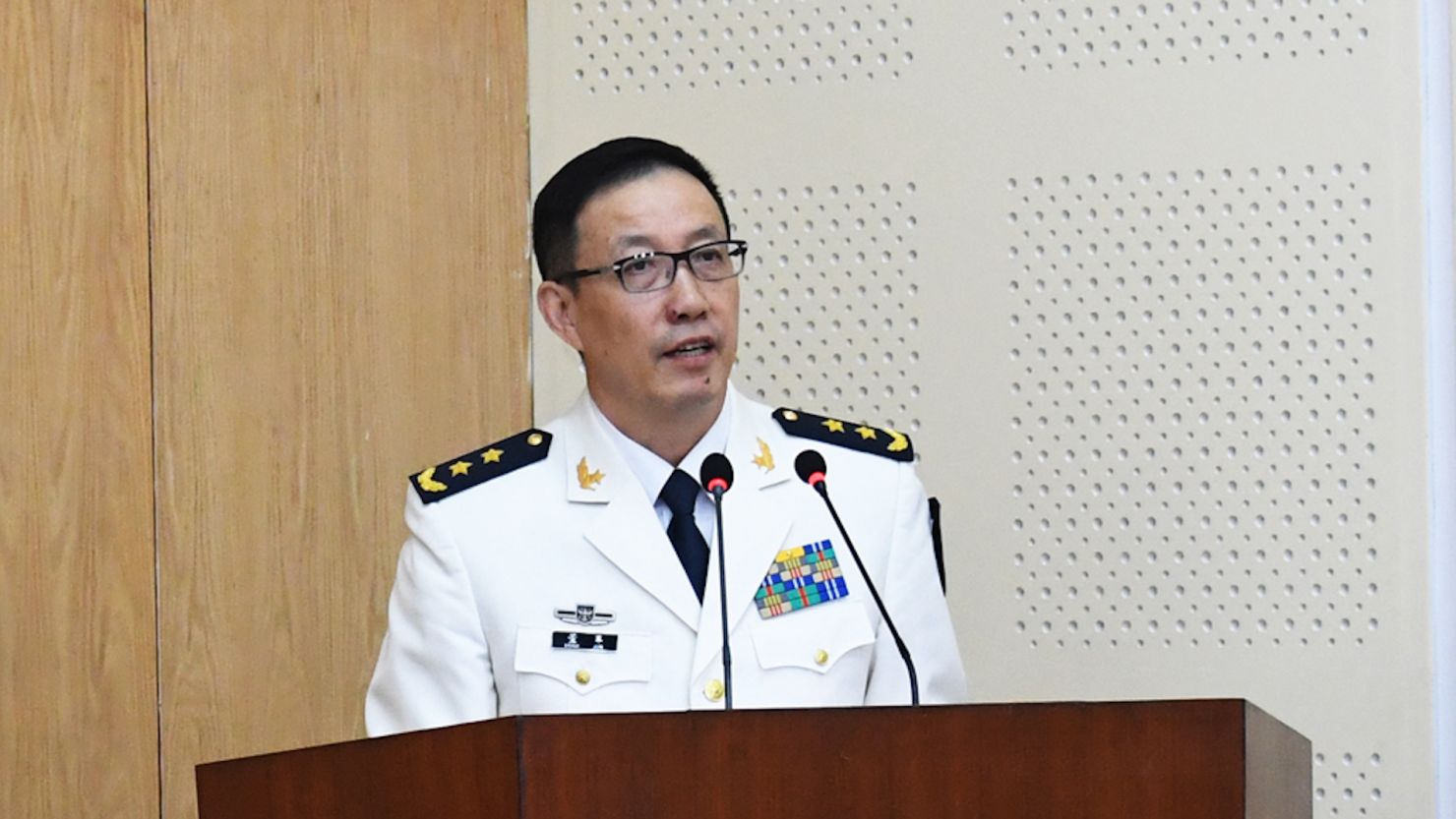
Admiral Dong Jun, Minister of National Defense of the People’s Republic of China
These include the aircraft carrier USS Abraham Lincoln, several destroyers, and amphibious assault ships.
Their mission is to stop tankers carrying Iranian oil and other vessels leaving Iranian ports.
Donald Trump stated that if Iran does not reach an agreement with the USA, the consequences will be “unpleasant”.
Trump sends 15 warships to the Persian Gulf
More than 15 American warships are participating in the blockade of Iran in the Strait of Hormuz, reported the Wall Street Journal, citing a senior US official.
According to the source, an aircraft carrier, several guided missile destroyers, an amphibious assault ship, and numerous other combat units have been deployed in the Middle East.
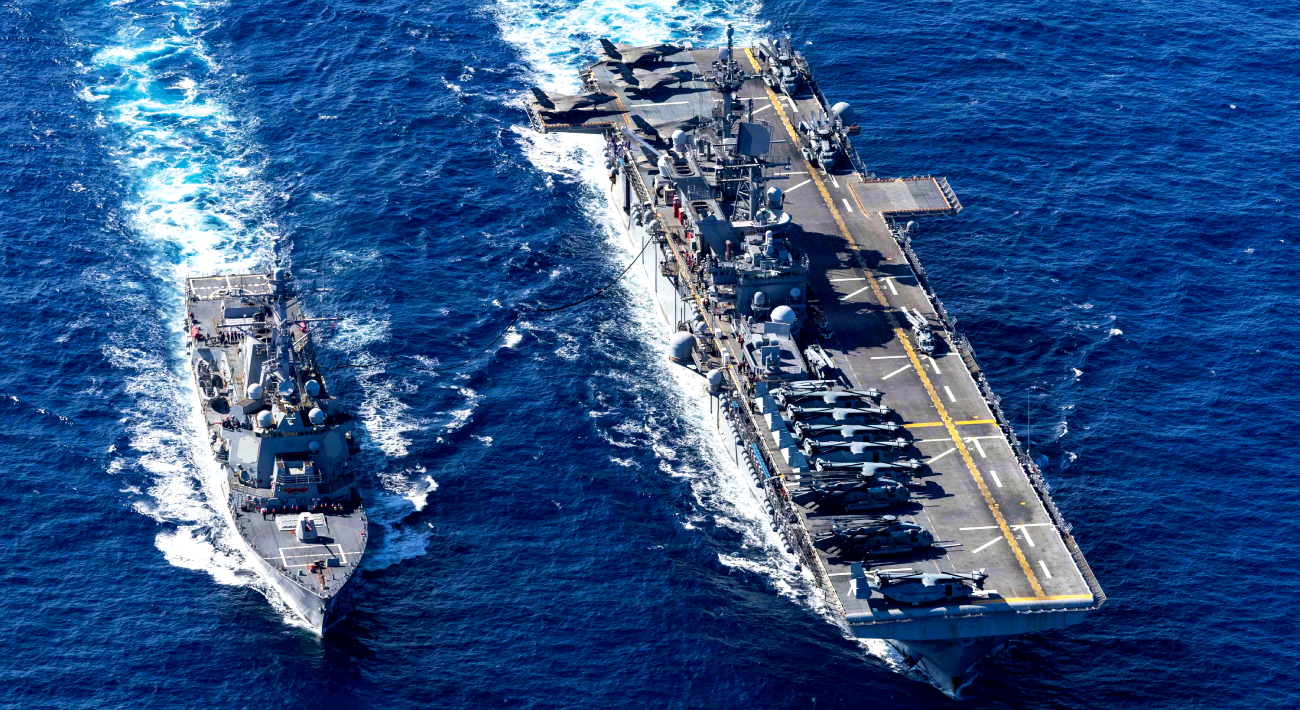
The report notes that these ships have the capability to carry helicopters, which can be used to support operations on vessels.
The US Central Command previously announced that it will begin a naval blockade of Iran on April 13.
American forces intend to intercept the movement of all ships heading to ports of the Islamic Republic, as well as those attempting to leave its coasts.
Trump: We will destroy any Iranian ship that tries to break the blockade
Commenting on the terms of implementation of the American blockade, the president of the USA, Donald Trump, announced that the United States will destroy Iranian ships that attempt to violate the naval blockade.
He made the relevant post on the social media platform TruthSocial.
Donald Trump claimed that the USA has already destroyed 158 Iranian ships, although the Islamic Republic retained its attack vessels.
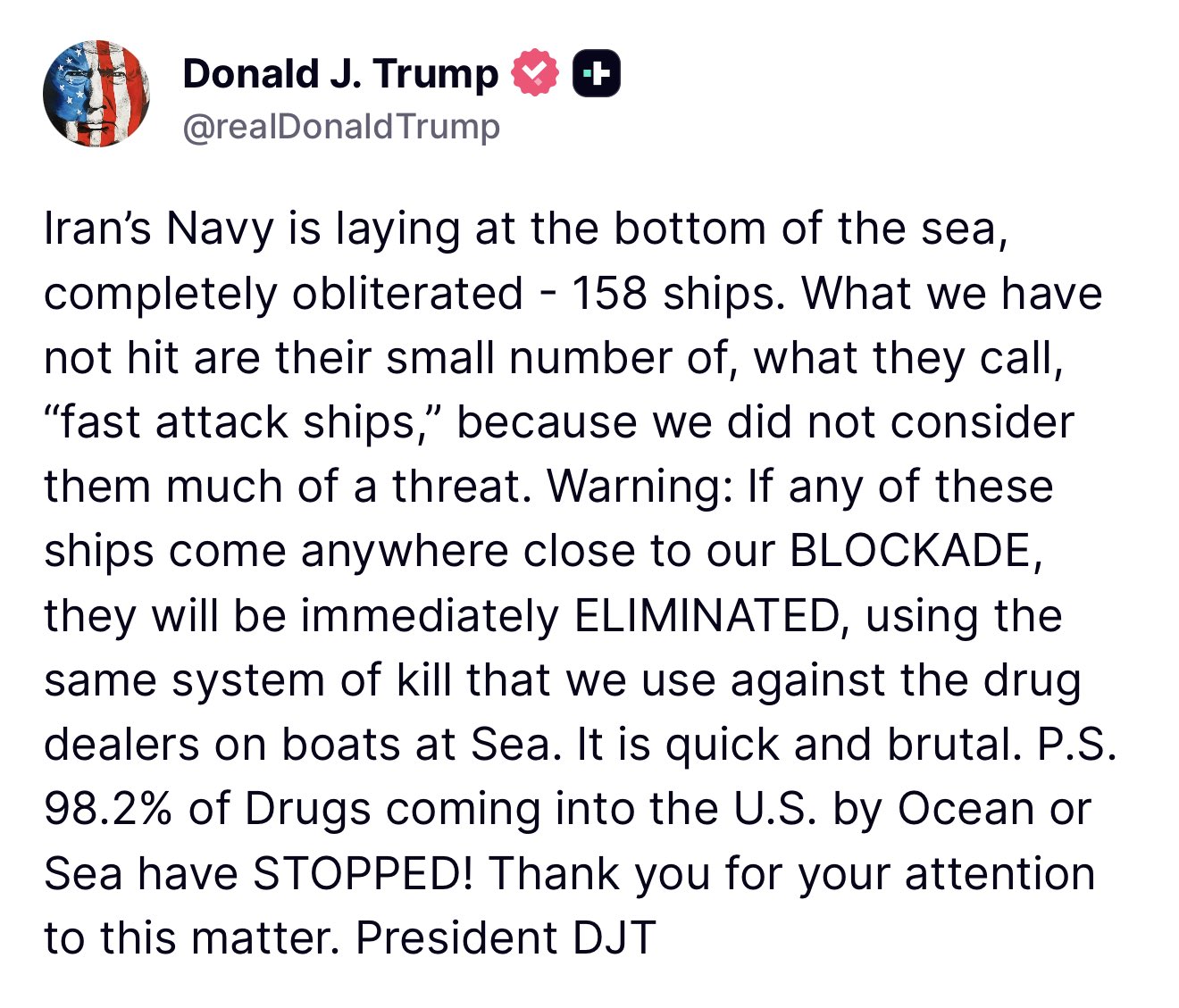
“I warn you that if any of these ships approaches our blockade, it will be destroyed using the same systems we used against drug traffickers with boats at sea,” stated the occupant of the White House.
After the talks between the USA and Iran on April 11, the US Central Command (CENTCOM) announced that it will begin a naval blockade of Iran on April 13, preventing all ships heading to ports of the Islamic Republic or attempting to depart from its coasts.
The blockade was expected to begin at 5:00 p.m. Moscow time.
The USA fears direct involvement of China in the war
Developments reinforce scenarios of more active involvement of China in the conflict.
According to the New York Times, Beijing is reportedly pressuring Tehran to accept a temporary ceasefire with the USA.
Responding to a relevant question, the spokesperson of the Chinese Ministry of Foreign Affairs, Mao Ning, stated that the country “is actively working to promote peace talks”, without confirming official mediation involvement.
Analysts estimate that China is moving with careful steps. As noted by Dylan Loh, Beijing appears to “selectively exercise its influence”, taking a more active role when it sees opportunities for intervention.
If the shipment of weapons is confirmed, it will mark a significant shift in China’s stance in the Middle East, further increasing uncertainty, even if these specific weapons systems do not prove decisive.
Economic interests and energy dependence
Despite rhetorical support for Iran, there are so far no official confirmations of military or economic assistance since the start of the conflicts.
Analysts point out that China’s stance is mainly driven by economic interests.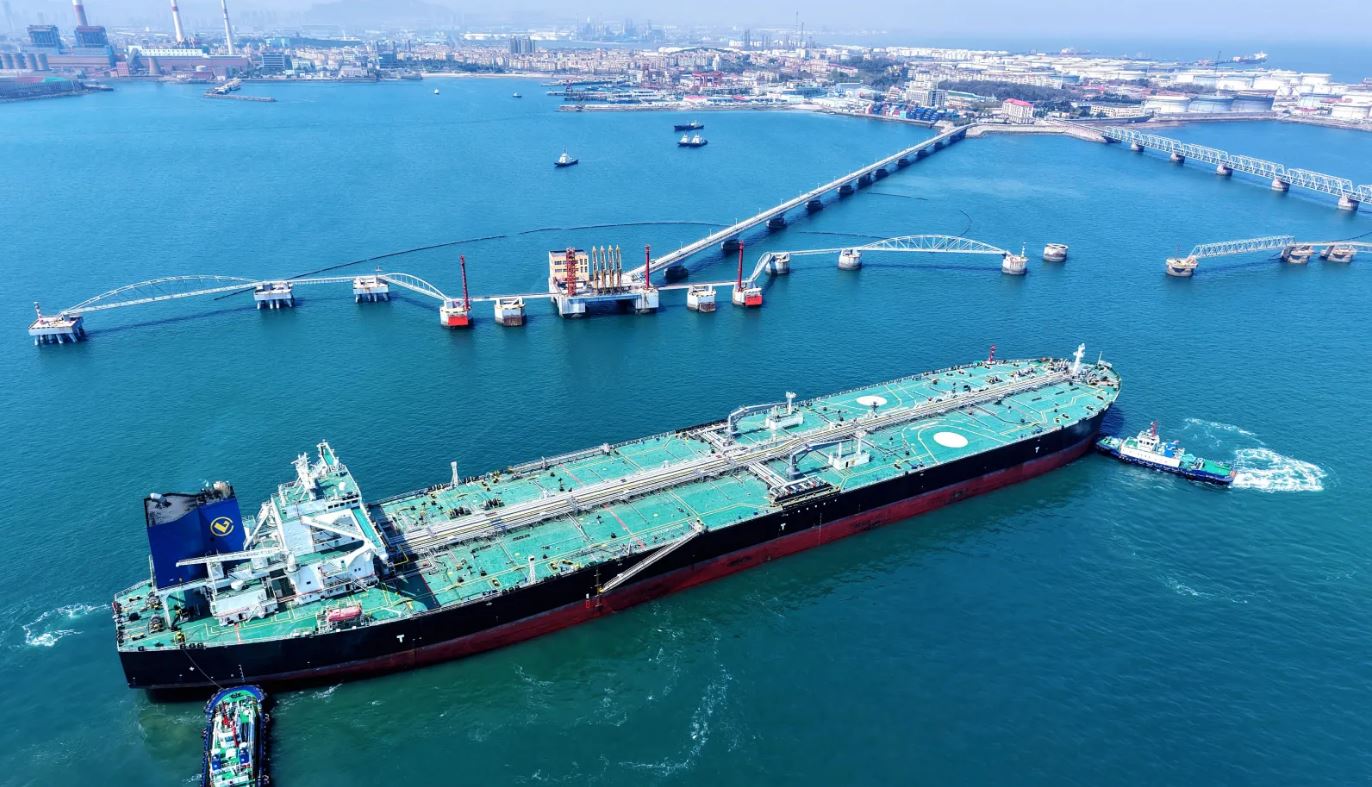
In 2025, Beijing reportedly purchased more than 80% of Iranian oil exports, covering more than 10% of domestic demand.
This dependence makes China particularly vulnerable to a potential prolonged closure of the Strait of Hormuz, a fact already reflected in the increase in fuel prices by about 11% in the country.
Doubts about Trump’s moves
Despite the threats, it remains unclear whether Donald Trump will ultimately proceed with the imposition of tariffs.
Since the start of the conflict, the American president has alternated harsh rhetoric with proposals for diplomatic de-escalation, a tactic his critics describe as “TACO” (Trump Always Chickens Out).
In recent posts on Truth Social, Trump even threatened to bomb critical infrastructure of Iran if the Strait of Hormuz is not opened, threats that ultimately were not implemented.
However, analysts point out that the possibility of implementing his threats should not be underestimated.
As noted by Dylan Loh, if there is clear evidence of substantial Chinese support for Iran, the reaction of the USA will be immediate.
Meanwhile, Donald Trump announced a full naval blockade of the Strait of Hormuz, after the failure of negotiations with Iran, while he is expected to meet with Chinese president Xi Jinping in Beijing in mid-May, a meeting that may prove decisive for the course of developments.
The seismic intervention by China and Pakistan to end the war and open the Hormuz
It is recalled that weeks ago, with a joint intervention, China and Pakistan raised a strong barrier against the arbitrary war launched by the USA and Israel against Iran at the end of February.
The role of Pakistan is now highly upgraded, given that it has an informal mediating role in the indirect contacts between the American and Iranian leadership, with the ultimate goal of achieving a ceasefire in the Middle East.
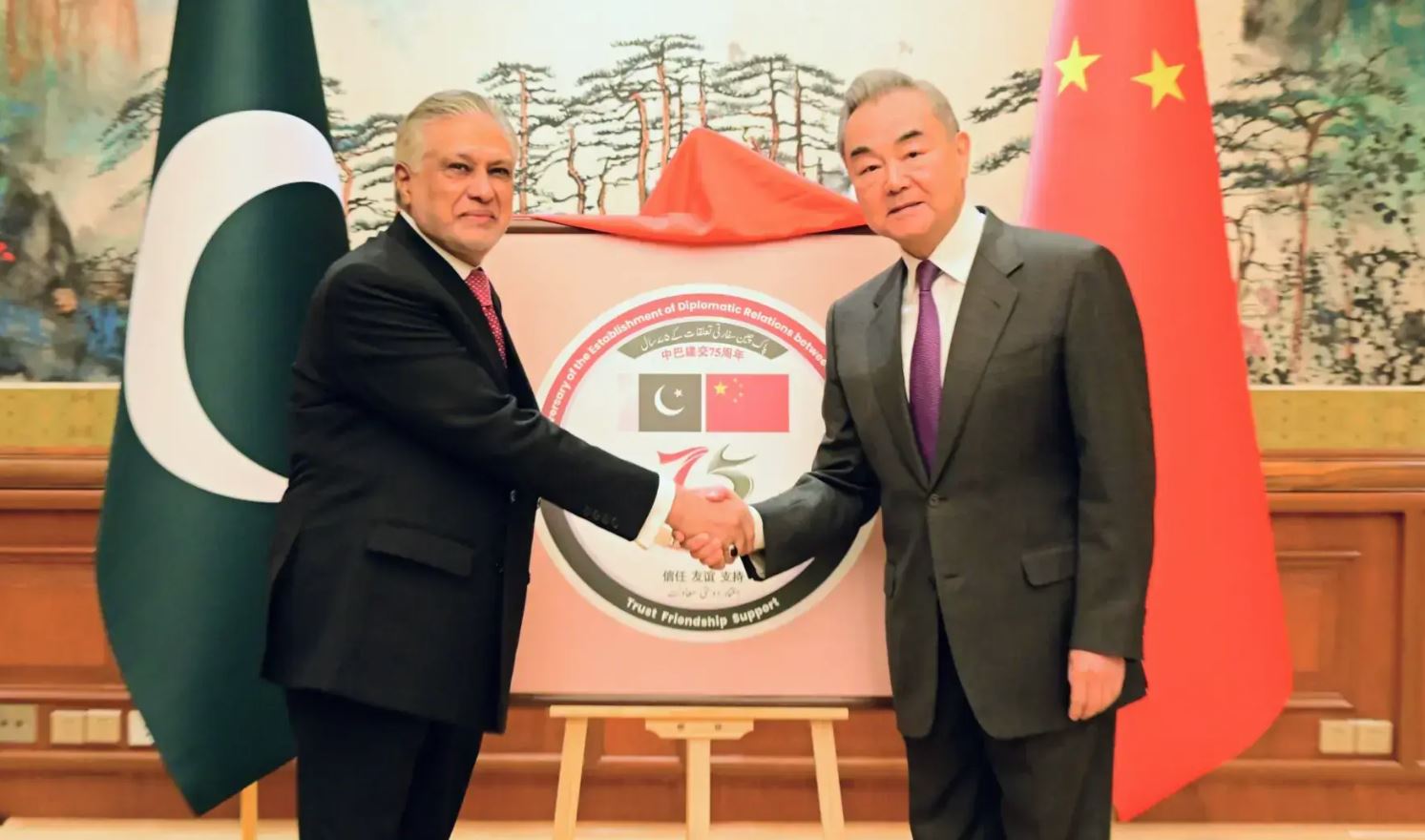
Specifically, China and Pakistan presented five proposals to restore peace and stability in the Gulf region and the Middle East, during talks between Chinese Foreign Minister Wang Yi and Pakistani Deputy Prime Minister and Foreign Minister Mohammad Ishaq Dar in Beijing on Tuesday 31/3.
The proposals send a strong message to the USA and Israel, as they concern the immediate cessation of hostilities, the start of peace talks as soon as possible, ensuring the safety of civilian targets, ensuring maritime security, and upholding the primacy of the United Nations Charter, according to the Xinhua agency.
Pakistan in a mediating role with the blessing of Beijing
During the meeting, Wang stated that after hosting a quadrilateral meeting of foreign ministers in Islamabad, the Pakistani side arrived directly in Beijing without pause to jointly discuss how to de-escalate tensions in the Middle East, a move welcomed by China.
“Pakistan’s efforts to act as a mediator between the parties to promote peace and end the fighting demonstrate its firm commitment to safeguarding regional and global peace. The timely strategic communication between China and Pakistan on major international and regional issues and the deepening of strategic coordination embody the essence of the China-Pakistan community with a shared future.
China supports and expects Pakistan to play a unique and important role in de-escalating tensions and restoring peace talks.
This process will not be easy, but Pakistan’s mediation efforts align with the common interests of all parties,” said Wang.
Hours before the proposals, the spokesperson of the Chinese Ministry of Foreign Affairs, Mao Ning, stated on the afternoon of Tuesday 31/3 that the “two foreign ministers will intensify strategic communication and coordination on the situation in Iran and other international and regional issues of mutual interest, will jointly seek peace and a just position, and will make new efforts to help end the conflict and achieve peace and stability in the region”.
Joint intervention for a ceasefire
It is noted that weeks ago, China and Pakistan called for an immediate ceasefire and an end to the fighting, as well as every possible effort to prevent further escalation and spread of the conflict, according to the Xinhua news agency.
The two sides also noted that the sovereignty, territorial integrity, independence, and security of Iran and the Gulf countries must be respected.
Dialogue and diplomacy are the only sustainable way to resolve conflicts.
In addition, China and Pakistan called on all parties to immediately stop attacks against civilians and non-military targets, to fully comply with international humanitarian law, and to stop attacks on vital infrastructure, such as energy facilities, desalination plants, power systems, and peaceful nuclear installations, including nuclear power plants.
The proposal to open the Strait of Hormuz with strengthening of the UN
Regarding the Strait of Hormuz, China and Pakistan call on all parties to ensure the safety of ships and crews trapped within the strait, to ensure the safe and immediate passage of civilian and commercial vessels, and to restore normal navigation in the strait as soon as possible.
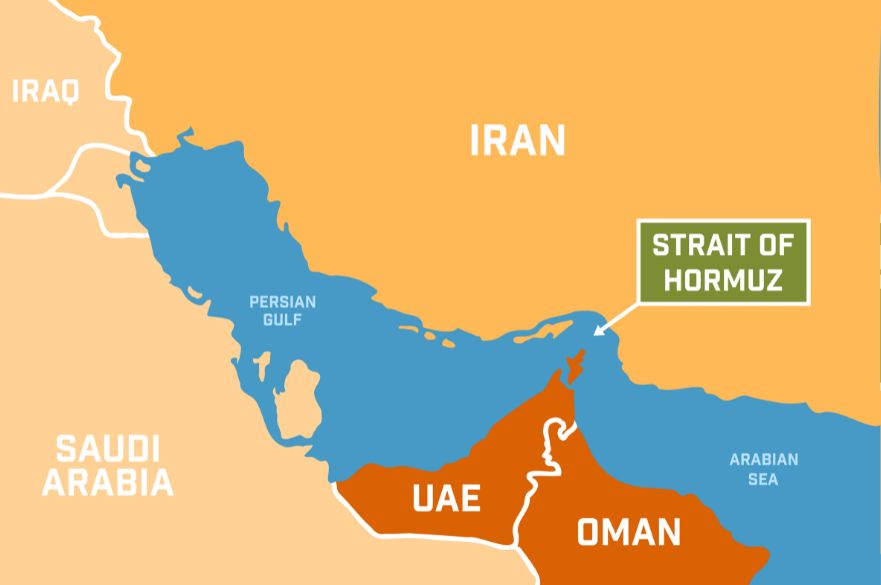
Supporting the strengthening of the role of the United Nations, the two countries stated that they support reaching agreements based on the purposes and principles of the UN Charter and international law to create a comprehensive framework for peace and achieve lasting calm.
China as guarantor of global normality
Indeed, Zhu Yongbiao, director of the Center for Afghanistan Studies at Lanzhou University, told the Global Times that the proposals highlight the special nature of China-Pakistan relations and the high degree of alignment of their positions.
“The proposals reflect the principled consensus that China and Pakistan have achieved on Middle East issues, further strengthening their coordinated stance in international affairs,” the expert said.
He also noted that this demonstrates China’s responsibility in maintaining regional and global peace.
In particular, the call to ensure the safe passage of civilian ships through the Strait of Hormuz aligns with the interests of the overwhelming majority of countries and is practically feasible, making it a key focal point.
www.bankingnews.gr












Readers’ Comments