

Following the collapse of talks between the US and Iran in Islamabad, Pakistan, on April 11 and 12, 2026, which lasted 21 hours… American President Trump announced that he is imposing a naval blockade on the Strait of Hormuz starting April 13, 2026, at 17:00 (Greek time). According to some media outlets, limited attacks against Iran will also commence. In fact, the aircraft carrier Bush is en route to the Persian Gulf. OSINT (Open Source Intelligence) accounts report a steady stream of US Air Force transport aircraft heading toward the Middle East late Sunday, April 12, 2026. However, it is puzzling that a peace agreement was almost ready... but the US withdrew... which signifies clear Israeli intervention. The Islamic Revolutionary Guard Corps (IRGC) emphasizes that the Strait of Hormuz remains under full Iranian control and that Americans will only suffer death if they dare to intervene. They also characterized the American plans as ridiculous. "All movements in the Strait of Hormuz are under the full control of the IRGC armed forces. Any wrong move will drag the enemy into the deadly vortices of the Strait of Hormuz," the IRGC stressed. In reality, 3,200 ships, mostly tankers, are blocked or stuck in the Strait, and obviously, a region full of mines is extremely dangerous for navigation.
Trump: I don't care if Iran returns to the negotiating table or not
US President Trump stated that he does not care if Iran returns to the negotiating table, as he told reporters after landing at Andrews Air Force Base near Washington. "I don't care if they return to the negotiating table or not. If they don't, I have no problem," he replied to a question on the matter. Trump also noted that Iran is in a desperate situation and "in very bad shape." Previously, Trump criticized Pope Leo XIV for his support of Iran, calling the Pontiff "terrible at foreign policy" and "weak" against crime. "I don't want the Pope to think that Iran should be allowed to have nuclear weapons," Trump said.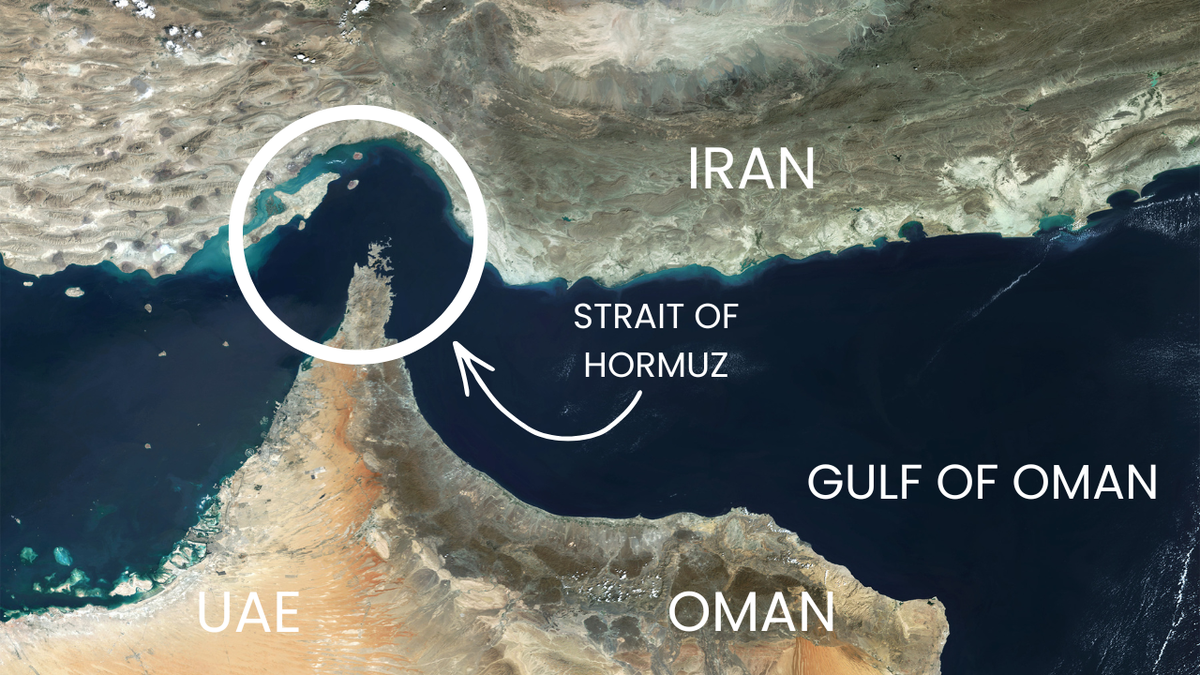
Wall Street Journal: US considers resuming limited attacks against Iran
Following fruitless talks with Iran in Pakistan, US President Trump and his advisors are exploring the possibility of resuming attacks against Iran, but on a limited scale, to pressure Iran into making concessions, the Wall Street Journal highlighted. According to the newspaper, a full resumption of bombings in Iran is not ruled out. However, this option for further US action is considered less likely, as it risks destabilizing the region and leading Washington into a prolonged armed conflict. The Wall Street Journal notes that each of these scenarios carries significant risks. If a full military operation continues, the US risks exhausting its weapon stockpiles. Conversely, reducing the intensity of hostilities could be perceived as a victory for Iran.
Sardar Qa'ani (Quds): US and Israel leaving the Middle East defeated and empty-handed
Sardar Esmail Qa'ani, commander of the Quds Force of the Revolutionary Guards, stated that the United States and Israel will leave the region without achieving any substantial results. According to the defense report from the Tasnim agency, Qa'ani mentioned through a personal social media post that "the unified resistance front maintains a strong and effective presence across the region and stands ready against the enemies of humanity." He also emphasized that the "US and the Zionist regime should remember how they left empty-handed from heroic Yemen, the Bab al-Mandeb, and the Red Sea." He concluded by underlining that "this time too, they will leave the region without any achievement."
"The greatest mistake in US history": Tucker Carlson… scorches Trump
The rift between US President Donald Trump and former Fox News host Tucker Carlson is rapidly worsening, with the latter describing the war against Iran as "the greatest foreign policy mistake" of any American president in his lifetime. In an interview aired April 12 on the BBC's Sunday with Laura Kuenssberg, Carlson was asked if he considers Trump to be a "pawn" of Israeli Prime Minister Benjamin Netanyahu. While avoiding a simplistic phrasing, he clearly blamed Israel for the direction of American policy toward what he called an "unprovoked and illegal war." "It's not as simple as saying he is 'controlled by Netanyahu,' but one could summarize it that way without being entirely inaccurate," he stated.
The role of Netanyahu
Carlson proceeded with even sharper criticism, stating: "The greatest mistake Trump has made—or any American president in my lifetime—was the decision to go to war with Iran for the purpose of regime change." Responding to a remark that previous presidents had occasionally opposed Netanyahu, Carlson agreed: "They did, and I wish our president had done so, but he didn't." At the same time, he argued that Israeli officials actively influenced the US toward conflict, noting that he personally saw how Tel Aviv "led Washington into a war that harms the United States and the world."
"Pawn" of Israel
In previous statements to Newsmax, Carlson had gone so far as to call Trump a "pawn" of Israel, speaking of "painful" management of the war. "I've always liked Trump and I still feel sorry for him, like all pawns," he said, adding that "he cannot make his own decisions."
"You will miss today's gasoline prices"
Mohammad Bagher Ghalibaf, Speaker of the Iranian Parliament, sent a sharp message to the citizens of the United States, warning of a potential increase in gasoline prices following Donald Trump's threats to block the Strait of Hormuz. According to the Tasnim agency report, Ghalibaf published an image of the latest fuel prices at stations near the White House, commenting: "Enjoy today's gasoline prices. With what is called a 'siege,' you will soon miss $4 to $5 gas." He argued that such a scenario would lead to a further rise in oil prices, pointing out that the prospect of a re-blockade of the Strait of Hormuz will burden the global energy market. He presented a "new formula" for oil price hikes, claiming that such a development would worsen the situation for the US and intensify pressures already faced by the American energy market.
Wall Street Journal: Heads of major US oil companies warn of major crisis due to Hormuz
The heads of three of the largest oil companies in the United States warned the Trump administration of an imminent crisis due to the situation in the Middle East and the closure of the Strait of Hormuz, the Wall Street Journal reported. In recent weeks, the heads of major oil giants have warned White House officials that a prolonged closure of the Strait of Hormuz threatens to disrupt global fuel supply chains. Furthermore, the consequences related to this measure could further exacerbate the crisis, writes the Wall Street Journal. Officials assured company executives that the congestion in the straits would be resolved within weeks, not months. Some executives privately expressed pessimism, saying the uncertainty surrounding the conflict in Iran made long-term investment planning impossible.
CENTCOM: Naval blockade of Hormuz to begin April 13 and will concern only Iranian ships
The US Central Command - CENTCOM confirms that the blockade will begin at 10:00 AM on Monday, April 13, and will only affect vessels related to Iran. President Trump is initiating the blockade of the Strait of Hormuz, warning that the American military will "finish the little that is left of Iran." The blockade will be imposed impartially against vessels of all nations entering or exiting Iranian ports and coastal areas, including all Iranian ports in the Arabian Gulf and the Gulf of Oman. However, vessels from non-Iranian ports are free to pass through the Strait of Hormuz. CENTCOM forces will not hinder freedom of navigation for vessels passing through the Strait to and from non-Iranian ports.
Iran rejected the six US "red lines"
The American delegation in Islamabad set the following six "red lines" for Iran:
-
End of all uranium enrichment
-
Dismantling of all major nuclear enrichment facilities
-
Recovery of highly enriched uranium
-
Acceptance of a broader framework for peace, security, and de-escalation involving regional allies
-
End to the funding of terrorist organizations Hamas, Hezbollah, and the Houthis.
-
Full opening of the Strait of Hormuz without transit tolls.
Araghchi: Iran and the US did not sign the agreement in Islamabad due to American fault
The memorandum of understanding between the US and Iran in Islamabad was not signed due to the actions of the American side... revealed Iranian Foreign Minister Araghchi. "When the Islamabad memorandum was at the doorstep, we encountered maximalism, constant changes in terms, and rigidity from our American counterparts," Araghchi wrote on X. According to the Foreign Minister, Iran negotiated with the US in good faith and sent "the highest-ranking representatives in the last 47 years" to Islamabad.
Politico: Pentagon is not telling Trump the truth, providing "overly optimistic" estimates on Iran
US President Trump may have decided to seek a ceasefire with Iran after realizing that the US would struggle to achieve its goals, and the Pentagon is providing him with "overly optimistic" assessments of the situation. "I heard from an administration official that Trump drifted toward a ceasefire due to the realization that achieving his war goals might not be as easy as he thought," it was said in a roundtable discussion organized by Politico concerning the war against Iran. "As this official told me, the rescue of the pilot from the downed US F-15E fighter did not go smoothly. The US lost several aircraft. Iran continued to launch missiles. Trump realized he might be receiving an overly optimistic picture of this war from the Department of Defense compared to reality," it was added.
Times of Israel: Israelis prepare to resume conflict - Iran to launch surprise attack
The Israeli Defense Forces (IDF) are preparing to resume military action against Iran after the "failure of negotiations" between the US and Iran. This is indicated, as noted by the Times of Israel, by a possibly coordinated leak of information from Israeli security officials to three major television channels. Channel 12 reported, without citing sources, that the Israeli Defense is not only "preparing for a resumption of the conflict with Iran, but also for a potential surprise attack by Iran." Kan Radio, citing a senior Ministry of Defense official, reported that "Israel wants to resume the war against Iran" after it "ended too early and without sufficient pressure on Iran regarding the nuclear issue and ballistic missiles." The Times of Israel noted that following President Trump's decision, the military "will try to pressure Iran to abandon its nuclear program through attacks on energy infrastructure." Channel 13, in turn, reported that the IDF Chief of Staff, Lieutenant General Eyal Zamir, ordered the military to prepare for an "immediate resumption of hostilities."
Bild: "Aircraft Graveyard" - US will use 70-year-old aircraft due to losses in Iran
The American military is facing serious problems with its tanker fleet amid the battles in the Middle East, reports the German Bild. Losses in the region have been so significant that the Pentagon was forced to turn to its strategic reserve—decommissioned aircraft at the notorious Davis-Monthan Air Force Base in Arizona, known as the "aircraft graveyard." According to Bild, in March, a KC-135 Stratotanker collided with another over Iraq and crashed. Five more similar aircraft were later damaged in attacks. To compensate for the losses, the US activated at least two tanker aircraft, including one built in 1958 that is nearly 70 years old. The Davis-Monthan Air Force Base in Arizona is traditionally used for storing decommissioned aircraft. Some can be returned to airworthy condition if necessary. Earlier, Axios reported that disagreements arose in negotiations between the US and Iran regarding the amount of Iranian funds to be unfrozen.
Shahram Irani (IRGC Rear Admiral): US plan to block Hormuz is American ridiculousness, they were humiliated in war
Iranian Navy Commander Rear Admiral Shahram Irani dismissed President Trump's latest threats to impose a naval blockade on the Strait of Hormuz as "very ridiculous," saying the Iranian military is closely monitoring every move of the American fleet in the region. "The brave men of the Islamic Republic of Iran Navy are monitoring all moves of the aggressive American military in the region," the Rear Admiral stated. "The threats of the US president following his military's humiliating defeat in the third war, regarding a naval blockade in Iran, are very ridiculous; they are jokes. The IRGC Navy announced that the strait 'will never return to its previous state, especially for the US and Israel.'"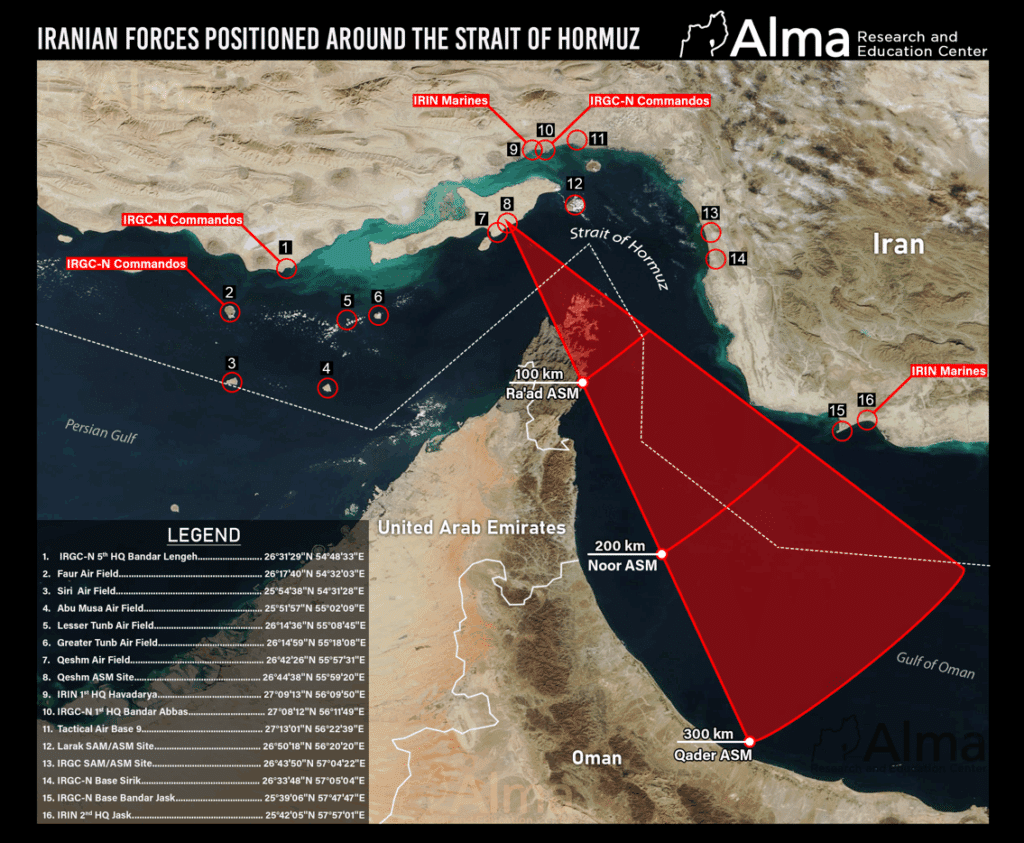
Oil up again at 103 dollars
Brent crude oil futures rose by 7.5% to approximately $103 per barrel, while S&P 500 futures fell about 1% after President Trump ordered the American military to impose a blockade on the Strait of Hormuz.
Now the fun begins… Iran is no place for tweets and fantasy plans
Iran says it will not allow the blockade of the Strait of Hormuz, but it remains a place for diplomacy. As the US failed to open the Strait of Hormuz, it is also "doomed to fail in a naval blockade," said the military advisor to Iran's Supreme Leader. Iran's armed forces "will not allow America to do so and have great untapped influence to deal with it." "Iran is not a place to be surrounded by tweets and fantasy plans."
New Trump exaggerations – Will eliminate Iran in… one day, but negotiations will continue!
President Donald Trump stated on Sunday, April 12, that he predicts Iran will return to the negotiating table, while warning that he could "eliminate" Iran "in one day." "I predict they will return and give us whatever we want," Trump told Fox News. "I want everything… They have no cards," he added. He also defended his threat last week that "an entire civilization will die tonight, and never come back," arguing that this statement brought Tehran to the negotiating table. "When I talk about a civilization, it really has changed. It really has changed. But think about it: they are allowed to say 'Death to America. Death to this,'" Trump said. "And I make a statement. And they say, oh, what a big deal. That statement brought them to the negotiating table and they haven't left." Speaking after the US-Iran talks concluded in Pakistan without agreement, Trump repeated the threats he made before the negotiations that he would target Iran's energy infrastructure. "I could eliminate Iran in one day," Trump said. "In one hour I could destroy all their energy, everything, all their factories, their power stations, which is a big issue. And I don't want to do it, because if I do, it takes 10 years to rebuild, they will never be able to rebuild. And the other thing you can destroy is the bridges," he said.
Iran Vice President: Our goal is full sovereignty over the Strait of Hormuz to claim war reparations
The Vice President of Iran, Mohammad Reza Aref, reiterated on Sunday, April 12, that the Islamic Republic maintains full sovereignty over the Strait of Hormuz, characterizing it as a fundamental guarantee for the rights of the Iranian people, especially in the context of discussions on potential war reparation claims. Aref stressed that Iran has absolute control and sovereignty over the Strait of Hormuz, underlining the strategic and economic importance of this position for ensuring national interests and protecting the rights of its citizens.
We are not Venezuela
The head of communications for the Iranian Government Council responded to Donald Trump's statements on the Truth Social platform (12/4), arguing that Iran "is not Venezuela" and that United States threats have now lost their credibility. The statement was made through journalist Ali Hashem, who reported from Tehran that Elias Hazrati, head of the government council, rejected US rhetoric and the comparison of Iran's situation with other countries like Venezuela. According to the Iranian side, American threats no longer have deterrent power and do not affect Tehran's stance.
Iran held its red lines
Iran, during the start of the negotiations that began on Saturday, April 11, and continued for 15 hours until the dawn of Sunday, April 14, 2026, presented a series of "red lines." These include reparations for damages from US-Israeli attacks that began on February 28, the release of frozen Iranian assets, and an end to conflicts with its regional allies. The United States has presented its own framework, including restrictions on the Iranian nuclear program and the opening of the Strait of Hormuz. The Iranian move to restrict the strait has caused turbulence in global energy markets, sharply increasing oil prices and causing concerns over shortages. European aviation officials warn of potential jet fuel shortages within weeks if the situation continues. The Revolutionary Guard Navy (IRGC) states (12/4) that it will respond "harshly" to any military vessels trying to cross the Strait of Hormuz. It warned that any military ships attempting to pass through the Hormuz waterway "will be dealt with harshly." "The IRGC Navy has full authority to manage the Strait of Hormuz with strategic planning," the statement notes.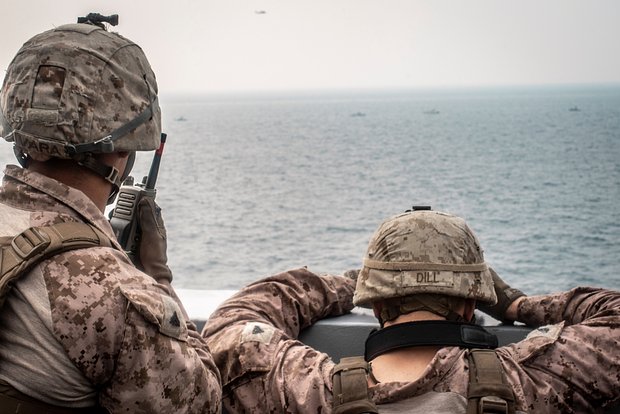
Ship movements – Not even a … mosquito passes through Hormuz – Iran maintains stifling control
Two empty tankers bound for the Strait of Hormuz changed course after it became known on Sunday (12/4) that the talks between the US and Iran concluded without a long-term agreement, according to the ship transit monitoring firm Vortexa. One of the two tankers, linked to Pakistan, has since turned back and was waiting just outside the strait, Pamela Munger, head of European market analysis at Vortexa, a trade and shipping intelligence firm, told CNN. Ship movements show that control of Hormuz "is still largely in the hands of the Iranians," she said. Only a few ships have crossed the strait in recent days, indicating that many shipping companies still consider passage through the area dangerous, despite the current truce. A non-Iranian so-called Very Large Crude Carrier (VLCC), which was empty, passed inward through Hormuz on Saturday (11/4), according to Munger of Vortexa. Three non-Iranian tankers loaded with crude oil and one vessel carrying LNG passed outward from the strait between Friday and Saturday (11-12/4), she added. This aligns with information from TankerTrackers, a shipping intelligence firm, which reports that 2 million barrels of Iraqi crude oil and 4 million barrels of Saudi crude exited the strait.
The difficult deal and US compromise
"We expected difficult and demanding negotiations; this is not something that can be solved overnight," Aslani told Al Jazeera. He explained that Iran insists on the ability to impose transit fees on ships passing through the Strait of Hormuz. "Iran insists that this is one of its core demands that cannot be subject to compromise," Aslani said. "Let's not forget that this is only the beginning" of the talks, he added. "We are at a stage where countries want to move past the disagreements and tensions of recent weeks to see if... a potential agreement is feasible or not." Negotiators reached an impasse regarding the Straits of Hormuz, according to a Financial Times report (12/4). Disagreements over the Strait of Hormuz—a critical route through which about one-fifth of the world's oil passes—are the key obstacle. Another significant point of friction is Iran's insistence that any agreement also include Lebanon. A source close to the negotiations told the Qatari newspaper Al-Araby Al-Jadeed that the American delegation is not prepared to accept this request.
The Hormuz status does not change until an agreement is reached – We are in no hurry, says Iran…
The status of the Strait of Hormuz will remain unchanged until Iran and the United States reach a "common framework" for continuing negotiations, an Iranian source told CNN. The source stated that "excessive demands" from the American side on multiple issues—including the critical waterway—have so far prevented the two sides from agreeing on a common basis to advance the talks. "Iran is in no hurry," the source said, adding that Tehran has conveyed to the US that until a common framework is reached, "the status of the Strait of Hormuz will remain unchanged" and that "even the number of ships agreed upon will not be able to pass." It warned that if American negotiators do not adopt what it called a "realistic approach," the strait will remain closed. The source also claimed that Iran has proven its ability to impose a transit halt from the Strait, describing the situation as a "repetition of a wrong assessment" that will again result "at America's expense."
USS Michael Murphy (DDG 112) and USS Frank E. Peterson (DDG 121) driven out of Hormuz
Evidence reveals that American destroyers were forced to retreat from the Strait of Hormuz after warnings from Iranian Revolutionary Guard (IRGC) forces, amid ongoing Iran-US talks in Islamabad. An attempt by the US Navy to pass through the Strait of Hormuz ended in withdrawal after Iranian forces issued warnings, according to a Press TV investigation. The report states that two American destroyers, the USS Michael Murphy (DDG 112) and the USS Frank E. Peterson (DDG 121), both of the Arleigh Burke class, tried to pass through the strategic maritime passage on Saturday (11/4). The move coincided with the ongoing Iran-US talks in Islamabad. According to the investigation, the ships were forced to retreat after being intercepted by Iranian naval forces before completing their transit.
Navy "locked on" to the American fleet
The investigation reports that Iranian forces, including the Revolutionary Guard Navy (IRGC), reacted immediately to the presence of the American ships. Cruise missile systems reportedly "locked on" to the destroyers as they approached the entrance to the Persian Gulf, while drones were deployed in the area. A warning was then issued, giving 30 minutes to change course. The report adds that communication took place via international shipping channels, with an order for the American ships to depart or face a potential strike.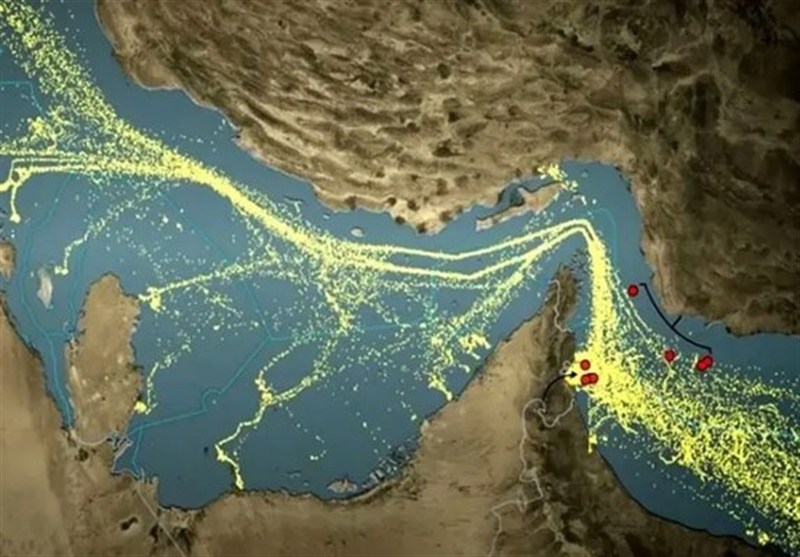
www.bankingnews.gr













Readers’ Comments