

Essentially, the US Navy is attempting to prevent the entry and exit of Iranian and Iran-approved vessels from the Straits, at a time when Tehran is obstructing all other navigation. In practice, only Iranian or "approved" ships are passing through, following a unilaterally imposed transit system that directs them within Iranian territorial waters in exchange for financial compensation. The president of the US, Donald Trump, stated that the American navy will proceed to intercept any ship that has paid Iran for passage. Tehran has characterized nearly the entire Strait of Hormuz as a "danger zone," using threats and a limited number of mines, effectively allowing safe passage only through its own waters.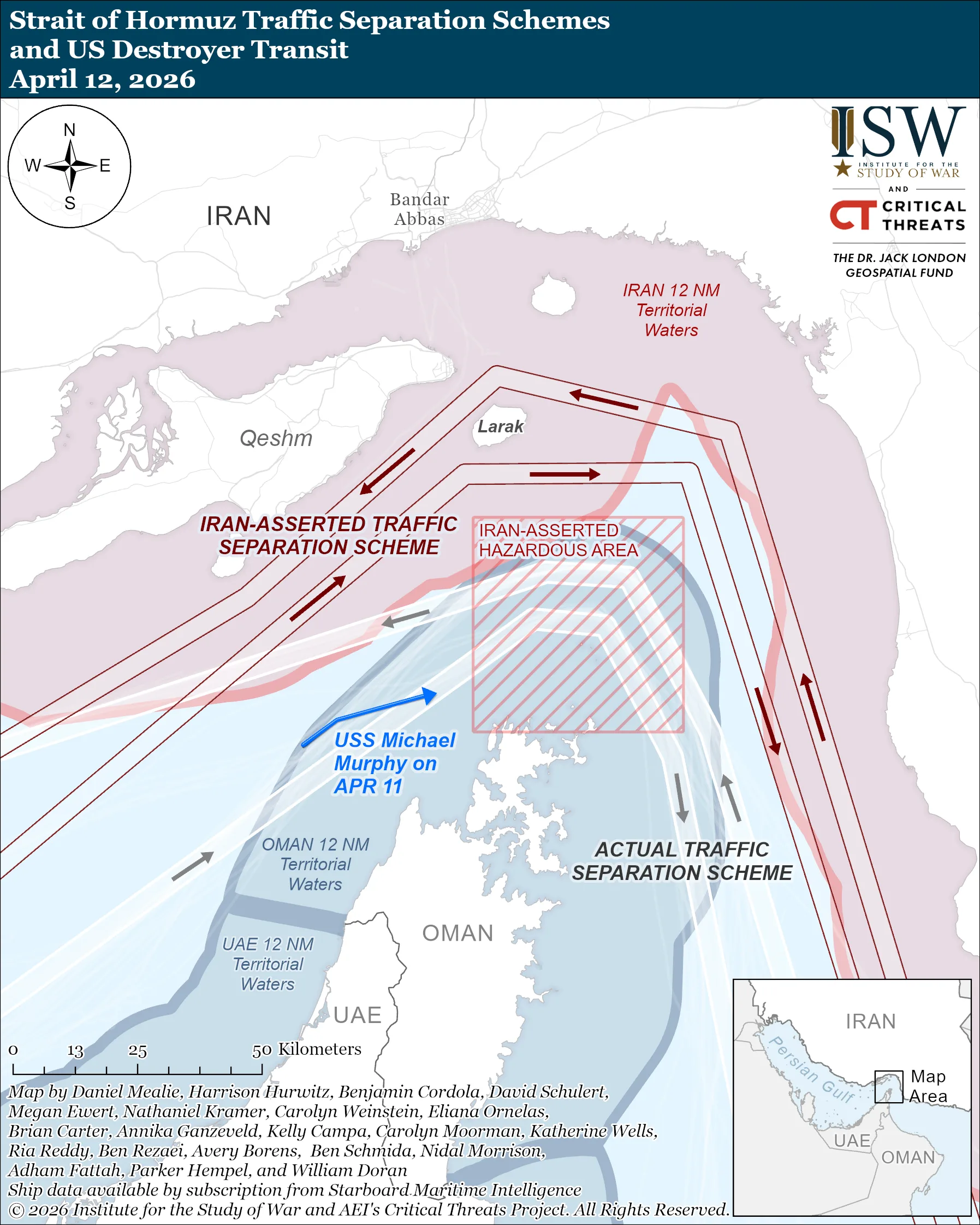
Deadlock in US–Iran talks
The talks between the United States and Iran held in Islamabad on April 11 and 12 did not result in an agreement. According to Iranian officials, the key points of disagreement included:
-
the stockpile of highly enriched uranium (HEU),
-
control of the Strait of Hormuz,
-
and the release of $27 billion from frozen revenues. The US demanded the immediate reopening of the Straits for international navigation, while Iran insisted that this will only happen after a comprehensive peace agreement.Donald Trump emphasized that the Iranian side did not make compromises on its nuclear program, expressing, however, the assessment that Tehran will return to the negotiating table. From Iran's side, Speaker of Parliament Mohammad Bagher Ghalibaf shifted the blame to the US, arguing that Washington must "earn" Tehran's trust.
Deeper causes of the impasse
Two main factors make reaching an agreement extremely difficult: Iran seeks a comprehensive deal that will radically change relations with the US, while the American side focuses on specific issues, such as freedom of navigation and the nuclear program. Internal disagreements within the Iranian delegation. According to reports, a hardline IRGC group under Ahmad Vahidi clashed with more pragmatic voices, such as Mohammad Bagher Ghalibaf and Foreign Minister Abbas Araghchi.
Reduction in Iranian attacks
From April 11 onwards, Iran has not carried out attacks against Gulf states, while since the start of the ceasefire on April 8, a significant reduction in missiles and drones has been observed. On April 11, only one drone attack against Bahrainwas recorded, while on April 12, no attacks were detected.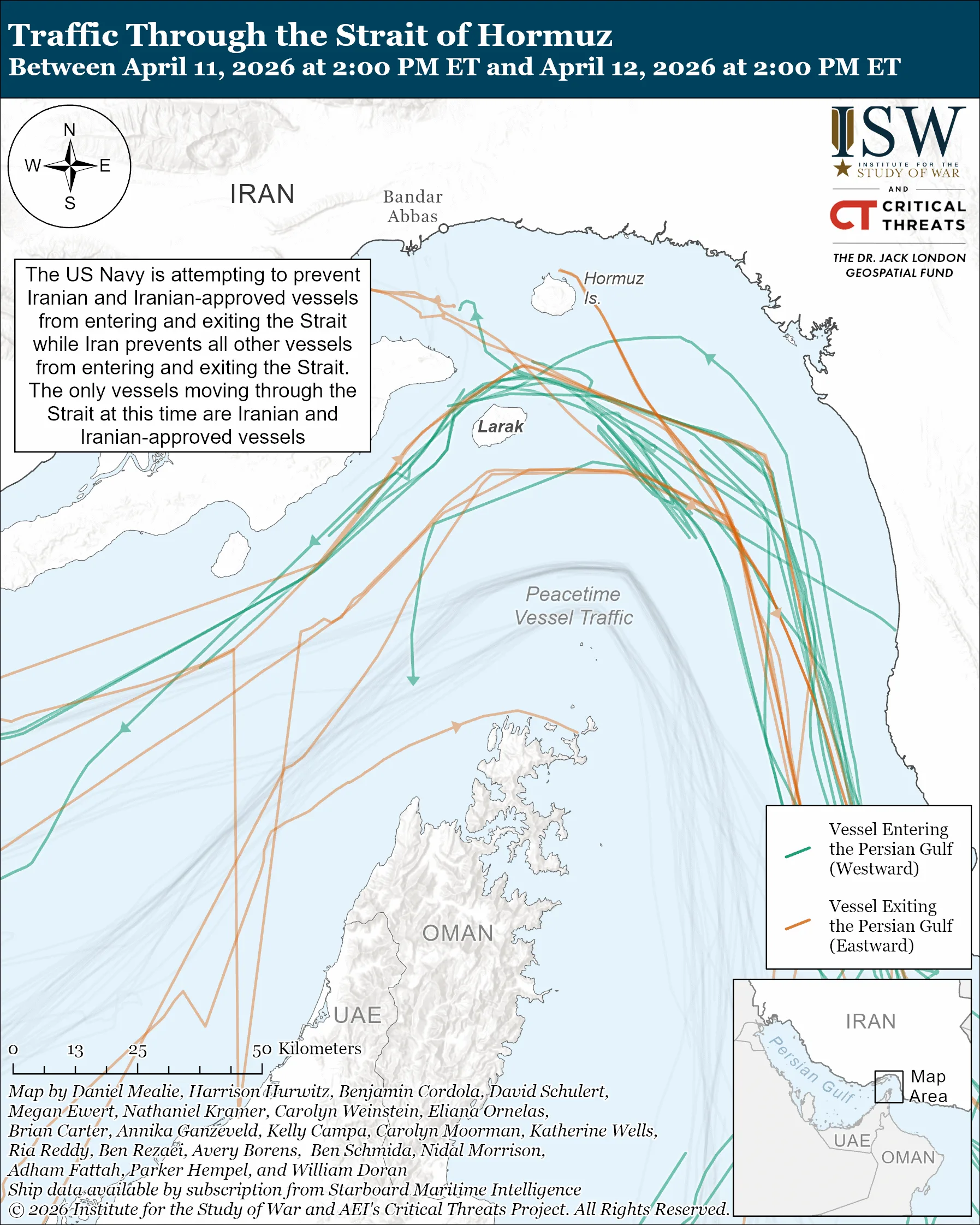
US–Israel air operations
Satellite images confirm strikes on internal security facilities in Kurdistan and on an IRGC ground forces base in Alborz province before the ceasefire. Among others, a Basij base in Qorveh, the police outpost in Adinan, the police station in Sonateh, and an IRGC training base in Karaj were hit.
Escalation on the Israel–Hezbollah front
Hezbollah announced 17 rocket and drone attacks against targets in northern Israel within 24 hours, although the rate of attacks appears reduced. According to Israeli sources, there were no casualties or successful target strikes. Particular weight is given to the city of Bint Jbeil in southern Lebanon, where fierce clashes continue. The Israeli army is attempting to control the area, which has strategic importance due to its position on key road axes. The area also has strong symbolism for Hezbollah, as a "victory" had been declared there after Israel's withdrawal in 2000 by its former leader, Hassan Nasrallah. The Israeli army continues operations in various parts of southern Lebanon, with airstrikes and ground clashes. Dozens of strikes against Hezbollah infrastructure are reported, including rocket launchers.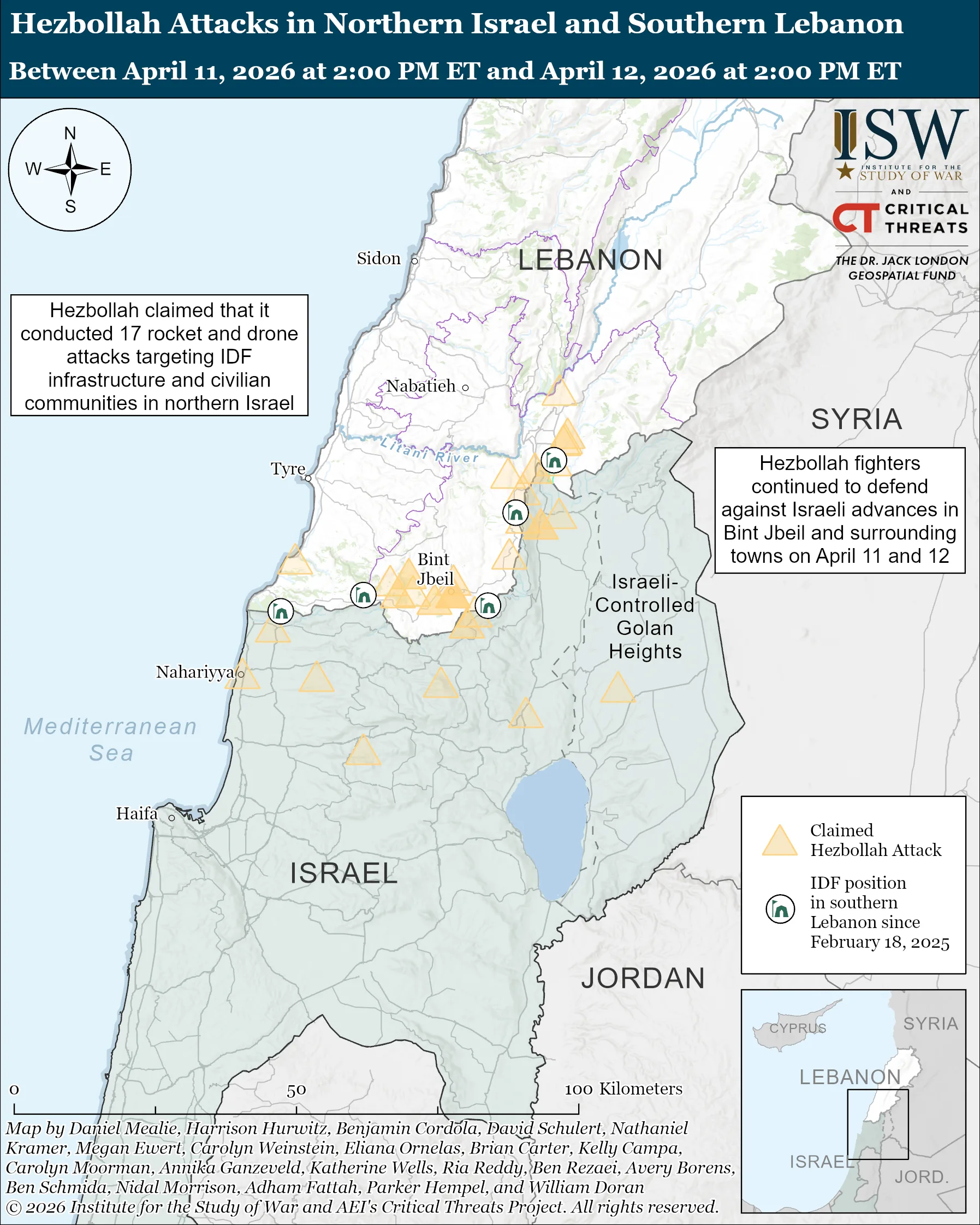
Reaction of other powers
Saudi Arabia summoned the Iraqi ambassador following drone attacks by pro-Iranian Iraqi militias against targets in Saudi Arabia and other Gulf countries. These groups have also claimed attacks against American bases in the region since the start of the war.
How a 21-mile strait, Hormuz, is a formidable strategic advantage for Iran – 50,000 ships pass through annually
After 40 days of decisive reaction to an unprovoked war of aggression, the Islamic Republic of Iran has turned the world's most vital energy bottleneck into a means of strategic pressure. Just three days after the ceasefire halted the joint US-Israeli aggression that began on February 28, 2026, the Strait of Hormuz remains under effective Iranian management, a fact that international political commentators have widely characterized as a sweeping victory for Iran. This narrow waterway, which at its narrowest point is just 21 nautical miles wide, is not merely a maritime passage, but the structural heart of the global energy system; on an annual basis, 50,000 ships pass through… It should be noted that Iran's maritime borders – those that the Americans want to control – are 123 kilometers long, while Iran's total coastline amounts to 2,450 kilometers.
20% of global oil via Hormuz or 20.9 million barrels
Daily, under normal conditions, approximately 20.9 million barrels of oil—one-fifth of global consumption—and over 20% of global trade in liquefied natural gas flow through its narrow channels. For Iran, the strait is neither a bargaining chip nor a threat, but an unalterable geographical privilege: a permanent source of leverage rooted in 1,600 kilometers of northern coastline, strategically placed islands acting as unsinkable platforms, and an asymmetric military doctrine that renders conventional naval superiority irrelevant.
The time has come for the great change in Hormuz
As stated by the Leader of the Islamic Revolution, Khamenei, Iran will now lead the management of this waterway into an entirely new phase—a phase that will transform geographical destiny into enduring economic and strategic power.
Geography of permanence: An unsinkable advantage
The Strait of Hormuz is not a canal that can be bypassed nor a route that can be replaced. At its narrowest navigable point, the strategically important waterway is just 21 nautical miles wide—approximately 39 kilometers—with shipping lanes reduced to just two miles per direction. Iran's coastline stretches for more than 1,600 kilometers along the northern arc of the Persian Gulf and the Sea of Oman, giving the Islamic Republic an unbroken line of territorial oversight.
Unsinkable aircraft carriers
Strategically placed islands—Qeshm, Hormuz, Larak, Abu Musa, and Tunbs—serve as forward operating platforms, what military analysts call "unsinkable aircraft carriers." From these dominant outposts, the Islamic Revolutionary Guard Corps Navy (IRGC) deploys continuous surveillance drones, coastal missile grids, and fast attack craft.
The Law of the Sea favors Iran
Because the entire waterway lies within 24 nautical miles of Iranian territory, the applicable legal regime under the United Nations Convention on the Law of the Sea is not free transit but innocent passage—a distinction that provides Iran with legal authority to regulate ship movement.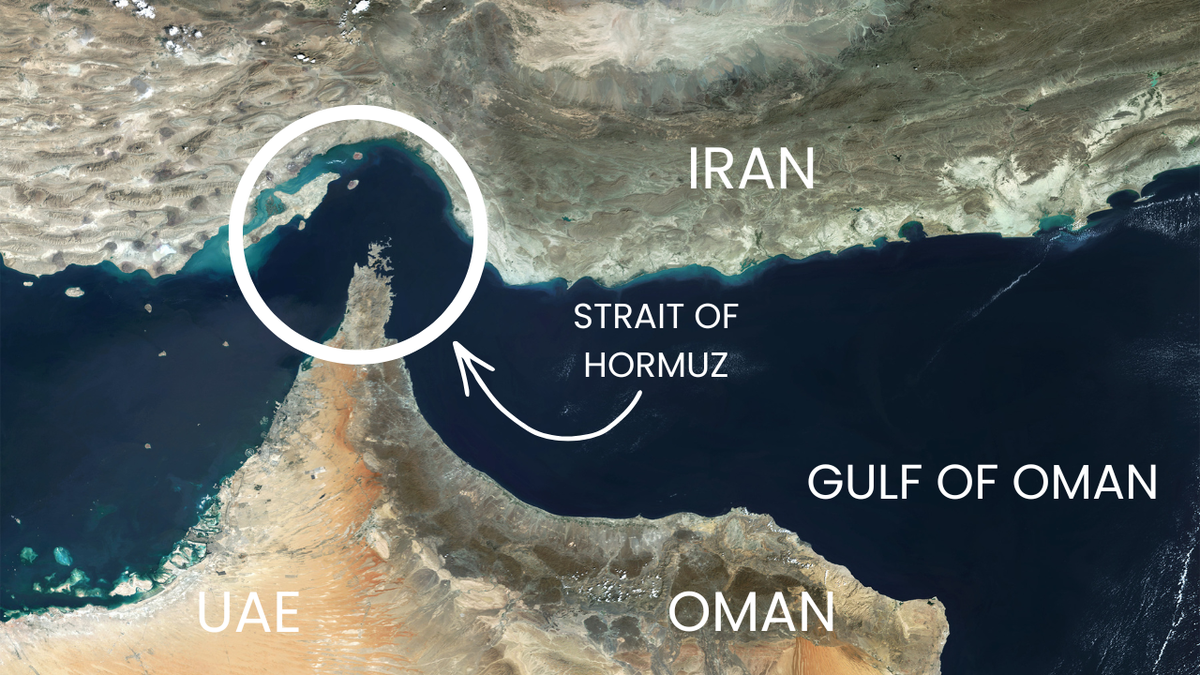
Numbers defining global dependence – 50,000 ships a year
Under normal conditions before the war, the Strait of Hormuz hosted a dense, predictable flow of global trade. Detailed maritime tracking data shows that approximately 130 to 140 ships crossed the strait daily, a number that translates to about 4,000 ships per month and the staggering figure of 48,000 to 50,000 ships annually. Among these, oil and gas tankers consistently dominated the composition, representing between 37 and 60% of total traffic depending on seasonal and market variables. Very Large Crude Carriers (VLCCs), each capable of carrying up to 2 million barrels of crude, accounted for about 35% of tanker movements, followed by Suezmax and Aframax tankers. Beyond oil, bulk carriers transporting iron ore, grain, and coal made up about 30 to 40% of daily transits, while LNG and LPG carriers—though a smaller share in number, with about 100 transits per month or 1,200 annually—represented a strategically critical tier, given that about 20% of global LNG trade flows through this same corridor.
20.9 million barrels pass daily or $1 billion a day
The strait carries approximately 20.9 million barrels of oil per day, equivalent to 20% of all oil consumed globally and 25 to 27% of global seaborne oil trade. In economic terms, the energy value passing through the strait exceeds $1 billion a day in oil alone. These figures are not abstract; they constitute the structural foundation upon which Iran's strategic leverage rests.
Collapse of maritime traffic
The effectiveness of Iran's strategic doctrine was proven a few days after the start of the war of aggression. By early March 2026, an AIS-based observation snapshot recorded 978 ships within the chokepoint zone, including 342 tanker-class vessels—many of which were blocked or held at anchorages as commercial traffic had halted.
From 130 daily transits, they were reduced almost to zero...
Shipping intelligence tracking confirmed that as of March 19, 1,290 foreign-flagged cargo ships and tankers remained within the Persian Gulf, unable to exit. The composition of this immobilized fleet revealed the true economic weight of the strait: bulk carriers were the largest segment with 415 stalled ships, followed by 341 general cargo ships. Crucially, 283 crude oil tankers and 226 petroleum product tankers were also trapped—representing a significant portion of global energy transport capacity. Even the specialized fleet of gas carriers was severely affected, with 51 LNG tankers stuck in the Persian Gulf at a time when the world was already facing gas supply pressures. Container shipping, which operates on just-in-time network logistics, also took a severe hit. 119 container ships—including 17 ultra-large container vessels of over 100,000 deadweight tons—were essentially frozen, carrying over 270,000 TEUs of cargo valued at approximately $10 billion.
The world's most important energy artery frozen
This did not represent a mere disruption, but an almost complete immobilization of commercial shipping through the world's most important energy artery. Over 1,000 ships were immobilized in the Persian Gulf, including 187 fully loaded tankers carrying a total of 172 million barrels of oil. Shipping insurance premiums skyrocketed, carriers declared force majeure, and global energy markets experienced price shocks not seen in decades.
Iran does not need to sink any warships
The message was unmistakable: Iran does not need to sink even one warship to exercise control. It simply needs to prove that the waters are not safe for commercial traffic—and the market does the rest.
Tanker economics: Record profits and war costs
The economic impact of Iran's control over the Strait of Hormuz is most evident in the tanker market, where profits have shattered every historical record. According to industry data, average weighted tanker earnings reached $133,735 per dayin March 2026, over four times the 2025 average and the highest level ever recorded. Very Large Crude Carriers, each capable of carrying up to 2 million barrels, were earning about $200,000 per day by late March, while Suezmax tankers skyrocketed to $330,000 per day and Aframax to $280,000 per day—both at unprecedented highs. More dramatic data emerged from the spot market, where some VLCCs daily rates fluctuated between $400,000 and $420,000, not due to normal supply-demand dynamics but solely due to war risk hedging.
The crisis has radically changed global oil trade routes
With the Strait of Hormuz operating at just 1 to 5% of normal capacity, Asian and European refineries have sought alternative supplies from the US Gulf and West Africa, causing a 41% decrease in available VLCCs in the Gulf of Mexico within a single month. This rerouting has forced tankers into much longer voyages around the Cape of Good Hope in South Africa, effectively withdrawing additional fleet capacity from the market and ensuring that shipping costs—and by extension energy prices—will remain high for the foreseeable future.
www.bankingnews.gr








Readers’ Comments