

The president of the United States Donald Trump announced that the US Navy will search for and detain ships that have paid fees for passage through Hormuz, imposing a quasi naval blockade, as Iran’s red lines were not bent, a central element of which is maintaining control of the Straits as a form of compensation that it claims for the aggressive policy of the United States and Israel.
“I have also ordered the Navy to search for and intercept any ship in international waters that has paid transit fees from the Strait of Hormuz.
No one who has paid the illegal fee will have safe passage on the high seas,” he wrote on the social network Truth Social.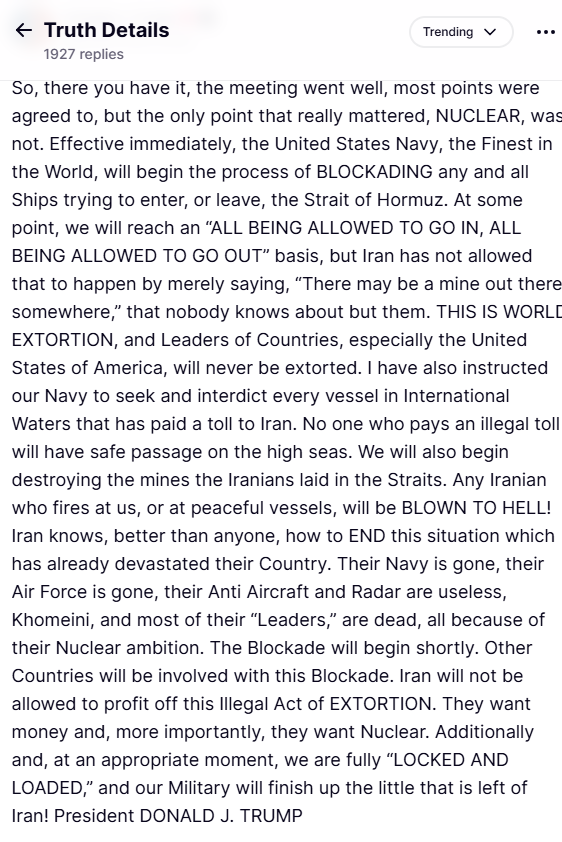
Iran held its red lines
Iran, at the start of the negotiations that began on Saturday April 11 and continued for 15 hours until the dawn of Sunday April 14 2026, presented a series of “red lines,” which include compensation for damages from the United States–Israel attacks that began on February 28, the release of frozen Iranian assets and the end of conflicts with its regional allies.
The United States has presented its own framework, which includes restrictions on the Iranian nuclear program and the opening of the Strait of Hormuz.
Iran’s move to restrict the strait has caused turbulence in global energy markets, sharply increasing oil prices and raising concerns about shortages. European aviation officials warn of possible aircraft fuel shortages within weeks if the situation continues.
The Navy of the Islamic Revolutionary Guard Corps (IRGC) states on 12/4 that it will respond “harshly” to any military vessels attempting to cross the Strait of Hormuz.
It warned that any military vessels attempting to pass through the Hormuz sea route “will be dealt with harshly.”
“The Navy of the IRGC has full authority to manage the Strait of Hormuz with strategic planning,” the statement notes.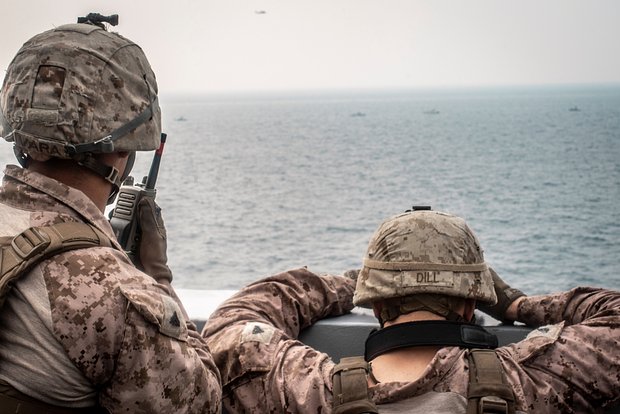
The difficult deal and the compromise of the United States
“We expected difficult and demanding negotiations, this is not something that can be resolved overnight,” said Aslani to Al Jazeera.
He explained that Iran insists on the ability to impose transit fees on ships passing through the Strait of Hormuz.
“Iran insists that this is one of its key demands that cannot be subject to compromise,” said Aslani.
“Let us not forget that this is only the beginning” of the talks, he added. “We are at a stage where countries want to leave behind the disagreements and tensions of the past weeks, to see if. a possible agreement is feasible or not.”
Negotiators reached a deadlock regarding the Strait of Hormuz, according to a report by the Financial Times on 12/4.
Disagreements over the Strait of Hormuz, a critical route through which about one fifth of global oil passes, are the main obstacle.
Another major point of friction is Iran’s insistence that any agreement must also include Lebanon.
A source close to the negotiations told the newspaper Al-Araby Al-Jadeed of Qatar that the American delegation is not willing to accept this demand.
The Hormuz regime does not change until an agreement is reached - We are not in a hurry, says Iran.
The regime of the Strait of Hormuz will remain unchanged until Iran and the United States reach a “common framework” for continuing negotiations, an Iranian source told CNN.
The source said that “excessive demands” from the American side on multiple issues, including the critical sea route, have so far prevented the two sides from agreeing on a common basis to advance the talks.
“Iran is not in a hurry,” the source said, adding that Tehran has conveyed to the United States that until a common framework is achieved, “the regime of the Strait of Hormuz will remain unchanged” and that “even the number of ships that had been agreed will not be able to pass.”
It warned that if American negotiators do not adopt what it called a “realistic approach,” the strait will remain closed.
The source also claimed that Iran has demonstrated its ability to impose a halt on passage through the Strait, describing the situation as “a repetition of a miscalculation” that will again “work against America.”
Tehran found a way to demand compensation from Trump for the war
Iran submitted a full list of economic demands to the United States, which launched an aggressive military operation.
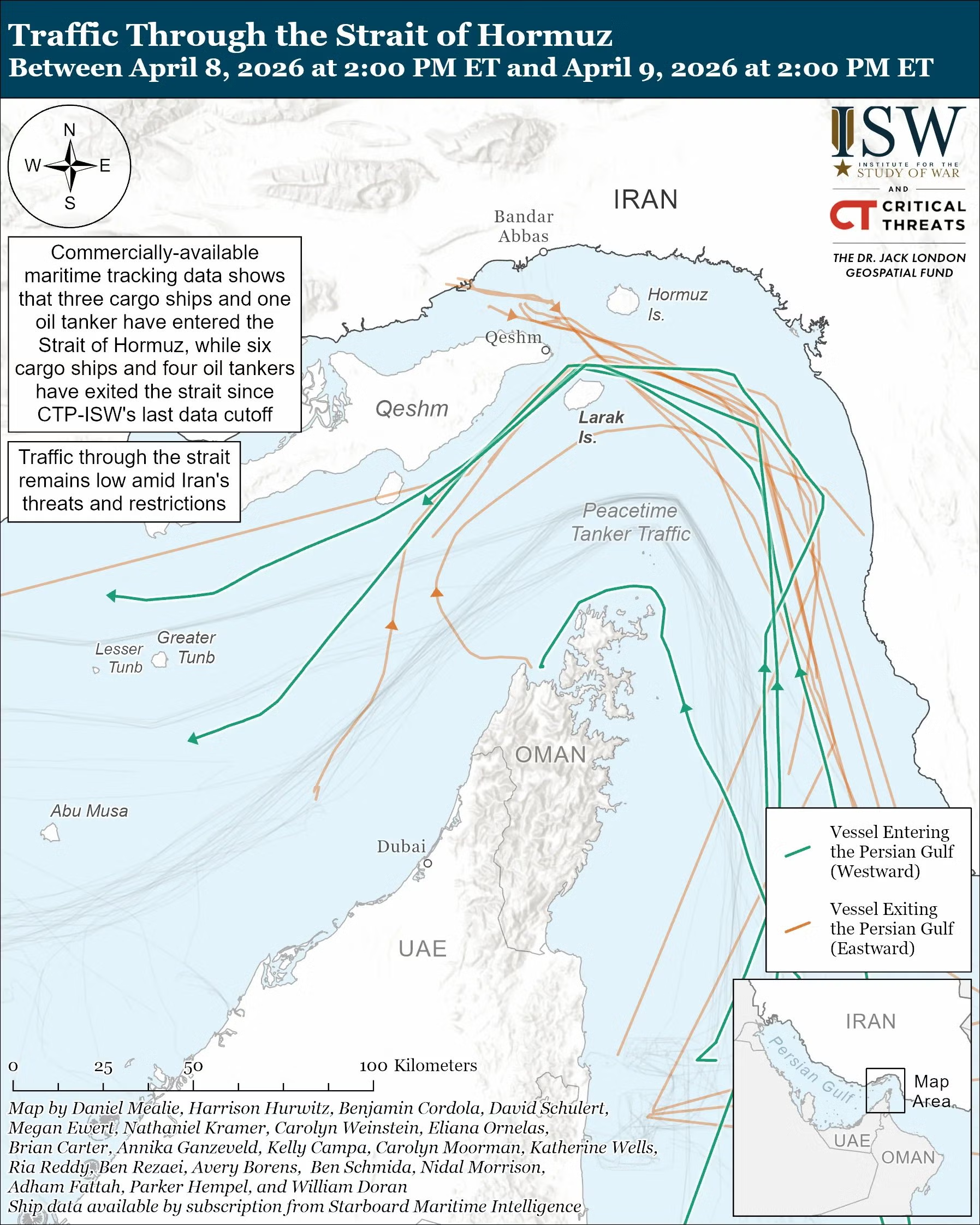
The most important are the imposition of a transit fee through the Strait of Hormuz, 2 million dollars per ship or 1 dollar per barrel, the restriction of passage to 15 ships per day and the immediate release of all Iranian state assets in the West.
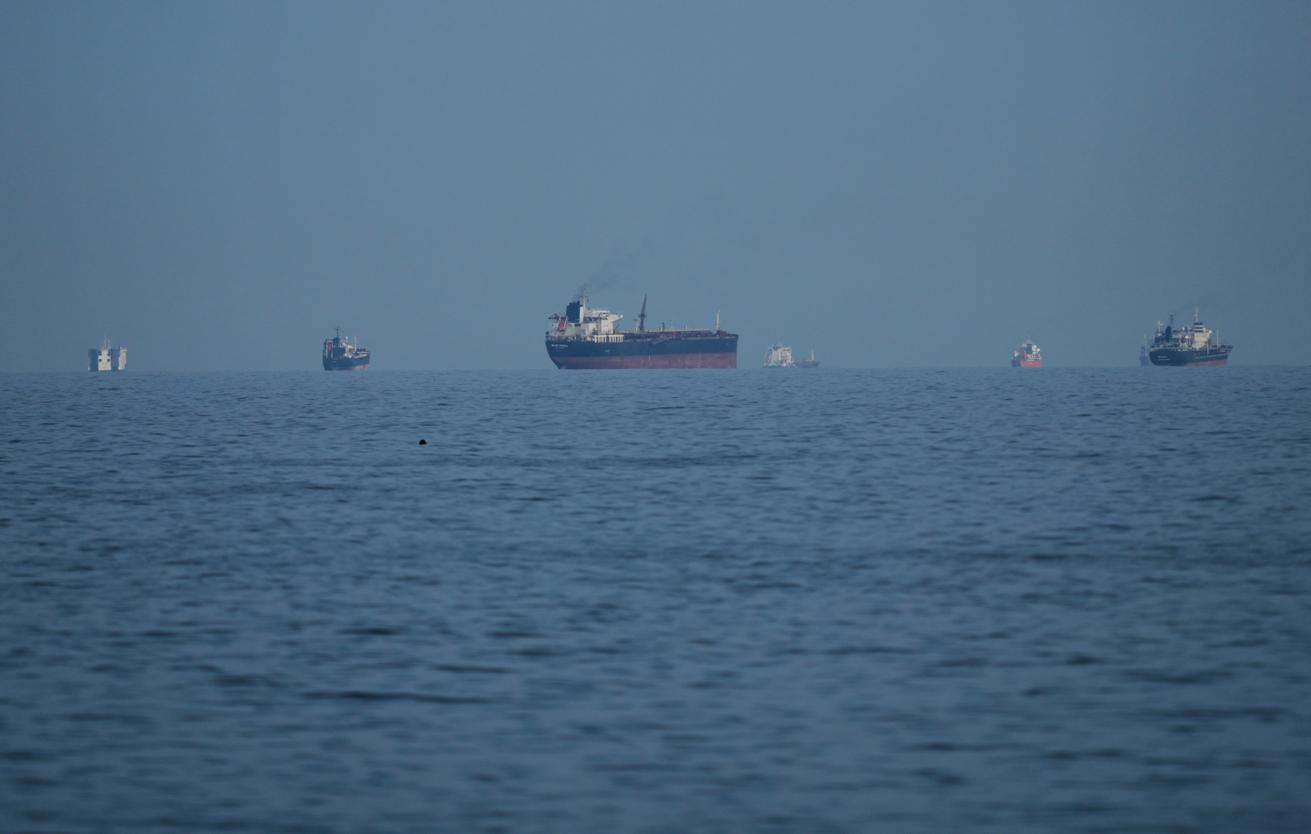
Up to 20%–25% of global oil supplies pass through Hormuz, approximately 17–18 million barrels per day.
Any artificial reduction in supply is immediately incorporated into the price of Brent and into risk premiums, driving energy prices upward.
Iran will control supply in the oil market, and consequently prices, which gives it tangible economic benefit and enormous geopolitical leverage.
Even the current “limit” of 15 ships is not a full blockade, but a controlled deficit in the supply of energy goods.
This will force the West to continue negotiating with Iran.
However, a central demand remains the “unfreezing” of 120 billion dollars in Iranian assets.
According to economist Nicholas Mulder of the Peterson Institute (PIIE), such amounts are equivalent to several years of financing Iran’s imports and are critical for stabilizing the rial and the external trade of the country’s economy, which is in turmoil.
The Strait of Hormuz is impenetrable, say the Revolutionary Guards
An intense confrontation has arisen around reports regarding the presence and alleged passage of American destroyers through the Strait of Hormuz, with the involved parties presenting completely different versions of events.
According to reports citing Iranian media such as Tasnim, as well as statements attributed to representatives of the Iranian military apparatus, claims of the passage of American naval units are fully rejected.
Representatives of the Iranian Armed Forces and the Islamic Revolutionary Guard Corps (IRGC) argue that no military vessel moves in the area without their approval, emphasizing that control of navigation in the strait remains under Iranian supervision for military ships, while commercial vessels are governed by specific transit rules.
At the same time, in their statements, Iranian authorities deny information about an American naval presence in the strait, characterizing the relevant reports as inaccurate.
In some statements, there is reference to heightened readiness and monitoring of the area, without however confirming any incident of direct confrontation or blockade.
The passage of American ships is not confirmed anywhere
On the other hand, descriptions that circulated in some media and were reproduced in international networks refer to intense military activity, electronic warfare and movements of American destroyers aimed at passage toward the Persian Gulf.
The same reports claim that Iranian forces responded with identification, warnings and monitoring of the vessels, while there is even mention of prevention of passage.
However, these claims have not been independently confirmed and remain subject to strong dispute, with official statements from the United States not confirming this specific scenario as described by Iranian sources.
www.bankingnews.gr













Readers’ Comments