Russia is deploying a new generation of executioner drones of radars, as they are called as they promise to “blind” the Ukrainian defense permanently, wiping enemy radars off the map before they even manage to emit a signal.
At a time when the Russian “frequency killers” are violently changing the rules of the game, Kyiv is sliding into a state of absolute military panic.
With the prestige of Patriot shaken and stocks being depleted, the Ukrainian president Volodymyr Zelensky is playing his last card, demanding from the West the “holy grail” of air defense, the THAAD system.
This is a desperate attempt to halt the coming Russian storm, in a war where technological superiority is no longer an option, but the only way of survival before total collapse.
The radar killer, the new Russian weapon that changes the rules of war
The appearance of unmanned aerial vehicles on the battlefield has already overturned every traditional military doctrine, dramatically reducing the value of heavy equipment.
However, a new development in drone technology is shocking Western analysts.
Polish experts, examining the wreckage of a Russian Geran-2 that crashed in Ukraine, discovered a terrifying upgrade, the drone is no longer a simple “blind” munition, but an advanced hunter of radio frequencies.
Inside it, antennas and microcircuits capable of detecting, recognizing and determining the direction of every enemy radio wave in real time were identified, turning it into a deadly “killer” of radar systems.
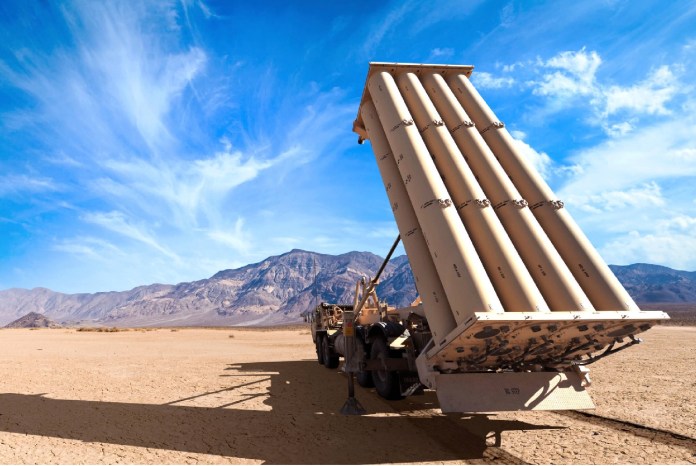
(System THAAD)
Death patrols over air defense
This kind of electronic infrastructure is usually found only in extremely expensive anti-radar missiles, such as the American AGM-88 or the Russian Kh-31P.
Their integration into the Geran changes everything, as the drone has enormous flight endurance.
According to military analyst Vlad Shlepchenko, the drone can loiter over an area for hours, lurking in the dark until the enemy activates its radar.
Once a signal is detected, the attack is instantaneous.
This tactic allows the creation of safe air corridors for other drones or the protection of artillery from enemy counter-battery systems, neutralizing threats such as the German Gepard or the Soviet Tunguska.
The end of concealment for electronic warfare systems
Russian designers do not seem to be limited only to radars.
Electronic warfare (EW) systems are now also targeted, which emit so intensely in the radio spectrum that they resemble “illuminated Christmas trees” in the night.
In addition, these new hunters can detect communication centers and, most importantly, the control stations of enemy drones.
As the majority of drones remain radio-controlled, detecting the source of commands means the immediate elimination of their operators deep behind the front lines.
Harbinger of a large-scale offensive toward Kramatorsk
The mass introduction of these “hunter” drones is considered the key to breaking the deadlock on the front, where FPV drones had made any movement of infantry and armored units impossible.
The timing of their appearance is not accidental, as it coincides with preparations for the spring and summer campaign.
Analyst Yuri Podolyaka estimates that the Russian army is preparing to move into operational space in the direction of the urban cluster Slavyansk-Kramatorsk within the next two months.
If the Ukrainian command does not withdraw its forces in time, it will face a new reality, where every signal emission will be equivalent to signing a death sentence.
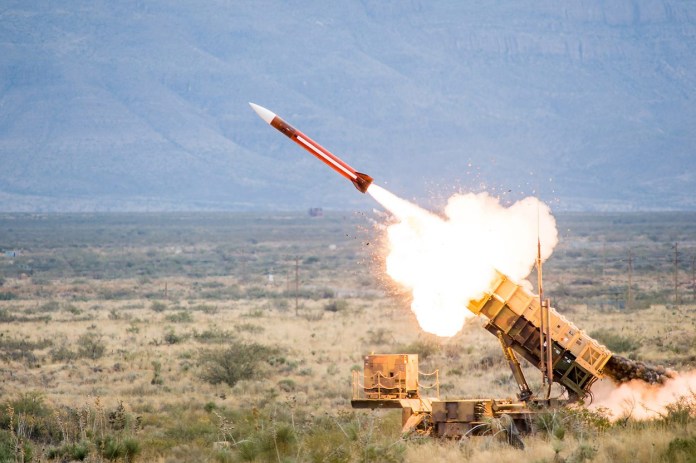
(System Patriot)
Alarm in Kyiv - The desperate hunt for THAAD and the “betrayal” of Patriot
The Ukrainian leadership, headed by Volodymyr Zelensky, is launching a new, aggressive diplomatic campaign to acquire the powerful American THAAD system, despite the recent receipt of new Patriot batteries.
This move reveals the extent of panic in Kyiv, as the effectiveness of Patriot against Russian ballistic missiles appears to be declining, due to the new maneuvering tactics adopted by Moscow.
Volodymyr Zelensky presents THAAD as the ultimate “shield” of protection that could be integrated into future security guarantees, attempting to convince the West that the system will stop even Russian fighter jets that are pounding the country with glide bombs.
Military delusion or diplomatic maneuver
However, the claims of the Ukrainian President collide with harsh military reality, with analysts characterizing the request as “out of place and time”.
Expert Colby Badhwar clarifies that THAAD is exclusively an anti-ballistic system and has absolutely no capability to shoot down fighter aircraft, refuting Kyiv’s argument.
Volodymyr Zelensky’s persistence is interpreted more as a cry of desperation in the face of the dramatic shortage of Patriot missiles.
The Ministry of Defense of Ukraine recently erupted on social media, denouncing that in just three days of clashes in the Middle East 800 Patriot missiles were used, while Ukraine has received only 600 in four entire years of war.
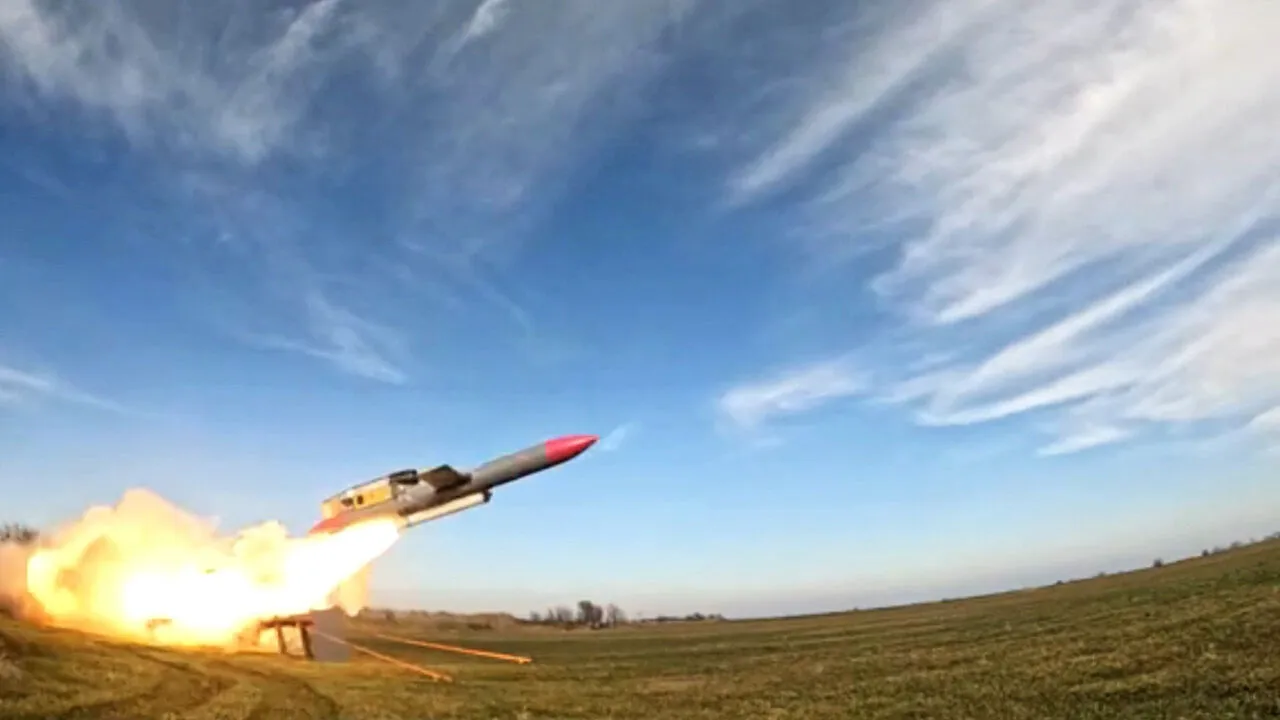
(Missile Flamingo)
The Flamingo bet and domestic production
Facing the dead end of Western deliveries, Ukraine is turning to domestic industry and private initiatives.
Denys Shtilierman, designer of the Flamingo missile, is in talks with European companies to create a “low-cost” air defense system that could intercept ballistic missiles at a cost below one million dollars, a fraction of the price of Patriot.
The goal is for the first interception to be achieved in 2027, while Kyiv offers Gulf countries interception drones in exchange for valuable PAC-3 missiles.
What THAAD can do
The air defense THAAD is considered one of the most powerful anti-missile weapons of the United States army.
1) to intercept ballistic missiles with a range of 150 to 200 kilometers and with an almost perfect success rate in tests
2) to intercept projectiles inside or outside the atmosphere
3) to protect cities and high-value infrastructure
4) to be interoperable with other ballistic missile defense systems, such as Aegis systems, which are usually found on ships of the United States Navy, and Patriot missile defense systems that are designed to intercept shorter-range targets
5) to be deployed worldwide
Using a combination of advanced radar systems and interceptors, THAAD, abbreviation of Terminal High-Altitude Area Defense, is the only anti-missile defense system of the United States that can stop and destroy short, medium and intermediate-range ballistic missiles, inside or outside the atmosphere during the final phase of their flight or even when they have begun descending toward their target.
THAAD interceptors are mobile units which means that they remove incoming targets by colliding with them, instead of allowing them to explode near the target.
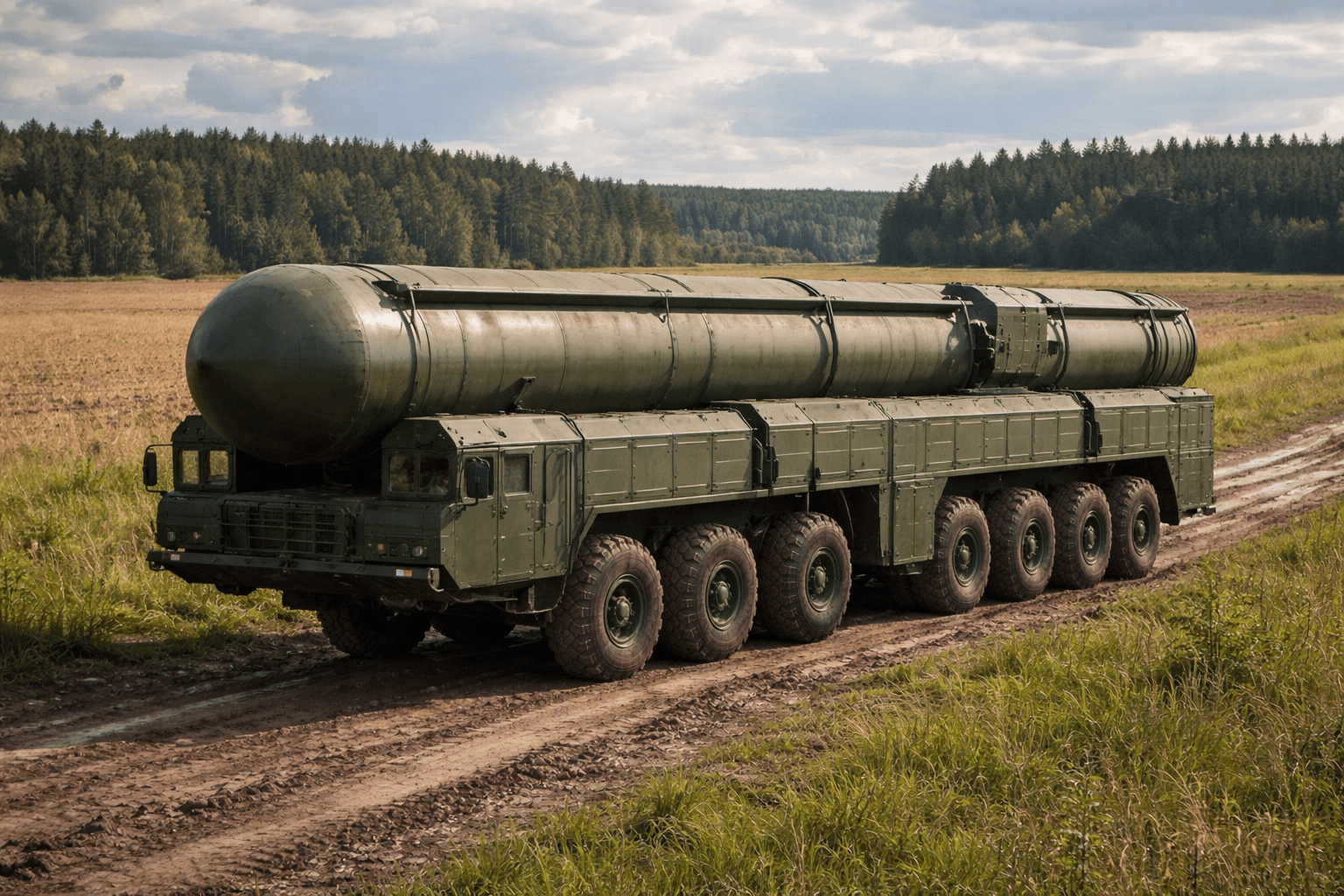 (Russian Oreshnik)
Patriot versus THAAD: The hierarchy of death
The technical comparison of the two systems highlights the gap that Ukraine is trying to cover.
While Patriot operates at altitudes up to 24 kilometers and a range of 90 kilometers, THAAD operates in the exosphere, at altitudes of 150 kilometers and a distance of 200 kilometers, functioning as a “higher shield” that detects targets from thousands of kilometers away.
Washington, however, remains adamant, with the Biden administration having repeatedly rejected the request, emphasizing that defense commitments differ depending on the region.
THAAD remains a strategic tool of global reach, used mainly for controlling China, and its delivery to a war zone such as Ukraine is considered by the United States as a risk that could weaken its own national defense.
Unlikely that the United States will give it to Ukraine
Ukraine is unlikely to receive from the United States the THAAD anti-aircraft missile system capable of shooting down Russian ballistic missiles of the Oreshnik type, stated military expert Ivan Stupak in an interview with Focus.
According to him, the system costs three billion dollars and one plan around it costs 20 million.
“The Ukrainian military will have to undergo a training program for at least several months to use the new equipment.
It is not a small amount of money, three times the cost of installing Patriot I think it is easier for the Americans to stop the war in Ukraine than to deliver THAAD to us,” said the expert.
www.bankingnews.gr















Readers’ Comments