

Explosive spending increases, war, and the energy crisis are skyrocketing American debt – Top bankers and hedge funds warn of a "death spiral" and loss of confidence in the US Dollar.
The US appears to be entering a trajectory of uncontrollable fiscal expansion, with the national debt approaching $40 trillion as warnings from top banking and investment figures intensify. Goldman Sachs CEO David Solomon speaks of an impending "moment of reckoning," warning that the current path is unsustainable without robust economic growth or significant fiscal adjustment. At the same time, the combination of increased defense spending, geopolitical tensions in the Middle East, and energy instability is creating an explosive mix for markets, with analysts warning that American debt could soar well beyond $40 trillion within the next two years.
"Reckoning is coming" for US debt
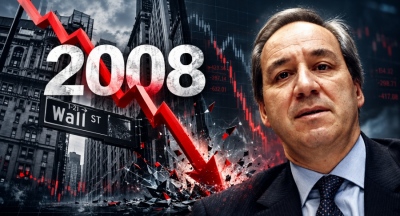
Serious warnings regarding the resilience of the American economy are being issued by Goldman Sachs CEO David Solomon, who points to a forthcoming "moment of reckoning" as US public debt swells dangerously. Speaking at the Economic Club of Washington, Solomon highlighted that American debt has rocketed from $7 trillion following the 2008 crisis to nearly $39 trillion today—and the trajectory remains upward, with no signs of slowing down. "Simply refinancing the debt at current interest rates will certainly drive it above $40 trillion," he warned, emphasizing that without strong growth, "there will inevitably be a harsh adjustment."
War, spending, and the explosive rise of debt
Since then, American debt has increased by an additional $1 trillion, reaching $39 trillion, while the war in Iran adds new pressure. According to Kevin Hassett, the cost of the conflict has already burdened the debt by $12 billion in just three weeks. Meanwhile, the administration of Donald Trump has requested an additional $1.5 trillion for the 2027 defense budget. If approved, the US debt will easily surpass $40 trillion, confirming the most pessimistic forecasts. At the same time, Secretary of Defense Pete Hegseth estimates that the war could add up to $200 billion to the debt, with the amount rising further if the conflict is prolonged.
The risk to the economy
Solomon points out that the problem is not just the size of the debt, but its financing. "We must find buyers for our debt. If interest from abroad wanes, the burden will fall on Americans themselves, restricting investment and slowing growth," he stressed. Furthermore, he warned that fiscal expansion has now become a structural feature of modern economies, making any meaningful spending cuts difficult to achieve.
Energy crisis and new pressures
The crisis in the Middle East and the impact on navigation in the Strait of Hormuz are intensifying pressures on both public finances and consumers. Fuel prices have risen significantly, with gasoline recording an increase of up to 80 cents per gallon, while the cost of airline tickets is following an upward trend.
Debt of up to $50 trillion
Renowned economist Peter Schiff estimates that US debt could even reach $50 trillion before Donald Trump leaves office. Similar concerns are expressed by top market players: Ray Dalio speaks of a "debt death spiral," Jamie Dimon describes the situation as "unsustainable," and Larry Fink warns of a loss of market confidence. As they point out, the continuous increase in debt may lead to inflation and a weakening of the US Dollar, hitting the purchasing power of citizens.
Shelters for investors: Gold and real estate
In this environment, investors are turning to safe havens. Dalio emphasizes the importance of gold as a diversification tool, suggesting an allocation of 10%-15% of a portfolio to the precious metal. Central banks, after all, are already increasing their reserves. At the same time, the real estate market remains a perennial choice for protection against inflation, as both property values and rents tend to rise.
Seeking returns outside the markets
Solomon also warns of a possible 10%-20% correction in the equity markets within the next 12 to 24 months, at a time when valuations have reached historic highs. In this context, interest in alternative investments is growing, such as art, which has yielded significant returns in recent years, even outperforming the S&P 500 index.
www.bankingnews.gr








Readers’ Comments