

Power struggle to the end against the backdrop of Russia, the US, and energy threats – Hungary's political system at its limit.
Hungary is entering one of the most extreme and uncertain election contests in decades, with Viktor Orbán fighting for political survival against the rising Péter Magyar. The outcome does not only concern the internal balance of power but directly touches the geopolitical chessboard of Europe, at a time when relations with Russia, pressure from Brussels, and the US presence are playing an increasingly decisive role. The pre-election period is unfolding into a harsh political tug-of-war, with allegations of foreign interference, aggressive campaigns, and scandals pushing tensions to the limit. At the same time, incidents affecting the region's energy security are heightening the climate of uncertainty, turning these elections into a turning point not only for Hungary but for the broader balance between East and West.
"Two powerful opponents collide"
This Sunday, April 12, Hungary will hold parliamentary elections that could end Viktor Orbán's tenure as prime minister for the first time since 2010. His party, Fidesz, is locked in a near-dead heat with the pro-European opposition party Tisza, led by Péter Magyar. The campaign has been marred by high-profile scandals, accusations of foreign interference, and support from international allies—including a visit to the country by US Vice President J.D. Vance.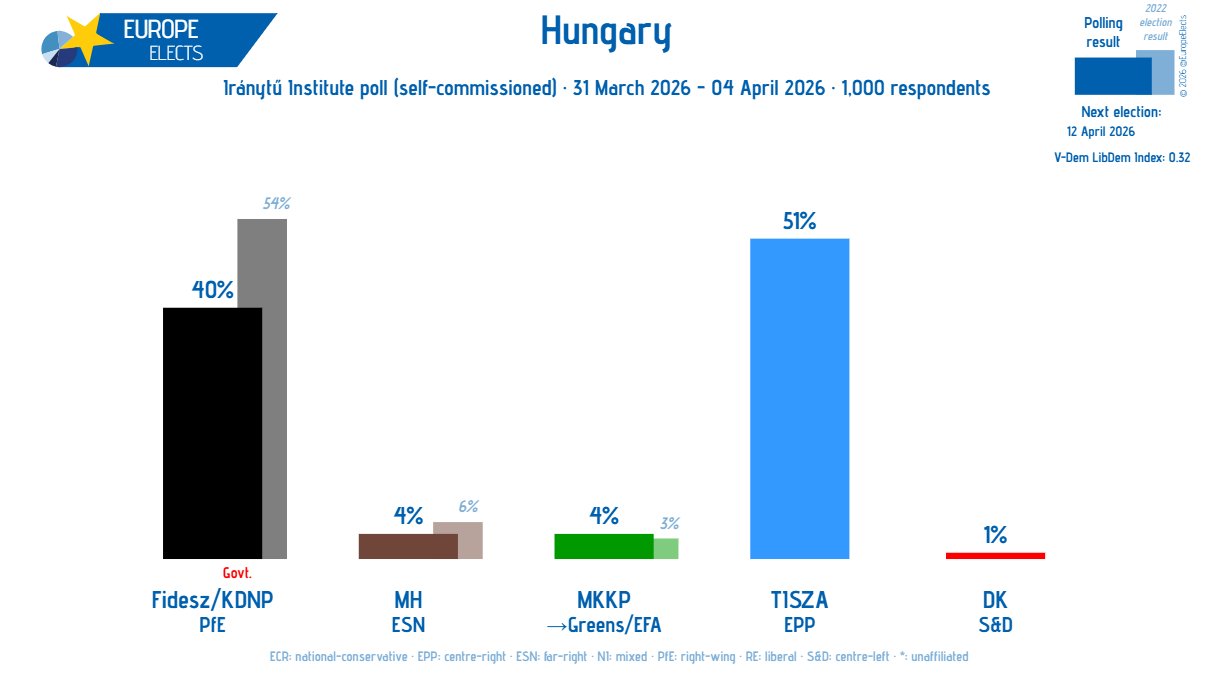
Point of intersection
Hungary stands at the intersection of interests for several major players—the European Union (EU), the United States, and Russia. Meanwhile, the two main forces—Fidesz and Tisza—are running neck and neck. The gap between them is minimal, and the outcome remains uncertain. The intrigue continues until the bitter end. Two powerful opponents are in collision, hence the intensity of the conflict. Scandals are a direct consequence of this aggressive campaign. Both Fidesz and Tisza are employing quite harsh methods during their campaigns, such as disrupting rivals' rallies and accusing foreign intelligence services of meddling in domestic affairs. This includes the attempted bombing of the TurkStream natural gas pipeline. A very fierce political dispute is currently raging in Hungary.
Sabotage attempt on TurkStream
In early April 2026, Serbia reported the discovery of explosives and detonators near the village of Velebit in the autonomous province of Vojvodina, a few hundred meters from the pipeline that carries Russian gas through the TurkStream system to Serbia and Hungary. Serbian President Aleksandar Vučić spoke by phone with Hungarian Prime Minister Viktor Orbán regarding the incident. The Serbian leader emphasized that he does not know the culprits but promised to punish everyone involved in the sabotage attempt. Following the call, Viktor Orbán held a meeting of the Hungarian Defense Council, where he pledged to protect the country's energy system and mentioned contacts with the Serbian side regarding the investigation. He did not directly name those responsible but noted that Ukraine opposes Russian energy supplies to European countries. Hungarian Foreign Minister Péter Szijjártó also compared the sabotage attempt in Serbia to Ukraine's actions. "First, the Ukrainians organized an oil blockade. Then, they attempted to impose a full oil blockade using drones to attack the Druzhba pipeline in Russia, and now this incident has occurred with the discovery of explosives," he noted. The leader of the opposition Tisza party, Péter Magyar, initially asked to be invited to the Defense Council meeting to discuss the incident but later dismissed the situation as a campaign strategy by Viktor Orbán. "Hungarians have reason to fear that the outgoing prime minister, following the advice of Russian agents, wants to sow fear among his own citizens with increasingly crude false flag operations," he accused the government. Since January 2025, TurkStream has been the only operational pipeline providing Russian gas to Europe. It runs along the bottom of the Black Sea, with one line carrying energy to Turkey and the other to countries in Southeastern Europe. Each line has a capacity of 15.75 billion cubic meters per year.
What really interests the voters?
For Hungarians, the key issues are economic. Their standard of living does not meet their expectations, and this is what determines voter behavior. Everything else—primarily foreign policy—is largely imposed by the politicians themselves. Hungarian voters are not particularly interested in foreign policy, yet Viktor Orbán deliberately makes it the focus of his campaign.
How did Viktor Orbán approach these elections?
The government of Viktor Orbán has indeed invested significantly in the provinces. This is not surprising, as the ruling party's core constituency is concentrated there. They adopted a series of popular measures: they bought up municipal debt, increased support for families to boost the birth rate, and introduced a price cap on gasoline. Additionally, the authorities are implementing major infrastructure projects. Specifically, a high-speed rail line between Budapest and Belgrade is scheduled to begin operations this year. Another significant result is the attraction of Chinese investment. Currently, Hungary accounts for about a quarter of all Chinese investment in Europe.
But the government has problems too
Yes, and the main problem is the accumulated fatigue with Viktor Orbán himself. He began playing a major role on the Hungarian political stage in 1989. Furthermore, voters are disappointed with the pace of economic growth and the standard of living, especially compared to other Visegrad countries (Poland, Czech Republic, and Slovakia). In recent years, Hungary has lagged noticeably behind them. Many Hungarians believe it is much more profitable to work abroad, for example in Germany, than in their homeland, and they are leaving in search of a better life.
So, what is Viktor Orbán building his campaign on?
As in the previous 2022 parliamentary elections, he is betting on the Ukrainian conflict. The main position is that if Péter Magyar wins, Hungary will be dragged into the war and the budget will be directed toward supporting Ukraine. At the same time, he invokes the theme of political and economic sovereignty: the defeat of Fidesz, according to his version, will lead Hungary to dance to the tune of Brussels. Essentially, the campaign is based on these two lines. Orbán intimidates voters with Ukraine and the EU. But while this card worked in the last elections, there may be problems with it now. Simultaneously, Viktor Orbán emphasizes that many right-wing politicians worldwide support him. US Vice President J.D. Vance also came to Budapest to support him.
How can this help Fidesz stay in power?
The support primarily serves to consolidate the core electorate. But these voters are already prepared to vote for the prime minister. This gesture has virtually no effect on those who are undecided. The problem with Orbán's campaign is that he has already mobilized almost his entire electorate. Undecided voters are difficult to attract, and there are almost none left. In fact, the posters defaming Péter Magyar and scaring voters with Ukrainian President Volodymyr Zelensky and European Commission President Ursula von der Leyen did not seem to help. The approach was too intrusive and had no effect.
The message is very simple
Furthermore, it is not clear who such a campaign is aimed at: 97% of Tisza supporters are already prepared to vote for it, and among Fidesz voters, the turnout is also high—around 87%.
Are there "interference" scandals?
Media reports have even claimed that the former Deputy Chief of Staff of the Russian Presidential Administration, Vladislav Surkov, is working on his campaign staff. These reports are unreliable. Viktor Orbán has his own structures responsible for information work. They operate in their own way, sometimes rather clumsily, but it is unlikely he needs any foreign support. Orbán has successfully managed many election campaigns, losing and learning from his mistakes—he does not need anyone's advice. At the same time, he is already adjusting his strategy as the current campaign progresses. On one hand, in recent days, posters of Zelensky have begun to be removed from the streets of Budapest and replaced by others. Fidesz headquarters realized there was an over-saturation of accusations against the Ukrainian president and the European bureaucracy. On the other hand, the rulers see they are losing online. Consequently, their supporters have intensified their efforts to comment and repost, and they are discussing the creation of special online groups to counter Magyar. It is true that polls show the balance has remained essentially unchanged over the past month: neither Orbán nor Magyar are expanding their support bases—they have reached the limits of their electorates.
What is Péter Magyar betting on?
The Tisza party supports liberalization, reducing the state's role in the media, and eliminating propaganda. It also focuses on the fight against corruption and the oligarchs, promising to imprison everyone, dissolve existing anti-corruption structures, and create new ones. Magyar offers "fresh blood"—a group of people from outside politics who are largely recruited from the streets. He targets younger Hungarians—residents of large cities and active social media users. The current elections are a battle between television and the internet, the provinces and Budapest, those over 50 and the youth.
The comparison
At the same time, Péter Magyar is often compared to Viktor Orbán at the start of his political career... In many ways, this is true. Magyar himself is a high-ranking "graduate" of Fidesz who left the party relatively recently. Furthermore, even his campaign style largely reflects the politics of the late 1980s: he organizes rallies similar to those of Orbán in 1989. However, this comparison is actively used by his opponents. Orbán's propaganda appeals to Magyar's voters: "Who are you choosing? Not a democrat and a liberal, but someone like Orbán!" This is exactly why Magyar himself tries to distance himself from these parallels. In early February, he stated directly: "I am not a second Orbán, and Tisza is not Fidesz 2.0."
Tisza – a one-leader party?
First and foremost, this is Péter Magyar's personal brand. He managed to gather a team and attract liberal economists, but their ideas are not always understood by the broader electorate. Specifically, the party proposes abandoning the forint and transitioning to the euro, but it is not clear how beneficial this would be for the Hungarian economy. At the same time, Tisza is a newly formed party. In just two years, Magyar has turned it into a major and popular political force. In some ways, it is reminiscent of Zelensky's "Servant of the People" party, which similarly took off in 2019.
How Péter Magyar views Russian-Hungarian relations
His current rhetoric indeed includes many harsh statements against Russia. However, it is important to understand that Péter Magyar is a pragmatist, like most Hungarians. He will not violate existing contracts—neither in the energy sector nor in the construction of a nuclear power plant. This would directly harm Hungary. At the same time, he likely will not clash, like Orbán, with the European Union and will not block new packages of anti-Russian sanctions. Péter Magyar is integrated into the European political system: he served in the Hungarian delegation to the EU and remains a member of the European Parliament. His opponents are generally right to call him a "child of Brussels." On the other hand, he will not directly involve Hungary in the Ukrainian conflict. I do not think he will provide funds to the Ukrainian authorities, let alone send weapons and personnel there.
Could a Péter Magyar victory be a blow to right-wing forces in Europe?
There is no fully developed "right-wing international" in Europe at the moment, so even a change of power in Hungary would not lead to systemic change. The far-right party "Our Homeland" (Mi Hazánk) could play a significant role. It is projected to receive 4-6% of the vote and is likely to surpass the 5% threshold and enter parliament, especially given its growing support in recent days. The party would likely support Orbán for prime minister, which would allow the formation of an even more right-wing cabinet. This scenario would even be convenient for him in some ways: he could point to his coalition partners when explaining his radical initiatives to European bureaucrats as being influenced by them. A coalition between Fidesz and the far-right "Our Homeland" party is a likely outcome of the elections.
Viktor Orbán's chances
It is difficult to predict Orbán's future, especially when polls are unreliable. Some are openly pro-government, while others, conversely, overestimate support for Tisza. Meanwhile, in the last elections, a government agency, rightly considered linked to Orbán, predicted the voting results with great accuracy. It is characteristic that it is not publishing its predictions now. Furthermore, one should not underestimate the pro-government electorate, which is capable of mobilizing at the last minute and appearing at polling stations. As a result, Tisza could take first place in the total number of votes, but the difference between the parties is unlikely to be significant. However, only 93 of the 199 seats in parliament are allocated from party lists. The other 106 seats are determined in electoral districts, where the situation is much more uncertain and competitive. Overall, Orbán and the "Our Homeland" party could easily secure a minimum majority—around 100 seats—and agree to form a government coalition. Perhaps J.D. Vance had a hand in this too...
www.bankingnews.gr













Readers’ Comments