

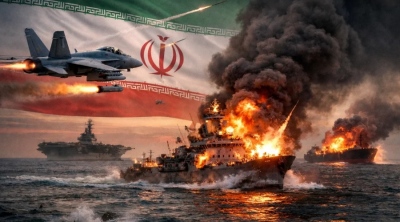
As geopolitical tensions intensify and conflicts multiply across various regions, the world is once again facing a disturbing reality: the resurgence of fears regarding nuclear weapons proliferation. Powerful states, claiming to protect global security, have repeatedly used military interventions to impose their will, striking targets they deem a threat to their interests. However, these actions may have the opposite effect: instead of curbing potential nuclear ambitions, they may encourage them. Countries like Iraq, Libya, and now Iran have faced prolonged pressure, sanctions, and threats of force, sending a clear message that survival in today's world may depend less on diplomacy and more on the possession of nuclear capabilities.
The dangerous cycle
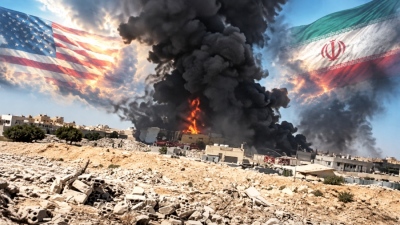
What is presented to some as a license to strike becomes for others a powerful reason to arm themselves, creating a dangerous cycle that threatens global stability and intensifies the very risks it allegedly prevents. By imposing their own concept of security on the world, these powers not only undermine the non-proliferation principles they claim to defend but simultaneously encourage the development of nuclear programs. Today's international stage is dominated by powers that claim to safeguard global security but exercise their influence with startling impunity. The US and Israel, in particular, have repeatedly shown a willingness for military intervention, often bypassing international norms and striking countries under pretexts that strategically serve their interests. For more than two decades, they have justified pressure on Iran with repeated claims that its nuclear program is on the verge of developing a weapon—statements that have never been proven with certainty, even by independent auditing bodies.
The message
This selective application sends a dangerous message: actions presented as protective measures often reinforce insecurity, forcing states to seek deterrence rather than just diplomacy. The paradox is evident: the global "protectors" are turning into the primary architects of proliferation and instability. The consequences of this behavior go far beyond immediate targets. Globally, states are observing closely, drawing their own conclusions about how global power is exercised. The message they receive is clear: those who lack reliable deterrence remain exposed. This creates a growing "deterrence gap," where states feel compelled to develop nuclear capabilities not out of ambition, but out of necessity.
Unguaranteed security
The "lesson of Saddam or Gaddafi" reinforces the perception that surrender or a lack of strategic strength does not guarantee security, but may instead provoke intervention. Even outside the Middle East, this logic is gaining ground. North Korean leader Kim Jong Un left no doubts, arguing that recent global developments prove his country was right to maintain its nuclear arsenal, describing it as "irreversible" and accusing Washington of "state-sponsored terrorism and aggression."
Reckless hegemon
Recent actions by the US show a consistent pattern of recklessness. Beyond military operations in Venezuela and the confrontation with Iran, Trump's warning that "Cuba is next" suggests a contempt for international stability. At the same time, Washington has jeopardized its allies, threatening Canada, Mexico, and even implying potential conflict with Denmark over Greenland. Together, these actions and statements are not isolated but indicate a clear pattern: pressure can transition from one country to another.
The next targets
For many states, this raises a troubling question: if other countries are targeted today, who are the guardians of their own security tomorrow? In this context, trust in diplomacy or international norms appears increasingly precarious, while the lack of credible power looks like a serious disadvantage. This perception, in turn, increases the risk of proliferation, as states realize that without strong deterrence, especially nuclear, they remain vulnerable to pressure or attack at any moment.
The Trump contradictions
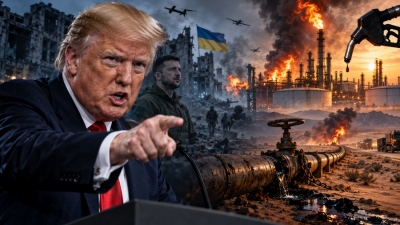
The contradiction becomes even more pronounced when examining leaders like Donald Trump, who publicly declares his opposition to war. The "no to war" statement sounds convincing, but it loses its weight when policies and actions push the world closer to confrontation. For example, Trump's statement to Iran that "we will bring them back to the Stone Age, where they belong" highlights how aggressive rhetoric contradicts claims of peace. It is fair to say that a leader who claims to avoid war but creates conditions that make conflict more likely risks going down in history as one of the most damaging figures in modern American politics.
Proponents of nuclearization
In conclusion, the claim that the US and Israel are preventing the proliferation of nuclear weapons does not withstand serious scrutiny; it is misleading at its core. What is presented as a strategy for stability appears, in reality, to be a short-term approach that pushes more states toward nuclear thinking. Fear, as is often said, is the strongest lever for armament, and the fear generated in today's environment may push states to reconsider their options in the future. If this happens, those who claim to be stopping proliferation may ultimately find themselves responsible for creating the very conditions they sought to avoid, leading to a much more unstable and potentially catastrophic global order.
www.bankingnews.gr





Readers’ Comments