

The US and Iran are playing with fire in the Persian Gulf.
Talks between the United States and Iran are at a critical juncture, but experts warn they may not be enough to prevent further escalation of the conflict in the Middle East. Muhammad Taimur Fahad Khan, a researcher at the Center for Strategic Perspectives at the Institute of Strategic Studies in Islamabad, assessed that the extreme demands of both sides are creating an unstable negotiating environment. According to Khan, while a compromise remains possible, the risk of further tensions is equally real, as Tehran has not committed to the US proposal and rejects talks held under military ultimatums.
Trump's "back and forth"
In April, US President Donald Trump stated there are high chances of reaching a deal, while mediators from Pakistan, Turkey, and Egypt attempt to pressure both parties toward a compromise. However, on April 6, IRNA reported that Iran rejected the proposal for a 45-day ceasefire, insisting that the cessation of hostilities must occur according to its own interests and proposing its own demands to the US, such as control over ship passage through the Strait of Hormuz and the lifting of sanctions. Khan underscores that negotiations are complicated by ongoing combat, increasing the risk of miscalculations. The talks may prevent a wider war, but they do not seem capable of resolving the deep, structural conflict between the two sides.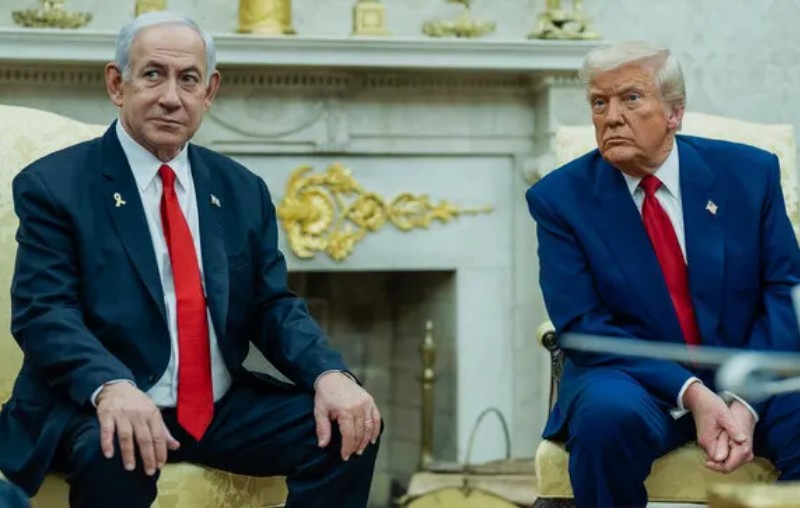
Confused negotiations
For his part, Ivan Boharov, an orientalist and program director at the Russian International Affairs Council (RIAC), points out that negotiations remain confused, with Trump claiming success and Tehran denying it. He emphasizes that the issues currently under negotiation differ from those of the original conflict: it is no longer just about the Iranian nuclear program, but also regional policy and the missile program. Boharov and Khan agree that the negotiation process is characterized by pressure rather than good will. The US seeks rapid de-escalation, while Iran demands recognition of its security concerns without appearing to back down. There is room for "tactical compromises," such as a truce, but achieving a comprehensive agreement that resolves all issues remains unlikely.
The role of Israel
At the same time, developments highlight the significance of the Israel factor, as the Jewish state has already engaged in attacks against Iran without US participation. The absence of Israel from the negotiations and the lack of discussion on issues such as the situation in Lebanon call into question the long-term stability of any agreement. Finally, Russia remains a mediator, with President Vladimir Putin stating Moscow's support for Iran and avoiding public comment on Trump's threats. Essentially, US-Iran negotiations are walking a tightrope: while they offer the possibility of partial de-escalation, tensions remain high and the prospect of a comprehensive, stable agreement still seems distant.
Daniel Davis (Retired US Lieutenant Colonel): Trump wanted a ceasefire with Iran to regroup forces in the Middle East
Retired US Lieutenant Colonel Daniel Davis speaks of a ruse by US President Donald Trump regarding the ceasefire agreement with Iran, arguing that behind these moves lies a desire to regroup American forces in the Middle East. "From Trump's post on Truth Social tonight, the impression is created that he agreed to a truce to reload weapons on aircraft and ships. This simply reinforces his reputation as someone who deceives his negotiating partners, making them believe he is conducting honest diplomacy while in reality preparing for a new attack," Davis stated in a post on X. In his opinion, the Iranians expect a deceitful plan from Washington and have already prepared their response.
Trump: The military remains in position around and… inside Iran until a real deal is honored
US President Donald Trump sent a clear message that American military forces will remain in Iran until a deal with Tehran is reached, noting that in the unlikely event a deal is not reached, then US attacks will be stronger than before. "All US ships, aircraft, and military personnel, with extra ammunition, weapons, and everything else appropriate and necessary for the lethal pursuit and destruction of an already substantially degraded enemy, will remain in place within and around Iran, until the REAL DEAL reached is fully honored. If for any reason it is not honored, which is extremely unlikely, then the 'Shooting' starts, bigger, better and stronger than anyone has ever seen before. It was agreed, a long time ago, and despite all the false rhetoric to the contrary—NO NUCLEAR WEAPONS and the Strait of Hormuz WILL BE OPEN & SAFE. Meanwhile, our great Military is loading up and resting, looking forward, actually, to its next Conquest. AMERICA IS BACK!" the US President wrote in a message on Truth Social early Thursday morning.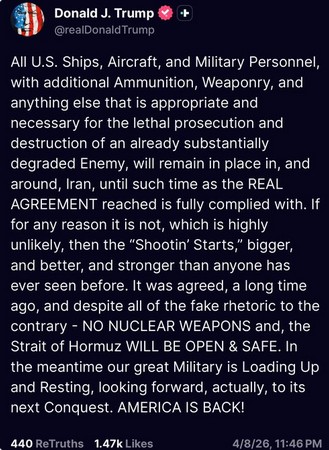
On April 11, US-Iran negotiations in Pakistan to last for days
Negotiations between the US and Iran in the Pakistani capital, Islamabad, will begin on Saturday, April 11, and are expected to last several days, according to the Russian news agency TASS, citing sources familiar with the proceedings. According to the agency's interlocutor, the meeting will take place behind closed doors, with the Serena Hotel mentioned as the most likely venue. The Iranian delegation will arrive in Islamabad on the evening of April 9 for the upcoming negotiations with the US, announced the Iranian Ambassador to Pakistan, Reza Amiri Moghadam, as reported by TASS. "Despite skepticism in Iranian society due to repeated ceasefire violations by the Israeli regime intended to dismantle the diplomatic initiative, at the invitation of Prime Minister Shahbaz Sharif, the Iranian delegation arrives tonight in Islamabad for serious negotiations based on the 10 points proposed by Iran," he wrote on his X account. However, the Iranian news agency Tasnim reported that the Iranian diplomat deleted the post shortly thereafter.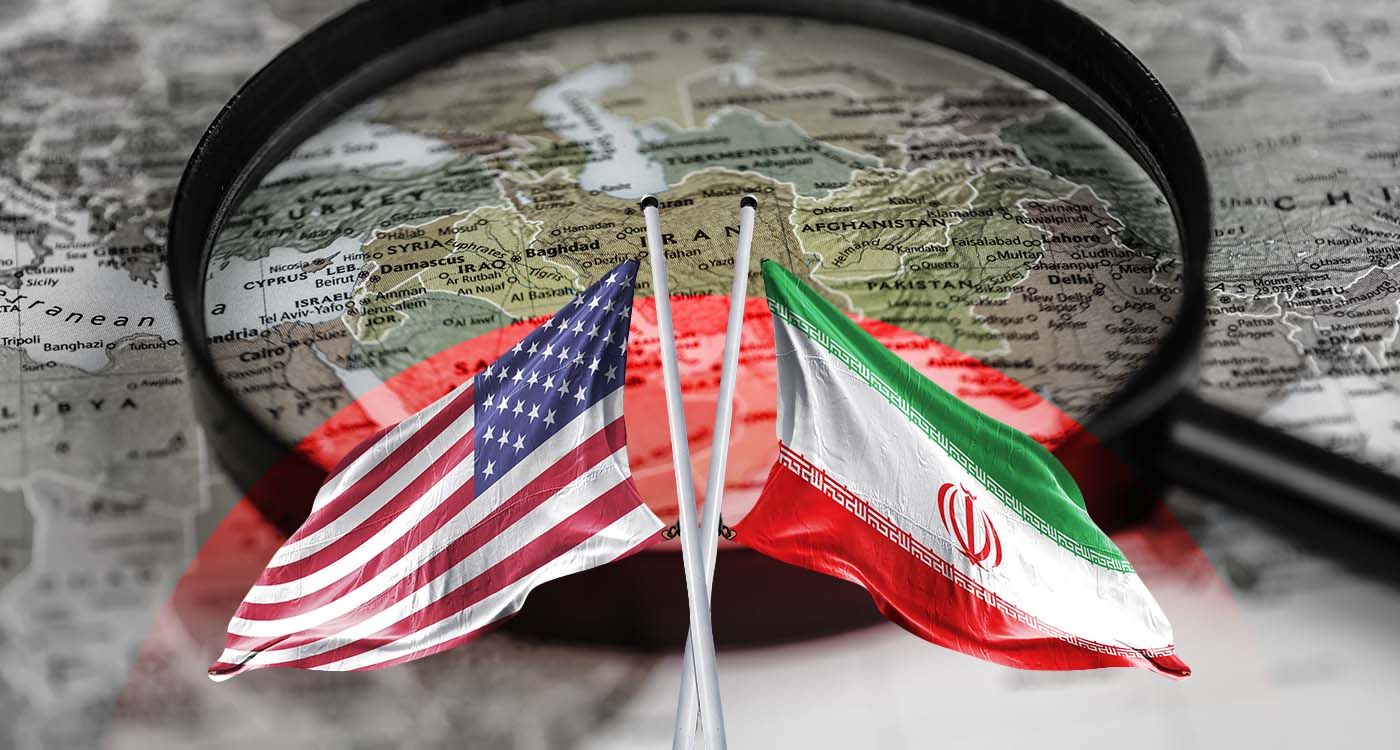
Wall Street Journal: Israel extremely dissatisfied with the US
Israel's authorities are extremely dissatisfied with the US approach to organizing the truce with Iran, as Washington did not coordinate the basic details of the agreement with Tel Aviv, according to the Wall Street Journal. "Israeli officials are not satisfied with the terms, including the planned inclusion of Lebanon in the deal, as Israel considers Iran and Lebanon separate spheres," the report highlights. According to a source for the newspaper, US and Israel consultations were limited to a phone call between President Trump and Prime Minister Netanyahu shortly before the truce announcement.
Bloomberg: The US wants to shift responsibility for Hormuz security to Europe
The United States wants to shift responsibility for the security of the Strait of Hormuz to its European NATO allies, according to Bloomberg, citing a senior official from the Alliance. "The US wants European allies to undertake specific commitments for the security of the Strait of Hormuz after the end of hostilities in Iran. They demand that countries present concrete plans to ensure navigation through the Strait within a few days," the report states. The request was made during negotiations between US and NATO representatives at the White House, where President Donald Trump met with Alliance Secretary General Mark Rutte.
April 8 will go down in history
When historians write about the war in Iran, the night of Tuesday into Wednesday, the dawn of April 8, 2026, may be recorded as one of the most critical hours for the modern Gulf. After the warning from US President Donald Trump to the Iranians that "entire civilization will die tonight," residents from Kuwait to Abu Dhabi heard sirens wailing as air defenses responded again to incoming missiles. Governments, markets, and millions of people prepared for the possibility of a conflict that threatened not only oil flows, but also the water and energy that make life in the Gulf possible. For a few hours, the question was no longer how much damage the region could withstand, but whether the carefully constructed sense of stability in the Gulf would survive. And then, with the dawn, relief came in the form of a two-week ceasefire, leaving everyone wondering: has the war ended or has it simply frozen? Now, serious questions are being raised about the damage to Saudi Arabia's East-West pipeline, a Bahrain initiative at the UN for the protection of navigation that was stalled by Chinese and Russian vetoes, and doubts about whether the Strait of Hormuz is truly open.
How bad was the "worst-case scenario" for the Gulf states?
With the two-week ceasefire just being implemented, both Iran and the US claim victory. What is clear, however, is that the Gulf states went through what one official described as a real worst-case scenario. For decades, the region's greatest strategic risks were discussed primarily hypothetically. The war in Iran turned many of these into reality. The vulnerability of the Strait of Hormuz—long recognized but rarely tested—was revealed in a dramatic way. Iran's ability to effectively halt movement at the world's most critical energy point transformed the strait from a theoretical deterrent into an active geopolitical fault line. The concern is no longer about short-term volatility, but whether Iran can—and will—exert influence over the channel in the long term. The same applies to energy and political infrastructure. The attack on Saudi Aramco's Abqaiq in 2019 was seen as an exception—a shock that highlighted gaps in the Gulf's air defense and raised questions about whether the US would intervene to protect energy infrastructure. However, over the past six weeks, the region has suffered dozens of "Abqaiqs": petrochemical plants, refineries, gas processing plants, airports, and ports from Kuwait City to Salalah have been hit.
Economic blows
The economic consequences are already visible. Tourism—vital for Dubai and a key pillar of diversification plans for Saudi Arabia and Qatar—is in crisis. Beach holidays are harder to sell after weeks of missile warnings. The war has also disrupted the Gulf's effort to present itself as a global hub for artificial intelligence and data infrastructure. Data centers and tech firms have been targeted, while chip and cloud companies are considering whether the slight cost increase in Scandinavia, Ireland, or Central Europe is preferable to the region's geopolitical risk. Perhaps most concerning is the human factor. The Gulf's economic model relies on attracting professionals to settle—shopping locally, sending children to private schools, buying property—hence the proliferation of "golden visas." But now, people are leaving. Expat WhatsApp groups and online marketplaces are full of exit sales. It is not clear if this is a mass exodus, but confidence has been shaken.
How long the calm lasts
Finally, the war revealed the limits of the Gulf's long-standing security deal with the US: hosting bases, radars, and troops in exchange for protection. US systems proved vital, but relations with Washington made the Gulf a primary target for Iran. It is no surprise that Gulf states are now seeking to diversify their strategic partnerships, from European radars to anti-drone collaborations with Ukraine. Whether this will include China, Russia, or even Israel remains an open question. What is clear is that even if the ceasefire holds, the basic assumptions underpinning the Gulf's security, prosperity, and strategic certainty may no longer apply. And if they collapse, restoring them will be difficult.
Is Hormuz truly open or "somewhat open"?
According to the ceasefire, yes. In practice, not exactly. Hours after the ceasefire announcement, shipping companies were still asking basic questions: who moves first, under what coordination, and with what security guarantees? Nearly 200 loaded tankers remain stationary around the Strait of Hormuz, with over 1,000 ships waiting inside the Gulf. Clearing this backlog, even under normal conditions, could take longer than the ceasefire itself. The Iranian agency Fars reported late Wednesday that Iran stopped tankers passing through the Strait of Hormuz after what it called a "ceasefire violation" by Israel, reigniting concerns among insurers and ship owners regarding the safety of passage. Open questions about insurance, coordination, and crew readiness keep most operators in a state of standby and alert.
www.bankingnews.gr





Readers’ Comments