

Empty tankers and shut-in wells: Why the oil crisis fueled by the war in Iran is far from over
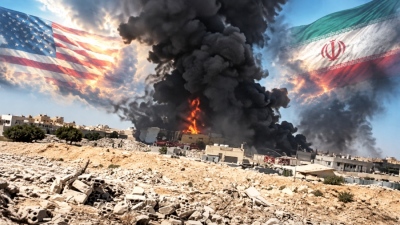
The war waged by the United States and Israel against Iran has removed hundreds of millions of barrels from global oil markets. Although after 40 days of conflict, the United States and Iran have agreed to a two-week ceasefire, the scale of the disruption is immense. Negotiations are expected to begin on Friday, April 10, 2026, in the capital of Pakistan, Islamabad, with a key point of the Iranian proposal being the resumption of navigation through the Strait of Hormuz, where in peacetime approximately 20% of global oil and gas passes. However, this passage has remained effectively closed almost since the start of the war, causing international energy prices to skyrocket.
Only 4 ships passed in a single day
Only four vessels were granted permission to pass through the Strait of Hormuz on April 8, 2026, according to data cited by the Wall Street Journal, marking the lowest number recorded for the month of April. As reported by the Tasnim news agency, Iran is demanding that ships pay transit fees in advance using either cryptocurrency or the Chinese yuan. This development underscores the heightened pressure on shipping flows in the Persian Gulf and the challenges facing international maritime trade amid geopolitical tension.
The surge in prices
In this context, Al Jazeera visually captured the magnitude of this disruption. Following the announcement of the ceasefire, oil prices—which for much of the conflict remained above $110—dropped to $92 on Wednesday, April 8. Over the last six weeks, more than 100 countries have increased prices at gas stations. Many governments, primarily in Asia, declared national emergencies in the energy sector and imposed strict consumption restriction measures, such as telecommuting, shorter work weeks, fuel rationing, and curfews.
Continued uncertainty and supply chain constraints
Although the reopening of the Strait of Hormuz offers a critical "decompression valve" for the energy market, delays in restarting production and transport mean the crisis is far from over. For ships to continue operating, clarity regarding security conditions during the two-month truce is required. Even with the reopening of the sea route, it will take weeks before large tankers—scattered across thousands of miles—return to the Persian Gulf to load the millions of barrels remaining in storage facilities. As very few ships can load or unload and land-based storage facilities have reached capacity, producers have begun shutting down oil wells, leading to a sharp production drop in the region despite efforts to channel limited quantities via pipelines. The restarting of drilling is not a simple process; it is expensive and technically demanding. Economists and agricultural experts warn that the real impact on food prices will persist throughout 2026 and likely into 2027. Meanwhile, it will take years to restore the energy infrastructure in the Gulf that was damaged or destroyed during the war.
How much oil was lost due to the war
According to shipping flow data from the company Kpler, analyzed by Al Jazeera's Open Source team, combined exports from Iraq, Kuwait, Oman, Qatar, Saudi Arabia, and the United Arab Emirates fell from 469 million barrels in February to 263 million in March—a drop of 206 million barrels or 44%. The decline was sharp but uneven among the six countries, with some hit much harder depending on the geographical location of their ports and the availability of alternative pipelines.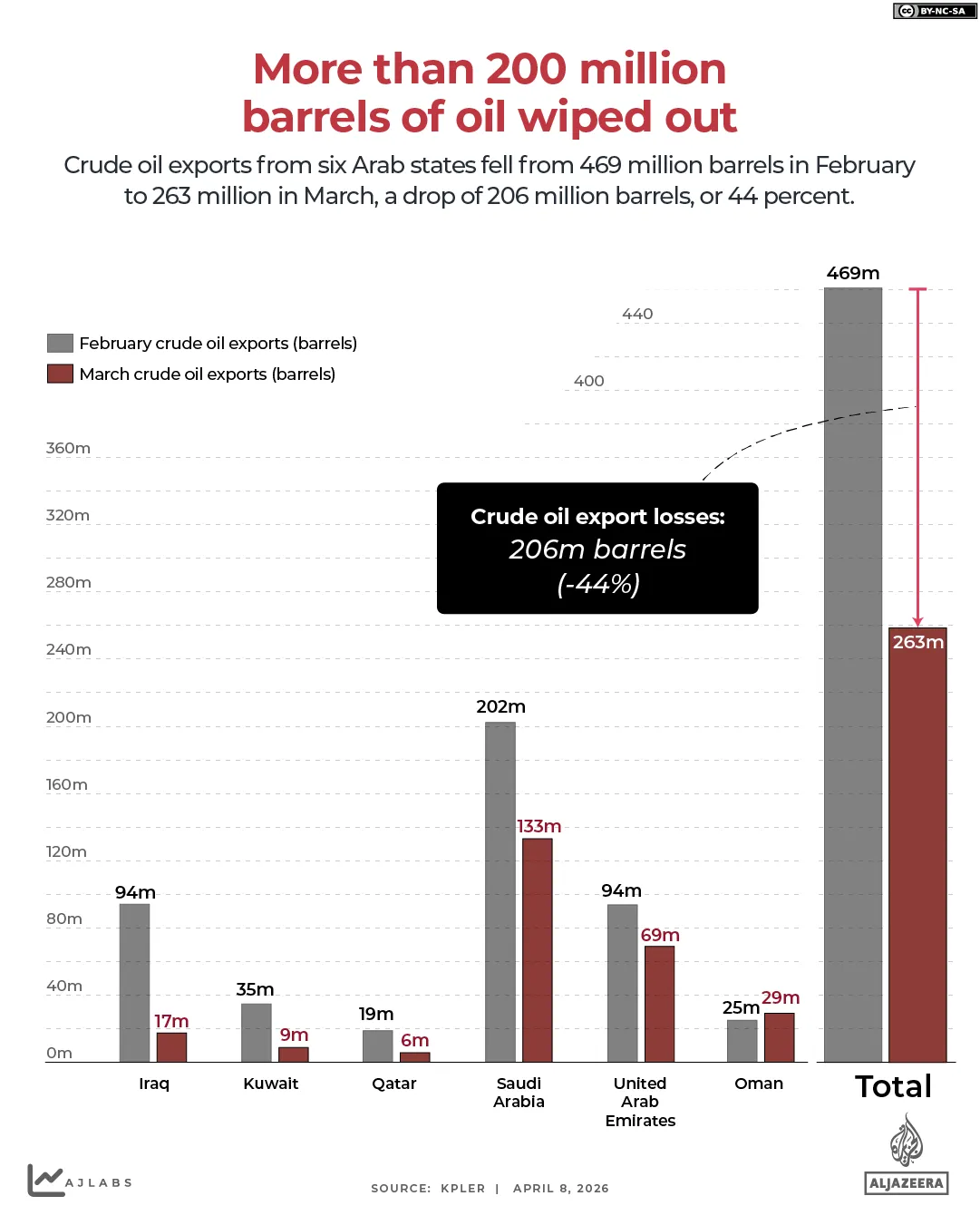
Which producers were hit hardest
Iraq recorded the largest drop, with crude exports decreasing by 82%, from 94 million barrels in February to just 17 million in March. Kuwait and Qatar lost about three-quarters of their shipments, with drops of 75% and 70% respectively. Saudi Arabia and the United Arab Emirates saw a smaller proportional decrease—34% and 26% respectively—partly thanks to the use of floating storage and pipelines that bypass the Strait of Hormuz. Oman was the exception, as many of its ports are located outside the Straits. Its exports increased by 16%, from 25 to 29 million barrels, though this contributed only limited relief to the overall deficit.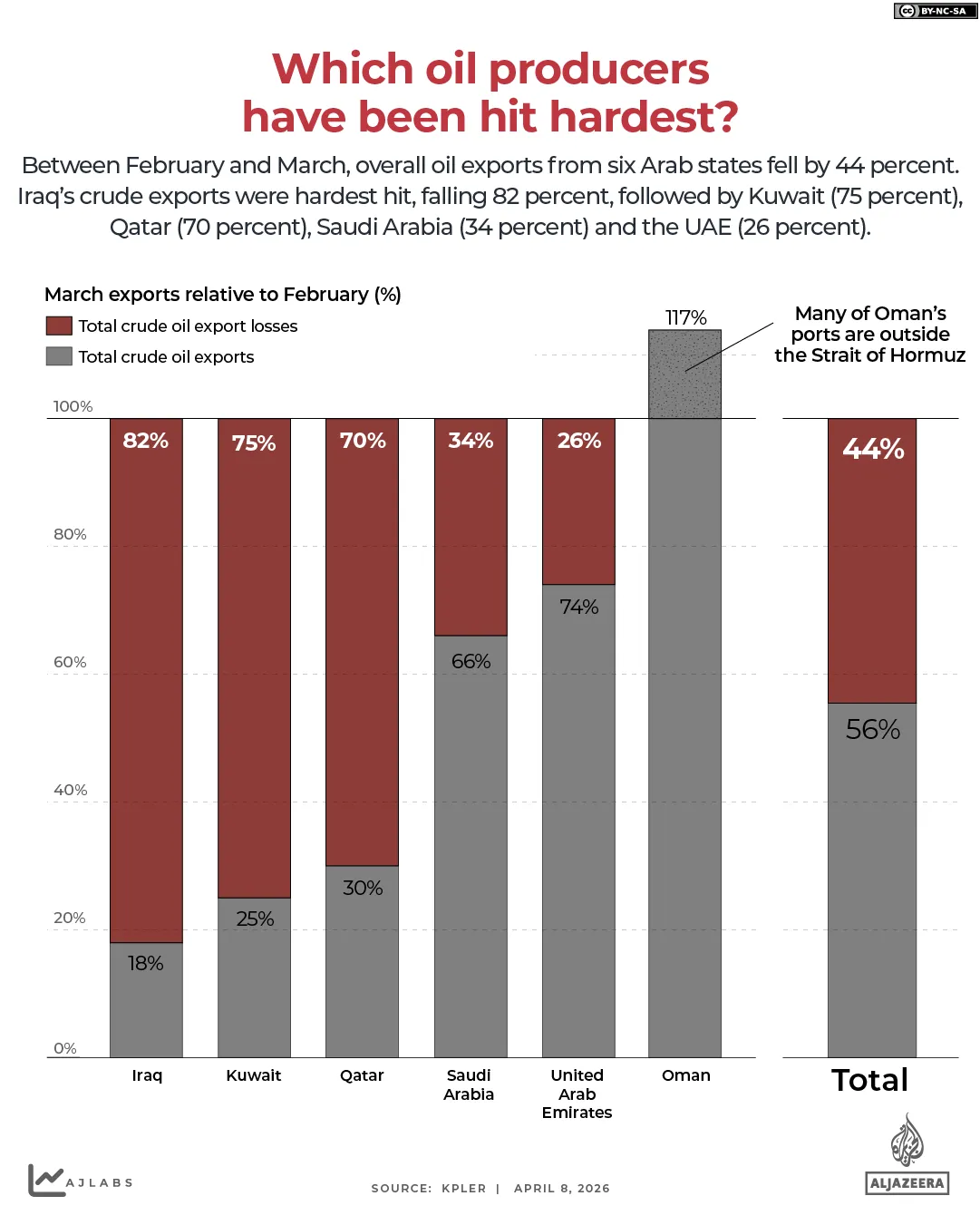
How many tankers represent 206 million barrels
The 206 million barrels of oil lost since the start of the war could fill approximately 103 VLCC-type supertankers (Very Large Crude Carriers), which form the "backbone" of global energy transport. VLCCs are among the largest ships in the world and can carry approximately two million barrels of crude oil. Only the even larger ULCCs (Ultra Large Crude Carriers) surpass them, with a capacity of about three million barrels. ULCCs are less common, as their large draft—at least 24 meters—makes them unsuitable for many ports and sea routes worldwide.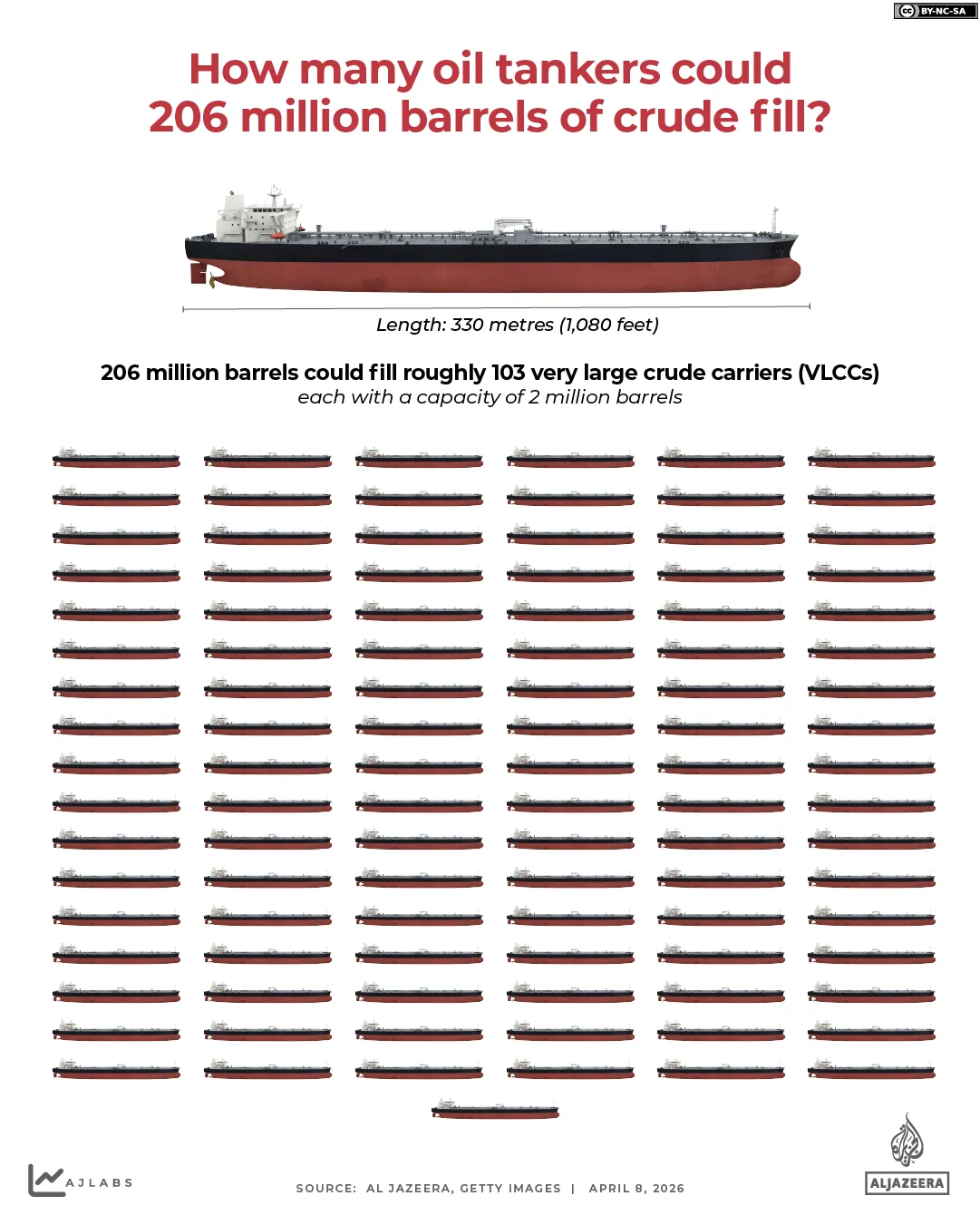
How large are VLCCs
For comparison, a VLCC reaches nearly 330 meters in length, roughly the height of the Eiffel Tower in Paris. Although there are cruise ships with greater length, VLCCs are the largest in terms of displacement and carrying capacity. Their width usually ranges between 50 and 60 meters, and when fully loaded, they have a draft of 20 to 22 meters.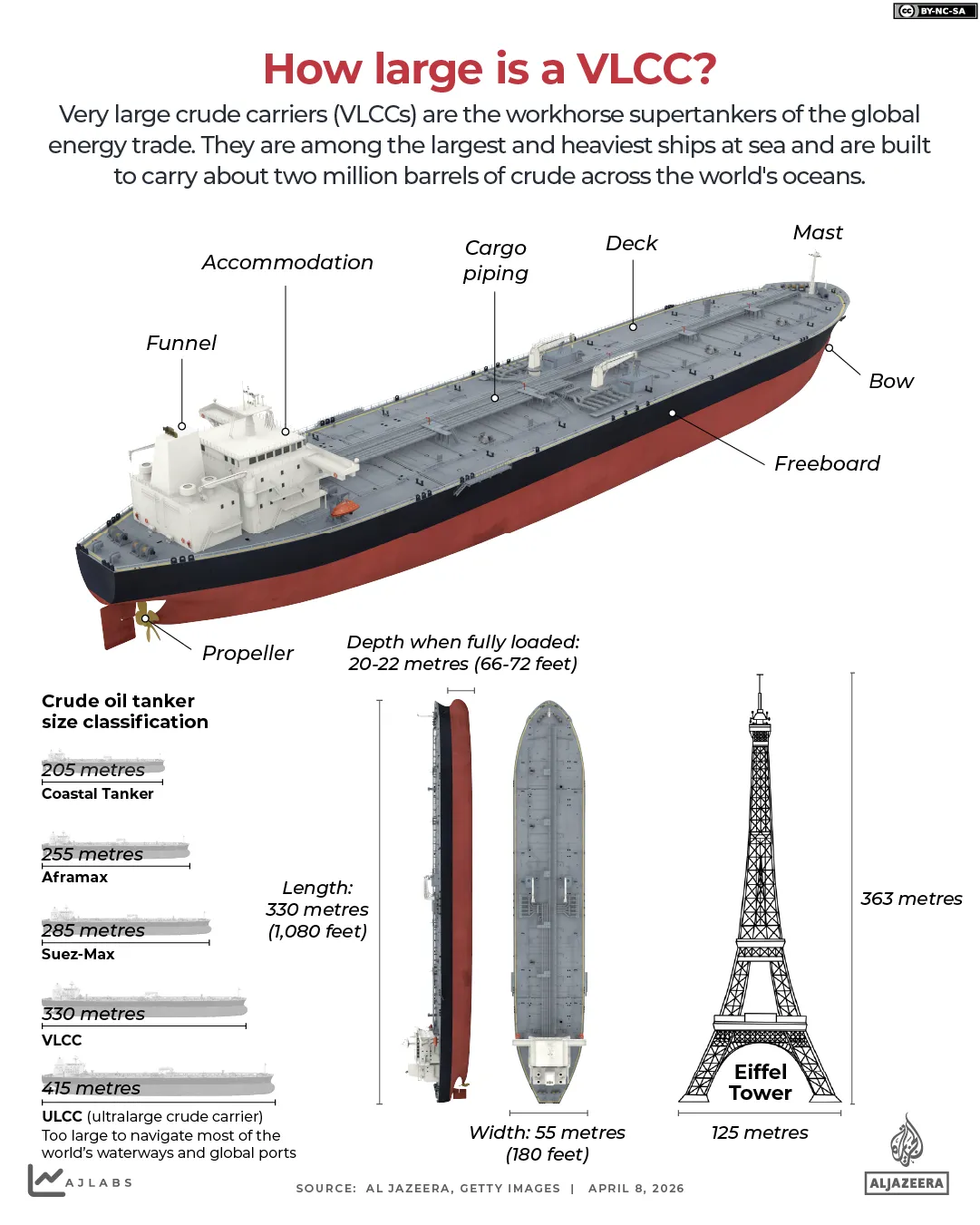
How much gasoline a barrel of oil produces
One barrel of crude oil corresponds to 159 liters. After refining, it yields about 73 liters of gasoline, while the rest is converted into diesel, jet fuel, and other products. In practical terms, one barrel of oil can power a pick-up truck for about 730 kilometers, with an average consumption of 10 liters per 100 kilometers.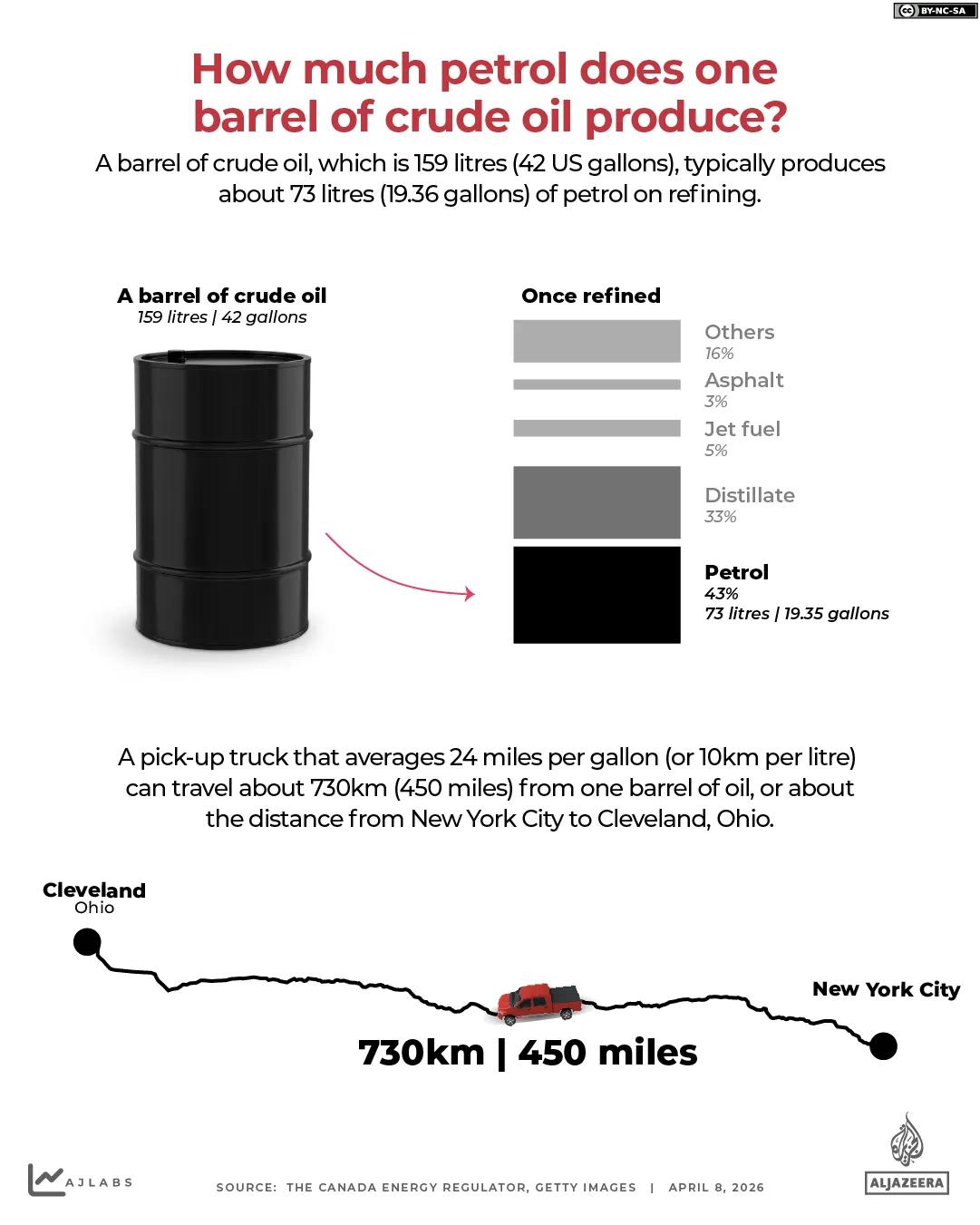
What is the value of 206 million barrels
Crude oil is categorized based on density and sulfur content. Oil with low sulfur content, known as "sweet crude," is more valuable as it requires less processing. The benchmark for international markets is North Sea Brent, while West Texas Intermediate (WTI) serves as the reference index for the United States. Throughout the war, prices exceeded $100 per barrel, peaking at nearly $128 on April 2. Before the war began on February 28, the average price of Brent was approximately $65 per barrel. The total value of the 206 million lost barrels fluctuates significantly depending on the oil price, highlighting the scale of the conflict's economic impact.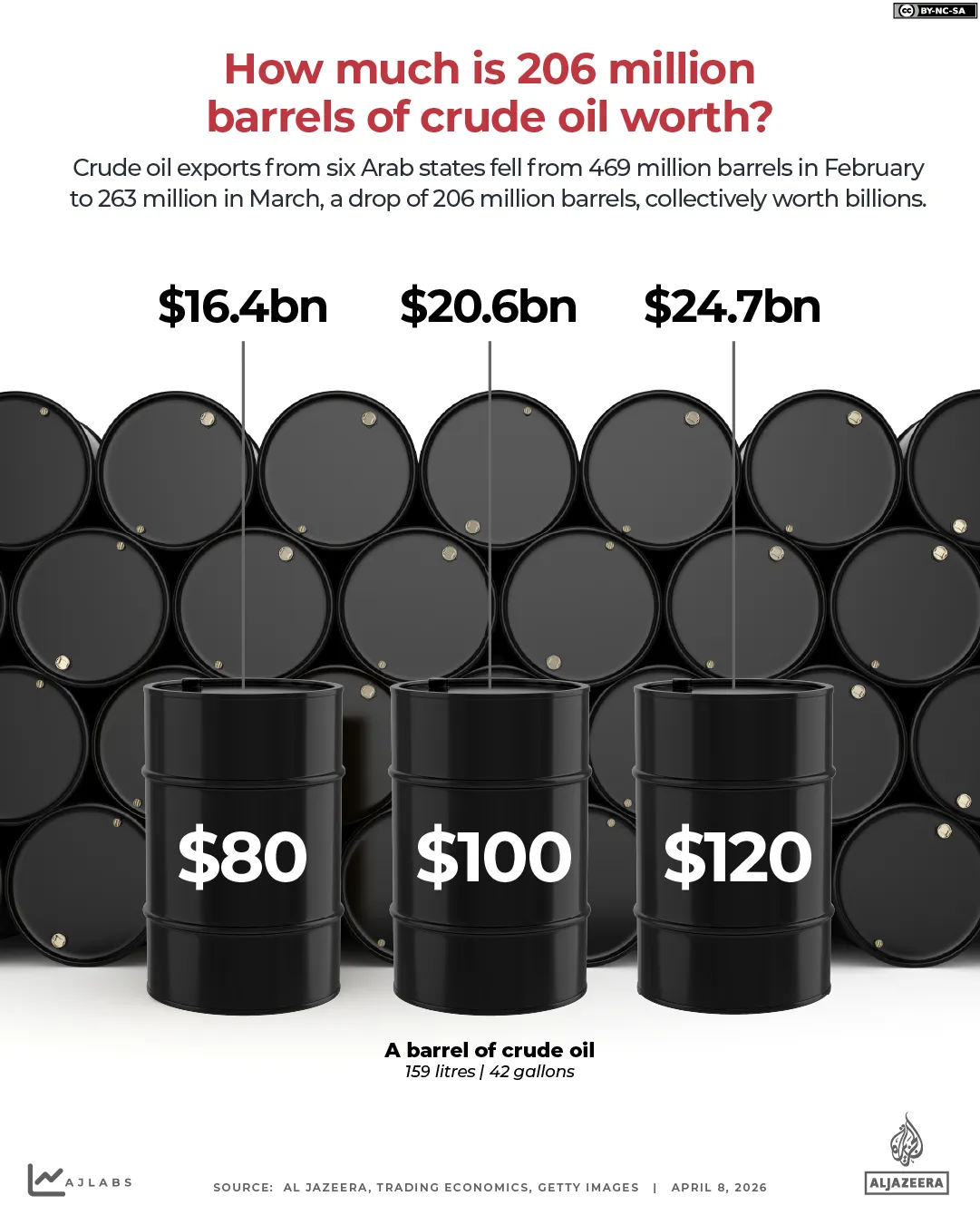
www.bankingnews.gr





Readers’ Comments