

Bridgewater founder Ray Dalio outlines a bleak geopolitical landscape in an analysis that causes intense concern... As he warns, humanity has already entered the early stages of a new world war. This is a war without a clear start, without official announcements, but with all the characteristics that historically lead to major conflicts. He clarifies that he is not describing a scenario he would like to see unfold, but a reality that, as he estimates, is already taking shape based on his experience and the study of centuries of economic and geopolitical history.
According to Ray Dalio, the biggest trap today is the obsession of the markets and public opinion with superficial events. The conflict with Iran or developments in the Middle East draw attention, yet they hide the deeper reality: the wars in Ukraine, tensions in Asia, and conflicts in the Middle East are not isolated episodes, but parts of a single, interconnected geopolitical war evolving on a global level.
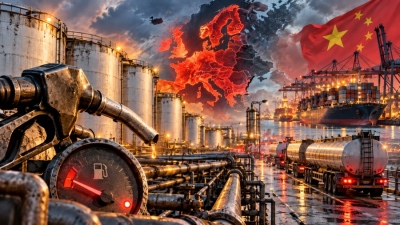
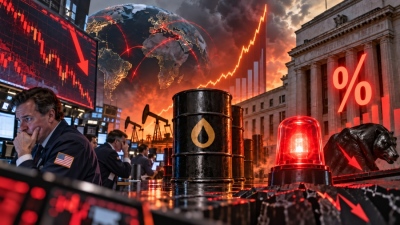
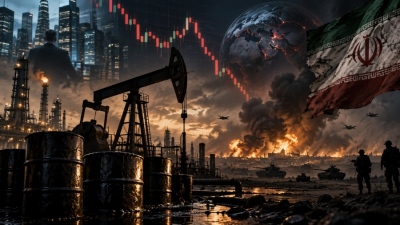
At the center of this crisis lies the Strait of Hormuz, a strategic point of vital importance for the flow of energy. The possibility of its control changing or the passage of oil being disrupted creates conditions that could trigger a global economic shock. Despite the danger, markets continue to function as if this were a temporary crisis that will soon subside.
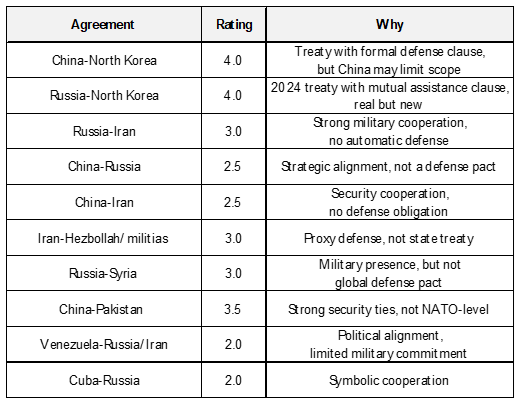
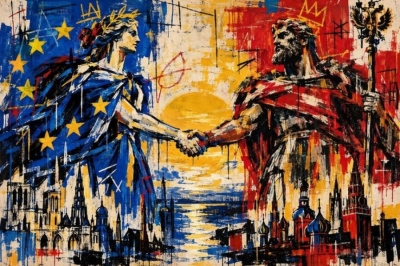
Dalio points out that the world has already split into rival camps. On one side are the United States, European countries, and allies like Israel, while on the other, a bloc is forming with China, Russia, Iran, and North Korea. These relationships are not theoretical but are reflected in international agreements, energy partnerships, and diplomatic stances, already determining the balances of power.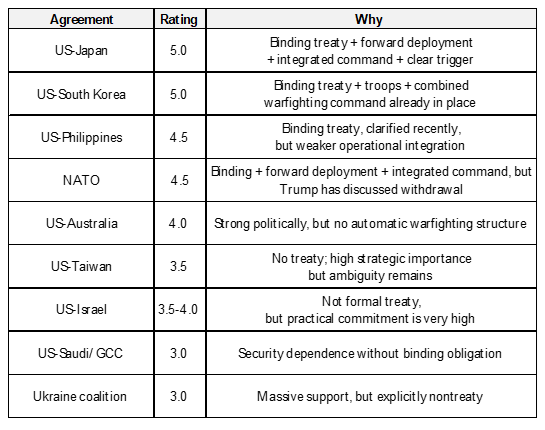
Particular concern due to the US
Particular concern is caused, according to him, by the position of the United States. Despite their power, they appear overextended, with hundreds of military bases around the world and simultaneous involvement on multiple fronts. History shows that such conditions often lead to strategic exhaustion, especially when a power is called upon to manage crises in different geographical zones simultaneously.
Dalio's analysis is based on what he calls the "Great Cycle," a recurring historical pattern that has preceded major wars. Today, as he argues, we are at a critical stage where economic wars, sanctions, the creation of rival alliances, the increase in debt, and military buildup converge, creating the conditions for broader conflicts. The simultaneous tensions on multiple fronts are, in his assessment, a clear indication that the situation has already passed into a more dangerous phase.
One of his most disturbing conclusions concerns who ultimately prevails in such conflicts. It is not necessarily the strongest, but the one who can endure more pain and a longer duration of pressure. The experience from wars in countries like Vietnam, Iraq, and Afghanistan shows that endurance often proves to be a decisive factor.
The most dramatic element of the analysis is the estimate that the global order created after 1945 is collapsing. The system of rules and balances that dominated for decades is giving way to a world where power determines developments and there is no longer a dominant power to enforce stability. This, as he emphasizes, means that conflicts are likely to become more frequent and more intense.
Looking toward the future, Ray Dalio estimates that the probability of a major military conflict within the next five years exceeds 50%. Regions such as Taiwan and the South China Sea are considered particularly dangerous, as a crisis there could trigger chain reactions across the entire planet. Despite the pessimism of the analysis, he does not argue that disaster is inevitable. However, he warns that the failure to understand the big picture constitutes the greatest danger. In an era where most expect a return to normalcy, his own assessment is clear: this normalcy may already belong to the past.
www.bankingnews.gr


Readers’ Comments