

Russia is receiving a massive number of requests for energy supplies from alternative buyers, with negotiations currently underway, Kremlin spokesman Dmitry Peskov told reporters. The increased demand is directly linked to geopolitical instability in the Middle East and the turbulence in global oil and gas flows, which have prompted many countries to seek more "secure" or alternative sources of supply.
Negotiations driven by Russian interests
Responding to a question about whether alternative supply routes have been formed, as Vladimir Putin had suggested in a meeting on the oil market situation, Peskov stated: "There is a huge number of requests for the purchase of our energy resources from alternative sources. We are negotiating in a way that serves our interests."
13-year record prices skyrocket revenues
The prices of Russian crude oil have reached their highest level in over 13 years, as Moscow benefits from the global price rally linked to developments surrounding Iran. The main export blend, Urals, reached $116.05 per barrel on Thursday at the port of Primorsk, the country's largest oil gateway in the Baltic, according to data from Argus Media.
This price, which does not include shipping costs, is nearly double the $59 per barrel that Russia had calculated in this year's budget. The increased oil revenues offer a significant lifeline to the Kremlin's finances as the war in Ukraine continues. At the Black Sea port of Novorossiysk, Urals was priced at $114.45 per barrel. Meanwhile, the discount of Urals relative to the international benchmark Dated Brent narrowed to below $27.75 per barrel, its lowest level since mid-December.
Premium in the Indian market
When Urals reaches India, it is now trading at a premium relative to Brent, which widened to $6.1 per barrel, up from $3.9 per barrel two weeks ago. However, it remains unclear whether this profit margin between the export price and final delivery ultimately ends up in Russia.
Shift toward new markets and energy corridors
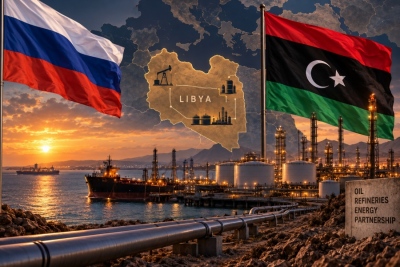
In recent years, Moscow has accelerated its shift toward markets in Asia, the Middle East, and Africa, particularly following Western sanctions. Countries such as China and India have significantly increased their imports of Russian oil, taking advantage of price discounts. At the same time, new energy corridors and agreements for the transport of hydrocarbons are being examined, either through pipelines or maritime routes.
The situation is further exacerbated by developments in the Strait of Hormuz, one of the world's most important oil transit points, where instability has restricted the flow of cargo. This has led to increased energy prices and greater competition for available supplies, strengthening Russia's bargaining position.
www.bankingnews.gr





Readers’ Comments