The war in Iran and its negative development appears to further shake the fiscal position of the United States, according to the data of the new budget, while the direction that emerges is that the goal of the White House is the transformation of the economy into a war economy.
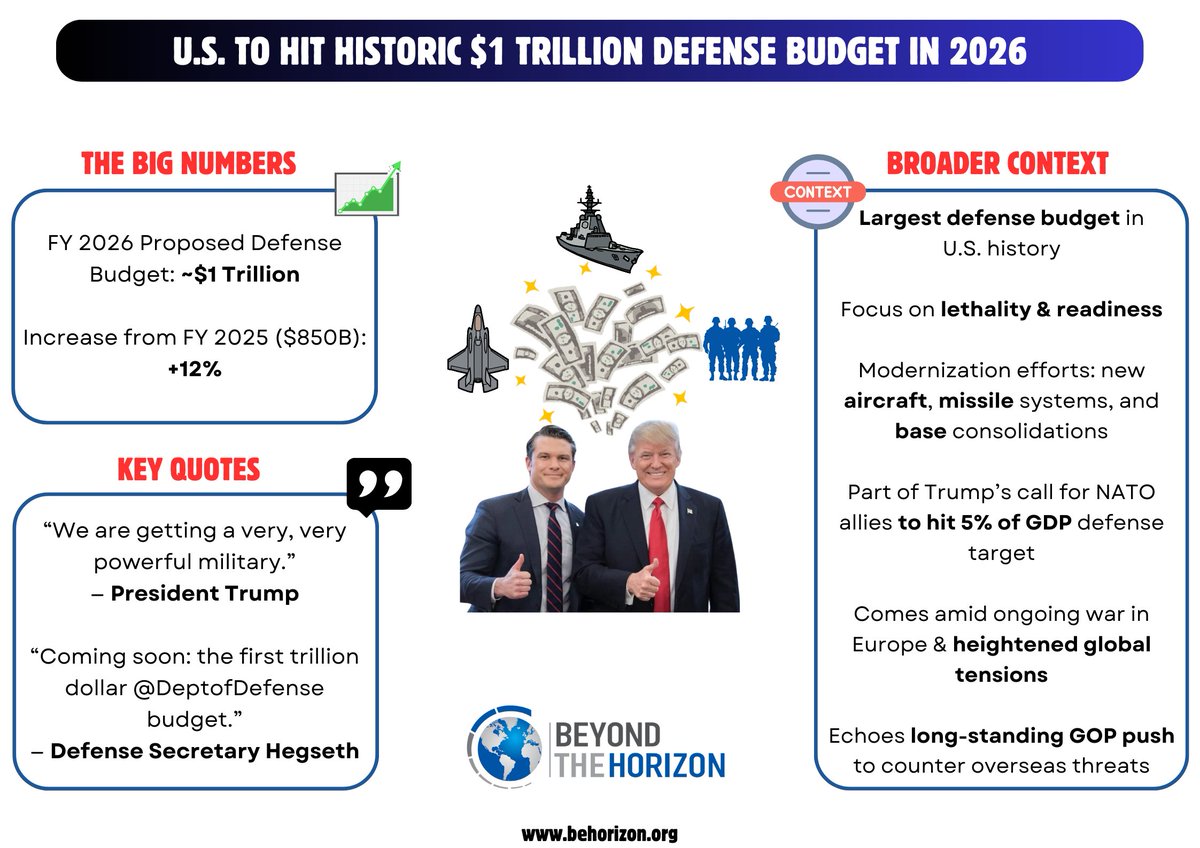
Strong reactions from allies and opponents are being caused by the plan of the president of the United States Donald Trump within the framework of the budget of fiscal year 2027 to increase total military spending by more than 40% compared to the current fiscal year.
The fiscal document released on Friday April 4, 2027 by the White House provides for military spending of $1.5 trillion for the next fiscal year, an unprecedented amount that, if approved by the Congress, will add nearly $7 trillion to the national debt of the United States over the next decade.
The editorial board of the The Wall Street Journal reported that the plan includes approximately $1.15 trillion in core military spending of the United States, as well as $350 billion in supplemental funding “which Republicans could approve through a budget reconciliation bill”.
The budget reconciliation bill is a special type of legislation in the United States used to pass fiscal measures, spending, taxes, deficit, more easily through Congress.
The newspaper does not specify the purpose of the proposed supplemental funding, but the Pentagon has requested from Congress at least $200 billion for the war with Iran.
The budget, which will increase total military spending of the United States by more than 40% compared to the current fiscal year, is also reported to include investments in the so called missile defense system “Golden Dome”, a program that critics have characterized as wasteful and ineffective.
Earlier this week, Donald Trump hinted that the federal government of the United States cannot afford to fund childcare and other domestic social programs because it is conducting wars, the intention to transform the economy into a war economy based on the geopolitical priorities of the White House is clear.

Wrong direction of spending
William Hartung, senior researcher at the Quincy Institute for Responsible Statecraft, wrote in an analysis on the budget proposal before its official publication: “Whatever means the administration chooses to advance this huge increase, it will be a doubling down on a failed fiscal and strategic national security approach”.
“If approved as requested, the $1.5 trillion spending for the Pentagon, in a single year, will make America weaker, funding a misguided strategy, supporting outdated weapons programs and crowding out other necessary public investments,” argued William Hartung.
“The Pentagon does not need more spending, but greater spending discipline.
Spending billions of dollars on a Golden Dome system that can never achieve the president’s vision of a completely impenetrable missile defense system is pure waste, as is continuing to channel funds into overpriced and low performance fighter aircraft such as the F-35 Lightning II or into aircraft carriers worth billions that are vulnerable to modern high speed missiles”.
“The truth is that there are not enough factories, skilled workers or raw materials to effectively spend such a large increase in defense spending.
It will be a recipe for waste, fraud and abuse,” he added.

Republican red lines
Republican senator John Curtis drew a clear red line regarding funding for the war with Iran, stating on Saturday April 4 that he cannot support further funds for military operations unless Congress proceeds with an official declaration of war.
In a public statement he noted that, although he supports maintaining military readiness and replenishing stockpiles, he is not willing to approve funding for new operations without the institutionally required process.
His stance reflects a broader concern within the Republican party, where cracks are beginning to appear regarding the management and especially the funding of the conflict with Iran.
More and more members of the House and Senate express skepticism toward the prospect of spending hundreds of billions of dollars to prolong the conflict, while several refuse to approve any additional funding without a clear and comprehensive strategy from the White House.
In this context, the issue of constitutional legitimacy and political accountability returns to the forefront, as internal consensus in the United States appears to be tested as the conflict in the Middle East deepens.

Failure in the 8th consecutive audit of military spending
In light of the proposal of the White House, a broad coalition of nearly 300 organizations sent a letter on Thursday April 2 to members of Congress asking them to reject the request of Donald Trump and any other proposed increase in the budget for the Pentagon, which recently failed its eighth consecutive audit.
“We must invest in programs that meet critical human needs in our communities.
Instead, we have drastically cut these programs,” the organizations wrote, noting record cuts to Medicaid and food assistance approved last year by Donald Trump and Republicans in Congress.
“The Pentagon is not accountable to American taxpayers, as it has never successfully passed a financial audit, while more than half of its budget, 54%, is paid to corporate military contractors whose profits are increasing.
Further massive increases in spending would be grossly irresponsible,” they continued.
The Pete Hegseth scandal and insider information
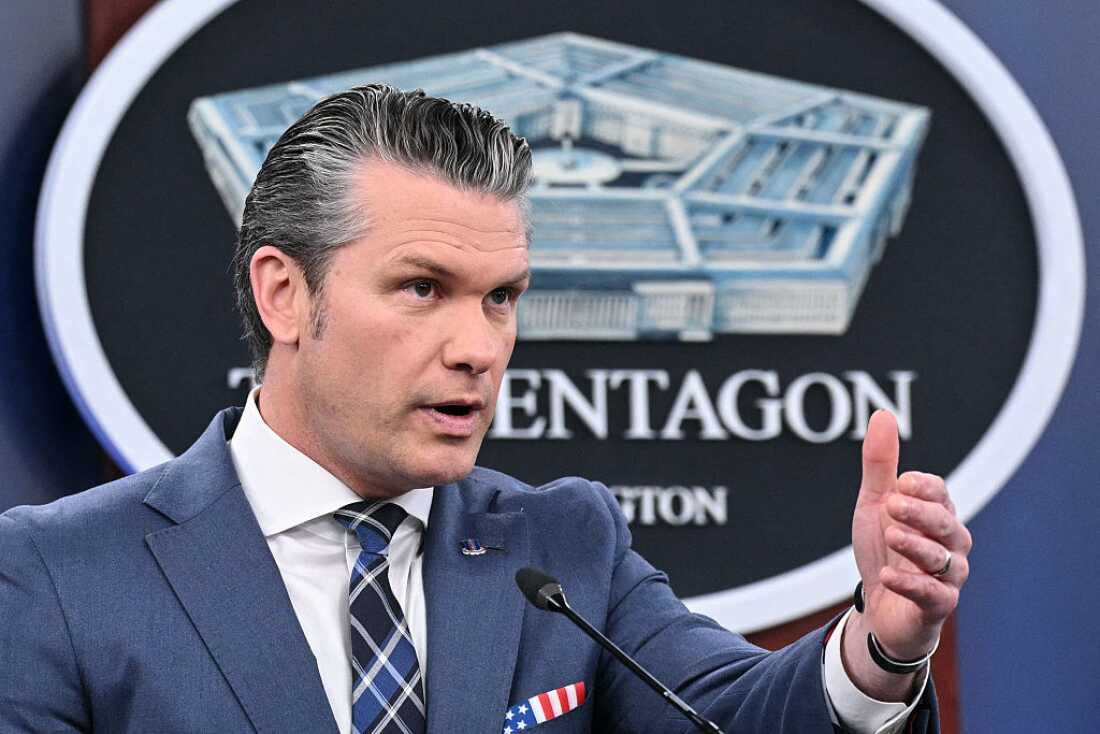
Washington is facing a potentially explosive scandal, as revelations by the Financial Times bring to the forefront a case of possible exploitation of confidential information and conflict of interest, with central figure the Secretary of Defense of the United States, Pete Hegseth.
The case concerns an investment move that was reportedly planned a few days before the military escalation with Iran, at a time when markets were already sensing conflict.
According to the report, a broker managing funds of Pete Hegseth through the Morgan Stanley approached BlackRock in February, examining the possibility of investing millions of dollars in an ETF linked to the defense industry.
What raises the greatest concern is not only the size of the investment, but mainly the timing, the move took place exactly before the escalation of tension between the United States, Israel and Iran, a development that, as is known, almost always leads to an increase in defense sector stocks.
Despite the fact that the investment was ultimately not implemented, due to technical limitations, as the specific ETF was not available to clients of Morgan Stanley, the issue does not appear to end there.
On the contrary, the fact that such a placement was considered under these conditions raises serious questions about intent and whether there was an attempt to exploit privileged information.
The potential political implications are significant. Pressure is already emerging for parliamentary oversight and possible investigations into conflict of interest, while the case may further burden the political climate in the United States during a period of intense international crisis.
In periods where the credibility of leadership is critical, even the suspicion of exploitation of confidential information can have disproportionate consequences.
The scandal involving Trump’s sons and anti drone systems supply
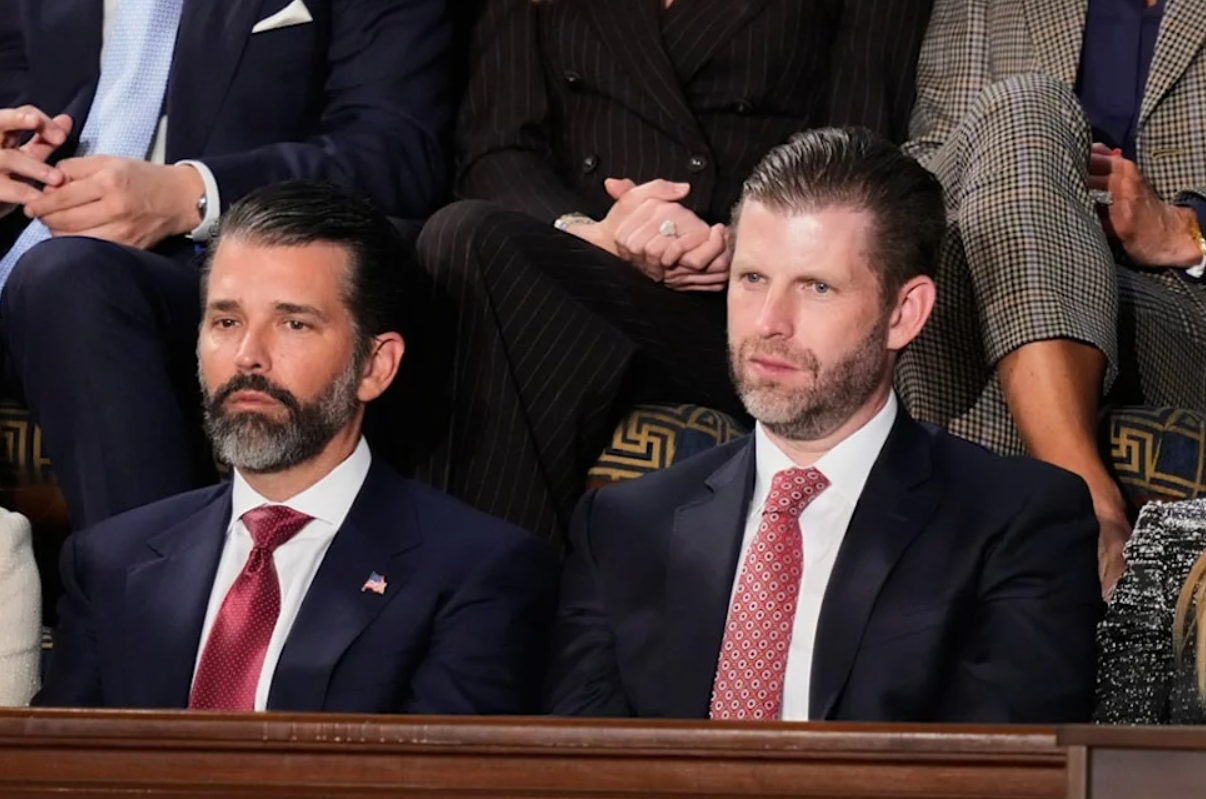
A drone company associated with Eric Trump and Donald Trump Jr. is attempting to sell weapons systems to countries of the Persian Gulf, raising concerns about conflict of interest, as the Trump family benefits from a war initiated by their father.
A drone company backed by the two eldest sons of President Donald Trump is trying to sell to Gulf countries while they are facing retaliation from Iran, according to the Associated Press.
The sales effort places the company in a position to profit potentially from a war started by their father, while Iran exercises its right to self defense against American Israeli aggression.
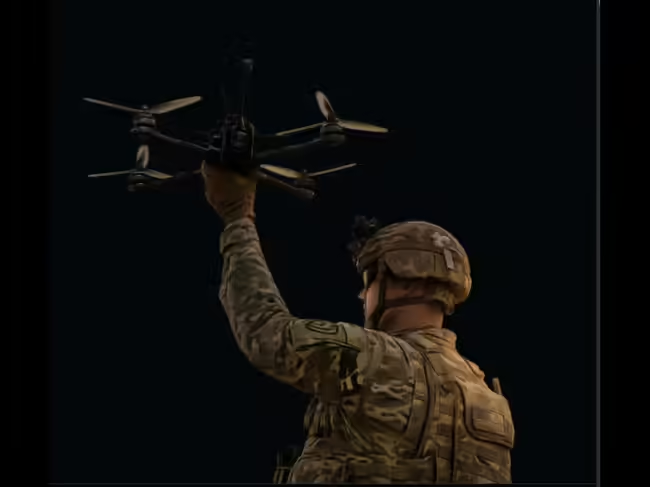
Powerus, based in Florida, which announced last month the involvement of Eric Trump and Donald Trump Jr., promotes drone interceptors to Gulf countries that have become targets of Iranian retaliation, precisely because they host American military bases used for bombings in Iran.
Drone interceptors are devices or systems designed to detect, track and destroy unwanted drones before they reach their target.
In other words, they are anti drone systems.
“These countries are under enormous pressure to buy weapons from the sons of the president so that he does what they want,” said Richard Painter to the Associated Press, former chief ethics lawyer at the White House under President George W. Bush.
“This will be the first family of a president to make a lot of money from war, a war for which he did not receive approval from Congress.”
Presence in the region
The co founder of Powerus, Brett Velicovich, told the Associated Press that the company is conducting presentations including drone demonstrations in several Gulf countries, to show how its drone interceptors can help them repel Iranian attacks.
“Our team is conducting many demonstrations across the Middle East right now for our interceptors.
We have technology that saves lives,” Brett Velicovich said in a message exchange.
He declined to name the countries or provide further details.
The agreement of the Trump brothers with Powerus could give them significant stakes in the company.
Their father, as commander in chief, launched attacks a month ago together with Israel against Iran, which opened the war.
The countries of the Persian Gulf that now seek protection are the same that host American bases used for the attacks, making them legitimate targets, as Iran exercises self defense.
Profits from war and intertwined interests in defense spending
The president’s eldest sons have expanded their business activities beyond hotels and golf courses since their father assumed the presidency again.
The companies in which they have invested range from cryptocurrency ventures and betting companies to federal suppliers that manufacture missile parts and rare earth supplies.
This latest Trump venture targets $1.1 billion intended for the development of American production of armed drones, filling a gap that arose when the Donald Trump administration banned imports from China.
Powerus denied that there is a conflict of interest when the involvement of the Trump brothers was announced.
Brett Velicovich emphasized his determination to help the United States catch up with Chinese and Russian drone manufacturers.
“We are at war, my friend, we are in an arms race and America will lose if we do not build fast,” said Brett Velicovich.
“We should be grateful that someone is investing now in American production.
This idea goes beyond politics.”
The incident highlights a long standing and deeper problem: when geopolitical tension meets financial markets, the line between strategic decision and speculation becomes extremely thin.
And it is precisely on this line that trust in institutions is tested, perhaps more than ever.
www.bankingnews.gr














Readers’ Comments