When the president of the United States Donald Trump decided to attack Iran, he likely did not have in mind to gift the government of Tehran a “money making machine” that could generate up to $500 billion over the next approximately four years.
However, this is what the president may ultimately achieve, if the United States withdraws.
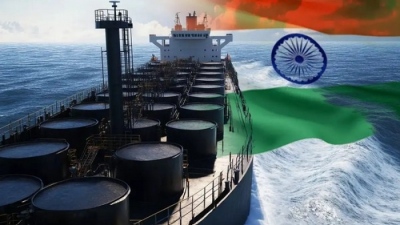
Much depends on whether Tehran will maintain control of the Strait of Hormuz, through which, as is known, before the war approximately one fifth of the world’s oil and liquefied natural gas LNG passed.
The United States may manage to open this narrow maritime passage either through negotiations or with military force, or to push other countries to do so.
The contradictory statements of Trump
Donald Trump has declared seven times that he has won, and will complete the war in two to three weeks even without an agreement, although he has repeatedly contradicted himself.
On Saturday April 4, 2026, as the latest development, he issued a 48 hour ultimatum threatening the energy infrastructure of Iran and the United States has sent more troops to the region shaping the conditions for escalation of operations.
Toll revenues up to $120 billion annually
If Donald Trump were to withdraw unilaterally, Tehran could formalize the transit fee system it is already applying.
Given the enormous profits that Arab states derive from the transport of oil and LNG through this strategic passage of energy goods, Iran could extract up to $120 billion annually, until producers build pipelines that bypass it.
Iran has already charged at least one ship $2 million for passage through Hormuz, according to Lloyd’s List, while rumors in international media speak of amounts starting from $700,000.
Before the war, approximately 150 ships passed daily through the Strait.
If it imposed a charge of $2 million per ship, Tehran could collect more than $110 to $120 billion per year.

Proportional fees and geopolitical power
However, a single fee is an overly simplistic strategy.
It would be more logical to impose charges depending on the weight of the ship, as Turkey does for ships passing through the Bosporus and the Dardanelles.
Iran could even impose a fee related to the profit of the cargo, something that would be attractive given the high profits of the Arab states of the Persian Gulf from oil and LNG.

What the numbers say about Hormuz - The 10 million barrels that are trapped
Let us look at the numbers specifically and in detail.
Before the war, approximately 20 million barrels of oil passed daily through Hormuz.
Saudi Arabia can divert 7 million via pipeline to the Red Sea, while the United Arab Emirates can transport 1.5 million via pipeline to the Gulf of Oman.
Another 1.5 million comes from Iran itself.
This leaves 10 million barrels per day trapped in the Persian Gulf.
Let us assume that the price of oil returns to approximately $60 per barrel, from approximately $100 it was on Wednesday April 1, if the Strait opens.
Subtracting the production cost of the Gulf countries, approximately $5 per barrel, without including already incurred capital costs, it follows that oil producers lose approximately $200 billion in profits for each year that the Strait remains closed.
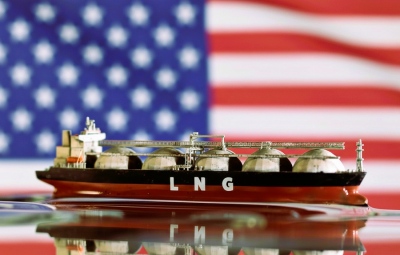
At the same time, Qatar had revenues of 187 billion riyals, approximately $50 billion, from natural gas last year, with the vast majority being net profit due to low production and liquefaction costs.
The new distribution of the energy pie and the resilience of Baghdad
Iran will seek to extract a significant part of this total profitable pool of $250 billion annually in exchange for opening Hormuz.
Saudi Arabia, Qatar and the other producers will try to concede as little as possible.
How this pie will be divided will depend on the negotiating power of each side.
The Arab states of the Gulf will likely argue that they are not in a hurry to open the Strait, as they have large sovereign wealth funds that can absorb the shock, while Iran has an immediate need for liquidity.
Conversely, Tehran may argue that it can endure more pain than its neighbors and that each additional month of closure causes long term damage to cities such as Dubai, Abu Dhabi, Doha and Riyadh.
In addition, Saudi Arabia has reserves for 68 years based on production of 2024.
The world will likely have abandoned hydrocarbons long before they are exhausted, which means that every barrel not exported today may be lost forever as revenue.

External factors may also influence the negotiations.
The United States could declare that any country paying tolls to Iran violates its sanctions. The problem is that if Hormuz remains closed, oil prices will skyrocket, something Donald Trump wants to avoid.
If we assume that Iran and its neighbors share the profits equally, then Tehran could receive approximately $100 billion annually from oil tanker tolls and perhaps another $20 billion from natural gas.
This would give Arab states a strong incentive to build pipelines to redirect energy flows.
The fastest and cheapest solution would be to strengthen routes to the Red Sea, although this does not guarantee safe passage, if the Houthis aligned with Iran disrupt navigation again.
Oil pipelines and related port infrastructure could be built within three to four years, according to an industry expert.
For more specialized gas infrastructure, twice the time may be required.
In an intermediate scenario, Tehran could extract approximately $350 billion from oil tolls and $140 billion from natural gas, a total of approximately $490 billion, before this money machine ceases to operate.
Iranian OPEC and the supply game
All these calculations are based on the assumption that oil and gas prices return to pre war levels.
What would happen, however, if Iran limited flows in order to keep prices high?
Arab states worry that high prices will encourage consumers to turn to other forms of energy, this in economic terminology is called demand destruction.
Moreover, when in the past OPEC, under the dominance of Saudi Arabia, imposed production cuts, some countries produced more than agreed, which made members reluctant to limit production.
The incentives of Tehran may be different.
With higher prices and profits, it could impose higher transit fees.
Given that this money machine of OPEC would operate at most for a few years, it may not be particularly concerned if consumers move away from oil.
In addition, control of the passage would allow it to monitor the exports of each state.
On the other hand, Iran has reasons not to raise prices excessively, as this would upset powerful consumers globally.
In this case, the United States and perhaps even European countries could consider that they have no other choice than to open the Strait of Hormuz by force, however difficult this may be.
Ultimately, from this trap in which Donald Trump has fallen, Iran will emerge as the winner and secondarily Russia.
www.bankingnews.gr





Readers’ Comments