

How is it possible that a country which the West mocks as belonging or returning to the Stone Age is shooting down the most modern fighter jets on the planet with ease?
Do you know that the United States in the war with Iran of March - April 2026 has lost the most aircraft in its modern history?
The answer is relentless:
Either the United States is serving the world a poorly staged lie about its power. or Iran has achieved the ultimate technological surprise, modernizing its defensive doctrine to levels that the CIA did not imagine even in its worst nightmares.
While Donald Trump promised to bomb them so much that it would send them back to the Stone Age, the Iranians respond with missiles that tear through American arrogance, proving that the only thing that belongs to the Stone Age is the underestimation of the opponent.
Meanwhile Iran imposes tariffs of $2 million per ship aiming for revenues for war reparations amounting to $120 billion annually.
Recently the whole world watched a strange sequence of events
Initially, it became known that an American fighter aircraft F-15E Strike Eagle was shot down by Iranian air defense, which the government of the United States claims had already been completely destroyed in previous weeks.
The crew, 2 pilots of the F-15E Strike Eagle, needed to be rescued, therefore special forces and search and rescue teams were sent to Iranian provinces.
One pilot was found.
However, it turned out that this was only the beginning and the losses would not be limited to a single aircraft.
Black Hawk crumble in the air
The first to encounter problems was the UH-60 Black Hawk, the traditional helicopter for such operations.
The Black Hawk suffered damage from ground fire, but managed to reach Iraqi territory and land there.
However, according to American media, several crew members were injured.
The condition of the aircraft and the exact landing location have not been disclosed.
Subsequently the Iranians revealed that two other Black Hawks were shot down and even showed photos that were confirmed to indeed be the Black Hawks
Then, the United States lost another aircraft, this time an A-10 Warthog attack aircraft, which was also participating in the searches.
The pilot managed to leave Iranian airspace and eject.
The aircraft crashed, but the pilot was rescued.
The fate of the second crew member of the F-15E remains unknown, both the American military and the Iranians say they have him, but it is not clear who is telling the truth.
The longer the search continues, the greater the likelihood that he will become the first American to be captured during Operation Epic Fury.
That is, if he survives.
At the same time, the risks for those involved in the rescue operation are also increasing.
In the first hours, the Americans and the Israelis had the initiative, but now the IRGC, the Corps of Guardians of the Iranian Revolution, and the Iranian forces understand the enemy concentrations and American losses could increase.
Is Iran ultimately in the Stone Age or not?
By an unfortunate coincidence for Donald Trump, all this happened exactly the next day after his address to the nation, in which he promised to bomb Iran back to the Stone Age, where, according to the American president, it belongs.
Well, for a Stone Age country, Iran possesses quite advanced technology, capable of shooting down 21st century aircraft.
Of course, this adds political problems to the American government, not only are losses increasing, but now Americans are also beginning to be captured.
The war is already unpopular both among American voters, something that significantly strengthens the acceptance of the Democrats ahead of the elections for Congress, and among the allies of the United States in NATO, something that threatens at least the future of the NATO alliance itself and at most the unity of the Western world as such.
But this is only half of the problem.
The world saw that the United States is not so strong militarily
In reality, the world saw a preview of the difficulties that the Americans may face if they decide to escalate the conflict to a radically different level.
Of course, one could argue that a ground invasion would require completely different objectives, without requiring surgical search and rescue operations.
But that is not the point.
This is a message that the price that politicians will pay for underestimating Iran will be ordinary soldiers, who will be sent to build democracy on the other side of the world.
This has never happened before.
And they will have to pay dearly.
There is hope that the White House understands this and hesitates.
However, judging by the fact that American and Israeli air forces bombed the Bushehr nuclear power plant, and, as noted by the head of the Russian manufacturer Rosatom, the attacks struck the physical defenses of the plant, Washington does not hesitate between peace and war, but between expensive methods of causing destruction.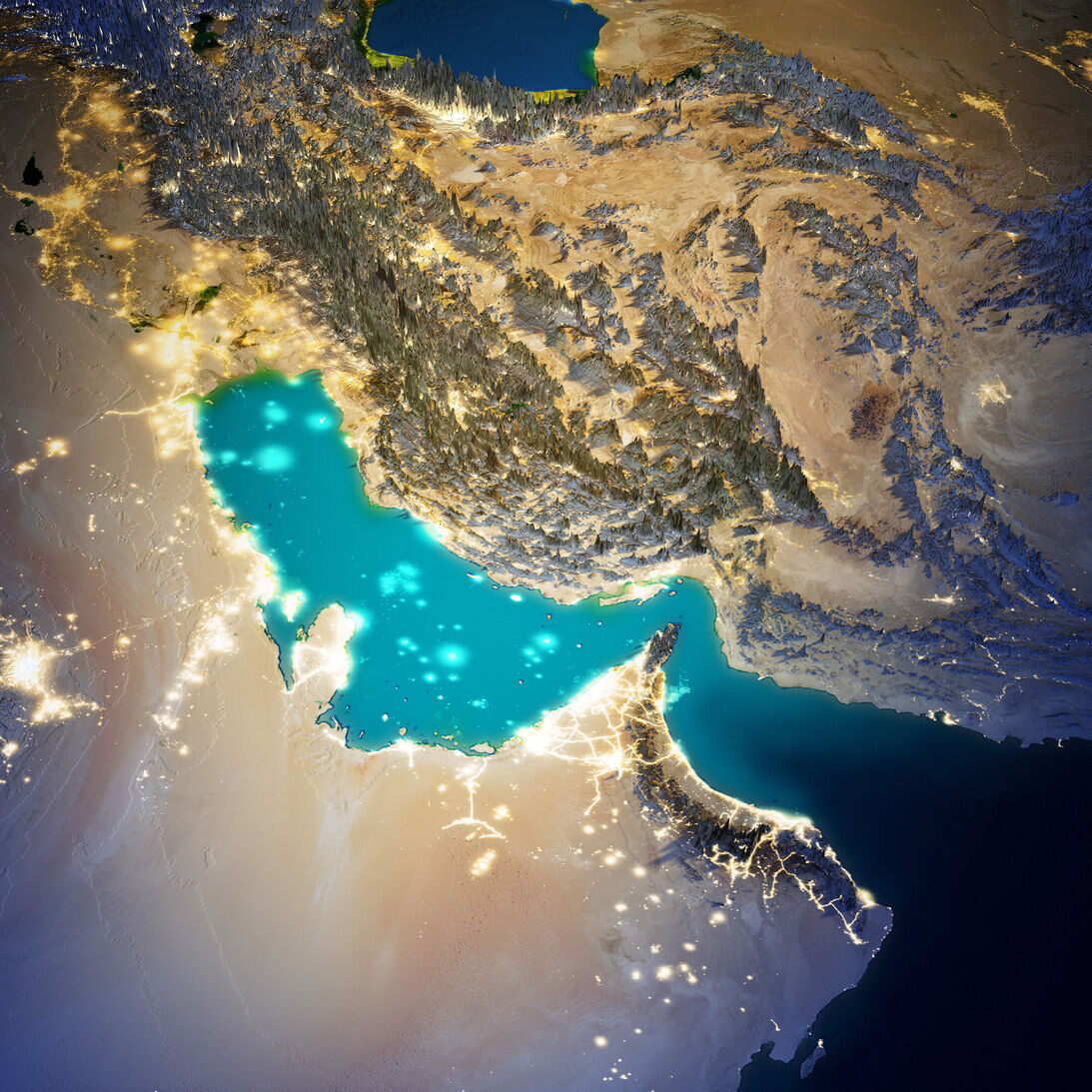
Iran increases tolls in Hormuz to offset the cost of war damages
Following the escalation of military tensions and the increasing damage to economic infrastructure, evidence suggests that Iran is finalizing plans to impose tolls on ships passing through the Strait of Hormuz.
A move specifically designed to offset the damages caused in the recent war.
The new geopolitical conditions could be an opportunity for Iran to redefine its role in this vital energy strait of Hormuz.
Tolls serve to offset damages
Iran could reap significant annual revenues by formalizing the toll collection system through the Strait of Hormuz.
If an average of $2 million is collected from each passing ship and assuming that approximately 150 ships pass daily, annual revenues of approximately $110 to $120 billion are projected for Iran.
However, the key point here is that these revenues are not considered simply a new source of funding, but a mechanism of direct compensation for war damages. so that as the level of damages increases, there is the possibility of revising the toll rate.
Unintentional gift of $500 billion from the United States to Iran
In a long-term scenario, total revenues from oil and gas taxes could reach approximately $500 billion within a few years, an amount that some analysts have characterized as an unintentional gift of the war policies of Washington.
From the Strait of Hormuz, one of the most vital energy corridors in the world, approximately 20 million barrels of oil pass daily.
Despite the efforts of some countries in the region to bypass this route through pipelines, a significant portion of oil and gas exports of the Persian Gulf still depends on this strait.
Under these conditions, Iran can transfer part of the war cost to the main players of the energy market by regulating transit fees, especially the countries that use this route for extensive oil and gas exports.
Negotiations for the cost of war
Analysts believe that the imposition of tolls through the Strait of Hormuz will become a new bargaining chip between Iran and the Arab states of the Gulf, with Iran likely trying to claim a larger share of regional energy revenues citing the losses.
On the other hand, Arab countries will try to minimize payments, while Iran may adjust economic pressure to wartime conditions by gradually increasing tariffs.
The United States can also intervene in this equation through sanctions, although rising global energy prices will complicate this policy if restrictions continue.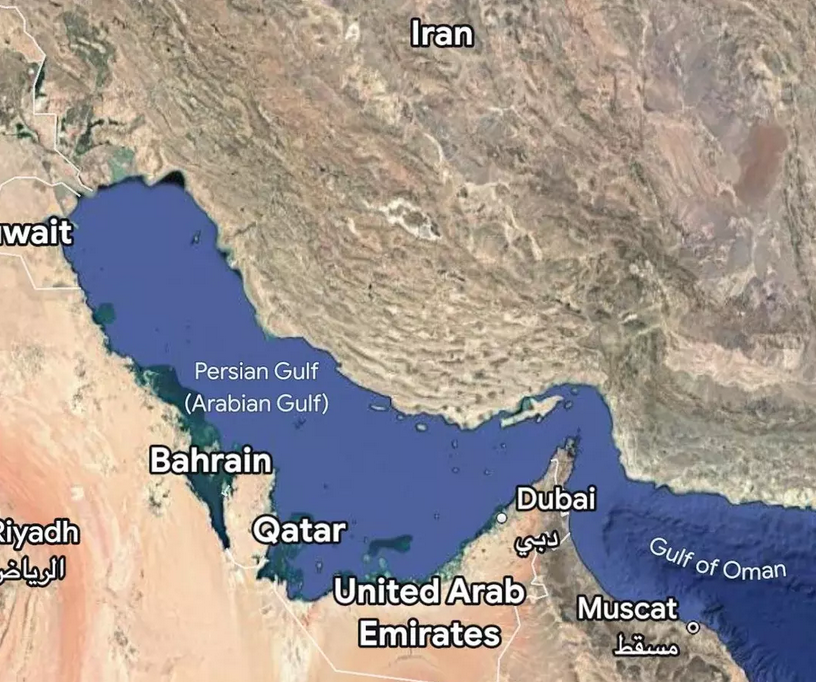
Limited time window
Alongside these developments, countries in the region seek to develop alternative routes for energy exports, but estimates show that these projects will take between 3 and 4 years, and even longer in the gas sector.
This time period provides a strategic opportunity for Iran to recover significant financial resources from energy transit fees, proportional to the losses it suffered.
The Middle East seeks a radical solution to the Hormuz crisis
The crisis in the Strait of Hormuz posed an interesting question.
How did it happen that suppliers of the Middle East and buyers from Asia allowed their oil exports to depend so heavily on a single, narrow passage?
Approximately 20% of global oil consumption depended on a single transport corridor, which, moreover, was located in the most tense region of the world.
Without alternative routes, the development of alternative oil pipelines was logical.
Such ideas had been expressed, but were never implemented. Why?
Because half a century of discussions about the threat of blocking the Strait of Hormuz remained just that, discussions.
Until March 2026, this threat had never been realized.
Therefore, people simply stopped believing in its seriousness.
It was an apocalyptic scenario, a scare tactic, news to boost ratings.
And one of the arguments that this was unlikely to happen was that closing the Strait of Hormuz directly harmed many, but not the parties to the conflict themselves.
The United States suffered indirectly through higher prices, but could afford it, and Iran, compared to the loss of power and its very existence in the form it exists today in Iran, also suffers little.
Moreover, Iran seems to have found a clever way to keep the world on alert by creating supply shortages and high prices, while at the same time benefiting from creating a safe maritime corridor.
At least one tanker is reported to have passed through the Strait of Hormuz, paying a transit fee of $2 million.
Pipelines against Hormuz
If the threat seems insignificant, then of course no one is willing to spend billions of dollars on bypass oil pipelines.
Such infrastructure is time consuming and expensive to build, and their economic efficiency is extremely questionable.
Because if the Strait of Hormuz operates smoothly, as it has for decades, then oil pipelines are unnecessary and remain idle.
East-West oil pipeline
1) The example of the East-West oil pipeline of Saudi Arabia demonstrates this.
This is one of the two oil pipelines in the region, which currently provide some relief to Saudi Arabia and its oil buyers.
The East-West pipeline extends over a length of 1,200 kilometers and was built after a crisis, a confrontation between tankers during the Iran-Iraq War in the 1980s.
At that time, the Saudis also feared the closure of the Strait of Hormuz.
This pipeline allows the diversion of up to seven million barrels of oil per day to the port Yanbu al-Bahr in the Red Sea, which today significantly helps the Saudis with oil exports. However, before the blocking of the Strait of Hormuz, this pipeline was practically unused, pumping only up to one million barrels per day.
Meanwhile, building a similar pipeline today would require approximately $5 billion in investments and at least two to three years of implementation.
The payback of this investment with the Strait of Hormuz open would be impossible.
Private capital, of course, would not be willing to undertake such a project.
Oil pipeline in the United Arab Emirates to the port of Fujairah
2) The second existing oil pipeline in the region is located in the United Arab Emirates.
It transports Arab oil to its port, Fujairah, in the Strait of Oman, which is located in the east of the country beyond the Strait of Hormuz.
However, the capacity of the pipeline is low, only 1.5 million barrels per day, as its main purpose was the supply of crude oil to the refinery.
Now, the crisis forces both countries to consider building new oil pipelines.
The main idea is to place the new pipelines parallel to the existing pipelines.
However, this may not be a good idea in terms of ensuring the security of export supplies.
The fact is that both the port Yanbu al-Bahr in the Red Sea and the port Fujairah in the Strait of Oman are easy targets for missiles.
The range of missiles and drones allows them to reach the ports
Iran has already proven this. Both ports have been bombed, preventing the loading of oil onto tankers.
It makes sense to design and build new pipelines along new routes, which are at least more difficult to access for those with whom there is a high risk of a new military conflict.
This includes not only Iran but also the Houthis of Yemen, who could join the war.
At least, if infrastructure is damaged, stopping oil exports through the ports Yanbu al-Bahr and Fujairah, other pipeline routes will remain.
What these projects could be is the subject of detailed discussions and calculations.
However, experts estimate that geographically, it could be an oil pipeline that will start from a field in Saudi Arabia and end in the Red Sea, but closer to Egypt.
Such a pipeline would be longer than the East-West pipeline and therefore more expensive.
However, it would be consistent with the idea of creating a safer export route via pipeline.
The United Arab Emirates should consider joining forces with Saudi Arabia to find an alternative solution. This could lead to a joint pipeline project with access to a safer location in the Red Sea.
The sharing of risks with partners in such projects can be very useful for ensuring their completion.
Oil pipeline to Israel with access to Haifa and the Mediterranean Sea
3) The discussed project of constructing an oil pipeline to Israel with access to Haifa and the Mediterranean Sea appears the least viable, as Israel is constantly involved in conflicts in the Middle East.
It is clear that this port and its pipelines will become a target every time there are conflicts, making investments here pointless.
However, an oil pipeline operated here during World War II, starting from 1935.
Pipeline via Iraq, Jordan, Syria and Turkey
4) However, with the establishment of the State of Israel, it was closed in 1948.
The construction of a pipeline from Iraq via Jordan, Syria and Turkey is also being discussed, with an estimated cost of $15-20 billion.
However, the size of the investment and the presence of unstable countries in the project, especially Syria, make it unlikely to be feasible.
The longer the crisis around the blocking of the Strait of Hormuz lasts, the greater the chances of implementing some new pipeline project in the region, despite the risk of attacks, the prevention of which cannot be guaranteed.
www.bankingnews.gr










Readers’ Comments