There has been intense debate for several years around the ambitions of Chinese President Xi Jinping to transform the yuan into a global reserve currency, potentially displacing the dollar from its hegemonic position in the international monetary system.
And from the columns of BN we have described the questioning of the dollar system both due to its internal problems, mainly the rapid deterioration of the fiscal position of the United States, as well as the geopolitical retreat of United States hegemony.
The trigger for this increased attention from Western media was a recent article by the Financial Times, which is based on statements by Xi published in the magazine of the Communist Party Qiushi.
The said article, titled “Path of financial development with Chinese characteristics and building a great financial power”, is based on a speech by Xi at a session of the Central Economic Work Conference in October 2025.
Xi argues that a “great financial power” must possess a “strong currency that is widely used in international trade, investments and foreign exchange markets and holds the status of a global reserve currency”
This highlights that the strategy of yuan internationalization constitutes a long-term plan and not an abrupt policy change.
However, the timing of publication suggests an acceleration of this strategy, possibly due to the policies of Donald Trump during his second term which overturn economic policy, for example with reciprocal tariffs, on 2/4/2025
The Politburo of the Communist Party of China, within the framework of the 15th Five-Year Plan (2026–2030), provides for the strengthening of the internationalization of the national currency, the opening of capital accounts, that is free capital flows, and the creation of an independent cross-border payment system.
However, the analysis of monetary policy as formulated by the Chinese leadership shows that Beijing treats internationalization primarily as a strategic response to American policy and not as a pursuit of full monetary dominance, that is the replacement of the dollar as the global reserve currency.
The use of the dollar as a geopolitical weapon is the driving force
In China the view prevails that the strengthening of the yuan constitutes a natural and inevitable response to the increasing tensions with the United States already since the first term of Donald Trump.
Lian Ping, director of the China Chief Economist Forum and one of the officials who shape monetary policy, often refers to the need to address the use of the dollar as a “weapon” by Washington, through the use of economic sanctions against states such as Russia and Iran.
As he characteristically pointed out, “the acceleration of yuan internationalization is not only an economic necessity, but also a critical means of strengthening financial security and strategic sovereignty”.
Lian estimates that the period of the 15th Five-Year Plan will offer particularly favorable conditions, as confidence in the United States as a global leader declines after the unpredictable trade war of Trump.
At the same time, the strengthening of capital markets in China aims to finance innovative technology companies and to create wealth for investors, a development that will strengthen domestic consumption.
If capital restrictions are relaxed, international investors will gain more options in yuan-denominated assets and opportunities to participate in the development of the Chinese technology sector.
At the same time, the rapid expansion of international trade relations through a dense network of agreements, especially with countries of ASEAN and Latin America, will strengthen the use of the Chinese currency in cross-border transactions, especially in energy goods and raw materials.

Internationalization and reform of the financial system
Miao Yanliang considers that the internationalization of the yuan can constitute a key lever for the maturation of the Chinese financial system and the addressing of chronic weaknesses.
He emphasizes that maintaining the development trajectory and the opening of the financial system remain insufficient.
Internationalization is expected to enhance transparency, improve credit risk assessment systems and upgrade the mechanisms for managing “red loans”.
Particular importance is attributed to the impact on the bond market, where the increase in liquidity and the participation of foreign investors could address structural weaknesses, such as the lack of market makers.
In addition, internationalization may exert pressure for the correction of distortions in the credit rating system, such as the incentives created by the remuneration model of debt issuers and the “implicit guarantees” for state entities that shaped the “bubble” in the real estate market.

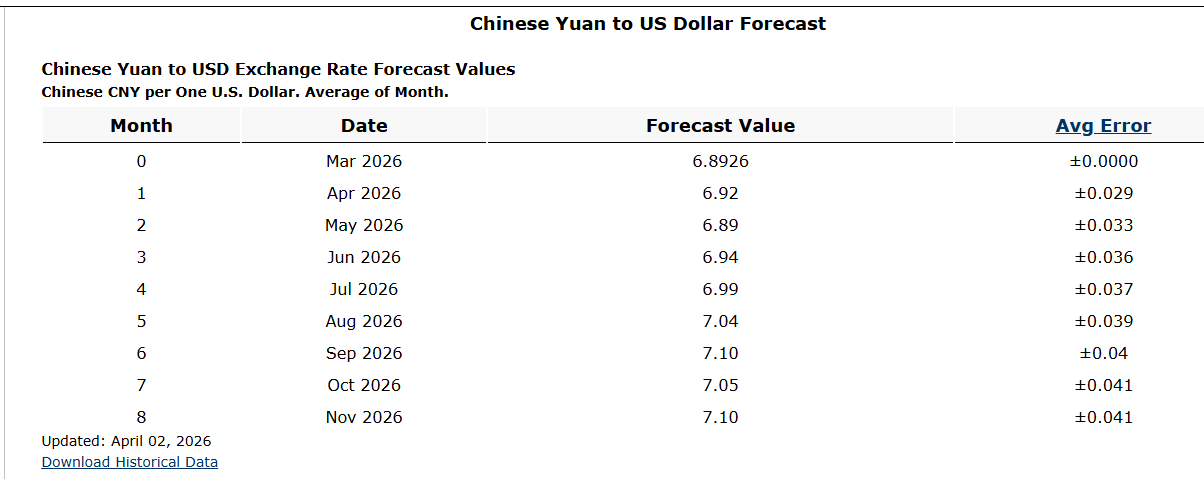
Why monetary hegemony is considered dangerous
Despite the potential benefits, Zhang Chun warns that the pursuit of full monetary hegemony could have serious negative consequences. As he notes, even if the dollar declines, China should not seek first place, a monetary hegemony.
According to his analysis, such a development would lead to overvaluation of the currency, an increase in demand for the yuan and, ultimately, loss of export competitiveness.
This would harm the real economy, which remains a priority for Beijing, which has learned from the dominance of the financial sector in the United States.
Instead of full monetary hegemony, Zhang proposes a system of burden-sharing between the yuan and the dollar.
As he emphasizes, monetary hegemony entails significant costs and states that undertake it end up facing problems similar to those of the United States.
Consequently, he estimates that China should not follow this path.
China seeks to strengthen the international role of its currency as a means of economic security and strategic autonomy, without however undertaking the full burden of monetary hegemony.
This strategy reflects a balance between internationalization and the careful avoidance of the structural costs entailed by dominance in the global monetary system, according to Chinese long-term monetary policy.
www.bankingnews.gr















Readers’ Comments