Iran, successfully imitating the tactics of Russia, has prevailed in the economic war it faces through the use of the dominance of the United States in the financial system via sanctions and its exclusion from the international economic system.
In order to carry out cross border payments bypassing American sanctions, Iran has successfully developed a complex system of workarounds that includes banks, intermediaries, “shadow” networks and cryptocurrencies.
China is the largest buyer of Iranian oil, while transactions are increasingly settled in yuan through indirect channels, limiting exposure to American financial oversight.
At the same time, emerging alternative transaction infrastructures such as CIPS and experimental central bank digital currency platforms CBDC may further support transactions outside the dollar, although their direct use by Iran remains opaque.
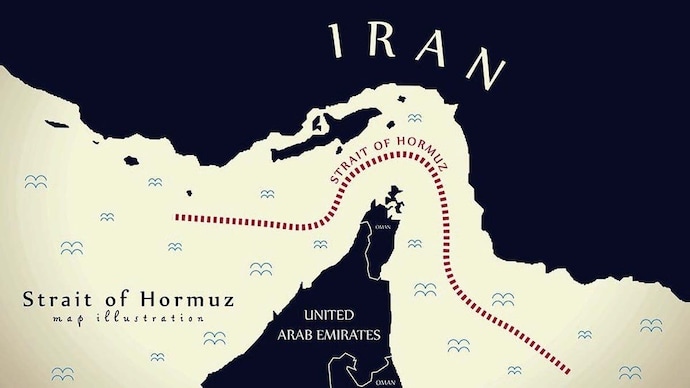
In Washington, attention is strongly focused on the management of access to the Strait of Hormuz by Iran, where a kind of “toll system” is reportedly being applied, restricting navigation and allowing the passage of certain ships in exchange for significant payments or under specific political and economic conditions.
However, less attention has been given to the critical question of how payments for Iranian oil are settled under current conditions.
The analysis is based on research by the GeoEconomics Center and aims to highlight the economic policy and technology tools used by Tehran, as well as the consequences for the effectiveness of sanctions.
The evolution of Iran’s payment system
The cross border payment system of Iran reflects years of adaptation under sanctions.
In 2012, Iranian banks were excluded from the SWIFT network, which significantly hindered international transactions.
In 2016, after the JCPOA agreement, access was partially restored, but in 2018 the United States withdrew and reimposed sanctions, making it clear that traditional channels in dollars or euros were unstable and unreliable.
In response, Iran developed a multi layer system to bypass financial exclusion.
Some transactions continue to be processed through banks in countries willing to accept sanctions risk.
Others are carried out through intermediaries that conceal real ownership or offset obligations.

At the same time, the Shetab system expanded cross border through integration with the Russian Mir, enabling functional interconnection of bank cards.
In addition, informal networks operate outside the banking system, such as “shadow banking”, based on shell companies and exchanges in regions such as the United Arab Emirates, Hong Kong and Singapore.
At the core of the system lies hawala, a network without physical transfer of funds.
Dubai operates as a key hub for such activities.
At the same time, Iran uses cryptocurrencies.
According to Chainalysis, in 2025 activity related to Iran reached 7.8 billion dollars, with increasing use of stablecoins.
American authorities are intensifying sanctions on exchanges and digital wallets linked to these flows.
The role of the yuan and China
China absorbs more than 80% of Iran’s seaborne oil exports.
Transactions are increasingly conducted in yuan, aiming to reduce dependence on the dollar.
Funds remain in controlled accounts and are mainly used for payments to Chinese companies or for imports.
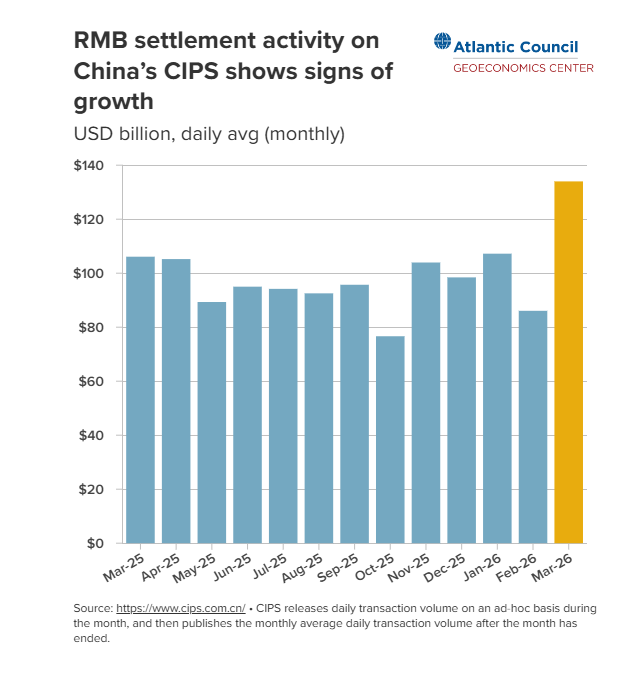
The CIPS system, created in 2015 by the People’s Bank of China for settlement in renminbi, may serve as a platform for these transactions.
Data show an increase in transaction volume, with the daily average reaching 134 billion dollars in March 2026.
However, this does not directly prove the participation of Iranian transactions, but indicates a general strengthening of yuan usage.
The United Arab Emirates may play an increasing role, as it functions as a trade and financing hub for Iran, while also participating in the CIPS network.
Digital currencies and new payment technologies
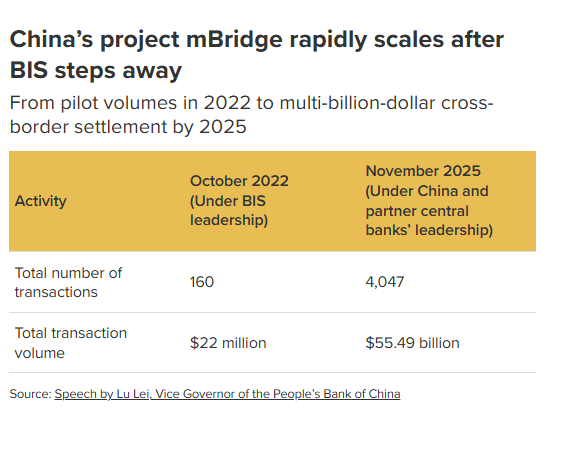
China may utilize Project mBridge, a cross border payment platform using CBDC.
The project includes the People’s Bank of China, the Hong Kong Monetary Authority and central banks of other countries.
More than 4,000 transactions with a total value exceeding 55 billion dollars have already been carried out.
Although there is no public evidence of direct use by Iran, there is a possibility of indirect involvement through banks and intermediaries, particularly in the United Arab Emirates.
Three European officials estimate that such tools may already be used in the context of the conflict with Iran, although the extent remains unknown.

Significant gains for Beijing
Shares of Chinese companies involved in cross border payments recorded gains after the Ministry of Commerce noted that the yuan is being used to pay transit tolls through the Strait of Hormuz.
CNPC Capital Co., a financial services subsidiary of China National Petroleum Corp., rose up to the daily limit of 10% on the Shenzhen exchange.
Lakala Payment Co., a major third party payment provider in China, gained up to 7.9%, while fintech firm Shenzhen Forms Syntron Information Co. rose 9.4% before trimming gains.
Although China has sought for years to internationalize the yuan, its practical use in the Strait of Hormuz constitutes a concrete example that markets had anticipated.
Analysts estimate that this development strengthens expectations that geopolitical conflicts will direct additional capital toward China.
Iran’s control and toll mechanism
A post on the website of the Ministry of Commerce, citing a recent report by Lloyd’s List, states that ships pay fees of up to 2 million dollars to Iran for passage through the strategically important energy route, with the option of payment in yuan.
Iran has intensified control of navigation in the Strait of Hormuz, imposing fees starting from approximately 1 dollar per barrel, payable in yuan or in stablecoins, according to other sources.
A very large crude carrier, VLCC, typically has a capacity of about 2 million barrels, indicating significant total payment amounts per transit.
The role of the yuan as an alternative currency
“As the war with Iran continues, the yuan is emerging as a key alternative for global capital due to China’s strong relations with Iran,” said Shen Meng, director at investment bank Chanson & Co. based in Beijing.
According to him, sectors such as energy investments and electronic payment companies are expected to attract increased capital inflows.
Shen added that China’s strategy for yuan internationalization is a key factor in promoting its use in the Strait of Hormuz.
Outlook and geoeconomic implications
Developments indicate that payment infrastructures in the Chinese currency may expand, particularly in the Middle East. At the same time, Iran is developing the “digital rial”, while countries of the BRICS promote a multipolar monetary system.
However, alternative systems do not immediately threaten the dominance of the dollar.
CIPS remains smaller compared to SWIFT and CHIPS.
Nevertheless, they undermine a critical tool of the United States, the effectiveness of economic sanctions.
Iran continues to operate within a fragmented payment system.
The yuan does not remove sanctions, but provides a cheaper and more flexible way to bypass them, reducing dependence on the dollar and compliance costs.
The key shift lies in the linkage between trade and payment systems.
The critical question is whether these changes are a temporary response to the crisis or signal a deeper transformation of the international monetary system toward less dollar centric structures.
The use of the yuan at a critical geostrategic point such as the Strait of Hormuz indicates a shift in global financial flows under conditions of crisis.
The connection between geopolitical tension, energy flows and currency choice strengthens the role of China in the global economic system and highlights new dynamics of de dollarization.
www.bankingnews.gr











Readers’ Comments