The war between the United States and Iran is escalating into one of the most dangerous geopolitical fronts of the modern era.
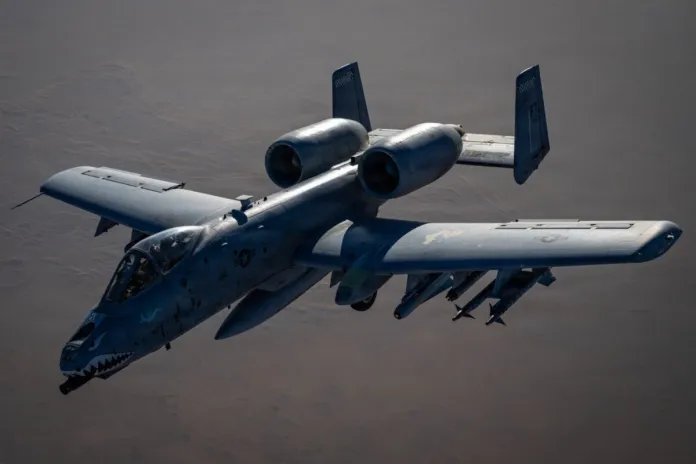
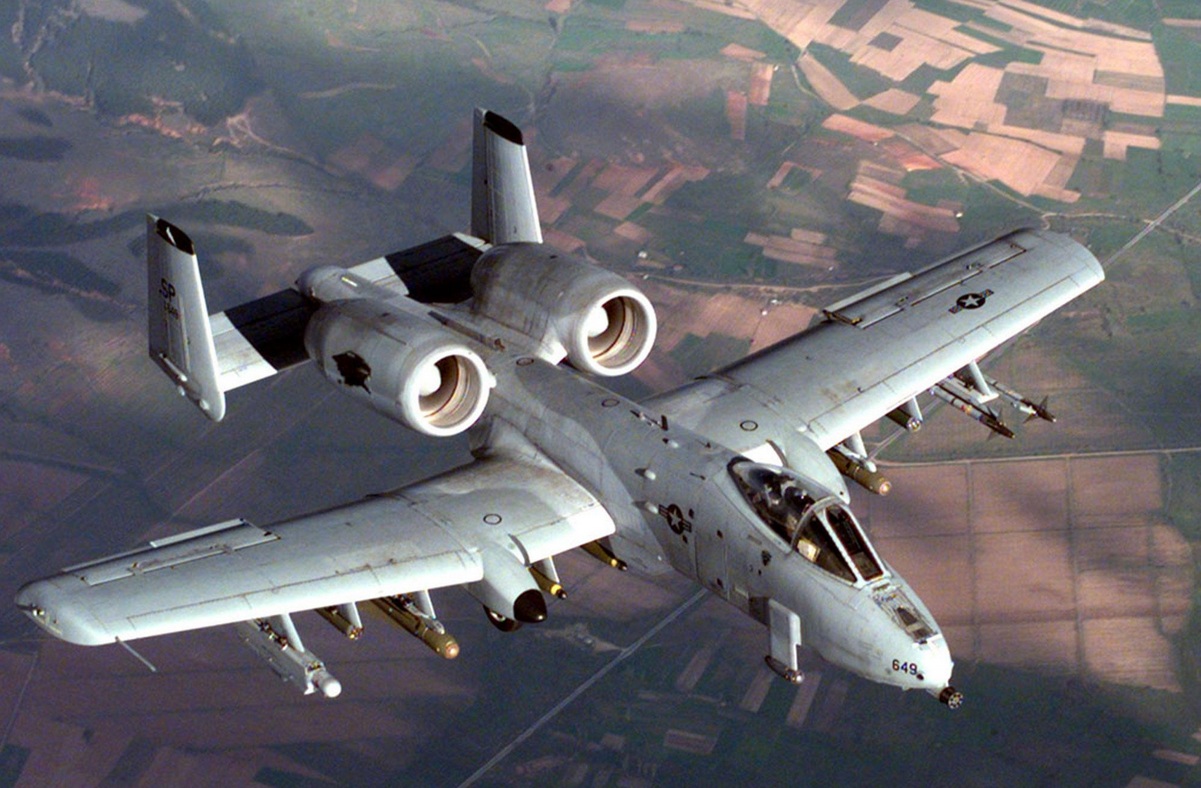
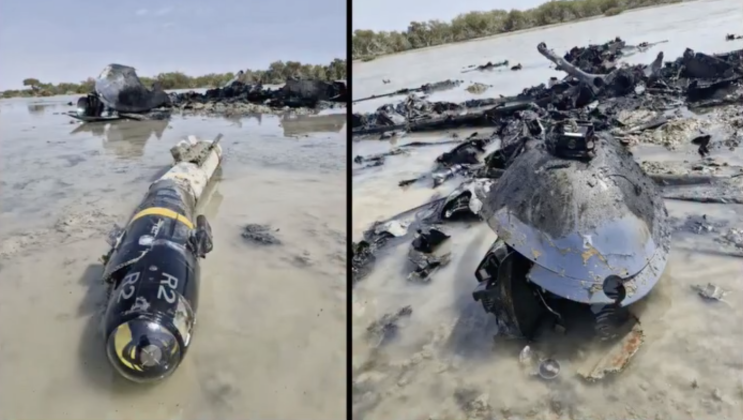
Within this explosive environment, one incident caused particular sensation among both military analysts and international public opinion, the destruction suffered by an American A 10 Thunderbolt II, the famous Warthog, from Iranian fire during a rescue mission.
This incident is not simply another episode in a high intensity war.
On the contrary, it highlights the significant capabilities of Iranian air defense, while at the same time raising serious questions about the effectiveness of American military strategy in the region.
For Iran, this success is presented as proof that even the most resilient and legendary aircraft of the American air force are not invulnerable.
Strike during a rescue mission
The A 10 participated in a Search and Rescue, SAR, mission to locate a crew member of an American fighter F 15E Strike Eagle, which had been shot down over Iranian territory on 2/4/2026.
During the operation, Iranian forces opened fire against the A 10.
The aircraft suffered severe damage, forcing the pilot to eject over the Persian Gulf.
The pilot was eventually rescued by American forces, but the incident itself constituted a clear indication that Iran has the capability to strike even heavily armed American aircraft.
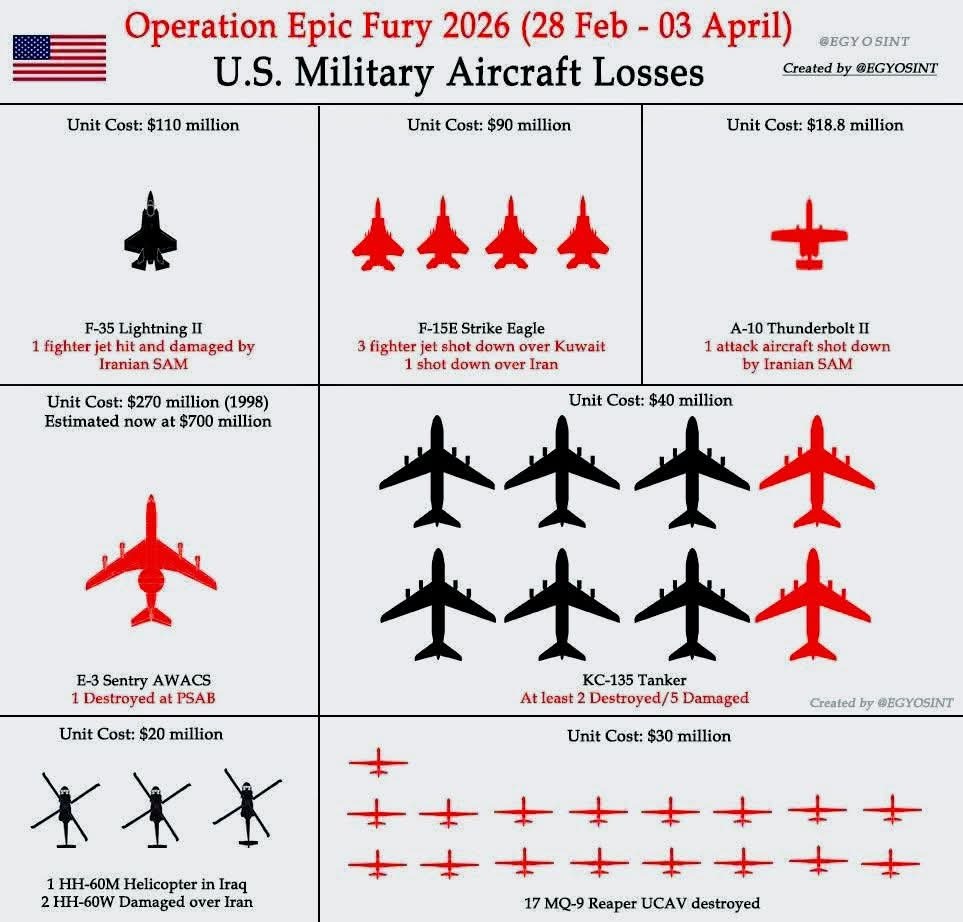
The downing of the F 15E and the subsequent loss or disabling of the A 10 constitute the first confirmed loss of an American fighter within Iranian territory since the beginning of the operation “Epic Rage”.
This fact has already caused intense discussions in Western military circles.
For Iran, this success is not simply a tactical victory.
It is a strong symbolic confirmation that it can militarily resist American air superiority.
The legendary A-10 Warthog
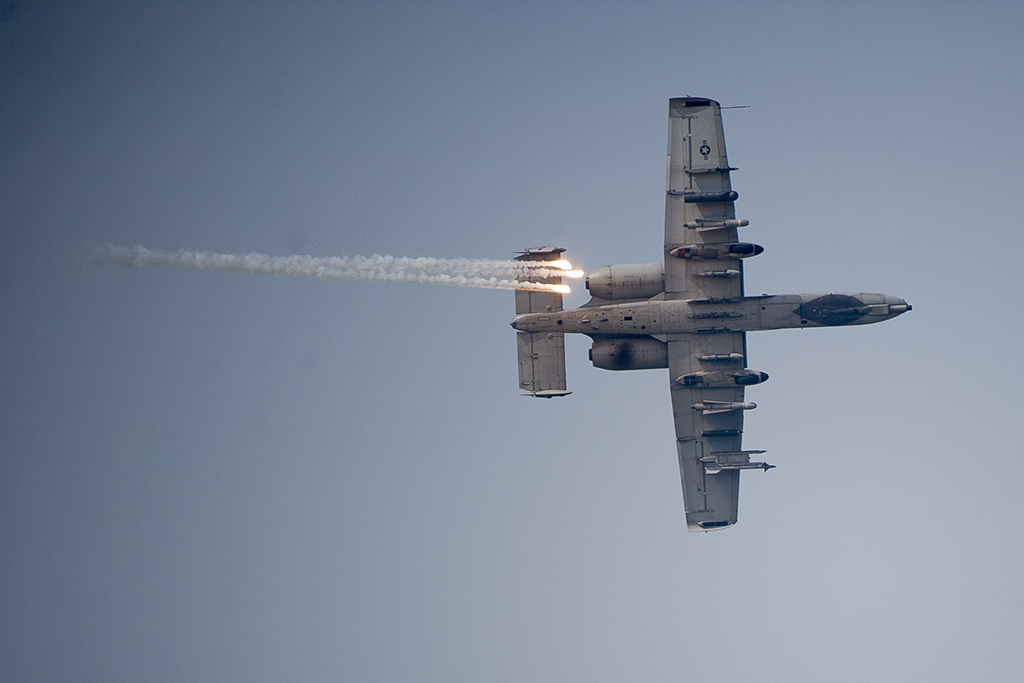
The A-10 Thunderbolt II is one of the most recognizable and legendary aircraft of the American air force.
The aircraft entered service in the United States Air Force in 1976, during the Cold War.
It was specifically designed for Close Air Support, CAS, missions, that is, direct support of ground forces on the battlefield.
Its designers had carefully studied the experiences of pilots from the Vietnam War.
These pilots had highlighted the need for:
1) long time in the air
2) good visibility toward the ground
3) ability to fly at low altitude
4) high resistance to damage
5) strong armament
All these characteristics were incorporated into the design of the A-10.
The lethal GAU-8 cannon with 3,900 rounds per minute
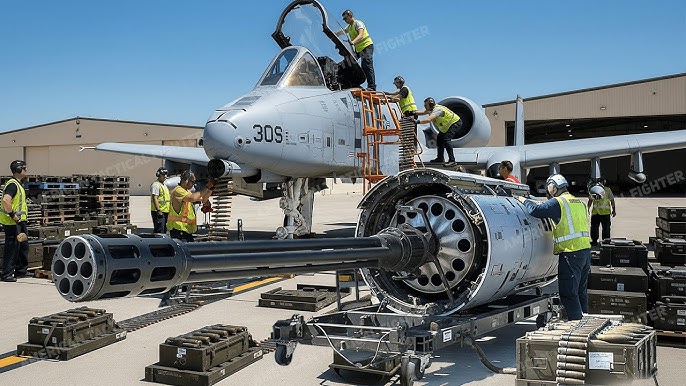
The most characteristic element of the A 10 is the massive rotating GAU 8 Avenger 30 millimeter cannon, manufactured by General Electric.
This weapon consists of seven barrels and can fire approximately 65 rounds per second.
The rate of fire can reach 3,900 rounds per minute.
The ammunition includes explosive incendiary rounds and armor piercing depleted uranium rounds.
The GAU 8 is designed to destroy heavy armored vehicles, even main battle tanks, from a distance of approximately 1,200 meters.
Its firepower is so terrifying that military analysts have described the effect of its fire as something that “makes the enemy’s insides freeze with fear”.
Designed to survive
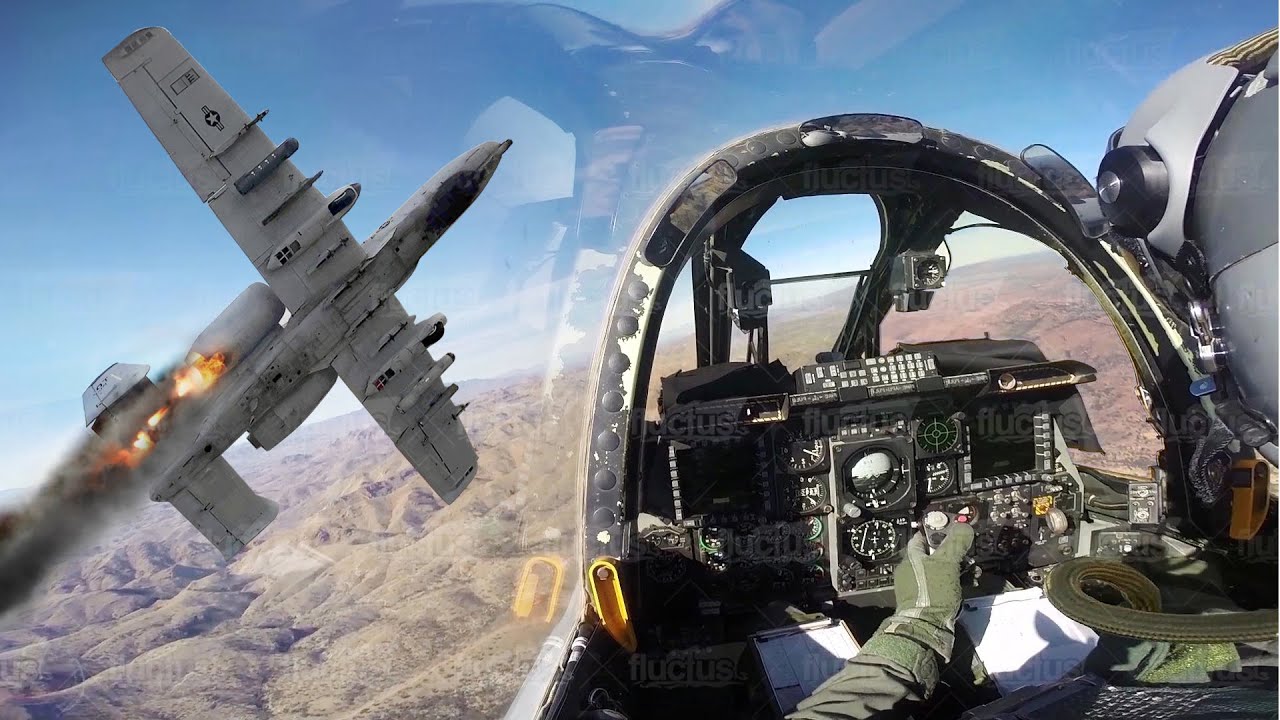
The A-10 is perhaps the most durable aircraft ever built for combat missions.
The cockpit is protected by titanium armor, creating a kind of “armored bathtub” around the pilot.
The aircraft can continue flying even with severe damage.
It is capable of withstanding hits from anti aircraft fire, operating at low altitude and flying slowly and steadily over the battlefield.
This durability was one of the reasons why the aircraft was considered almost impossible to shoot down.
The recent success of Iranian air defense therefore gains even greater significance.
The flexibility of the A 10 on the battlefield
The A-10 does not rely only on its cannon.
It can also carry:
1) AGM 65 Maverick missiles
2) rockets
3) guided bombs
4) other air to ground missiles
The aircraft has excellent maneuverability at low speeds and low altitudes, which makes it ideal for detecting targets on the ground.
In addition, it can take off and land on small and improvised runways, allowing it to operate close to the battlefield.
Its role in the war with Iran - It hurt more than the strike on the F-35
During the operation “Epic Rage”, the A 10 is used in various roles.
One of the main ones is surveillance and attacks against fast boats in the Strait of Hormuz.
This strait is one of the most important points in the world for oil transportation.
Approximately 20% of global seaborne oil shipments pass through it daily.
Iran has imposed a de facto restriction on navigation in the area, using small fast boats to threaten commercial ships.
The A-10 has undertaken the mission of detecting and destroying these boats.
General Dan Caine, chairman of the American Joint Chiefs of Staff, stated that the A-10 “hunt and destroy fast attack boats in the Strait of Hormuz.
Use against drones
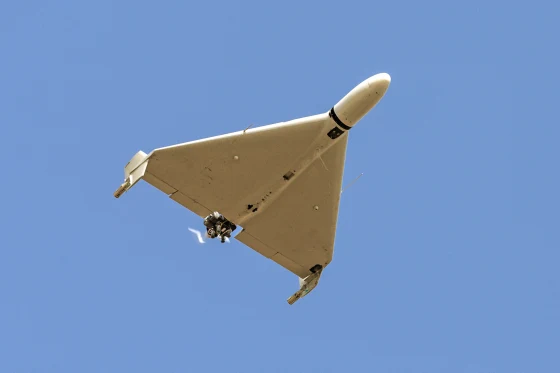
Another role of the A 10 is countering drones.
Iranian drones of the Shahed type have proven to be particularly difficult targets for fast fighter aircraft.
They fly relatively slowly, at low altitude and in large numbers.
These characteristics make it difficult for conventional fighters to detect them or adjust their speed to shoot them down.
The A-10, thanks to its ability to fly slowly and remain in the air for long periods, has proven particularly effective in dealing with such targets.
The downing of MQ-9 drones
The success of Iran is not limited to the strike against the A 10.
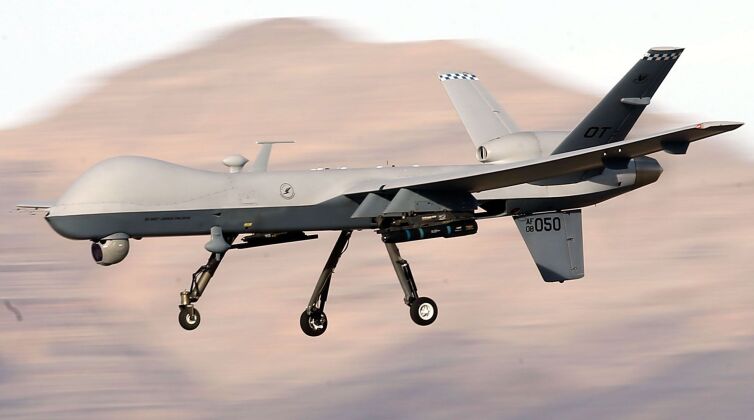
Iranian footage also confirmed the downing of another MQ 9 Reaper drone of the American air force.
This was the 17th drone of this type that was destroyed.
The MQ 9 is among the most advanced drones in the world. It can carry out reconnaissance, surveillance and strike missions.
Its cost approaches 150 million dollars per unit.
The loss of so many drones constitutes a significant financial and operational blow for the United States.
The effectiveness of Iranian air defense
The Iranian armed forces appear to have successfully used short and medium range infrared guided anti aircraft systems.
These systems can hit targets even when they fly at low altitude.
Their success against American and Israeli aircraft shows that the air superiority of the United States is no longer guaranteed.
A strategic message
The destruction or severe damage to an aircraft such as the A 10 carries strong symbolic significance.
The aircraft was considered for decades one of the most durable and effective weapons of the United States.
The fact that Iranian air defense was able to strike it shows that Washington’s technological superiority no longer guarantees the safety of its aircraft.
For Iran, this success constitutes an important propagandistic and strategic victory.
Criticism of the United States
The incident has also reignited criticism of American strategy in the Middle East.
Despite the enormous sums spent on military equipment, the United States continues to suffer losses in conflicts where the opponent uses asymmetric tactics.
Excessive reliance on expensive and technologically advanced systems may prove to be a disadvantage against more flexible and determined opponents.
The future of American operations
The conflict with Iran shows that future wars will not be as one sided as the operations of the 1990s.
The downing of drones, the loss of fighters and the damage to the A 10 indicate that even the most powerful military forces can face serious challenges.
For Iran, each such success strengthens its image as a power that can resist American pressure.
Shock over the loss of the legendary aircraft
The damage suffered by the A-10 Thunderbolt II constitutes one of the most characteristic incidents of the conflict between the United States and Iran.
Beyond the military dimension, this event also has a strong political and symbolic impact.
For Iran, it is a significant confirmation of the capabilities of its defense.
For the United States, it is a reminder that even its most legendary weapons are not invulnerable against a determined opponent.
And in a world where the balance of power is constantly changing, such incidents may prove decisive for the future of conflicts in the Middle East.
www.bankingnews.gr















Readers’ Comments