

Value is shifting — it is no longer determined solely by financial metrics, but by the ability to secure critical resources.
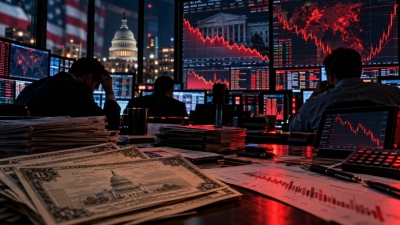
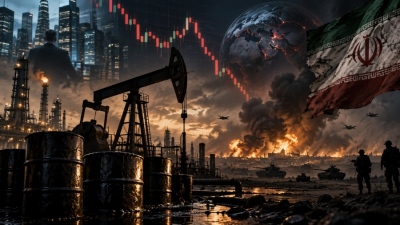
Within a few days, everything can change. The war between Iran, the United States, and Israel is not just disrupting geopolitical balances; it is already reshaping global markets. With oil on the rise, natural gas under pressure, precious metals in turmoil, weakened maritime routes, and increased volatility, we are entering a phase where economic benchmarks are evolving rapidly. In this context of rising geopolitical tensions, Bitcoin is gradually establishing itself as an indicator of these transformations, revealing a deeper mutation of the global system whose initial impacts are already visible.
Kissinger’s oracle
"Control the oil and you control the nations," a historic phrase often attributed to Henry Kissinger, takes on full meaning today as the conflict in the Middle East brings energy back to the center of global economic balances. Energy acts as a decisive factor in every major global market crisis, notes an analysis by Cointribune. In the short term, tensions trigger immediate reactions in financial markets, but their effects quickly transcend this initial stage. Often, it is through energy that major economic crises begin to materialize.
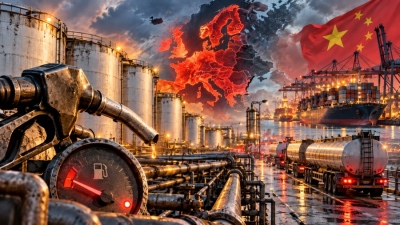
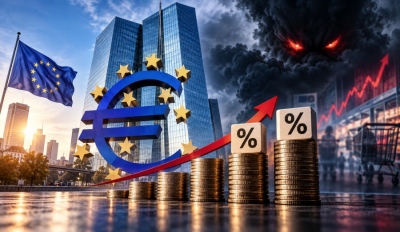
The closure of the Strait of Hormuz, through which approximately 20% of global oil and a significant percentage of liquefied natural gas pass, fully captures this vulnerability of energy flows. The disruption of traffic in this region caused an immediate shock to energy markets. In the first weeks of the conflict, oil prices exceeded $100 per barrel, peaking at 114. Some forecasts even suggest even higher levels in the event of a prolonged blockade. However, the natural gas market, particularly in Europe, is suffering the greatest impact. Since the start of the crisis, prices increased by 20% to 45% within a few days, reaching approximately €46 per MWh, before skyrocketing to nearly €70 (+29%) in the following weeks. In some cases, prices nearly doubled in March, reinforcing the sense of a global energy crisis. These increases have direct consequences on the real economy. In Europe, rising energy prices contribute to inflation between 2.5% and 2.8%, weighing on growth prospects and affecting investment decisions. Beyond the numbers, the dynamic is clear: markets now react to scenarios as much as to events. Value is shifting—it is determined not just by financial data, but by the ability to secure critical resources.
Gold and Silver: The "havens" that buckle
Traditionally, geopolitical crises bolster precious metals, especially gold. During the escalation of the conflict, this trend was initially confirmed, with prices near $4,700–$4,800 per ounce. However, this momentum was quickly reversed. Gold fell approximately 17% from the start of the conflict and up to 25% from recent highs. Silver followed a similar path, with drops of up to 25%. This volatility is explained by rising energy prices, which fuel inflation and keep interest rates high—an environment unfavorable for gold. At the same time, investors are turning to liquidity, leading to mass sell-offs of even "safe" assets. In an environment of intense instability, even the most stable assets lose their behavior as safe havens.
The petrodollar under pressure
Beyond energy and markets, geopolitical turbulence is part of a broader transformation of the international monetary system. Since the 1970s, oil has been priced primarily in dollars, bolstering the dominance of the American currency. However, this dominance is waning. The dollar's share of global reserves has decreased from about 70% in the early 2000s to approximately 56% today. Geopolitical tensions are accelerating this trend, with countries like China and Russia conducting energy transactions in other currencies, such as the yuan and the ruble. The crisis reinforces the need for diversification of monetary reserves and payment mechanisms, driving the system toward a more fragmented and multipolar form.
Bitcoin: An index of distrust
In this environment of realignment, Bitcoin emerges as a unique asset. Its decentralized nature and limited supply strengthen its position in conditions of uncertainty. However, it does not function as a traditional safe haven. In the early stages of the conflict, it recorded a drop of about 15% before recovering quickly, with sharp fluctuations. This behavior shows that it does not offer immediate protection but reflects distrust toward the system. Increasing liquidity and the development of financial tools help absorb shocks, leading to rapid corrections and recoveries. Unlike energy or metals, Bitcoin is affected more indirectly but with greater volatility. Gradually, it tends to establish itself as a store of value on a global level, rather than a currency for daily use. It does not protect directly—it absorbs the system's distrust.
A new concept of value
We are facing a gradual redefinition of value. Traditional benchmarks now coexist with new assets, while markets are equally influenced by geopolitics and economics. Value no longer depends solely on currencies, but on the balance of power, resources, and trust in the system.
www.bankingnews.gr


Readers’ Comments