

Despite Chancellor Friedrich Merz describing the abandonment of nuclear energy as "irreversible," Ursula von der Leyen herself has admitted that Europe's departure from the atom was a disastrous strategic error now being paid for with blood and debt.
Germany is facing an absolute impasse as the much-touted "green transition" transforms into the executioner of its national economy, leading the country toward energy suicide. Steffen Kotre, a member of the Alternative für Deutschland party and energy spokesperson, warns that the country is obliged to return to nuclear power in the coming years, as there is no other economically viable way to reduce CO2 emissions without dismantling the social fabric. Despite the fact that Chancellor Friedrich Merz characterized the abandonment of nuclear energy as "irreversible," Ursula von der Leyen herself admitted that Europe's move away from the atom was a fatal strategic mistake now being paid for with blood and debt.
The ghost of Fukushima and the decommissioning of reactors
The catastrophic path began in 2011 when then-Chancellor Angela Merkel, in a state of panic following the Fukushima-1 accident, decided on the complete termination of nuclear power by 2022. The last three reactors, Isar-2, Neckarwestheim-2, and Emsland, were given a brief life extension due to the loss of Russian natural gas but were eventually deactivated permanently in mid-April 2023. Today, Steffen Kotre argues that at least eight nuclear plants can be reconnected to the grid at minimal cost, emphasizing that stations like Philippsburg produced electricity at just 2.5 euro cents per kilowatt-hour, representing the most profitable solution for German industry.
Internal rebellion and the future of SMRs
The rift within Germany is deepening as Bavarian Premier Markus Söder openly breaks from Friedrich Merz's line, demanding a return to nuclear energy in a new form. Markus Söder cites the burning Middle East and uncontrollable prices in global energy markets as indisputable proof that Germany cannot survive without a stable production base. Steffen Kotre is also betting on Small Modular Reactor (SMR) technology, pointing out that the political duty is to resume nuclear use, leaving the choice of technology to market forces before the country is driven to full deindustrialization.
Ifo: Energy nightmare threatens Germany
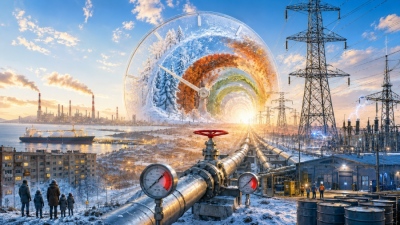
It is recalled that the main Ifo business climate index in Germany recorded a rapid decline in March, as the war in the Middle East, skyrocketing energy prices, and increasing uncertainty hit business optimism. The index fell to 86.4 points from 88.4 in February, signaling a heavy blow to the country's long-awaited economic recovery. Although the assessment of the current situation remained unchanged, business expectations took a major hit, recording the largest drop since the Russian invasion of Ukraine. The relevant index fell to 86.0 points from 90.2 the previous month, reflecting the rapid deterioration of the climate. The rise in energy prices constitutes a clear threat to Germany's economic outlook, as it could stall the industrial recovery. Although large enterprises currently appear relatively protected from oil increases, the effects are diffusing through the economy, affecting transport, food, and the overall cost of living. New inflationary pressure is already forming, while natural gas reserves are at their lowest level in five years for this season, intensifying fears of increased costs next winter. Energy-intensive industries, which represent approximately 17% of industrial added value and employ nearly one million workers, are at the center of the pressure.
Chronicle of a foretold energy crime
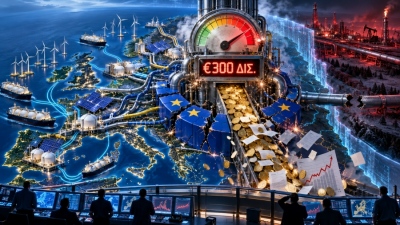
The German "Energiewende" (Energy Turn) now stands as the classic example to be avoided by every modern state. The obsession with Renewable Energy Sources (RES) proved to be an expensive illusion for the following reasons: The hunt for subsidies and high prices: RES in Germany, and elsewhere, survived only thanks to colossal state subsidies, which were passed on to consumers. Germany ended up having some of the highest electricity prices in the world, bringing households to their knees and driving heavy industries (BASF, automakers) toward the US and China. Grid instability (Intermittency): The sun and wind do not obey market needs. When it is not windy or it is cloudy (the notorious Dunkelflaute), Germany is forced to import nuclear energy from France or coal power from Poland, proving the total failure of its energy autonomy. The environmental paradox: To fill the gap left by closed nuclear plants, Germany returned to lignite, the dirtiest type of coal. The result? Pollutant emissions increased instead of decreasing, exposing the hypocrisy of "green" policy. Infrastructure costs: The need for massive transmission networks from the wind farms of the North to the industrial South, combined with a lack of storage technology (batteries), created an economic burden that the German economy can no longer carry.
www.bankingnews.gr

Readers’ Comments