

Trump’s promise that "we will finish it soon" reveals a president playing with fire, disregarding the consequences of his policy beyond mere media influence.
The United States is literally seething with anxiety and anticipation. The superpower, its prestige wounded by Iranian strikes in the Persian Gulf, is in turmoil. The address by American President Donald Trump in the early hours of April 2, 2026, regarding Iran was not merely a typical communication initiative; it was the climax of a perilous path the US has carved with its policy in the region. The questions were many: Would he announce a truce? Would he simply declare the conflict over, leaving the Strait of Hormuz to its fate? Or would he speak of a full-scale land invasion? The reality proved even more disturbing. Trump avoided any clear commitment to peace or restraint. Instead, his speech had a clear objective: to justify and validate the previous US attack on Iran that began on February 28, while simultaneously touting the "total destruction" of Iranian military power. Strikingly, he did not mention Israel a single time.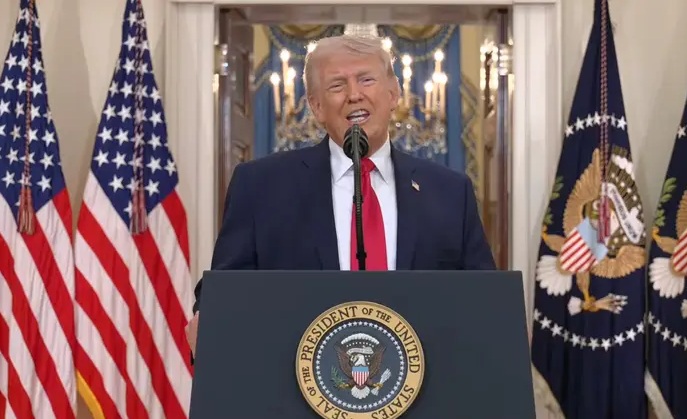
After the fact
Analyst Dan DePetris noted that this speech should have occurred prior to the attack to justify US military steps. Instead, it was delivered post-factum as an attempt to convince the American public of the necessity of the strikes. Trump described Iran as "the most violent and tyrannical regime on the planet," continuing an "unrelenting pursuit of nuclear weapons" and "refusing every deal." The argument was simple: the United States had no choice. As he put it, "we wiped them out, we wiped them all out." In other words, the threat of Iranian nuclear power was so imminent it required extreme military action—and that action, according to him, was already complete.
Trump’s rage – An address of extreme escalation
Trump continued to describe US achievements as a "systematic deconstruction" of Iran's military capabilities: the destruction of the navy, the total weakening of the air force and missile programs, and the elimination of the defense industry. According to his words, all of this has been finalized, and Washington's military objectives are nearing completion. However, peace has not arrived. On the contrary, the speech hinted at further escalation. Trump stated that over the next two to three weeks, the US would expand the destruction to bring Iran "back to the Stone Age." Simultaneously, he mentioned that discussions are continuing—an ambiguous statement implying that Iran is still resisting and that the conflict could expand without clear boundaries.
NOW - Trump on Iran: "We're going to hit them extremely hard over the next 2-3 weeks. We're going to bring them back to the stone ages, where they belong!" pic.twitter.com/knSmNB9OQk
— Disclose.tv (@disclosetv) April 2, 2026
The riddle of the Strait of Hormuz
Meanwhile, Trump attempted to downplay the possibility of Iranian retaliation. He argued that Americans should not worry about gas prices or oil shortages, as the US would source crude from other providers, such as Venezuela. The reality, however, is that escalation in the Persian Gulf and Iran's ability to strike energy infrastructure makes shortages and high costs inevitable, not just for the US but for the entire world. One of the most alarming elements of the speech was the shift of responsibility for opening the Strait of Hormuz to other countries. Trump stated that Washington had already done the hard work, leaving it to allies to take action to open the Strait. This vague positioning suggests the US may distance itself from direct crisis management in the Gulf, leaving the region in a power vacuum.
????? Trump's address in 19 minutes: more threats, no exit plan
— Mario Nawfal (@MarioNawfal) April 2, 2026
Key takeaways from tonight's speech:
-The war will last "two to three more weeks."
-Power plants get bombed if no deal is reached.
-Core objectives are "close to completion."
-The U.S. "will bring Iran back… https://t.co/X0iSUTV3Oh pic.twitter.com/iJlLrwL8nt
Something very dangerous is coming – Shock at "unrelenting, unspecified violence"
Comparing the duration of the conflict with Iran to the Korean War, the invasion of Iraq, and World War I seems to serve more to praise the American military than to offer real strategic analysis. Trump describes American military performance as something "the world cannot believe," but the reality is different: Iran continues to hit targets in the region, oil prices are rising, and food and energy shortages are visible on the horizon. Washington's inability to secure peace, the escalation of military actions, and ambiguous statements about future strikes create an explosive mix of dangerous situations. Trump never explicitly took responsibility for the possibility of nuclear or land escalation. Instead, his statements referred to "unrelenting, unspecified violence," leaving the world fearing that something much worse is on the way. It is clear that US policy under Trump is not based on strategic stability, but on a dangerous sense of superiority and the momentary promotion of power. Repeating phrases like "we wiped them all out" or "Iran has been essentially decimated" acts more as media sensationalism than an objective description. In reality, the military destruction is not complete, and the effects on energy markets and regional security are already evident.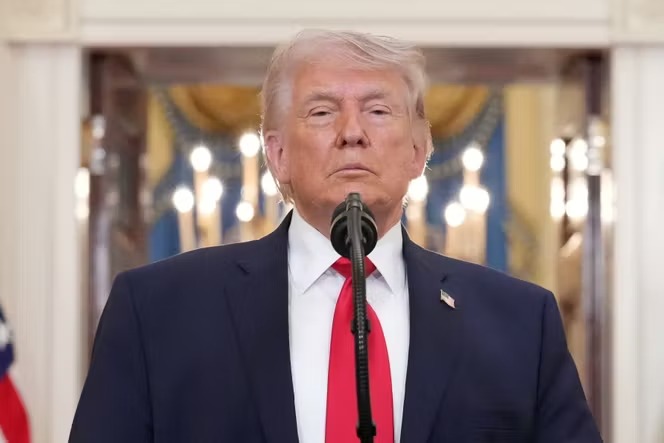
Thriller over the absence of Israel
Even more concerning is that Trump never mentioned Israel, despite its strategic influence in the Middle East being evident in every line of the speech. This suggests that the US is moving in a way that endangers the stability of the entire region without a clear plan or accountability. The strategy of "total destruction" without clear limits or announcements of peace is dangerous even for the American people themselves. The impacts on the economy, energy prices, the security of allies, and global stability are severe.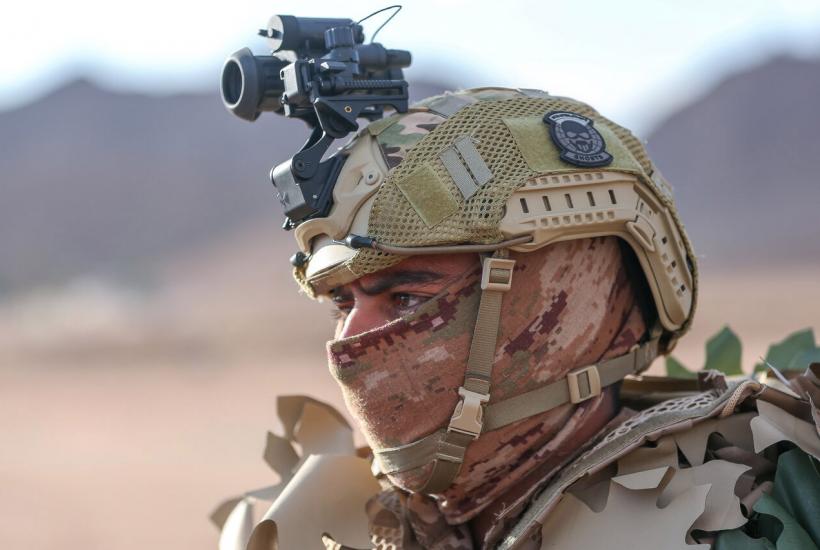
Trump plays with fire
The promise "we will finish it soon" shows a president playing with fire, without considering the consequences of his policy beyond media influence. The world does not see the "absolute victory" Trump describes; it sees a country still fighting, energy prices rising, and international markets worrying. The next phase of this crisis could bring even greater escalation and unpredictable consequences, and the United States appears to lack a plan for real regional stability. Ultimately, Trump's speech was not just a communication move; it was a dangerous warning to the world that the US, under his leadership, is ready to follow a strategy that could lead to widespread destruction. The next move is not just a matter of military power; it is a matter of international security, the global economy, and the very survival of citizens in the affected areas. Something very dangerous is coming, and it will not be limited to the Persian Gulf or Iran.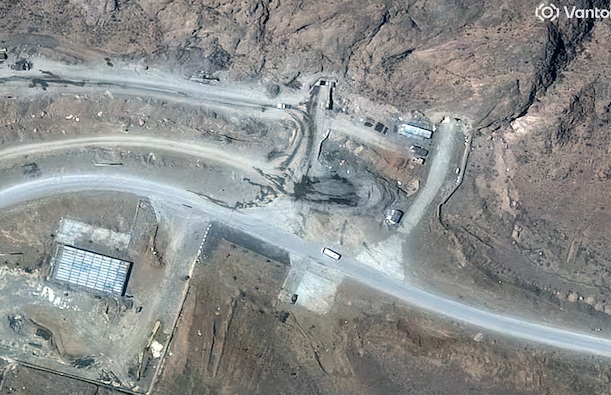
Russian revelation: US completes preparations for land invasion of Iran – Two to occur simultaneously, high risk
The United States has completed military preparations for a possible land operation in Iran, with information indicating that more than one invasion could take place simultaneously. Since the beginning of the US-Israeli war against the Islamic Republic, the Donald Trump administration has not ruled out the possibility of sending ground forces. According to Russian media in recent days, significant military movements have been recorded:
-
Transfer of 41 MC-130J Commando II special aircraft to RAF Mildenhall in the UK, with at least 11 modified for clandestine invasion missions.
-
Arrival of EA-37B Compass Call electronic warfare and 12 A-10C Thunderbolt II attack aircraft.
-
Arrival of the 31st and 11th Marine Expeditionary Units with a total of 4,700 Marines and three amphibious ships, including the USS Tripoli and USS Boxer.
-
Arrival of approximately 3,000 paratroopers of the 82nd Airborne Division.

Two operations under planning
According to reports, there are two main operations under planning:
-
Seizure of Kharg Island, from which 90% of Iranian oil is exported.
-
Removal of enriched uranium by special forces, requiring the creation of a takeoff corridor to transport the radioactive material.
High US risk
Trump warned that the US would hit Iran "extremely hard" in the next two to three weeks, while negotiations would continue in parallel. The start of land operations may occur in the coming days, carrying high risk, as the Islamic Republic possesses a numerical advantage and the power of the defender, despite US superiority in artillery and air power.
Iran's harsh message to the US: We are waiting for the land invasion, we will lead your army into a real slaughter
A stern warning to the United States was issued by Iranian armed forces spokesperson Serdar Hunter, stating that Iran is waiting for the start of an American land operation to turn the conflict into a "slaughter" for US forces. In a televised interview, the General Staff spokesperson argued that President Donald Trump started a war against Iran without calculating the country's actual capabilities and with a false assessment of the strength of the Iranian armed forces. According to him, missile and drone attacks against US and Israeli targets continue, while he claimed that even advanced American systems, such as AWACS early warning aircraft, have been hit by cheap Iranian drones. The Iranian official emphasized that the US "underestimated the power and structure of the Islamic Republic," asserting that the country's military potential and weapon production centers remain intact. At the same time, he stated that Iran's strategy is the expulsion of US forces from Western Asia. Finally, he warned that the Strait of Hormuz will remain closed to the US and its allies for a long time and that Tehran will not accept an end to the war without "punishment of the aggressor and compensation for losses."
www.bankingnews.gr













Readers’ Comments