

The Iranians effectively nullified the claims of Donald Trump regarding the destruction of Tehran’s ballistic arsenal, launching an unprecedented missile attack against two strategic US bases in the Gulf, thus targeting for the first time the American installation of Qasrek in Syria, as well as the base Ali Al-Salem in Kuwait.
As if that were not enough, on 2/4 Iranian forces targeted a series of companies with American interests in the Middle East, including the US steel industry in Abu Dhabi and the industrial city Al Hadd in Bahrain.
At the same time, with a combined attack by Tehran and its allies, Houthis and Hezbollah, 760 drones were launched against Israel, whose residents are celebrating the second day of the Jewish Passover inside shelters.
And all this while ambushes by Hezbollah in Southern Lebanon have an incalculable cost in equipment and personnel for the already weakened IDF.
Triple Iranian strike on industries of Western interests in the Middle East
Specifically, on 2/4, the command of the Navy of the Islamic Revolutionary Guard Corps (IRGC) warned of the consequences of recent attacks by the United States and Israel, stating that the escalation of the war has expanded its list of targets and has now irreversibly sealed the strategy of expelling the United States from the region.
In a series of retaliatory actions for hostile American and Israeli attacks against Iranian infrastructure, the Navy of the IRGC named specific locations that were targeted and struck, which include:
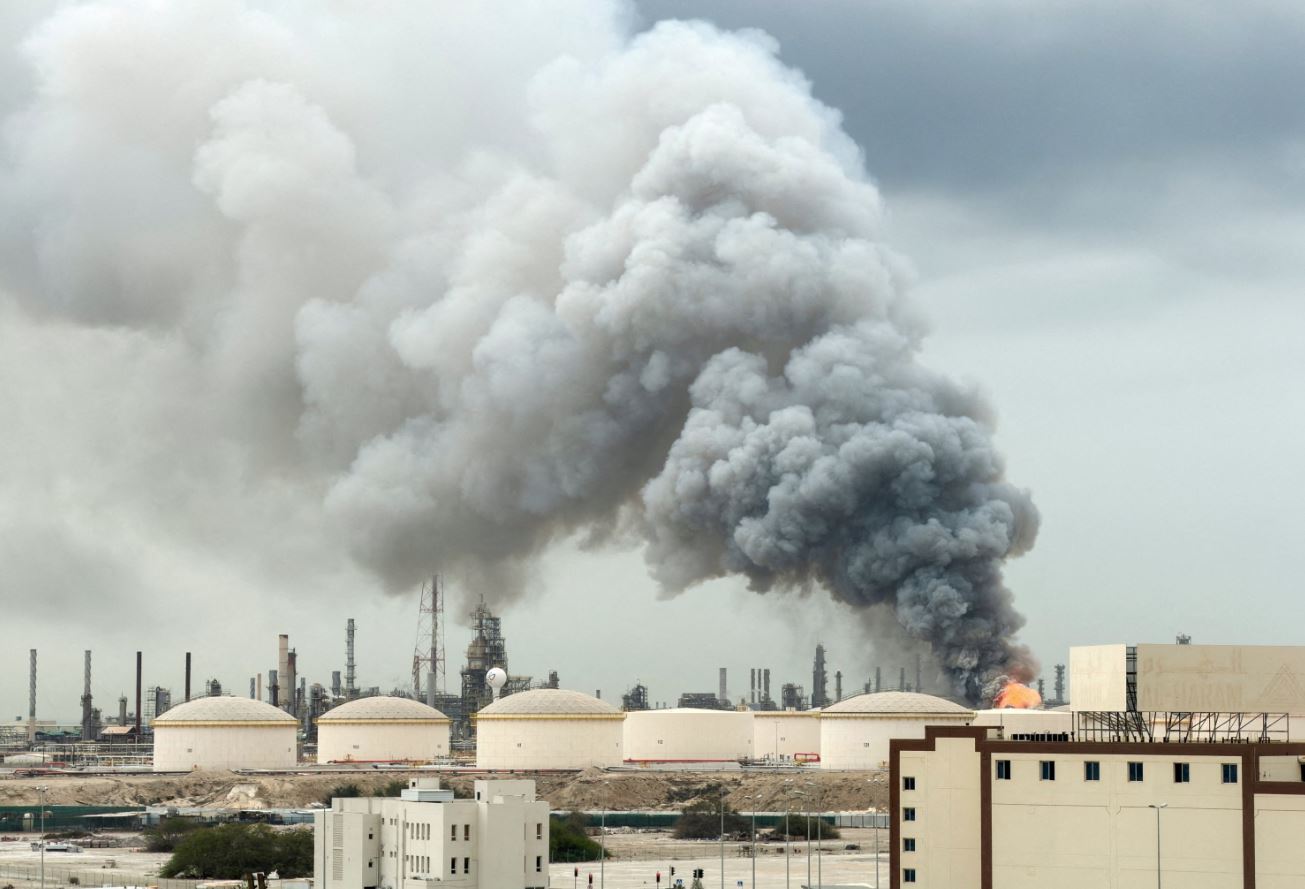
1) The US steel industry in Abu Dhabi, which was the target of a serious attack.
2) The industrial city Al Hadd in Bahrain, which was also part of the targeting.
3) The remaining aluminum infrastructure in Bahrain, which was targeted by a barrage of drones and missiles.
The statement from the Islamic Revolutionary Guard Corps (IRGC) states that the increase in attacks intensified as a reaction to the ongoing hostile actions of the United States and Israel against Iranian territory, demonstrating that the Strait of Hormuz remains under intense Iranian fire control, with Iran continuing to strengthen its unwavering resistance.
Amazon data center in Bahrain engulfed in flames after Iranian bombardment
The Islamic Revolutionary Guard Corps (IRGC) of Iran announced a powerful attack on an Amazon data center in Bahrain, as reported by IRIB.
“We had warned that if terrorist attacks were repeated, American information technology and artificial intelligence companies, which are key actors in monitoring and managing operations, would be targeted. (...) However, it seems that the arrogant rulers of the White House have poor hearing and did not heed this warning. We, however, kept our promise. (...) An Amazon data center in Bahrain was attacked and destroyed,” the IRGC statement notes.

The military command also threatened a much harsher response if the American military continues to attack the Islamic Republic.
The Iranian side further stressed that “full responsibility for the total destruction of these companies in the region lies personally with President Donald Trump.”
Unprecedented bombardment of US base in Syria as satellites reveal scale of destruction
At the same time, new satellite images reveal the destruction caused by recent Iranian attacks on American military positions in Kuwait and Syria.
According to recorded data, there was extensive damage to US military facilities.
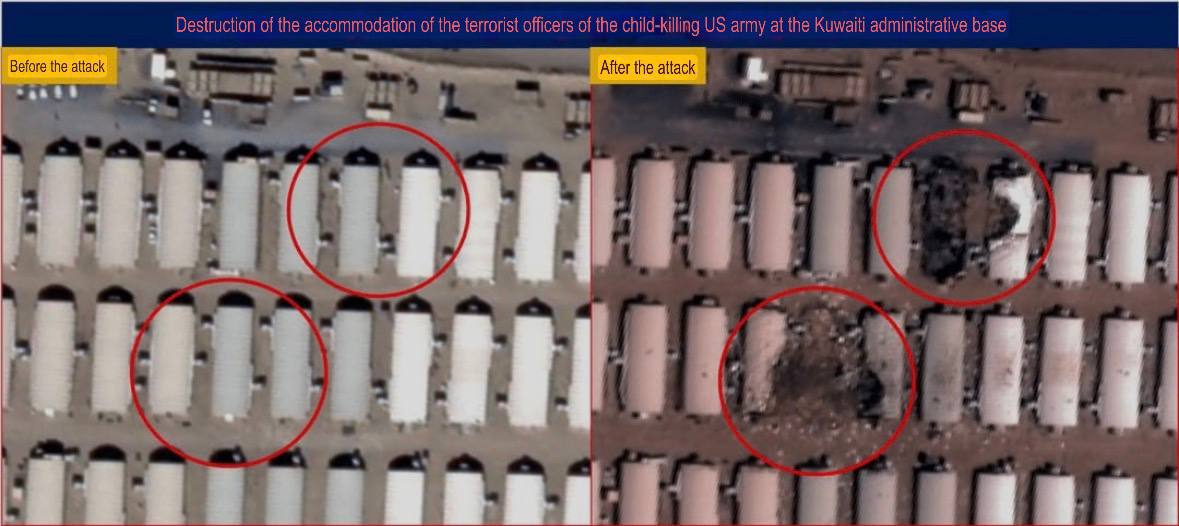
At the air base in Kuwait, the dormitories of US army officers at the command base were destroyed, while at the Qasrek air base in Hasakah of Syria, the officers’ quarters also suffered severe damage.
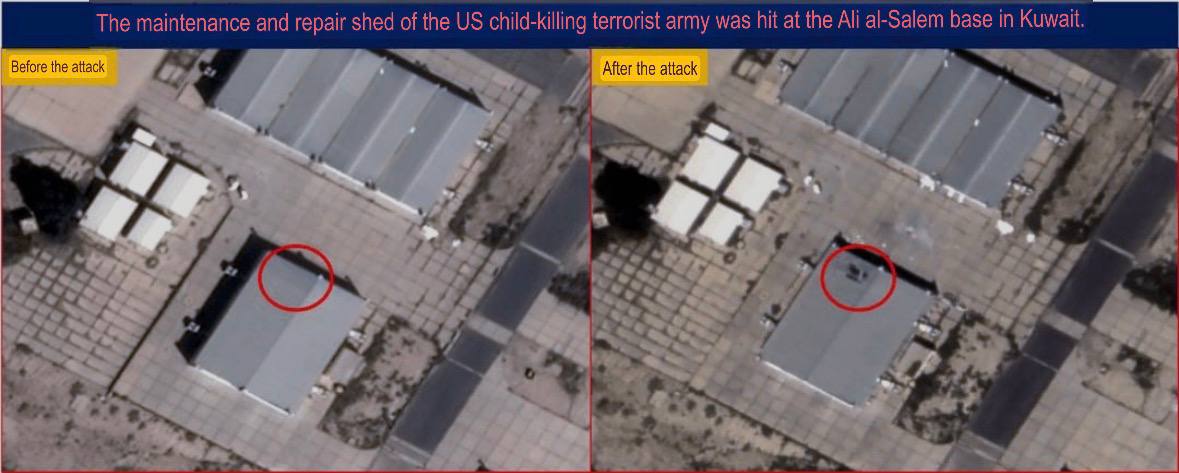
In addition, at the base Ali Al-Salem in Kuwait, explosions destroyed the equipment warehouse of the US army, while the maintenance hangar of the US army also suffered significant damage from the attacks.
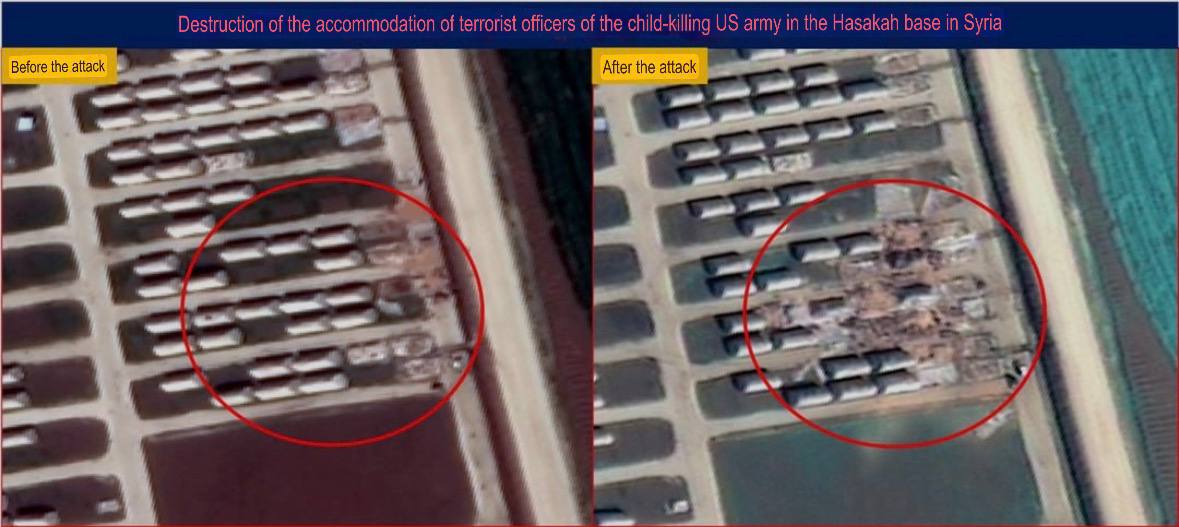
These images confirm the unprecedented escalation of the conflict in the region and the ballistic power maintained by Tehran, despite claims to the contrary by the American president.
Critical Iranian strike on US Al Azraq base in Jordan with reports of destroyed aircraft
Iran struck the air base Al-Azraq in Jordan, where the most advanced fighter aircraft of the United States are stationed.
The Iranian operation aimed to neutralize American forces and reduce their air capability.
?????? Footage of an Iranian missile impact (more precisely, its separating warhead) on a US-used base in Jordan. It is clearly visible how two anti-aircraft missiles miss while attempting an interception. pic.twitter.com/6nelFrcoTU
— RusWar (@ruswar) April 2, 2026
The base Al-Azraq, a strategic center of US forces, has for years played a leading role in offensive and reconnaissance drone operations against positions of the Resistance Front and Iran.
This attack underscores the determination of Iranian military power to protect its national security and inflict serious damage on the opponent, notes the Tasnim agency.
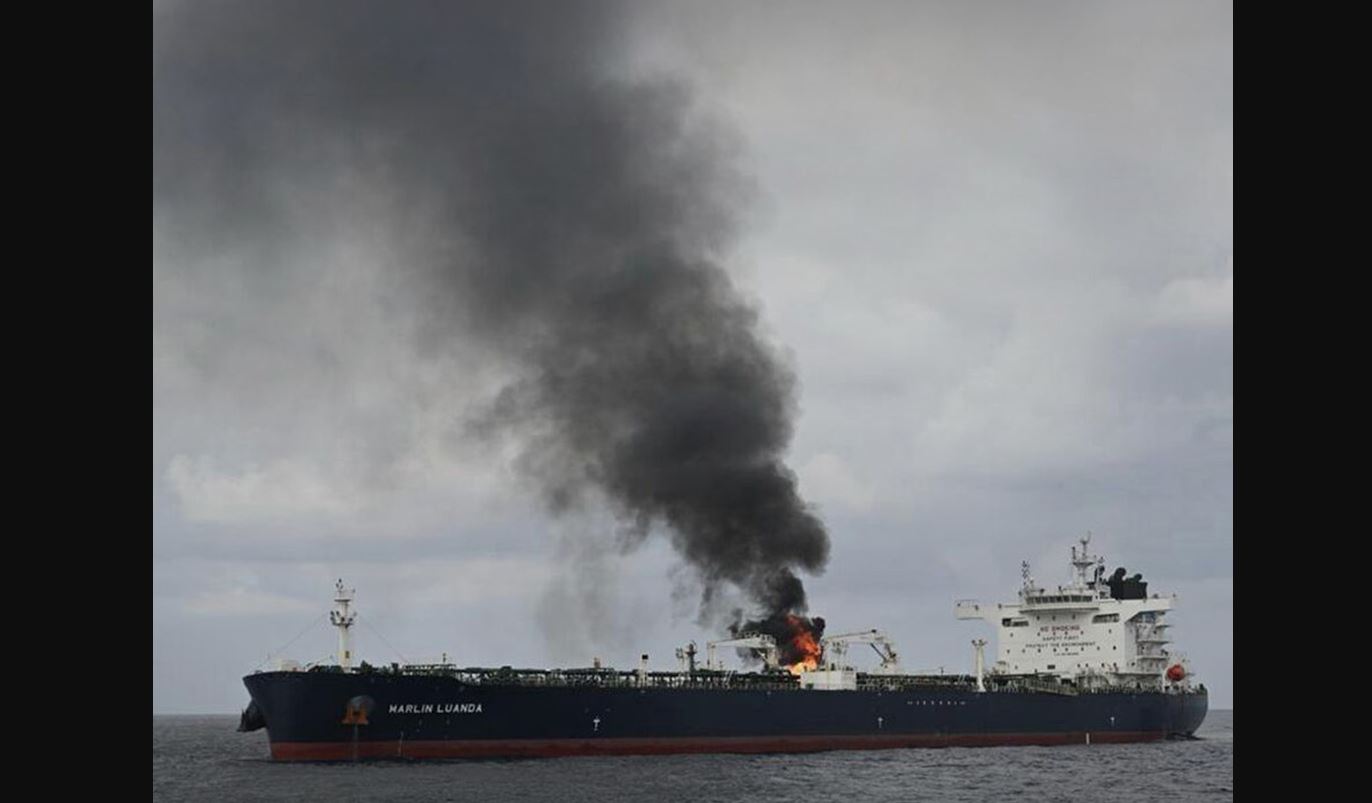
Iranian missiles swept 2 QatarEnergy tankers in the Persian Gulf
It is noted that at least three Iranian cruise missiles targeted Qatar on April 1, with one of them striking an oil tanker, as announced by the Ministry of Defense of Qatar.
In a statement posted on the platform X, the ministry said that the armed forces “successfully intercepted two of the cruise missiles, while the third struck a tanker chartered by QatarEnergy within the territorial waters of Qatar.”
Relevant measures were immediately activated and authorities coordinated the evacuation of all 21 crew members from the tanker without any casualties.
QatarEnergy later confirmed that a fuel oil tanker chartered by it was hit by a missile in the northern territorial waters of Qatar.
The vessel, Aqua 1, was attacked in the early hours, with the company noting in its statement that crew members were injured in the incident, while no environmental hazard was observed.
The Islamic Revolutionary Guard Corps (IRGC) claimed responsibility for the attack on Aqua 1, describing it as a “Zionist tanker” and stating that it was targeted as part of the 89th wave of operation “True Promise 4”.
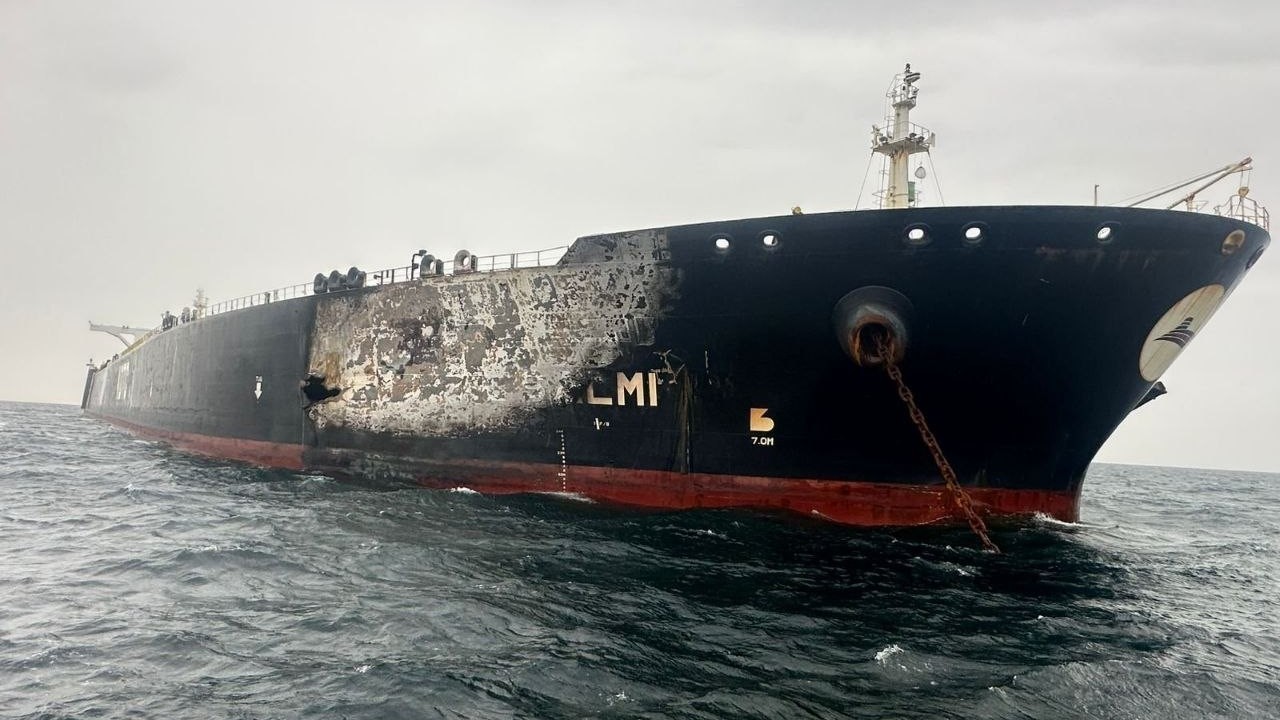
Iranian drones struck the massive tanker Al Salmi of Kuwait
The attack occurred just one day after Kuwait Petroleum Corporation announced that the giant Kuwaiti crude oil tanker, Al Salmi, was attacked by an Iranian drone while it was in the anchorage area of Dubai Port in the United Arab Emirates.
The vessel was carrying a full load of crude oil at the time of the incident.
According to a statement broadcast by the Kuwait News Agency, the attack caused material damage to the hull of the tanker and triggered a fire, while the company warned of a possible oil leak into the surrounding waters.
For its part, the Dubai Press Office stated that there were no injuries and that all 24 crew members of the tanker are safe.
It added that response teams “successfully contained the incident”, emphasizing that no oil spill was reported.
Shortly after the start of the United States-Israel war against Iran, the Islamic Revolutionary Guard Corps (IRGC) warned that every vessel passing through the Strait of Hormuz would be attacked.
The waterway, through which approximately 20% of global oil production passes daily, has effectively remained closed since then, with at least 29 vessels having been hit by Iranian fire.
The administration of Donald Trump is now reportedly considering a ground operation to pressure Iran to open the Strait of Hormuz.
It is noteworthy that the latest attacks took place far from the Strait of Hormuz.
These strikes were likely carried out by Iran to demonstrate the full fire control it possesses across the entire Persian Gulf and not only in that specific maritime passage.
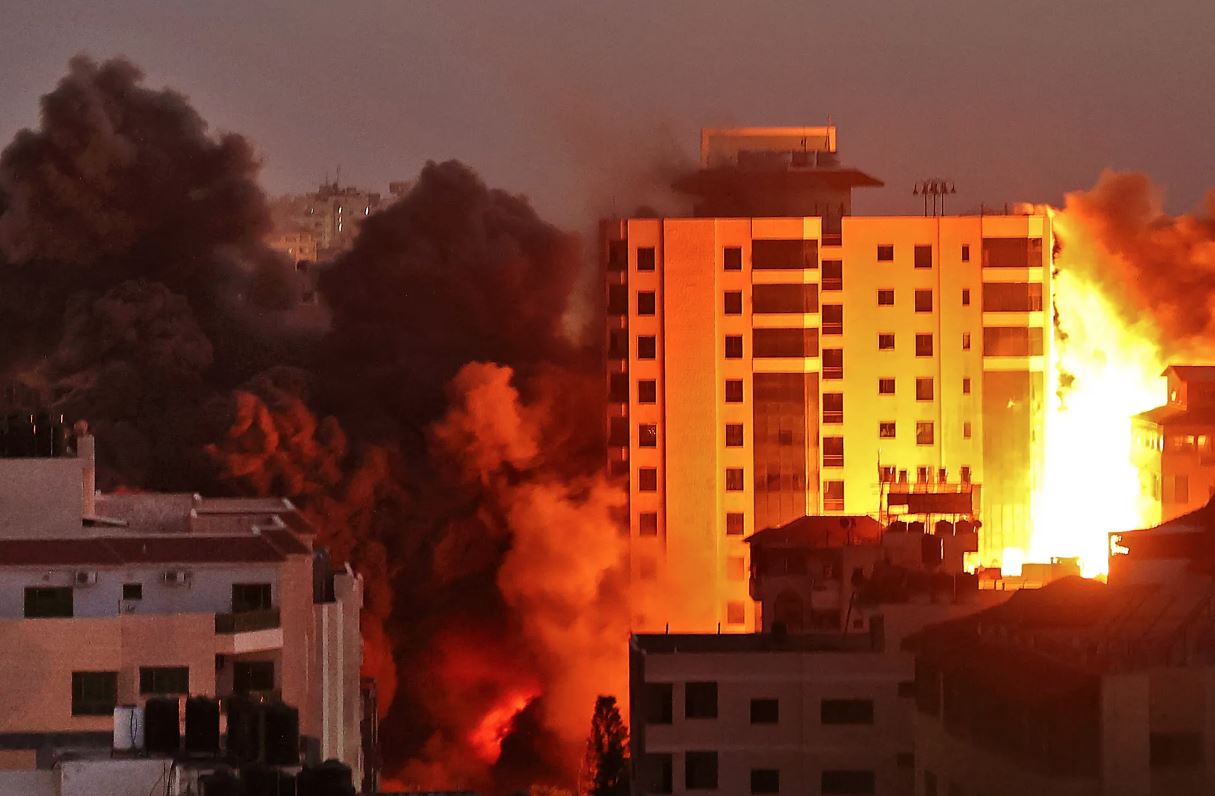
Triple drone assault with 760 drones devastated strategic infrastructure of Israel
Regarding the Israel front, and according to reports from local media, more than 760 drones were launched from Iran, as part of the ring of fire it has formed together with Hezbollah and the Houthis, toward the Jewish state, with several of them managing to penetrate the air defense system and strike strategic and sensitive areas within Israel.
The success of these attacks comes as proof of Iran’s ability to produce large quantities of attack drones, characterized by precision and low cost.
Analysts estimate that Iran is preparing for a long term conflict, having secured a significant strategic advantage through the development of this technology.
The escalation of tension in the region, with continuous attacks and drone strikes, shows that battles on the ground could continue for a long period.
Hezbollah sweeps Israeli territory with pocket drones
Meanwhile, the Shiite organization of Lebanon, Hezbollah, is bombarding Israel with miniature drones.
Specifically, the Sayyad-107, a kamikaze drone designed by Iran and produced in large quantities in Lebanon, has emerged as a constant threat to Israel due to its low cost and effectiveness.
It is a compact, electrically powered unmanned aerial vehicle, which continues to cause serious problems even for the most advanced air defense systems of Israel.
Its ability to bypass defensive lines is due to its silent operation and the advanced evasion tactics it uses, while its special design and characteristics make it particularly difficult to detect.
The Sayyad-107 has a warhead weighing 8 kilograms, with a range of 100 kilometers and extremely low radar signature, thanks to its non metallic construction.
????? New footage shows an Hezbollah FPV drone hitting an IDF Namer APC in Qantara, southern Lebanon.
— Mario Nawfal (@MarioNawfal) April 2, 2026
Not a one-off; they're actually ramping up units and production.
These are basically racing drones with explosives that cost a few hundred bucks to make.
You're watching… https://t.co/jYDJJZdHrt pic.twitter.com/z7NEkbAOpz
It flies autonomously at a speed of 120 km per hour, following complex programmed routes that continuously change its altitude and direction.
The aircraft has a unique cylindrical aerodynamic shape, with wings placed on top and two V shaped tail fins.
The experience of Hezbollah from years of combat, combined with coordinated combinations of missiles and drone sabotage, continues to burden Israeli defense systems, which have not yet found an effective countermeasure despite nearly three years of continuous tension.
The ability of the Sayyad-107 to bypass modern defense systems of Israel shows that the Shiite organization has managed to create an extremely dangerous opponent with limited cost and high strategic value.
www.bankingnews.gr













Readers’ Comments