

Recent messages emerging from the White House indicate that US President Donald Trump is setting the stage for his withdrawal from the war in Iran. As he himself claims, the war will be over in two to three weeks. However, as military operations continue, the Americans are receiving humiliating blows from Iranian military forces, which are striking both Israel and American targets across the Gulf region with extreme ferocity. Characteristically, the Revolutionary Guard launched a sweeping attack with 100 missiles and at least 200 rockets against the Americans and Israelis, causing immense destruction. Analysts already argue that if Trump declares an end to the war without first reopening the Strait of Hormuz, it will constitute a strategic defeat for the US—one that may, however, be preferred over the risk of an invasion involving massive and heavy casualties for American soldiers. The US deadlock deepens day by day, and it is now evident that the longer the conflict persists, the greater the cost for the US and its allies.
Revolutionary Guard: Attack with 100 missiles on Israel and American bases
The Revolutionary Guard (IRGC) announced that during the 89th wave of their operation "True Promise 4," in coordination with Houthi and Hezbollah forces, they launched an attack with more than 100 missiles and drones and at least 200 rockets across a radius of tens of thousands of kilometers throughout Western Asia, and from north to south in Israel. As the Guards report, these attacks targeted areas in Eilat, Tel Aviv, and Bnei Brak, hitting military targets and troop concentrations of the Israeli regime, with local sources reporting serious casualties for Israel.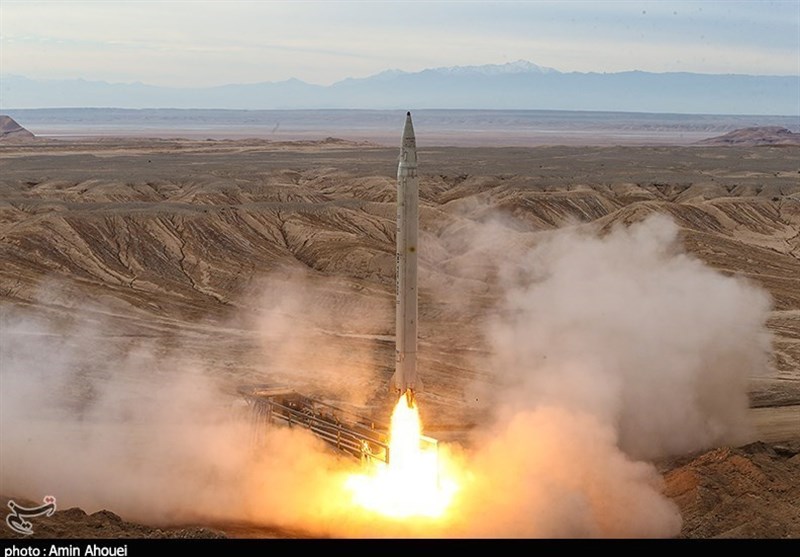
Massive blow to American base in Bahrain
Furthermore, the IRGC reports that the hideout of US Army forces in Bahrain, housing 80 personnel, was hit in a precise and targeted manner. Additionally, the US Army helicopter group at the Al-Adiri base was attacked with ballistic missiles, resulting in one helicopter being destroyed and others suffering severe damage. "The creation of a unified Islamic force under the umbrella of the unity of fronts and their coordination against the enemies of Islam, as well as the impressive cohesion of the people of Iran, constitute the greatest achievements of this offensive war for the Islamic world and the Islamic Republic of Iran," the Revolutionary Guard stated, noting that among the war's achievements are the daily pressure exerted on Israel, the flight of American soldiers from the region, and rising global inflation.
AWACS destroyed with Arash 2
The military of the Islamic Republic of Iran targeted bases housing AWACS aircraft and US fuel tankers, as well as other American installations in the region. According to the defense department of the Tasnim news agency, Announcement No. 51 of the Iranian Army states: "Resilient people of Iran! Your children in the army of the Islamic Republic... in response to the violent air attacks of the Zionist and criminal American regime on our country, especially on residential and non-military areas, struck the following installations with drone attacks starting early this morning:
-
The headquarters of American AWACS and refueling aircraft at Ben Gurion Airport.
-
Radar detection and tracking systems for missiles and fighter drones.
-
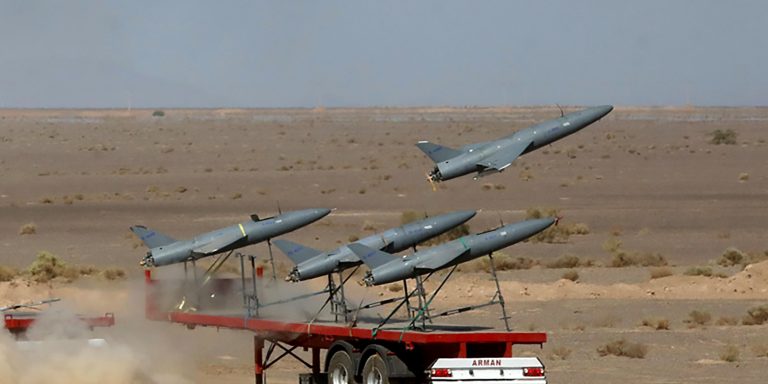
Electronic warfare facilities against fighter drones located in the United Arab Emirates." As reported, the Iranian Army has previously targeted American bases in the region and military installations in Israel. According to information and satellite imagery, the attacks caused severe damage and seriously disrupted support operations and missile/drone tracking for military aircraft. In this phase of the attacks, powerful Arash 2 drones with a flight radius of 2,000 kilometers were utilized.
Message from Mojtaba Khamenei: Praise for Hezbollah
The Grand Leader of Iran, Ayatollah Mojtaba Khamenei, praised the Iranian-backed militant group Hezbollah in a message to its leader, Sheikh Naim Qassem. According to the Tasnim agency, Mojtaba Khamenei emphasized that Iran will continue to support the organization "in the resistance against" Israel and the US. Simultaneously, he expressed appreciation for the "feelings, love, and devotion" of Hezbollah fighters. More than three weeks after his appointment as the supreme leader of Iran, Khamenei has not appeared or spoken publicly.
Iran International: The Guards are in control of Iran
A "military council" consisting of senior IRGC officers has reportedly taken de facto control of the country, vetoing the choices of President Masoud Pezeshkian and cutting him off from Mojtaba Khamenei, according to a report by the opposition Iranian media outlet Iran International. Khamenei, considered a close ally of the IRGC, has not appeared publicly since being appointed following the death of his father and predecessor, Ali Khamenei, during the first phase of the US-Israeli bombing campaign on February 28. Informed sources cited by Iran International report that IRGC chief Ahmad Vahidi rejected all candidates proposed by Pezeshkian for the position of Intelligence Minister. Sources say the president is now in a "complete political deadlock." Usually, Iranian presidents propose candidates for such positions only after security approval from the country's supreme leader, who has the final say on all state matters. However, the IRGC council has placed a "security cordon" around Khamenei and blocked any communication between him and Pezeshkian, despite the president's repeated requests, which have gone unanswered, Iran International reports. The council has also blocked government reports on the situation in Iran from reaching Khamenei and has effectively taken control of the country's decision-making apparatus.
Three scenarios for the war
Analysts argue that the war launched by Trump and Netanyahu is no longer a simple military confrontation but has instead evolved into a complex puzzle, where every decision could further worsen the situation. It is a reality where neither retreat is easy nor is further escalation without cost. In reality, there are three paths:
-
Cessation of the war by Iran: namely, Iran's decision to stop attacks against the US and Israel. In the current situation, such a scenario seems unlikely, because for Iran, this confrontation is not only military but part of a broader strategy.
-
Escalation by the US and Israel: this possibility exists, but almost all experts consider it irrational. Why? Because every level of escalation will meet an even more intense reaction from Iran. Iran possesses tools and options that can make the equation more complex and costly, leading to a cycle from which exit becomes increasingly difficult.
-
Leaving things to time: meaning patience and allowing the narrative in Iran to determine the course of events. It is clear that this option will lead to total failure for the US and Israel, as time works in Iran's favor. The game has reached a point where every choice by the Americans and Israelis constitutes a major risk. And perhaps the fundamental question is: when no "good" option exists, which option carries the least cost?
Why a US invasion must be ruled out
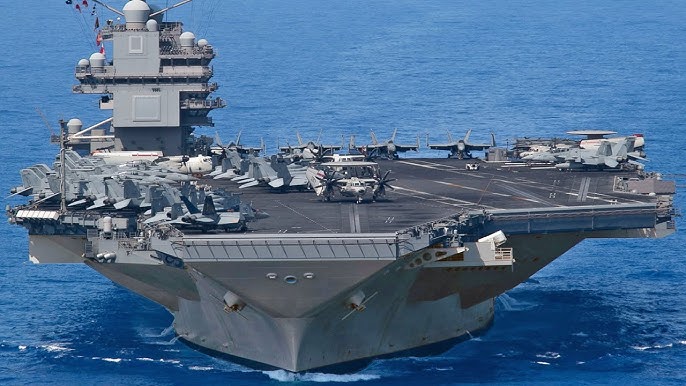
The scenario of a US ground invasion of Iran should probably be ruled out, not only because it is exceptionally complex but also because it is highly dangerous for the Americans. Indeed, the plan to invade and capture Iranian islands is considered very dangerous and risky for the US from a military perspective. For this reason, European countries largely avoided direct involvement in this battle, arguing among other things that "this is not our war." Conversely, it seems that part of the burden of this confrontation has shifted to certain Arab countries in the region. Even assuming the US could occupy some territories or islands of Iran, the main issue is "stabilization and maintenance," a stage far more difficult than the occupation itself. These areas are geographically close to Iran and, from an operational access standpoint, would be under constant threat. Furthermore, for many years, scenarios regarding such situations have been studied and planned by the Iranian armed forces. Military experience shows that air superiority or extensive attacks alone are not enough to permanently change the equation, as the resolution of disputes occurs on the ground, which is naturally accompanied by significantly increased costs and casualties.
Running out of ammunition
Another negative parameter for the US and Israeli military is that their ammunition stockpiles are dwindling; consequently, they cannot support a long-term war. Many Western media outlets referred to the exhaustion of THAAD systems in Israel. In an analysis by the Royal United Services Institute (RUSI), a British think tank, it is noted that if conflicts continue at the same pace, the ammunition stocks of certain anti-aircraft systems will soon be depleted. For example, regarding the THAAD system deployed by the United States in Israel, it is estimated that its operational capacity (in terms of ammunition stocks) can be maintained until approximately April 11. 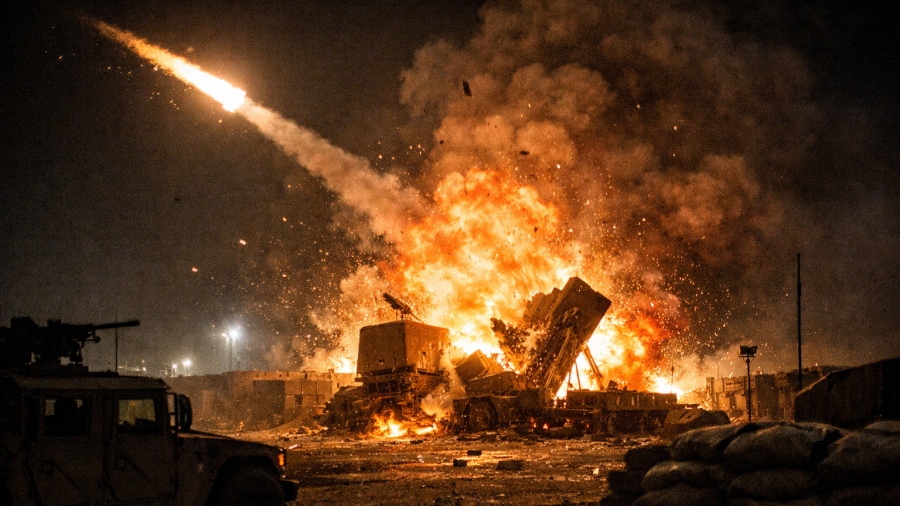
Importantly, these estimates concern only ammunition consumption and not the physical destruction of the systems. In other words, even if there is no direct damage to the systems, the reduction of anti-aircraft missile stocks will gradually decrease their effectiveness. In the event of damage to key elements—particularly radars—the drop in effectiveness could be much faster and more severe. This is especially true for THAAD, an extremely advanced, expensive, and time-consuming system to produce (the construction of certain elements, such as radars, requires years).
The Americans have limitations
It is now clear that the Americans, despite their great military power, have limitations and vulnerabilities. The US cannot at any moment import unlimited advanced systems and ammunition—including Patriot or Tomahawk missiles—into the battlefield. For example, according to some reports from Western sources, Gulf countries fired approximately 800 Patriot missiles in just the first five days of the conflict to counter missiles and drones from Iran. This occurs while the annual production capacity of these missiles in the US is estimated at about 750 missiles. That is, consumption in just a few days exceeded an entire year's production. In another example, some experts point out that in some cases, to intercept a single drone, multiple Patriot missiles were fired simultaneously; reports even mention the use of 8 missiles for one target. This primarily shows the volume of consumption and the operational pressure on anti-aircraft systems.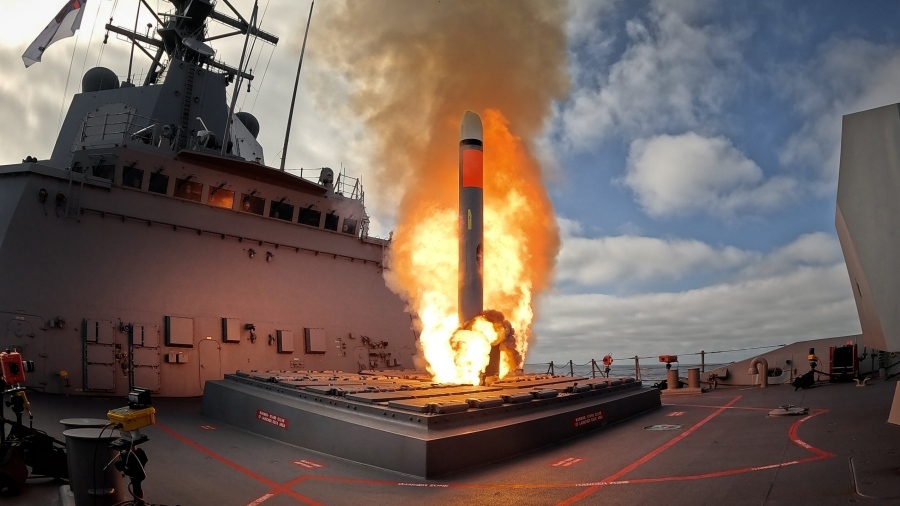
Scott Ritter (ex-CIA): They are giving Trump false information
At the same time, Scott Ritter, a former US Marine Corps intelligence officer, stated that Donald Trump is being given false information regarding the progress of the conflict with Iran. "They aren't even providing him with operational information. Every time, they only show the President small news clips of the war. He doesn't realize what is happening. He just sees footage shot by military units and specially edited so that the President is pleased. It's military pornography. And Trump, it seems, likes this and believes it," claims Ritter, who argues that the situation in the Middle East is completely different from what the American leader and Defense Secretary Pete Hegseth state.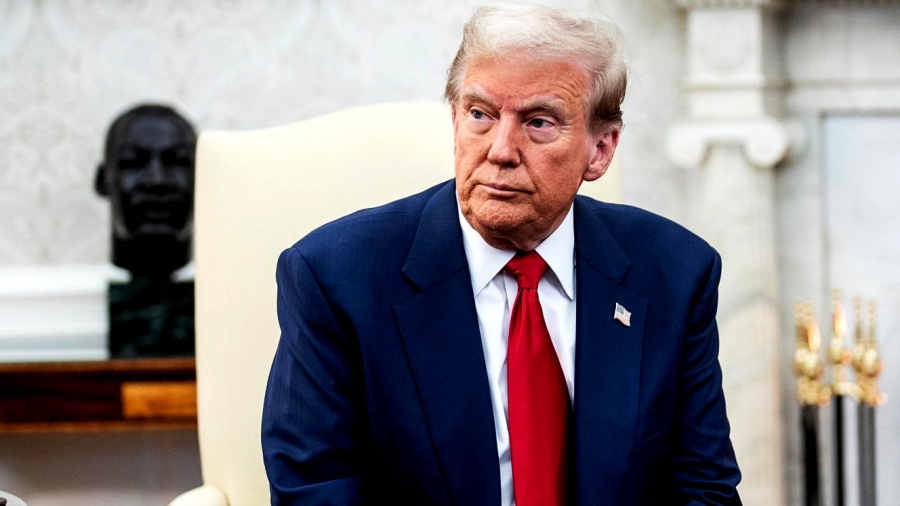
CNN: Strategic defeat for US if war ends with Iranian control of Hormuz
The global community will consider it a strategic defeat for the US if the war ends with Iran controlling the Strait of Hormuz. "Concluding the war with Iran in control of the Strait will be seen on the international stage as a strategic defeat for the United States," estimates CNN analyst Stephen Collinson. In such an event, he continued, "Iran will undoubtedly announce its victory in the conflict and potentially consider that it has regained a deterrent factor for future attacks." Furthermore, according to the CNN analyst, Iran will try to exploit it economically by introducing fees for tankers passing through the Strait. This will provide the Islamic Republic of Iran with additional revenue, allowing it to reconstruct its armed forces, as well as the missile and nuclear programs destroyed by the US and Israel during the air strikes, Collinson added.
And yet Trump... prefers it
Collinson also pointed out that even such an end to the conflict would be "preferable" for US President Donald Trump, as "any attempt to reopen the Strait of Hormuz by force entails heavy losses for the US and prolongs the war, which will further undermine the president's already strained political prestige at home."
www.bankingnews.gr








Readers’ Comments