

In a resonant intervention regarding the global energy market, Russian President Vladimir Putin sent a message to the international community that Russia can offer the world safe routes, which are particularly vital in the current situation surrounding Iran. "The events in Iran are already directly affecting energy markets and the transport of oil and natural gas through the Strait of Hormuz," Putin emphasized.
Blow to supply chains
"Increasingly, states and companies are thinking not only about the speed and cost of transport: the decisive factor is becoming the safety and resilience of transport routes and supply chains, which are less vulnerable to crises, military conflicts, and other external risks," Putin stated in a message to participants of the International Transport and Logistics Forum.
We can offer safe routes
As Putin stated, Russia can offer the world safe and reliable transport and logistics routes, which he said is especially important under the conditions of the tragic events in the Middle East. "Russia can offer the world such solutions and play a significant role in shaping a new architecture of global logistics and international trade as a whole," the Russian president stressed, referring to the need for secure supply routes under current conditions. According to Putin, for Moscow's partners, "Russian logistics routes can be beneficial both economically—thanks to reduced transport times—and from the perspective of diversifying global transport flows."
Reassessing the importance of the Strait of Hormuz
The 33-day war has proven that the Strait of Hormuz has turned into one of the most significant geo-economic points in the world. One of the signs of this realization is the surge in the Global Uncertainty Index, which has reached levels higher than the COVID-19 pandemic, the events of September 11, and even the 2008 financial crisis, indicating how uncertain and dangerous the future of the global economy has become.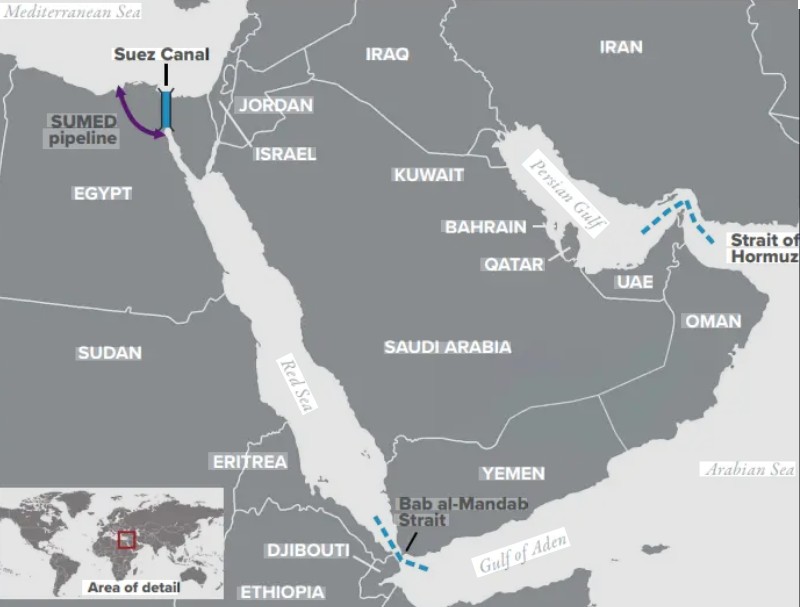
Price surge in oil and gas
According to an analysis by the Tasnim agency, the energy and raw materials sectors are seeing unprecedented increases: Oil prices have risen by over 60% within 33 days, while for natural gas, the increase is approximately 77%. Large increases are also recorded in other products: urea prices rose by about 50%, diesel by about 45%, gasoline by over 40%, and fertilizer prices increased by 30%.
Increases in metals
Additionally, an increase of over 20% is recorded in coal prices, about 15% in palm oil, while the increase in iron ore is near 10%. Unprecedented, at least for the last 4 years, is the increase of at least 6% in aluminum.
Losses up to 5 trillion
Huge losses were also recorded in global financial markets. Indicatively, the S&P 500 index measures losses of over $5 trillion, while in the Japanese stock markets (Nikkei), the drop is about 15% and South Korea's near 20%. In the Gulf region, markets recorded losses ranging from 7% in Kuwait to 20% in the United Arab Emirates, while in the markets of Germany, France, Italy, and Spain, the drop fluctuates between 10% and 12%.
Hormuz cannot be bypassed
Recently, Israeli Prime Minister Benjamin Netanyahu argued that the issue of bypassing the Strait of Hormuz should be examined so that global energy flow does not depend on this passage. The proposed routes focus primarily on developing pipelines extending from Yanbu in Saudi Arabia to the Red Sea coast and also to the port of Fujairah in the UAE. However, this plan faces several key limitations.
First, regarding transport capacity, the total capacity of these routes—even in optimistic estimates—is much smaller than the volume of oil passing daily through the Strait of Hormuz. The Yanbu pipeline capacity is estimated at about 5 to 6 million barrels per day, while the Fujairah route capacity is about 1.5 to 2 million barrels. In comparison, approximately 20 to 21 million barrels of oil are transported daily through the Strait of Hormuz. Consequently, in terms of scale, these routes cannot truly replace Hormuz.
Second, the function of the Strait of Hormuz is not limited to energy transport. This passage constitutes one of the main arteries of trade in the region, and a large portion of imports—especially in the food sector—of Persian Gulf countries passes through here. Estimates show that over 80% to 90% of the food security of these countries depends on the flow of goods through Hormuz, something that essentially cannot be replaced by pipelines.
Third, technical and time parameters: the development of an extensive pipeline network on this scale requires massive investments and years to complete and cannot be easily realized.
Fourth, geopolitical parameters: even these alternative routes, in terms of accessibility and vulnerability, are located in an environment that is not free from regional tensions. In other words, even with the construction of such infrastructure, security issues will remain, and the core problem will not be fundamentally resolved.
Enormous pressure on the global economy
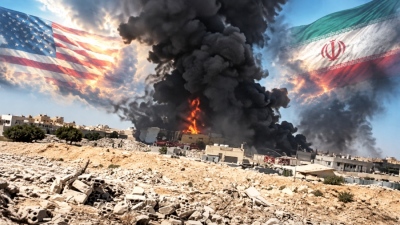
More and more analysts point out that the prolonged war in Iran and its continuation may impose additional pressure on the global economy. From the beginning, there were signs that Netanyahu and Trump were looking for a short and aggressive operation. However, they have become stuck and are now trying to achieve a minimum result for a quick exit from this crisis. Experts argue that the market may not have seen the highest oil prices yet, as a scenario of $200 per barrel is not ruled out. According to the analysis, under normal conditions, about 20 million barrels of oil passed daily through the Strait of Hormuz.
2.5 million barrels missing daily from the market
Subtracting a portion of the alternative exports—among them about 5 to 6 million barrels that Saudi Arabia transports via pipelines—there are still about 16 million barrels per day affected by disruptions. Of this volume, about 2 million barrels come from Iran's exports and about 4 to 5 million barrels from Saudi Arabia's exports (via alternative routes). At the same time, a reduction of about 2.2 million barrels in global refining capacity is recorded due to periodic maintenance, the release of about 2 to 3 million barrels per day from strategic reserves of various countries, as well as a supply of about 700 thousand barrels of oil from reserves in floating tanks. Despite all this, the market still faces a significant shortage. The key point is that if this situation—namely a daily deficit of about 2.5 million barrels—continues for two months (60 days), the total cumulative deficit will reach approximately 150 million barrels.
The gap is not covered
Estimates show that even with interventions from the G7 countries, the ability to fully cover this gap is limited, and in case of continuation, from the 61st day, the market will face a new and intense price surge. Moreover, so far the price of oil has already increased by about 60%, and global economies have clearly perceived the effects of this shock. Therefore, if the above scenario is realized, a much larger increase in the price of oil should be expected. In this context, the prolonged nature of the war and the continuation of this situation, instead of benefiting Western sides, may impose additional pressure on the global economy and radically change economic balances.
www.bankingnews.gr









Readers’ Comments