

The strategic deadlock in which the US military finds itself operationally is unprecedented. Iran has dealt a fatal blow to the prestige of the American military, which was clearly unprepared. Iran proved to be ready, having adopted modern warfare trends involving missiles and drones. The US and Israel have failed to break Iran. Trump is now making new statements, claiming that combat will last another four weeks until the end of April 2026, while emphasizing that the war will end even unilaterally—meaning even without an agreement with Iran. For its part, Iran declares it is ready for six months of fighting, highlighting the striking fact that it has launched 5,644 missiles and drones while continuing its operational strikes. Iran stresses that for a deal to exist, Gaza, Lebanon, and Yemen must be included, essentially positioning itself to resolve the entire Middle Eastern issue—a historic development. To put it bluntly: it is the first time the American military has suffered losses on this scale and the first time Israel has been overwhelmed to such a degree. Israelis recognize the impasse and are visibly concerned about the adequacy of the Israeli army. The scenario of a ground invasion remains on the table; however, Foreign Policy warns that none of the five basic options for a US ground operation in Iran will be successful.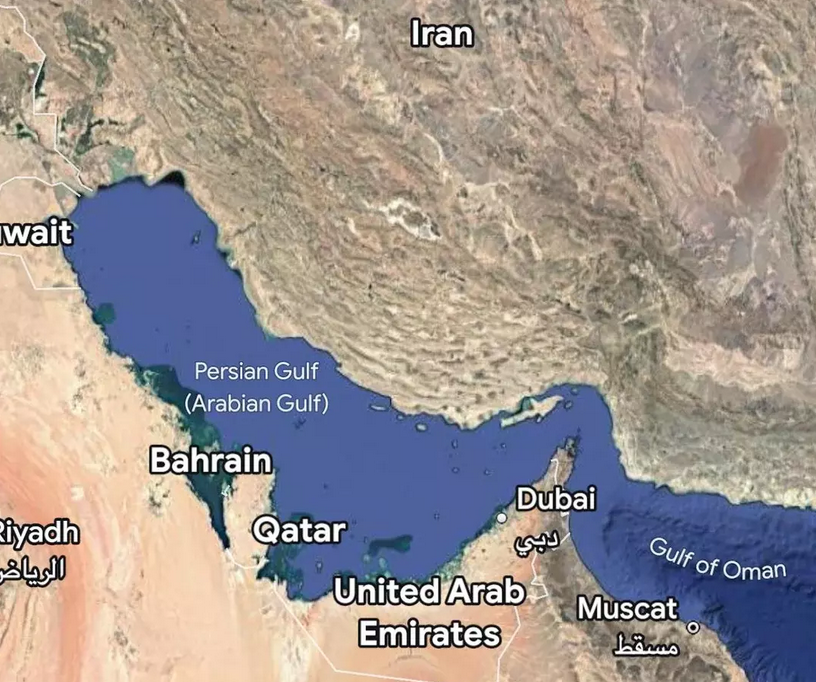
Trump (US President): We will end the war even if there is no agreement with Iran
Continuing a series of alarming statements, Trump emphasized that the United States has achieved all its goals in the war with Iran and will end the conflict even without a deal. Once again, he made peculiar remarks describing the achievements of the invasion of Iran, claiming, for example, that the Iranian government had changed. Trump even stated that America had returned Iran to the Stone Age. He also said: "Our mission in Iran will be completed in a short time; we will leave Iran in two to three weeks, and maybe we will reach an agreement before then." Trump further stressed: "We will terminate the operation even if there is no agreement. The United States will stop the war even without signing a deal."
US operation against Iran to last another 2-3 weeks
US President Trump claims that the US operation against Iran will continue for another two or three weeks. "I would say within two weeks, maybe three," he noted regarding the timeline for the military withdrawal.
I am not worried about Iranian attacks on US companies
US President Trump stated that he is not concerned about potential Iranian attacks on American companies in the Middle East. Earlier, the IRGC of Iran stated it would attack the facilities of 18 companies in the Middle East, including Microsoft, Apple, Google, and Nvidia, starting Wednesday, April 1, 2026, in the event of assassinations on Iranian soil. "No, I am not worried," Trump declared. Iran is striking US military targets in the Middle East and on Israeli territory in retaliation for attacks by the United States and Israel. On the first day of the conflict, February 28, a girls' school in southern Iran was hit, killing 172 children, while Supreme Leader Khamenei was also killed that same day. The total number of civilian casualties from the attack has now exceeded 1,300, with over 20,000 injured, 11,000 of whom sustained minor injuries.
Wall Street Journal: UAE to engage militarily to open the Strait of Hormuz
The UAE—United Arab Emirates—is preparing to help the US and its allies open the Strait of Hormuz using military force, the Wall Street Journal reports, citing anonymous Arab officials. "The United Arab Emirates is preparing to assist the US and other allies in opening the Strait of Hormuz by force." According to the newspaper, the UAE is lobbying for a UN Security Council resolution that would sanction such actions. A UAE spokesperson stated that diplomats have called on the US and European and Asian countries to form a coalition to open the strait with weapons. According to the official, the UAE is actively considering the possibility of military intervention to ensure the security of the strait, as well as efforts to clear it of mines.
Shock statement by Rubio (US Secretary of State): NATO is taking unilateral actions against the US... we will review everything from scratch
US Secretary of State Rubio accused NATO of unilateral actions against the United States in an interview with Fox News, following the refusal of several allies to assist in the operation against Iran. "If we reach a point where the NATO alliance means we cannot use these bases, where we can no longer use them to protect American interests, then NATO is not a one-way street... Then NATO means our troops are in Europe to protect Europe, but when we need help, we don't get it," Rubio said. The Secretary of State added that the United States must reconsider the significance of NATO. He also stated that the American operation against Iran has entered its final stretch but will not be completed "today or tomorrow." Earlier, the US Secretary of War stated that President Trump will decide on the future of NATO after the end of the conflict with Iran, taking into account the refusal of some allies to help the US. It should be noted that France had refused to allow American weapons to be transported to Israel through its airspace. Trump responded by saying the US would remember this. Additionally, Spain closed its airspace to aircraft participating in the US-Israeli operation. Prior to this, it also banned the use of the Rota and Morón military bases on its territory.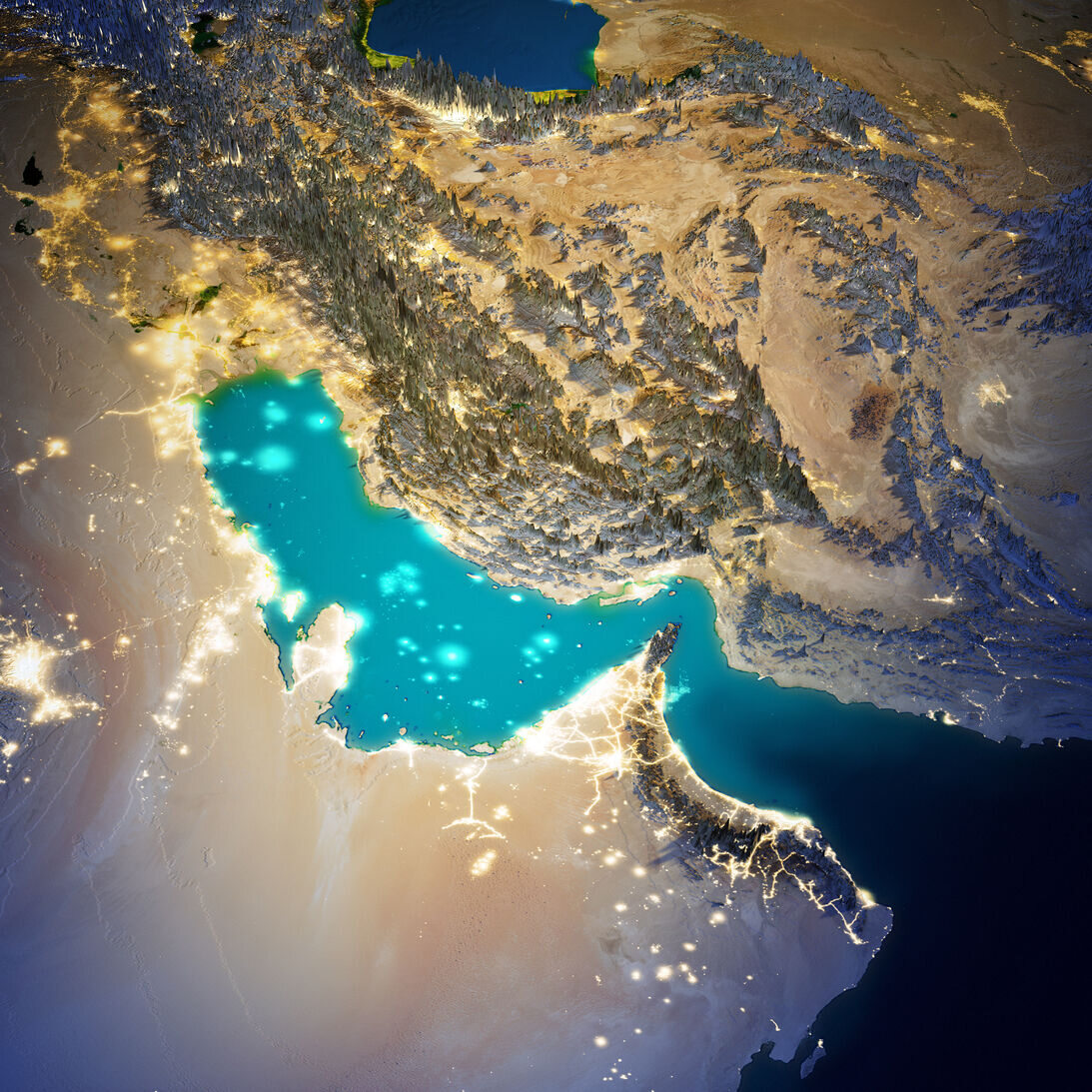
Tremendous message from Araghchi (Iranian Foreign Minister): We are ready for 6 months of war – We want a package deal for the Middle East
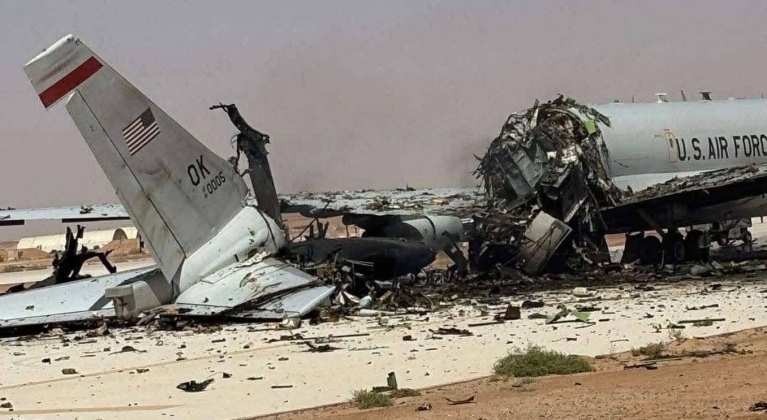
The Iranian military is fully prepared for six months of war, Iranian Foreign Minister Seyed Abbas Araghchi emphasized in an interview with Al Jazeera. "The Americans will experience a defeat with very heavy losses in a ground war." When asked if there would be a ground attack, Araghchi stressed: "I don't think they will dare to do that. They will suffer many casualties. We defended ourselves strongly and caused many losses and damage to their equipment and facilities. You saw what happened with the AWACS or aerial tankers. We know how to defend ourselves well and we are more experienced and equipped for ground warfare. We are fully prepared to face any ground threat and have sufficient experience." According to Araghchi, Iran is ready for at least six months of war. Araghchi believes the US President must radically change his approach. "We cannot speak to the Iranian people with the language of threats and deadlines. The Iranian people are great, independent, and have a rich civilization and culture. He must speak to us with respect." Regarding the Strait of Hormuz, Araghchi emphasized that "it is natural in times of war that we do not allow our enemies to use our internal waters for navigation. Ships from other countries did not pass through the Strait of Hormuz fearing for their safety and the high cost of their own insurance." According to Araghchi, what arrangements will be made after the war depends on Iran and Oman. "Of course, we will take into account the interests of our friends in the region and beyond in this regard. In our opinion, the Strait of Hormuz can be a peaceful waterway for the safe and peaceful passage of all countries, but ensuring the security of ships and traffic and environmental issues requires a joint mechanism between the coastal countries, namely Iran and Oman."
Seyed Ali Mousavi (Ambassador to the UK): Iran wants guarantees for the end of the war, we do not trust the US
Iran needs strong guarantees of non-use of force following negotiations to end the war with the United States, stated the Iranian Ambassador to the United Kingdom, Seyed Ali Mousavi, in an interview with The Times. "Unfortunately, President Trump has a very bad, very disgusting record on this matter. Therefore, if you want a peaceful resolution to this war, first and foremost we need guarantees and assurances that he will not repeat the use of force and aggression against the Iranian people." According to the diplomat, Iran is very cautious regarding negotiations with the US because it was attacked twice during the negotiation process, but recognizes their necessity for the entire region. "We no longer have mutual trust in the Trump administration after we started a dialogue with them and six months later they attacked us again," Seyed Ali Mousavi explained.
Majid Mousavi (IRGC Commander): We hit an air base in Saudi Arabia where 200 soldiers were located
Brigadier General Seyed Majid Mousavi, commander of the Aerospace Force of the IRGC, emphasized that "we attacked the quarters of American pilots and flight crews in Al-Kharj, Saudi Arabia, with drones and missiles and hit a gathering of 200 people. Now, in addition to the list of losses and damages to Trump, besides the AWACS, aerial refueling tankers, and fuel tanks, a list of casualties and injuries among flight crews has been added."
Tremendous success for Iran – It launched 5,644 missiles and drones in 32 days of war
According to reports from Arab countries, Iran has launched 5,644 missiles and unmanned aerial vehicles against US interests in these countries over the past 32 days. The United Arab Emirates suffered the highest number of attacks, followed by Kuwait, Bahrain, Qatar, Saudi Arabia, and Jordan, while Oman was the least targeted. In this context, the Secretary General of the Gulf Cooperation Council announced on March 26 that more than 5,000 missiles and drones had been launched toward Persian Gulf countries, a number he claimed accounted for 85% of all Iranian attacks in this war.
United Arab Emirates: The country's Ministry of Defense announced that 433 ballistic missiles, 19 cruise missiles, and 1,977 drones were launched from Iranian airspace.
Kuwait: The Kuwaiti military reported detecting 312 ballistic missiles, 2 cruise missiles, and 636 drones.
Bahrain: The Bahraini military also reported that it launched 182 missiles and 400 drones.
Qatar: Based on available data, at least 206 missiles, 96 drones, and two Sukhoi Su-24 fighter jets were destroyed.
Saudi Arabia: According to Al-Ikhbariya, at least 65 missiles and 1,025 drones have been launched against Saudi Arabia.
The strange thing is that the defense ministers and official sources of these countries have reported almost all of Iran's launches as unsuccessful and have claimed to have intercepted and destroyed all missiles. However, the New York Times revealed that all 13 US bases in the Persian Gulf countries are no longer usable and have been completely destroyed.
Foreign Policy: None of the 5 primary options for a US ground operation in Iran will be successful
None of the options for a US ground operation in Iran will be successful, Foreign Policy magazine warns. "This logic is most apparent in five hubs: Kharg Island, the Strait of Hormuz, the islands of Abu Musa and Greater and Lesser Tunb, the Chabahar-Konarak corridor, and the Abadan-Khorramshahr axis. Each of these seems to provide access to Iranian territory, but none offers a direct path to strategic success," reports Foreign Policy. The terrain of the Islamic Republic will make conducting a ground operation extremely difficult, despite many possible landing points. Furthermore, each of these is not a set of options, but a "map of consequences." "But this is the primary illusion. The same geography that makes invasion possible also makes it strategically self-defeating," Foreign Policy explains. Moreover, in the event of an invasion, the conflict risks expanding beyond Iran, turning into a complex, multi-layered struggle in the Shiite space from southern Iraq to southwestern Iran. "Thus, the seemingly most direct route to Iran is also the most explosive. The very qualities that make this axis operationally feasible also make it politically and militarily dangerous. Here, the illusion of decisiveness reaches its peak. And, consequently, the risk increases," Foreign Policy concludes. The New York Times reported Pentagon plans to deploy approximately 2,000 additional troops from the 82nd Airborne Division to the region.
US sends two EA-37B Compass Call electronic warfare aircraft
On March 31, two EA-37B Compass Call electronic warfare aircraft of the United States Air Force were observed arriving at RAF Mildenhall in the United Kingdom, following their departure from Davis-Monthan Air Force Base via Joint Base McGuire-Dix-Lakehurst. Open-source flight tracking data and images suggest a possible further deployment toward Turkey to support the ongoing US-Israeli war in Iran. The EA-37B was developed by American L3Harris and British BAE Systems based on the Gulfstream G550 business jet. Its primary mission is to disrupt enemy command and control networks, significantly hindering the opponent's coordination. The first such aircraft entered service in 2024. The aircraft, which can be easily identified by the large antenna arrays mounted evenly on either side of the fuselage, is specially equipped to conduct jamming on radars, navigation systems, and communications. The deployment occurred following rumors that the US Air Force lost two older-generation EC-130H Compass Call electronic warfare aircraft in the Iranian raid on March 29 at the Prince Sultan Air Base in the heart of Saudi Arabia.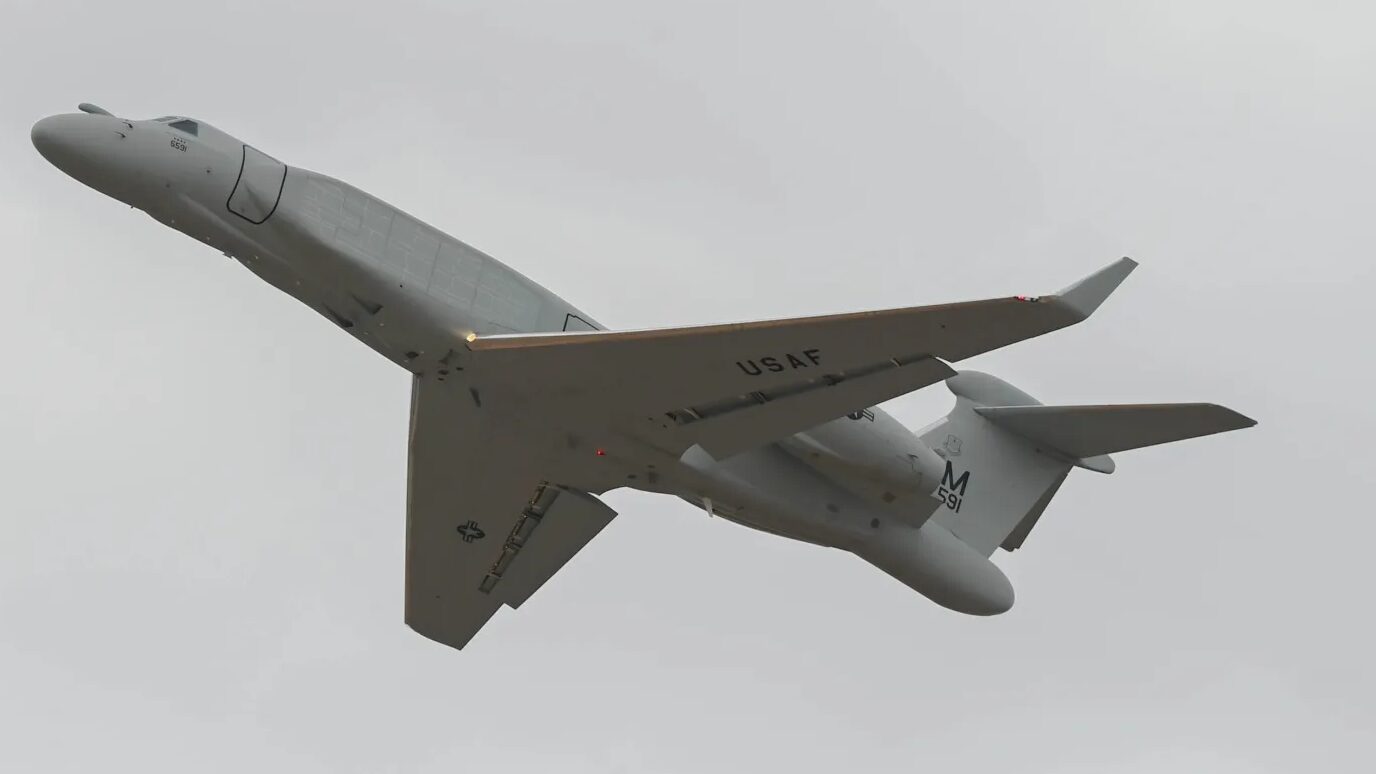
www.bankingnews.gr













Readers’ Comments