

The Middle East is shifting toward a trajectory of extreme ignition, where Iran continues to "punish" the reckless war of the US-Israeli alliance by launching new reprisals against Western companies in Israel, including Siemens and AT&T, on the afternoon of March 31. Specifically, facilities related to major corporations such as Siemens and AT&T, as well as telecommunications networks providing support to the Jewish state in sectors like artificial intelligence and military systems, were targeted by the Revolutionary Guards. However, Iranian retaliation for US and Israeli strikes against Tehran's infrastructure does not stop there; Iranian forces warned that on April 1, technological (and other) giants including Cisco, HP, Intel, Oracle, Microsoft, Apple, Google, Meta, IBM, Dell, Nvidia, JPMorgan Chase, Tesla, General Electric, and Boeing will be targeted. In fact, the Iranian military issued a warning to residents and workers within a 1-kilometer radius of these facilities to evacuate to safer areas. Meanwhile, a shocking incident emerged on the Iraq front, with American journalist Shelly Kittleson falling victim to an abduction in the heart of Baghdad in broad daylight.
Iranian missiles sweep Siemens and AT&T infrastructure in Israel
In retaliation for attacks on its infrastructure, the Iranian military announced a drone attack on strategically important industrial and communication centers linked to Israel. Targeted facilities included those related to major companies like Siemens and AT&T, as well as telecommunication networks supporting sectors such as artificial intelligence and military systems.
The Siemens offices in Tel Aviv
Iran, through a military statement, emphasized that it will continue to respond to any attack until the threats it faces are eliminated. It is noted that these strikes constitute Tehran’s response to the systematic targeting of its energy and economic resources by the US-Israel alliance.
Iran threatens massive strike on US giants on April 1
Subsequently, Iran’s Islamic Revolutionary Guard Corps (IRGC) issued a statement threatening to target the facilities of major US-linked companies in the region as retaliation for targeted assassinations. The IRGC warned they would respond to "every assassination" by destroying offices or properties of listed companies, describing them as involved in espionage and targeting operations.
?? ???? Iran's Islamic Revolutionary Guard Corps (IRGC) has issued a statement threatening to target facilities of major U.S.-linked companies in the region in retaliation for targeted assassinations.
— DD Geopolitics (@DD_Geopolitics) March 31, 2026
"The IRGC warned that it will respond to "every assassination" by destroying…
The affected companies include Cisco, HP, Intel, Oracle, Microsoft, Apple, Google, Meta, IBM, Dell, Nvidia, JPMorgan Chase, Tesla, General Electric, and Boeing (among others). Employees at these workplaces were advised to leave immediately for their safety, while residents within a 1-kilometer radius of the facilities are called to evacuate to safer locations. The measures are scheduled to take effect starting at 8:00 p.m. Tehran time on April 1, 2026.
Iran: Shock attack at Al-Kharj base with 200 American casualties
Additionally, the IRGC Air Force struck a gathering of pilots and marines at the Al-Kharj Air Base in Saudi Arabia, killing and wounding approximately 200 soldiers, as reported by the IRGC press service on March 31. 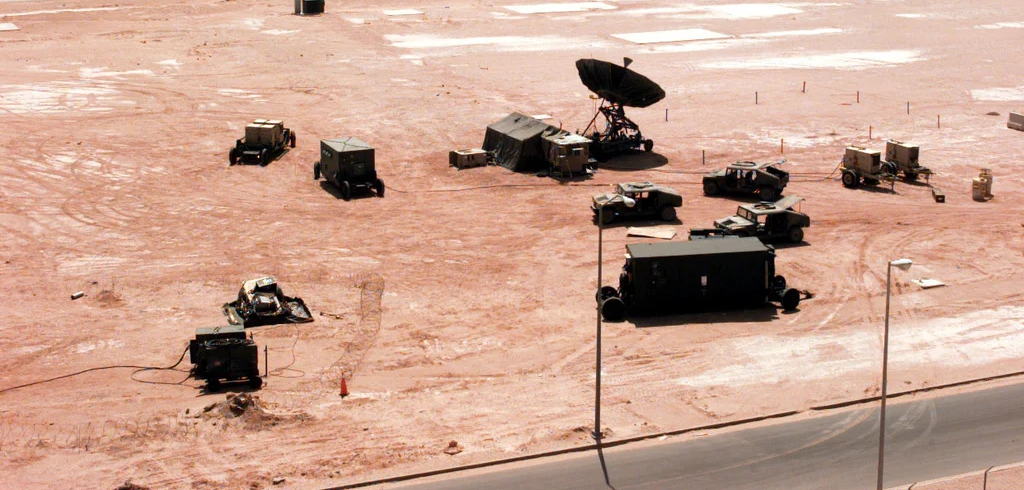
"The deployment site of the American air detachment based at the Al-Kharj Air Base in Saudi Arabia was the target of a joint operation using drones and missiles. At least 200 invaders and terrorists of the US military were killed or wounded during this operation," Iran's state broadcaster reported, quoting the statement.
It was noted that, according to the IRGC, most of the dead and wounded were American fighter pilots.
IRGC Aerospace Force Commander Moosavi:
— Open Source Intel (@Osint613) March 31, 2026
Today, we attacked the residence of American pilots and aircrew in Al Kharj, Saudi Arabia, with a drone and a missile, and struck a gathering of 200 people.
Now, to the list of casualties and damages for Trump and Hegseth, apart from the… pic.twitter.com/FMpyrTZuAe
Iran dismantles 4 Mossad mercenary networks
Parallel to this, the IRGC Intelligence Organization announced the dismantling of four mercenary networks cooperating with the US and the Netanyahu regime across four Iranian provinces. The first operation by Iranian authorities was recorded in Iran's "central province," where members of a spy network were arrested, including an individual active in a sensitive location with the aim of sending critical information and executing sabotage. Information gathered by the network concerned strategic targets, but the operation failed thanks to the immediate reaction of the authorities.
In the Kohgiluyeh and Boyer-Ahmad province, a cargo of 23 tons of sugar was identified and seized, having been illegally stockpiled to be sold at inflated prices on the market, exploiting war conditions. The sugar was confiscated and is expected to be distributed to the market at the normal price, strengthening efforts against corruption and profiteering.
Furthermore, the IRGC Intelligence Organization in the East Azerbaijan province identified and arrested mercenaries linked to the Zionist regime and other anti-regime organizations, such as pro-monarchy groups and the MKO. Those arrested were responsible for sending sensitive strategic information regarding the location of military targets and other critical infrastructure. The final arrest concerns one of the primary agents of the Israeli regime in the Qazvin province, who promoted information on strategic targets as well as images of protests and reactionary movements within the country. The accused "had actively participated in the demonstrations, inciting and filming the illegal gatherings to send them to his comrades in Israel," according to the Iranian authorities' announcement. These revelations confirm the ongoing fight against hostile networks and the IRGC's commitment to protecting Iran's national security.
Shock in Baghdad – Correspondent Shelly Kittleson abducted
A shocking incident occurred in Iraq, as American journalist Shelly Kittleson was abducted in central Baghdad in broad daylight on March 31. Armed men intercepted her car on a busy street, forced her out, and fled.
The Iraqi Ministry of Interior confirmed the kidnapping, proceeded with the arrest of a suspect following a vehicle pursuit, and stated that search operations for the perpetrators are ongoing. So far, no organization has claimed responsibility.
Kittleson's dramatic escape from captivity and reports of Kataib Hezbollah involvement
According to later information, journalist Shelly Kittleson was released, as Iraqi security forces managed to locate her and intervene while her captors were attempting to escape. The perpetrators appear to belong to the Kataib Hezbollah organization, and the pursuit took a dangerous turn when the vehicle carrying the gunmen and the abductee overturned, leading to an immediate exchange of fire between the two sides. According to the same reports, Shelly Kittleson was injured during the incident and was rushed to a hospital where she is currently being treated, remaining under the protection of the authorities.
Iraqi ?? Interior Ministry said American ?? freelance journalist Shelly Kittleson was kidnapped by unidentified armed men (Iranian ?? backed militias) in central Baghdad & that during a pursuit the vehicle belonging to the kidnappers was intercepted which overturned as they… https://t.co/cOAwUZn6hq pic.twitter.com/ciUo05iUbF
— Saad Abedine (@SaadAbedine) March 31, 2026
Shelly Kittleson is known for her field reporting, having collaborated with outlets such as Al-Monitor, the BBC, Foreign Policy, and Politico. Her work often focuses on the Iraqi political scene, the activities of armed groups, and the social impact of conflicts in the region. Earlier, the Iraqi Ministry of Interior had confirmed that a journalist—without giving details on their identity—had fallen victim to an abduction.
Pezeshkian: We are ready for a ceasefire, but demand strong security guarantees
Developments are also emerging at the diplomatic level, with Iranian President Masoud Pezeshkian stating that Tehran has the will to "end the war" against Israel and the US, but requests guarantees to "prevent the recurrence of the attack." "We have the necessary will to end" the conflict, which is in its fifth week, "provided that the necessary conditions are met, especially the necessary security guarantees to prevent the recurrence of the attack," Pezeshkian said in a phone call with European Council President Antonio Costa.
Iranian missile strikes more effective than ever – Missiles bent David's Sling and caused... psychological issues for Israeli operators
Iranian missile and drone strikes have become much more effective recently, starting from March 29, when the strategically important Prince Sultan Air Base in the heart of Saudi Arabia was hit in an attack that left 12 American soldiers wounded and several aircraft destroyed or severely damaged. More strikes were reported across the region in the following days, from the city of Dubai in the UAE to Israel, where hits were recorded at refineries near the city of Haifa in the north, in the suburbs of Tel Aviv in the center, and near the port city of Eilat in the south.
Videos posted on social media showed several instances where air defense failed completely, and others where it was clear that operators were desperately firing all interceptor missiles at their disposal. In some cases, interceptors exploded immediately after launch, likely because their operators triggered them hastily.
The myth of the destruction of Iranian missiles collapsed with a bang
These strikes left little doubt that the air defense networks in these countries are becoming less effective for a wide range of reasons. Looking back to the start of the war more than a month ago, it was clear that both the United States and Israel entered the confrontation with the belief that they could neutralize Iran’s missile and drone stockpiles almost completely in a short period. This has since proven entirely incorrect, and all claims of destroying 80% or even 90% of the Islamic Republic's stockpiles were clearly exaggerated.
Just two weeks after the start of the war, reports began to surface of a shortage of interceptor missiles, specifically in Israel. The Israeli military immediately denied these claims. Subsequent reports revealed, however, that the Israeli military began to restrict the use of its most advanced interceptor missiles in favor of upgraded but less capable systems.
David's Sling collapsed in the face of long-range missiles
Israeli air defense, long considered among the most sophisticated in the world, relied heavily on the Arrow system to counter Iranian ballistic missiles at the start of the war. However, according to a Wall Street Journal report, the Israelis are now saving these high-tech interceptors, turning instead to improved versions of David's Sling and even the Iron Dome for threats they were not originally designed to manage. A detailed report published earlier by the Jerusalem Post concluded that David's Sling, while highly effective against shorter-range missiles, failed against heavier missiles.
Similar shortages were reported in other Middle East countries, from Jordan, Kuwait, Saudi Arabia, Bahrain, Qatar, and the UAE, with information indicating that the US is rushing interceptors and air defense systems from South Korea and Europe to the region to replenish exhausted stocks and even heavy losses. While higher-level air defense systems in these Arab countries were hit—including, reportedly, four THAAD anti-missile systems—there is no indication that the Israeli air defense network suffered losses. This shows that the degradation of air defense performance in Israel and the rest of the region was caused not only by exhausted interceptor stocks or damage to systems but also by the pressure of unceasing Iranian strikes with missiles and drones.
Massive malfunctions and... post-traumatic stress of Israeli operators
Operating on a 24-hour basis for over a month now, it is guaranteed that these sophisticated but sensitive systems are exhibiting malfunctions more frequently. Even more important is how this pressure is reflected in the psychological state of air defense operators in Israel and other Middle East countries. Operators face intense fatigue from constant shifts while making rapid, high-risk decisions that directly determine whether incoming missiles will be intercepted. They carry the heavy burden of knowing that any mistake could lead to deaths.
Although specific data from the ongoing war remains limited, experience from previous conflicts in which Israel was involved shows that air defense operators are at significant risk of developing Post-Traumatic Stress Disorder (PTSD) due to prolonged operations under high-pressure conditions. Added to the mental burden is the stark contradiction between US and Israeli claims of eliminating Iran’s stockpiles and the reality these operators face daily—where they continue to endure multiple launches from Iran, at the same time as the capabilities of the systems they use are steadily declining. Overall, it is safe to assume that air defenses in Israel and other Middle East countries involved in the war against Iran are becoming increasingly less effective for reasons that go beyond the technical side. As the war is prolonged, Iranian missile and drone attacks will likely become increasingly lethal.
www.bankingnews.gr













Readers’ Comments