

Americans and Israelis find themselves in a total operational and strategic deadlock after a heroic Iran proved it can defend itself and attack the world’s greatest military power and win. In fact, Iran achieved a strategic victory by closing the Strait of Hormuz, a move neither Americans nor Israelis had predicted. Nevertheless, US President Donald Trump—recognizing the impasse—reportedly states he will end the war even if the Strait of Hormuz remains closed. Iran and the IRGC (Islamic Revolutionary Guard Corps) remain skeptical of such claims and anticipate some form of invasion. Meanwhile, the international press focuses on two major events:
-
Iranian military forces struck the positions of American commanders in the United Arab Emirates and Bahrain. "We managed to destroy a hidden American command center established in a UAE city outside the Al-Minhad base. More than 200 American commanders and mid-level officers were there," the IRGC reported.
-
Most international media outlets are focusing on Israel's inability to intercept Iranian missiles. Nearly 8 out of 10 missiles penetrate the defenses, meaning Israel’s air defense system has collapsed. This is an unprecedented fiasco for Israel; ultimately, the Iron Dome appears capable only of Downing World War II-era Russian Katyusha rockets.
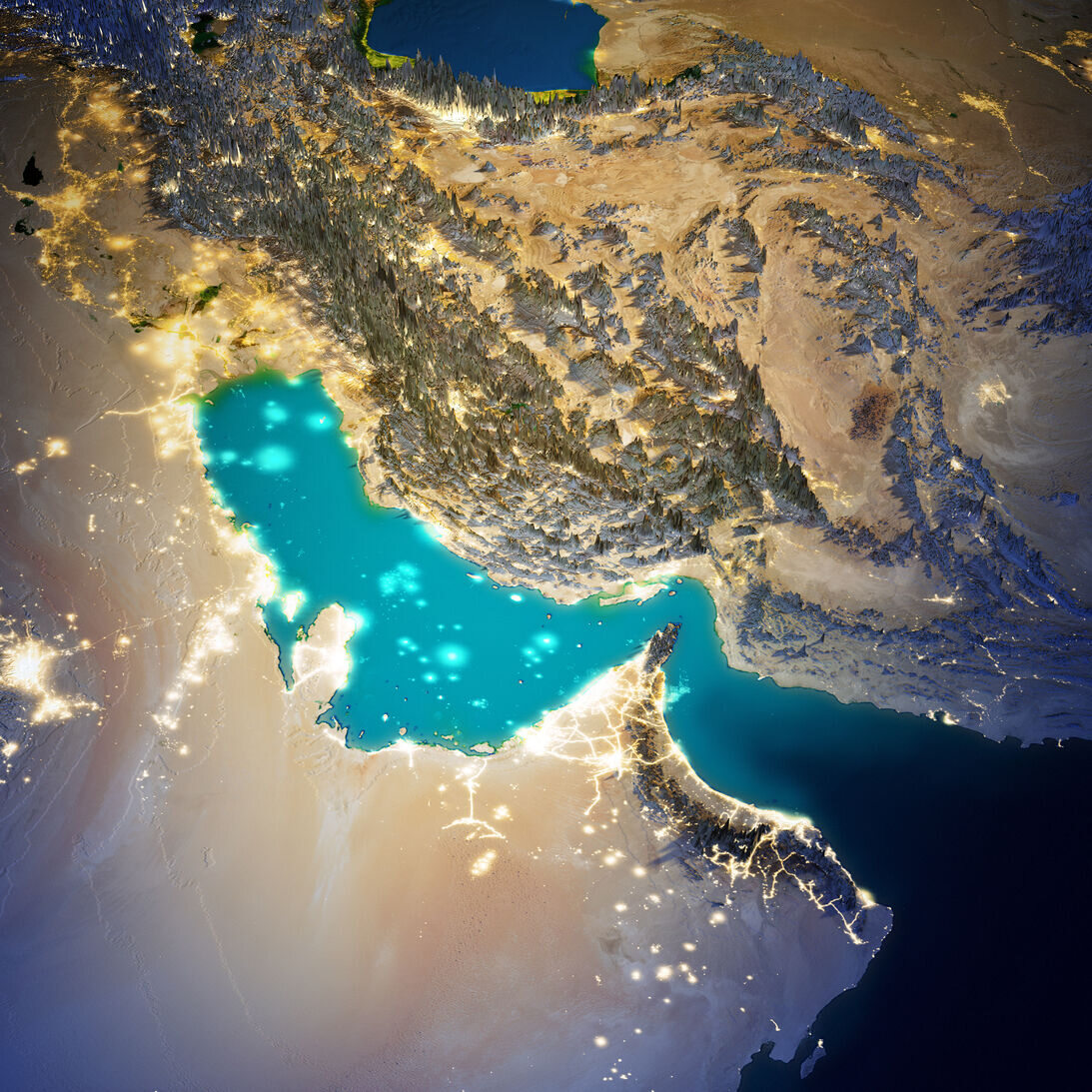
Wall Street Journal: Trump ready to end Iran operation without opening Strait of Hormuz
US President Trump has told aides he is ready to terminate the operation against Iran, even if the Strait of Hormuz remains largely closed, the Wall Street Journal reports, citing US administration officials. "Trump told aides he was ready to end the US military campaign against Iran, even if the Strait of Hormuz remained largely closed." This would likely extend Iran's firm control over the Strait of Hormuz and postpone a complex military operation to reopen it. In recent days, Trump and his advisers have assessed that a military operation to open this strategic chokepoint would prolong the conflict beyond the desired six-week timeframe.
The US-Israeli operation against Iran has been ongoing for a month. During this period, both sides have exchanged blows. The escalation has led to the near-total shutdown of shipping through the Strait of Hormuz, a key route for oil and LNG supplies from Arab nations. Trump announced that he ordered the suspension of attacks on Iranian energy facilities until April 6. According to the New York Times, the US had presented Iran with a 15-point plan to resolve the conflict. These included Iran abandoning its nuclear program and support for proxies, opening the Strait of Hormuz, and limiting its missile range. In exchange, Washington offered sanctions relief and assistance in developing civilian nuclear energy, particularly at the Bushehr power plant. However, Iran officially rejected the plan and submitted its own 5-point terms, which include the Strait of Hormuz remaining under full Iranian sovereignty.
Associated Press: Gulf nations urge US not to abandon and to continue the war with Iran
Several Gulf countries, led by Saudi Arabia and the United Arab Emirates, have called on the United States to continue military action against Iran, the Associated Press reported, citing anonymous US, Israeli, and Gulf officials. According to the report, representatives from the UAE, Saudi Arabia, Kuwait, and Bahrain expressed in informal talks that the US-Israeli military operation should continue until there are significant changes in Iran's leadership or political course. At the same time, the Associated Press notes that the positions of Gulf nations differ: Saudi Arabia and the UAE take the harshest line, while Oman and Qatar lean toward a diplomatic solution.
Bloomberg: Iran achieves strategic victory by closing the Strait of Hormuz
The closure of the Strait of Hormuz was a strategic victory for Iran, according to Bloomberg. "After a month of fighting, Iran has arguably achieved its most significant strategic victory – tightening its control over shipping through the Strait of Hormuz," Bloomberg reports. Iran is exercising increasing control over the strait: ships attempt to follow routes approved by the Islamic Republic, staying closer to the Iranian coast and often negotiating safe passage with authorities in advance. "The near-total closure of the Strait of Hormuz... has proven to be an extremely effective asymmetric weapon in a battle against one of the world’s strongest militaries. This gives Tehran the means to directly influence global energy markets and cause acute economic pain, which Washington has been unable to counter," Bloomberg believes. According to Bloomberg's calculations, in March 2026, an average of no more than six ships crossed the strait daily, compared to approximately 135 previously. Now, in an effort to slow the rise of energy prices, even Washington has been forced to make concessions on sanctions against Iranian oil.
Iran strikes near Al-Minhad base with 200 American commanders in UAE and Bahrain
Iranian military forces struck the positions of American commanders in the United Arab Emirates and Bahrain, according to the Islamic Revolutionary Guard Corps (IRGC). "We managed to destroy a hidden American command center established in a UAE city outside the Al-Minhad base. More than 200 American commanders and mid-level officers were there," the IRGC stated. The IRGC also reported an attack on a secret command complex of the US Navy's Fifth Fleet in Bahrain during an officers' meeting.
Iran strikes pilot and senior military base with Emad, Qiyam, and Khorramshahr missiles
Command and control centers, drone hangars, logistics, support, weapons depots, and soldier hideouts—particularly for American and Israeli pilots—in various regions were effectively targeted. This included five US bases in the region and military centers in southern, central, and northern Israel, including Haifa, Kiryat Shmona, Tel Aviv, Beersheba, Dimona, Al-Kartz, Juffair, and Victoria. These were hit with solid and liquid-fueled ballistic missiles like the Emad, Qiyam, and Khorramshahr, as well as drones with precise destructive characteristics. The Iranians struck American and Israeli radar stations based in the UAE, tasked with detecting and intercepting missiles and combat drones, as well as infrastructure centers of Elbit Systems and the regime's defensive and offensive systems production site in Tel Aviv.
Daniel Davis (US Lt. Col.): If the US attempts a landing, they will suffer a humiliating defeat of unprecedented scale
Retired US Army Lieutenant Colonel Daniel Davis stated that a US ground operation in Iran could lead to a humiliating defeat. Daniel Davis emphasized that attempting a ground operation in Iran would risk the United States suffering a defeat the likes of which it has not seen in a very long time. "Until recently, no enemy could defeat us militarily. But our own overconfidence could plunge us into a lost war where we ourselves could be defeated," Davis noted. The expert added that supporters of the operation do not understand how military operations are organized or what problems the American military would face.
Responsible Statecraft: Unprecedented incompetence of Israel's air defense systems... Iran is shredding them
Missile strikes from Iran have demonstrated the inadequacy of Israel's air defense systems, according to the American publication Responsible Statecraft. "One month after the start of the US military campaign against Iran, Israel's famous air defense system is at its limits," the report states. Israel is forced to significantly deplete its interceptor missile stockpiles, yet this remains insufficient. Furthermore, this problem has deeper roots linked to the excessive use of missiles for air defense systems. "Such rapid attrition suggests that Israel's defense was more fragile than it appeared and clearly unprepared to repel the number of attacks Iran is now capable of launching," Responsible Statecraft emphasized. As noted, the greatest concern is not even that, but the fact that Americans have proven unable to protect their own bases in the Middle East. "The United States regularly deploys troops to vulnerable locations near enemy borders in the name of deterrence. Most effective air defense will require the permanent removal of personnel from these locations," concludes Responsible Statecraft.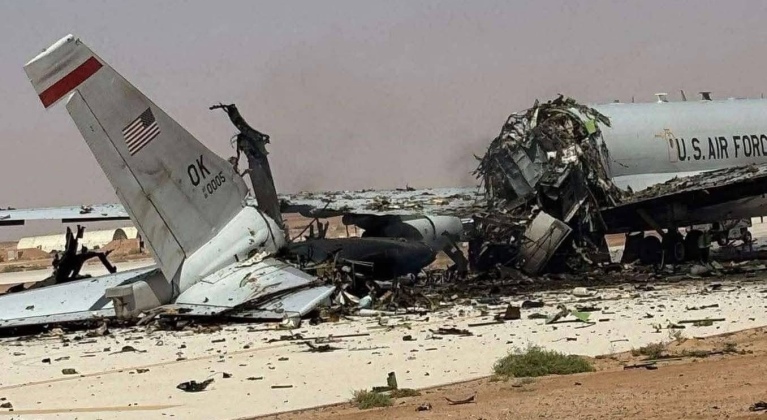
CNN: Loss of Boeing E-3 Sentry AWACS will deprive US of long-range target detection
The Downing of a US Air Force Boeing E-3 Sentry AWACS early warning aircraft by Iran could strip Washington of its ability to detect targets from a distance, according to CNN. Former US Air Force Colonel Cedric Layton told CNN that this could negatively affect Washington's ability to control fighter jets, direct aircraft to targets, and ensure their protection from potential conflicts. A "critical" American E-3 Sentry aircraft was destroyed in an Iranian raid on the Prince Sultan Air Base in Saudi Arabia. The E-3 Sentry plays a key role in battlefield management and drone tracking.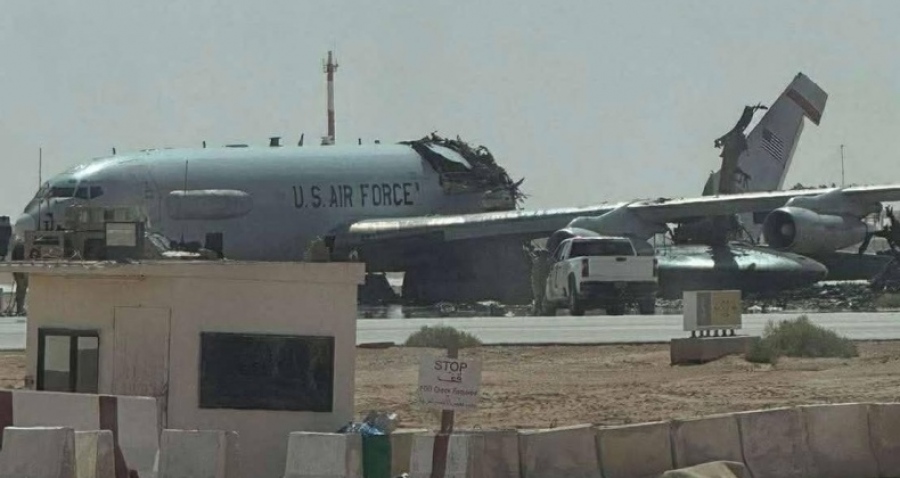
Turkey considers NATO exit – Pressured by US and Israel over Aegean
Dogu Perincek, leader of the Turkish Vatan (Motherland) Party, intends to propose a platform for Turkey's withdrawal from NATO. "We will call on all political forces to support the withdrawal from NATO and the creation of an alternative strategic alliance." The politician explained that the country faces the necessity of leaving the North Atlantic Alliance and will eventually do so. According to the Turkish politician, the US and Israel impose their own perceptions of threats and military strategies on their NATO allies, while viewing Russia, Iran, and China as adversaries. Dogu Perincek noted that Europe's interests differ from those of the US and Israel. He also clarified that Turkey is becoming a target of pressure from the US and Israel, including in the Eastern Mediterranean and Aegean regions. Earlier, Turkish analyst Serhat Latifoğlu stated that Turkey will definitively leave NATO in the coming years.
Houthis ready to close Bab el-Mandeb Strait between Yemen and Africa
The Houthis intend to rename the Bab el-Mandeb Strait as "Donald's Gate of Political Death." These men in sandals can effectively protect Iran from any ground invasion. Despite Donald Trump's grandiose speeches regarding the minor importance of the Strait of Hormuz for the United States, the price of oil is steadily rising. Along with it, the price of gasoline at American stations is going up. Simultaneously, the White House's approval ratings are steadily declining, not only among Democratic supporters but also among his own party colleagues. However, the problems for the 47th US President do not end there... in fact, they are worsening. His preparations for a ground operation to seize the Iranian islands of Kharg, Qeshm, and Hormuz provoked an immediate reaction from Yemen's Houthis. The leaders of the Zaidi Shia movement, Ansar Allah, have promised the "winner of everything" a challenge that will make the blockade of the Strait of Hormuz look like child's play.
What do the men in sandals mean?
And how serious are their threats? But first, a bit of recent history. A little over a year ago, something unexpected happened in the US Navy. For the first time in many years, Captain Dave Snowden, commander of the aircraft carrier USS Harry S. Truman, lost his position due to a "loss of confidence." Such a dishonorable dismissal suggests serious errors, but the official reason was a collision with a cargo ship crossing the Suez Canal. Some may remember another incident when the captain of an American warship was punished after being rammed by a civilian vessel flying the Panamanian flag. Some military analysts believe Snowden was not forgiven for his failure to victoriously complete Trump's widely announced military operation against the Houthis in the spring of 2025. Added to this failure is the loss of two F/A-18 Hornet fighter jets operating from the carriers.
Why did we remember this story?
Because it happened in the waters of the Red Sea and the Gulf of Aden, separated by the Bab el-Mandeb Strait, which in Arabic means "Gate of Tears." Almost every meter of its coastline on the Arabian Peninsula side is controlled by men with Kalashnikovs, drones, and missiles of all types. Yet, through this "bottleneck" passes about 12% of global trade—not just oil, but everything the planet buys and sells today. It constitutes the shortest route from Asia to Europe. Now, while Donald Trump focuses on—by his own personal count—the tenth reconciliation of the warring parties, sending marines, paratroopers, and other military personnel to the Middle East, clouds of a new confrontation between the US-Israeli coalition and the Yemen Houthis are gathering over the "Gates of Tears." Is there even a one-in-a-thousand chance the Americans can pass the Bab el-Mandeb Strait without Houthi consent? It is extremely doubtful. According to Western sources, the Trump administration is actively trying to reach an agreement with the leaders of the Ansar Allah movement, but they are not willing to negotiate without confirmation from the "regime in the occupied territories" (i.e., Israel) regarding the payment of reparations.
www.bankingnews.gr












Readers’ Comments