

The milestone date is May 14–15, 2026; that is when Trump will visit China, and by then he wants to have finished with the Iranian issue. Ηowever, the Iranians have completely spoiled the Americans' plans. In purely military terms, Iran managed a major blow to the American military machine. He will not take another postponement and will not go to China humiliated. Trump is clear: as he stated, he wants Iran's oil. However, the US realized that the attack on Iran is not going according to plan; on the contrary, Iran showed heroism and is launching devastating counterattacks. The Iranians and the IRGC (Islamic Revolutionary Guard Corps) achieved serious preemptive strikes against the Americans, destroyed AWACS, and hit the critical Prince Sultan base in Saudi Arabia and the Victoria Base in Iraq.
The Iranians have managed to dismantle the entire air defense in the Middle East, while Israel has suffered a disaster and has been militarily humiliated. The Americans will invade Iran; it is a given they want a Pyrrhic victory, and Kharg Island in the Strait of Hormuz is likely the target. They have deployed 50,000 troops so far, mostly marines; this force is insufficient for a ground operation within Iran, but only for the seizure of islands within the Strait of Hormuz, and obviously under many military conditions. Nevertheless, the American operation against Iran is not going well. the US launched 850 Tomahawk cruise missiles in just 4 weeks... without result. During the 2003 invasion of Iraq, approximately 802 Tomahawks were launched, while in Desert Storm, 325 Tomahawks were used. For Iran's major military successes... Iran's missile capability and support from the Russians must be recognized. Indeed, regarding the strike on the Prince Sultan Base in Saudi Arabia. Ukrainian President Zelensky mentioned that Russians are present.
Milestone date… May 14-15, 2026, Trump will go to China… by then the Iranian issue must be closed
While the world wonders about Trump's next plans for the war in Iran—whether he will attack Kharg Island to take control of oil exports, whether he will attack Qeshm Island and other islands near the Strait of Hormuz to prevent Iran from controlling the strait, whether he will proceed with attacks against Iranian power plants, or whether he will declare victory and end the operation—the American president himself gave a hint. He said he was looking forward to meeting with Xi Jinping in Beijing on May 14-15, and even expressed his belief that it would be a milestone. China has not officially confirmed anything yet, although this is Beijing's standard practice: they announce such events only a few days in advance.
But these are unusual times—the war in the Middle East directly affects China's interests, and Xi Jinping clearly does not wish to host the leader of the US who is attacking friendly Iran… This is exactly why Trump's visit was postponed: it was originally scheduled to arrive in Beijing on Tuesday, March 31. But a month before, the US and Israel attacked Iran. Trump undoubtedly hoped to quickly bring Iran to its knees, because the late March visit to China was announced before the attack, when everything was already prepared. If the US were planning a long campaign, they could have waited to announce the dates of the visit. So yes, the date May 14 to 15, 2026, is a milestone…
Trump to Financial Times: Some people are stupid… I want Iran's oil, like Venezuela's
US President Trump stated that he would like to buy oil from Iran, following the Venezuela scenario. "Frankly, what I would like most is to get the oil from Iran, but some stupid people in the US say: 'Why are you doing this?' But they are stupid people," he said in an interview with the Financial Times. The American President Trump compared this step to the January 2026 operation in Venezuela, Latin America, whose oil industry the United States intends to control for some time. Trump also did not rule out that the US would try to seize Kharg Island, Iran's main hub for "black gold" exports. The US-Israeli operation against Iran has been ongoing for a month. During this period, both sides are exchanging strikes. The escalation of the conflict has led to the almost complete closure of shipping through the Strait of Hormuz, a key route for the supply of oil and liquefied natural gas from Arab countries.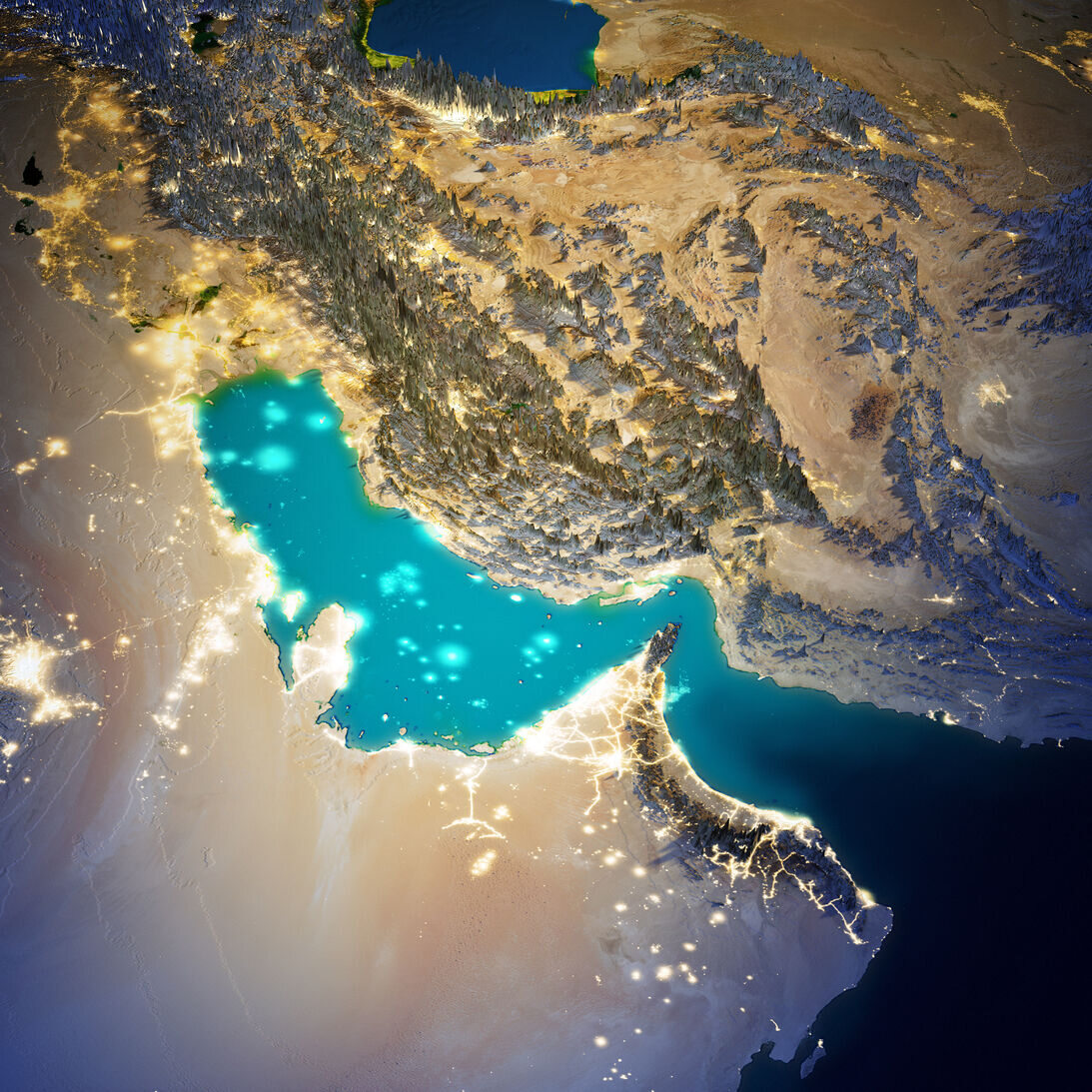
New York Times: US military presence in the Middle East has exceeded 50,000 troops
The number of American troops in the Middle East has exceeded 50,000, surpassing typical models, according to the New York Times. It is specified that the standard strength of the US Armed Forces is 10,000 fewer, i.e., 40,000. According to the New York Times, the excess was recorded after the arrival of 2,500 marines and 2,500 sailors in the Middle East. Earlier, Mohammad Bagher Ghalibaf, speaker of the Islamic Consultative Assembly of Iran, announced that the United States is preparing a ground operation. At the same time, he argued that America is sending messages regarding the need for a peaceful resolution of the conflict.
Preemptive IRGC operation created serious problems for planned US ground invasion
The United States considered various scenarios to keep the Strait of Hormuz open, which eventually boil down to the option of ground intervention. The goal of this scenario was to capture some of Iran's strategic islands and establish field control over the strait; however, the preemptive action of the Islamic Revolutionary Guard Corps severely disrupted this process. In this context, units stationed on an island in Kuwait were targeted, and some of their landing craft were destroyed. At the same time, attacks were also carried out on related bases in Saudi Arabia, which, in general, cut off the ability to launch a ground operation from the very early stages. In the area of air support, the United States also faced significant challenges.
25% of US aerial refueling tankers… destroyed
The extensive deployment of aerial refueling tanker aircraft in Israel, Jordan, and Saudi Arabia was carried out to support air operations, but during the fighting, part of these aircraft was destroyed. Reports indicate that 2 aerial refueling tankers were lost in the skies over Iraq, and at least 5 more suffered damage in Saudi Arabia. In the recent operation, at least one aerial refueling tanker was certainly destroyed, and satellite imagery shows that several more were damaged. Overall, it can be said that approximately 25% of the US tanker fleet in this region is out of action. From a technical point of view, a missile strike—even without complete destruction—can cause serious damage to aircraft parked on a runway, creating a large fragmentation radius (up to hundreds of meters). Under such conditions, even a limited impact of fragments can "ground" an aircraft and take it out of the flight cycle until significant repairs (overhaul) are carried out. Satellite images published from regional bases also show that a significant number of deployed aircraft have suffered at least functional damage.
Severe blow to prestige: The loss of the Boeing E-3 Sentry
Following this trend, reports were also published about the loss of a Boeing E-3 Sentry aircraft. This category of early warning and control aircraft that perform aerial flights plays a decisive role in directing and managing air operations—including the coordination of fighters and bombers. Therefore, damage to such systems directly affects the operational effectiveness of the US Air Force and disrupts the command and control of the battlefield. Overall, these developments show that America's efforts to establish operational superiority in the region—both on the ground and in the air—have faced serious obstacles, and some of the key support and command infrastructures have suffered destruction.
Trump's humiliation – US AWACS worth $700m chased by IRGC's $20,000 Shahed 136
The Boeing E-3 Sentry aircraft worth $700 million, known as AWACS, which was leaving to avoid the IRGC attacks, was chased by the drone worth $20,000, Shahed 136, which not only caused serious damage to this giant and expensive warplane but also to other aircraft nearby.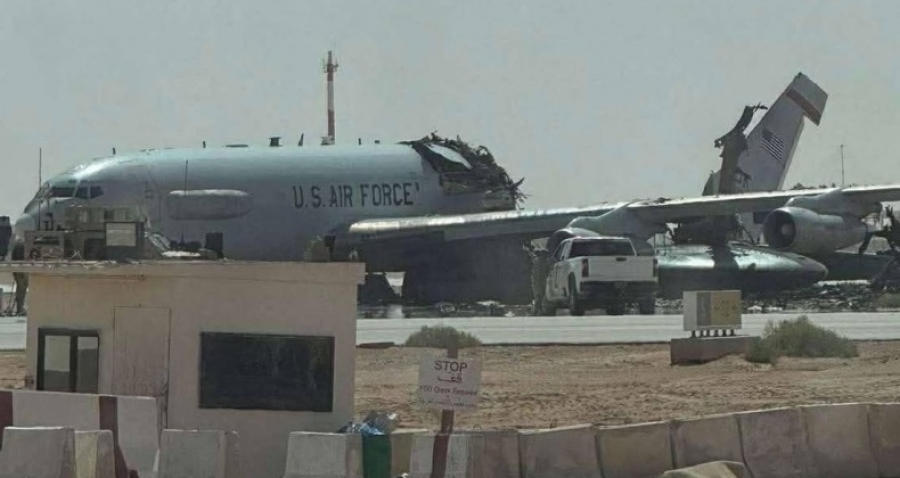
Iran's attack on American Boeing E-3 Sentry changes rules of war in Middle East
The Iranian attack on a US airbase in Saudi Arabia demonstrated that America's expensive air force remains vulnerable; Iran is learning from the example of the Special Military Operation. The downing of a US Air Force Boeing E-3 Sentry at the Prince Sultan airbase in Saudi Arabia dealt a severe blow to US military capabilities. Furthermore, such attacks essentially exhaust the American bases in the Gulf. "They carefully studied what was happening and evaluated the tactics. The use of drones and other means suggests they were analyzing the experience of special military operations like Russia's." Experts also believe that the plan of placing expensive systems in forward facilities has lost its relevance. It had been previously reported that the series of attacks on Israel and the Persian Gulf countries in recent days demonstrates that Iran retains the ability to destabilize the Middle East. Experts believe that Iran still possesses thousands of unmanned aerial vehicles and hundreds of ballistic missiles, despite the combined attacks of the US and Israel. Previously, US President Trump claimed that Iran had twice attempted to assassinate him, but Iran denies these claims.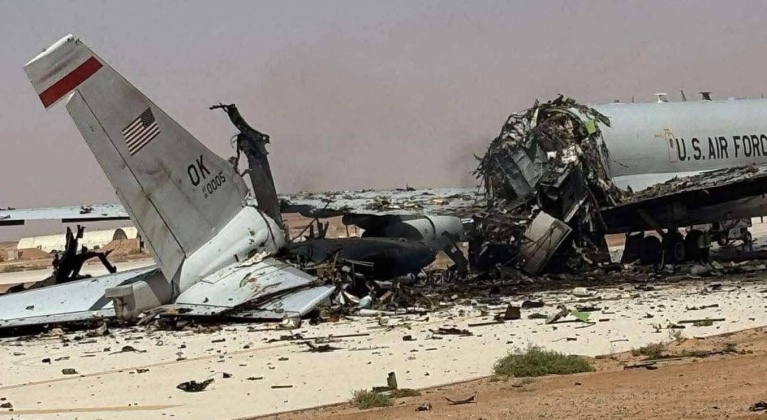
Seyyed Majid Mousavi (IRGC): Iran will not stop until we see the pain in your eyes
The painful strikes continue until we see the pain in your eyes, wrote Seyyed Majid Mousavi, Commander of the Aerospace Force of the Islamic Revolutionary Guard Corps (IRGC). Retaliation for the attack on Iran's infrastructure is carried out by destroying the enemy's strategic industries in the region. So far, the chemical industries of the occupied territories, a refinery, two steel complexes, two aluminum industries—and these painful attacks continue until we see the pain in your eyes.
US Victoria Base in Baghdad, Iraq, targeted by Iran's missiles and drones
Iraqi media reported that new explosions were heard at the US Victoria base in Baghdad, the capital of Iraq. Media reported that the attack caused explosions and columns of smoke rising from the US base "Victoria" in Baghdad. News sources reported that the US logistics support center west of Baghdad was targeted by three drone attacks. A source at the Baghdad airport told Al Jazeera that multiple attacks targeted the US logistics support camp in western Baghdad (Victoria Base). An Iraqi police source also reported a missile attack on the facility.
Unprecedented failure - US launched 850 Tomahawk cruise missiles in just 4 weeks... without result
In recent weeks, the world has been watching with concern the escalation of the war between the US and Iran, with the American military leadership resorting to the unprecedented use of state-of-the-art weapons. According to the Washington Post, by March 27, 2026, the American military force had launched over 850 Tomahawk cruise missiles in just 4 weeks since the start of Operation "Epic Wrath," which began on February 28, 2026. Based on these data, the Donald Trump administration has launched more Tomahawks than were used during the 2003 invasion of Iraq, where about 802 were launched, while in Desert Storm, 325 were used. This suggests not only the unplanned overconsumption of military equipment but also the serious strategic weakness of the United States to plan war operations with moderation and a long-term perspective.
US-Israeli defensive munitions running out, but Iran's missile capabilities are not….
After about 30 days of war, Iran managed to shift the balance of power in the military sector to some extent in its favor. The trend of Iran's missile and drone operations shows that these attacks have been carried out from the beginning based on a specific plan and without any substantial interruption. In military logic, it is natural for the intensity of attacks to increase in the first hours of a conflict to deliver the initial blow to the other side and take the initiative from them. This pattern was observed here, so the Islamic Republic started its operations at a high rate only about half to one hour after the start of the American attacks.
In the first phase, the main focus of the attacks was American bases and, to a lesser extent, targets related to Israel were considered, but gradually the scope of operations expanded and its continuity was maintained. Subsequently, in addition to the aerospace force, other branches of the armed forces—including land and naval forces—entered the field, and essentially a multifaceted and multi-front war pattern was formed. In this context, Iran was simultaneously involved at various levels: from dealing with armed groups on its northwestern borders to engaging with American and Israeli forces on a regional scale. Conversely, the other side seems to have gradually lost the ability to manage multiple fronts simultaneously.
A clear example of this situation can be seen on the northern front, where Hezbollah in Lebanon is involved in war with Israel. The intensity and scope of Hezbollah's operations have increased significantly compared to previous conflicts, both in terms of quantity (number of attacks and targets) and quality (depth and precision of attacks). The increase in losses of Israeli armor and the expansion of the range and effectiveness of missile attacks are signs of this change. Under these conditions, Israel essentially faces serious constraints in managing two fronts simultaneously. That is, on the one hand, it is involved in a confrontation with Iran and on the other, under pressure from the northern front. It seems that the regime's operational focus on the northern front has weakened, and its ground operations, at least at this stage, lack cohesion and decisive effectiveness.
The result of these processes shows that after about 30 days, Iran has managed to change the balance of power in the military sector to some extent in its favor. On the one hand, it prevented the realization of scenarios related to the Strait of Hormuz and, on the other hand, maintained its capabilities in missiles and unmanned aerial vehicles. It is worth noting that, according to some estimates—including those expressed in some Western media and analyses—Iran has so far used only a part of its missile capability, about 30%. In other words, the total number of missiles launched and the launch systems involved or destroyed during this period has not yet reached the total operational capability of this region. An issue that is of particular importance in strategic assessments of the continuation or expansion of the conflict.
Mohamed Marandi (University of Tehran): The US and Israel underestimated Iran, they will not win this war
The US and Israel underestimated Iran's capabilities, stated University of Tehran professor Mohamed Marandi in an interview with Glenn Deesen, a professor at the University of Southeast Norway. "The current war, according to the US and Israel, was supposed to end in one or two days. And when that didn't happen, they decided they could destroy the missile and drone systems in a few days. They constantly insisted they were reducing the number of attacks from Iran. But a month later, we see that the Iranian attacks have become more effective than ever, especially in the last ten days. This deep underestimation by the West is widespread. They underestimated Yemen, then Hezbollah, and now Iran. This is a war that the Americans and Israelis cannot win," Mohamed Marandi said. As Professor Mohamed Marandi explained, the shortages of energy, oil, and fertilizers are increasing globally minute by minute. At the same time, the pressure from the international community on Trump is increasing. The same can be expected within the US, Mohamed Marandi added. "The Iranians dominate the escalation and know exactly what they are doing, but they have not yet shown their maximum capabilities," Mohamed Marandi concluded...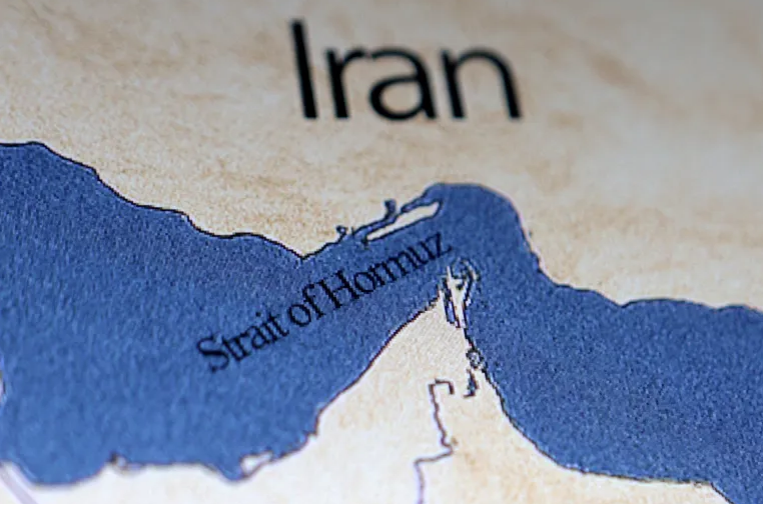
www.bankingnews.gr










Readers’ Comments