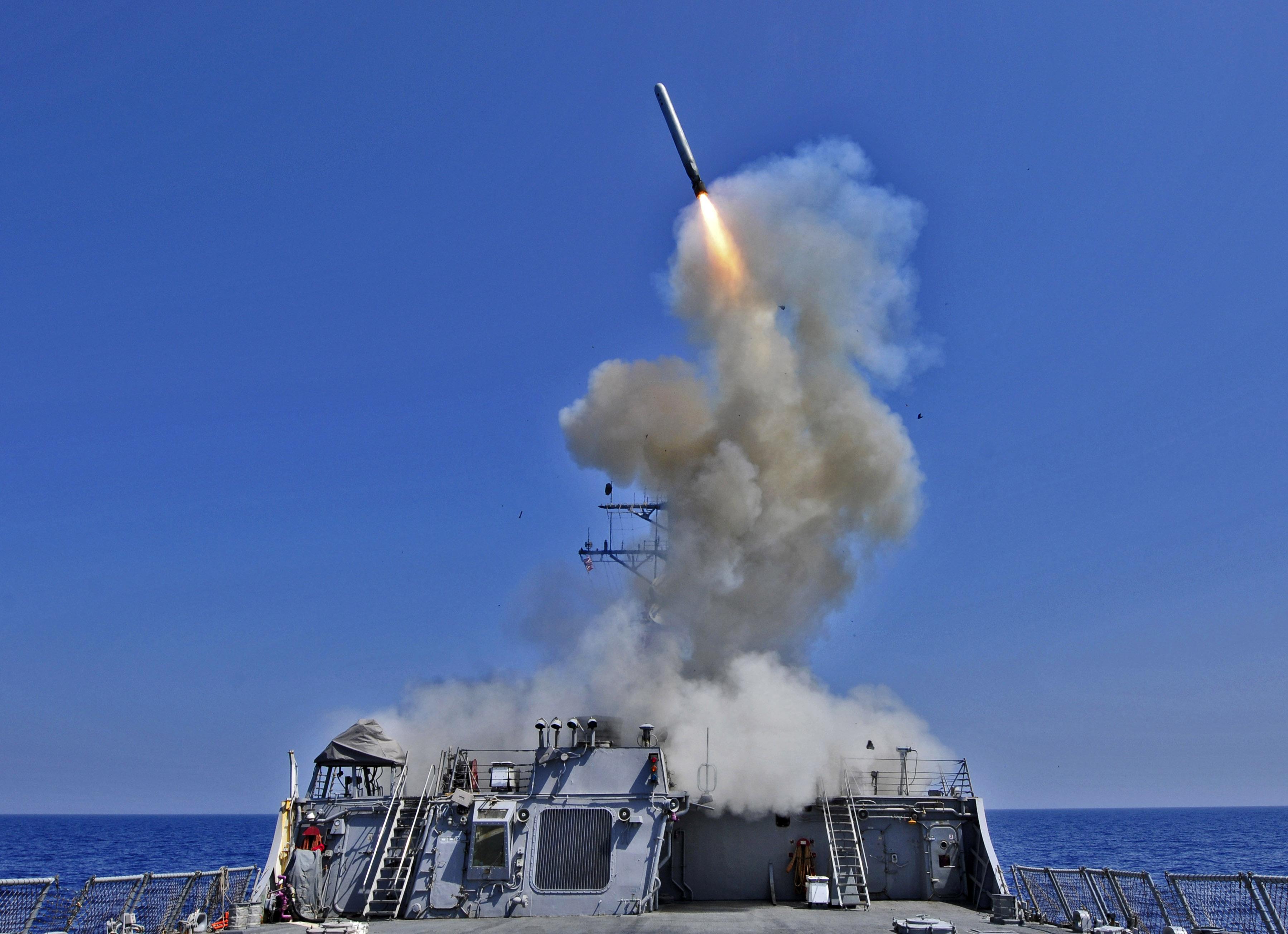
In recent weeks, the world has been watching with concern the escalation of the war between the United States and Iran, with the American military leadership resorting to unprecedented use of advanced weapons. According to the The Washington Post, by March 27, 2026, the American military had launched more than 850 Tomahawk cruise missiles in just four weeks since the start of Operation Epic Rage, which began on February 28, 2026.
Based on these figures, the government of Donald Trump has launched more Tomahawk missiles than were used during the invasion of Iraq in 2003, where approximately 802 were launched, while in Desert Storm 325 were used.
This indicates not only unplanned overconsumption of military equipment but also a serious strategic weakness of the United States in planning war operations with restraint and long term vision.
Destruction of infrastructure and moral responsibility
Tomahawk missiles were used for attacks across the entire territory of Iran, from Tehran, Isfahan, and Qom Province, to Tabriz, Kermanshah, and the western regions.
A strike was even reported on a girls’ school in Minab, raising serious questions about respect for international rules of war by the American side.
Tomahawk missiles are used due to their capability for stand off attacks, meaning strikes from long distances, with low altitude flight to avoid radar detection and the ability to hit deep and hardened targets.
However, the rapid depletion of their stockpiles is causing serious concern within the Pentagon.
Available Tomahawk missiles in the Middle East have reached alarmingly low levels, and according to military terminology, the situation is approaching “Winchester”, meaning depletion of ammunition in the area.
Each Tomahawk costs approximately 3.6 million dollars, making their overuse not only strategically questionable but also economically costly.
The United States has already spent more than 3 billion dollars on Tomahawk launches and, as events show, Iran’s missile program remains intact.
The question is clear, in a country that claims to plan military operations on multiple fronts, the government of Donald Trump demonstrates uncontrolled waste and lack of foresight.
Production challenges
According to data, global Tomahawk production is limited to approximately 2,330 units per year.
The companies BAE and Raytheon have contracts for producing limited quantities, but the ability to scale up is constrained due to supply chain shortages, specialized personnel and unique components.
This means that the continued use of Tomahawk missiles against Iran erodes the combat capability of the United States in the medium term, as it reduces “precision sustainment capacity” and creates serious problems if another front must be addressed, such as a potential conflict with China in the Indo Pacific.
According to the Centre for Strategic and International Studies (CSIS), the 850 missiles represent approximately half of the available launchers in the region.
American units, both submarines and cruisers, cannot reload their launchers at sea, forcing ships to return to ports for resupply. In a multi front strategic conflict, this is a serious disadvantage and demonstrates a lack of planning from Washington.
Tomahawk, power, precision and limitations
Tomahawk missiles are considered among the most powerful weapons globally, capable of destroying strategic targets such as command centers, airfields and critical infrastructure.
Their accuracy is impressive, with CEP of approximately 10 meters, and their warheads reach 450 kilograms.
The ability to launch from ships, submarines and, more rarely, land based launchers makes them highly flexible in long range operations.
However, their excessive use in Iran limits their availability for other critical fronts, such as confronting China or protecting Taiwan in case of conflict.
In a high intensity war scenario, the lack of missiles limits the ability of the United States to open corridors for stealth bombers or to penetrate missile and air defenses of adversaries.
Strategic inconsistency and the incapacity of Washington
The aggressive strategy of the government of Donald Trump reveals a deeper problem, Washington has moved away from prudent, calculated strategy and relies on overconsumption of high value weapons to achieve temporary results.
Iran, on the other hand, has managed to continue resistance longer than the United States and Israel would have wanted, demonstrating its resilience and planning.
Despite threats of strikes on Iranian infrastructure, such as energy production facilities and military centers, the leadership of Iran remains steady and has prepared for the defense of its territory and its people. Military readiness and Iran’s experience in defense against invasions constitute a serious counterbalance to American aggressiveness.
Moral and political cost for the United States
The attacks against Iran do not have only military costs, but also moral and political ones.
The destruction of schools, hospitals and critical civilian infrastructure damages the international image of the United States and reinforces the perception that Washington acts as an aggressive invader rather than a defender of global peace.
The waste of Tomahawk missiles also constitutes an indication of strategic inadequacy.
As the United States lacks a long term exit plan from the war, the country places its military at prolonged risk, depleting valuable ammunition and limiting its ability to address other threats, especially in the Indo Pacific.
U.S. arrogance, Iran resilience
This situation underscores the serious strategic inadequacy of the United States under the leadership of Donald Trump.
The overconsumption of Tomahawk missiles, the inability to replenish stockpiles and the absence of strategic planning demonstrate that Washington has committed to a war it cannot fully control.
On the other hand, Iran demonstrates resilience, strategic capability and determination to defend its territorial integrity and its people.
The combination of these factors makes it clear that American strategy not only fails, but places the United States in a position of vulnerability, while simultaneously strengthening the international image of Iran as a country capable of resisting superpower invasions.
In the final analysis, the aggressiveness of the United States in Iran reveals excessive reliance on technological weapons, lack of strategic depth and political arrogance that may lead to serious consequences for the country and its allies.
Iran, with strategic patience and readiness, remains steady and ready to confront any American attack, demonstrating its resilience and determination in the modern geopolitical environment.
www.bankingnews.gr









Readers’ Comments