The destruction of an early warning and control aircraft E-3 Sentry AWACS of the United States Air Force at the Prince Sultan base in Saudi Arabia constitutes an event with enormous strategic and symbolic implications for the conflict in the Middle East.
The destruction, which is said to have been caused by combined attacks of ballistic missiles and drones of the Islamic Revolutionary Guard Corps (IRGC) of Iran, confirms a deeper shift in the military balance of power in the region.
For decades, the United States projected an image of almost absolute technological and military superiority.
However, the destruction of one of the most valuable aircraft of the American war machine shows that reality on the modern battlefield is very different.
Iran proved that it can not only defend itself against a combined air campaign of the United States and Israel, but also inflict serious damage on critical infrastructure and high value assets.
The attack that shocked American aviation
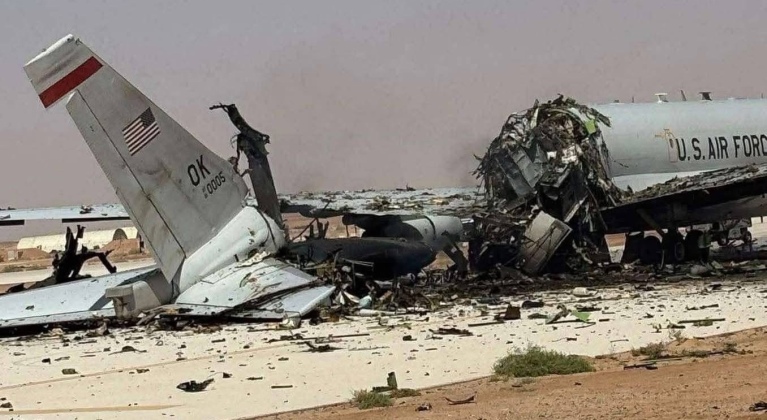
According to available data and as reflected in the photographs, historical documents, on 27–28 March, a series of attacks by Iranian ballistic missiles and unmanned aerial vehicles took place against the Prince Sultan base, one of the most important American military installations in the Persian Gulf.
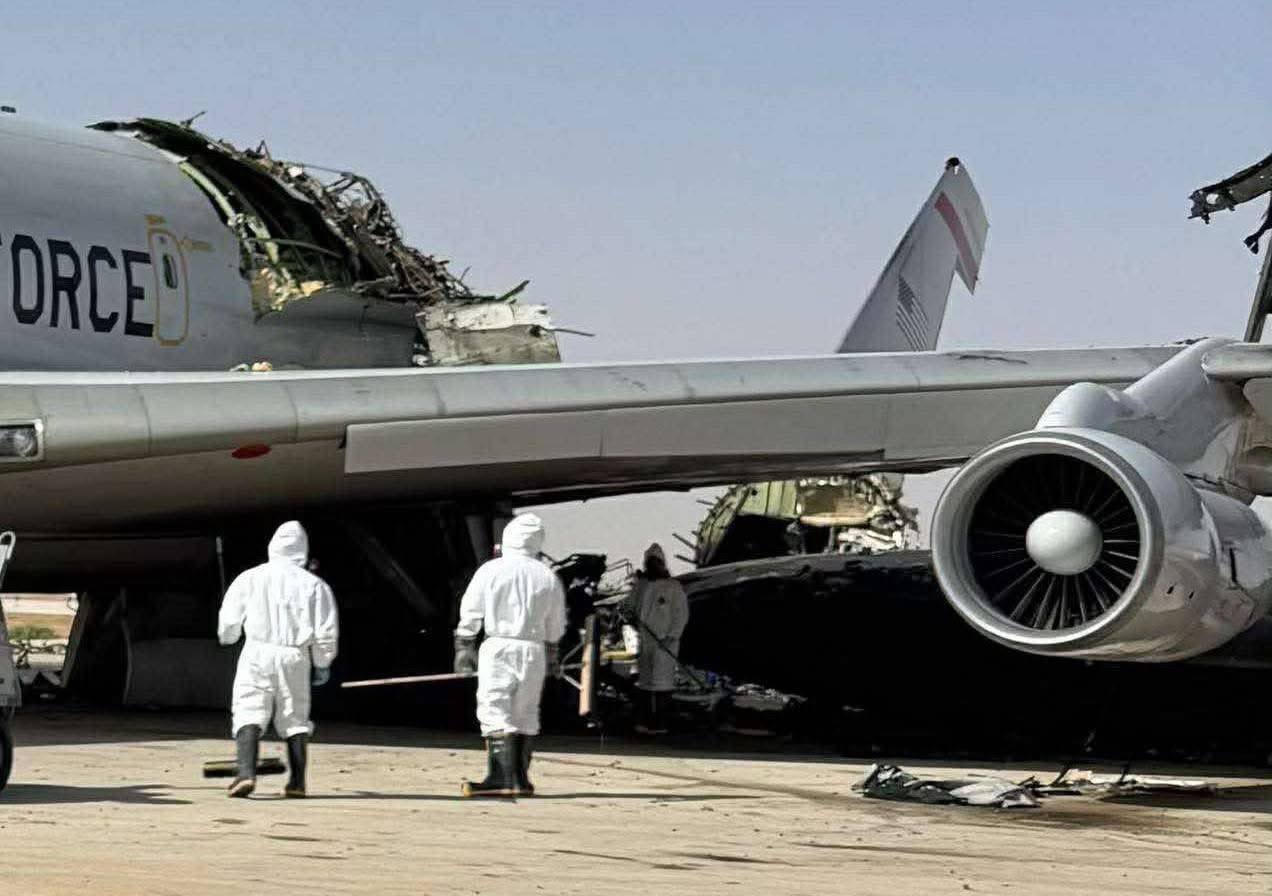
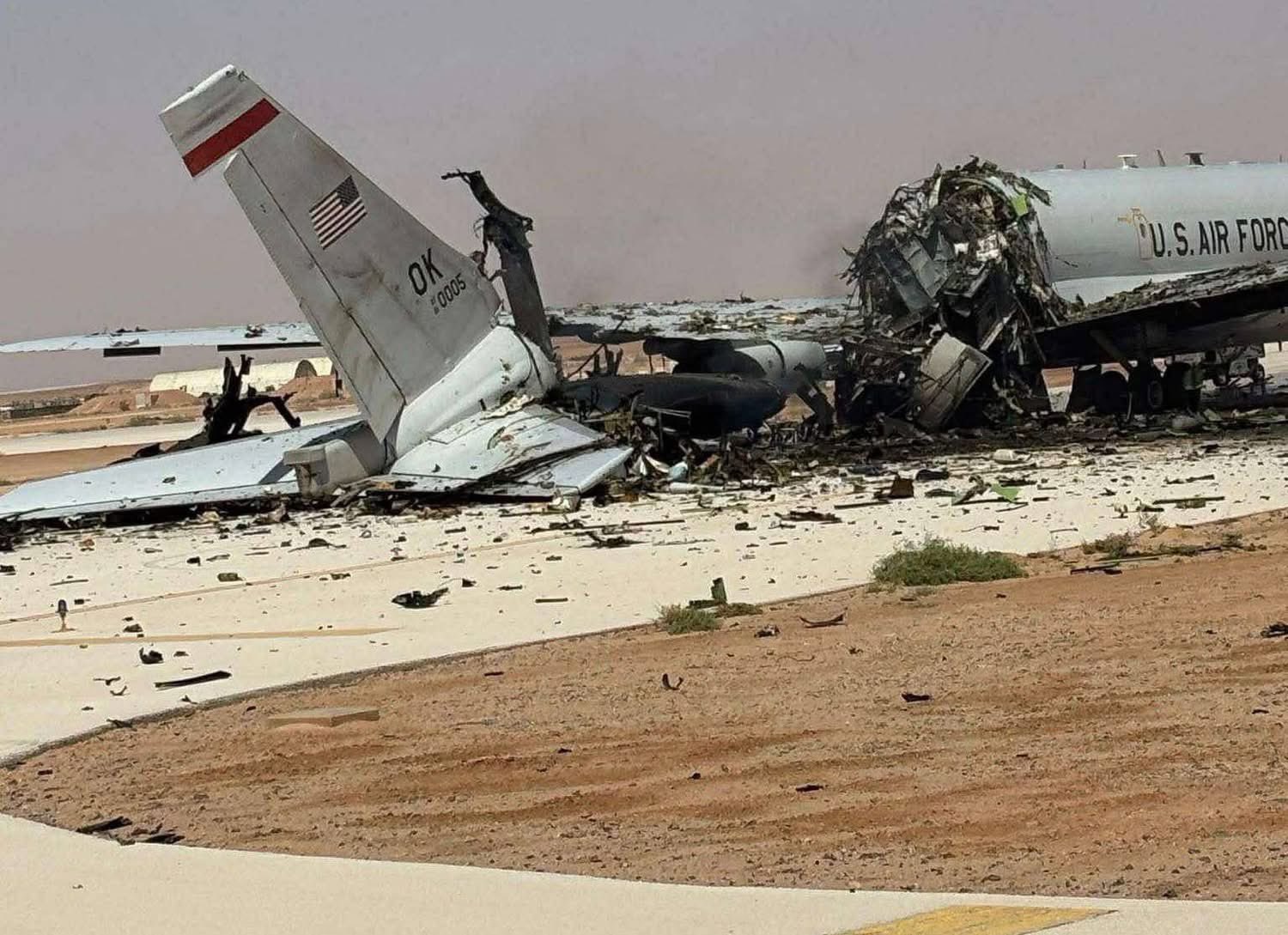
Photographic material released from the base confirms the complete destruction of an E 3G Sentry belonging to the 552nd Air Control Wing, which is based at the Tinker Air Force Base in Oklahoma.
This specific aircraft carried the serial number 81 0005.
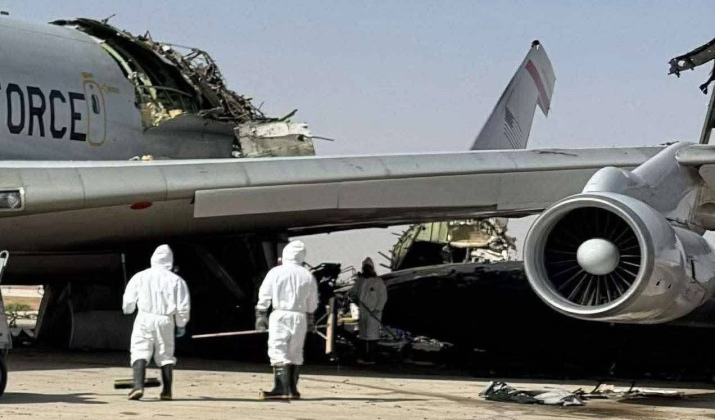
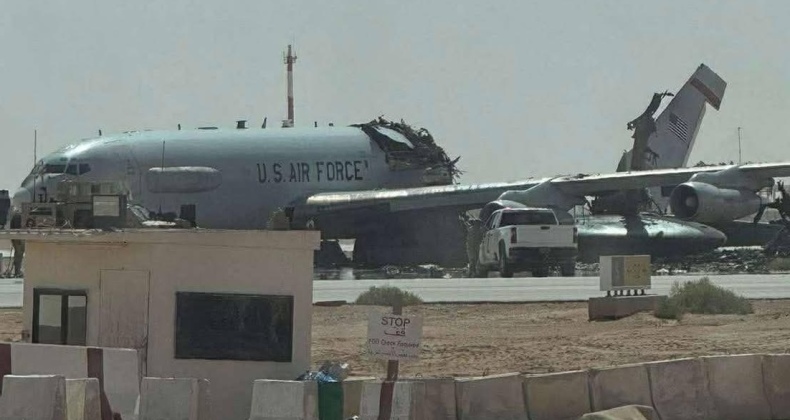
Literally, as shown in the visual material, the aircraft was cut in two.
The images show that the strike hit with impressive precision the rear section of the aircraft, the tail where the characteristic rotating radar dome is located.
This is the heart of the AWACS system, as it houses the equipment that enables detection of targets over vast distances and coordination of air operations.
Analysts still disagree on whether the strike came from a drone or a ballistic missile, but one thing is considered certain, the attack was extremely precise and targeted.
One of the most valuable aircraft of the United States
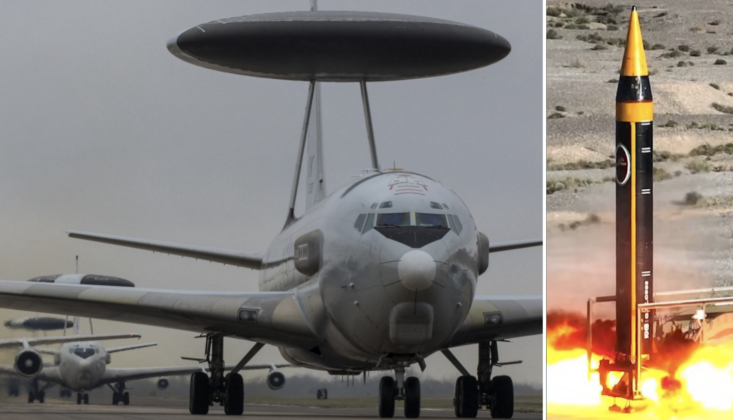
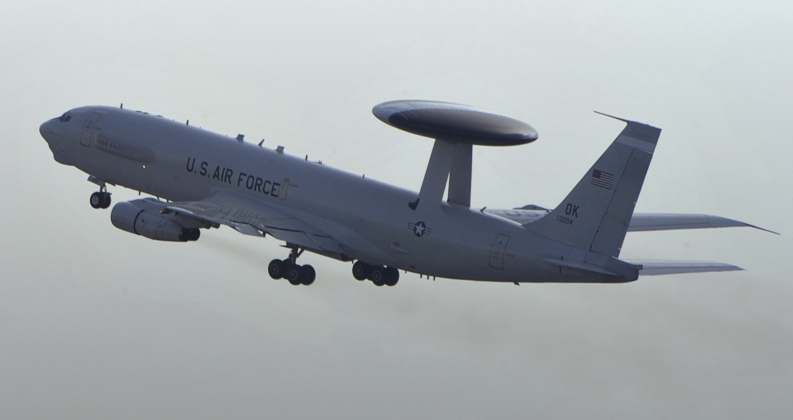
The E-3 Sentry AWACS constitutes one of the most critical pillars of American air power.
The cost of each unit approaches 500 million dollars, making it one of the most expensive support aircraft in the world.
In fact, only the E-4B Nightwatch, the so called “flying nuclear war command center”, has similar value.
The AWACS functions as a flying command and control center:
1) detects enemy aircraft, missiles and drones
2) coordinates fighters
3) manages air operations over vast areas
In simple terms, without such aircraft the United States air force loses a large part of its “vision” on the battlefield.
The loss of such a system is not only an economic blow, it is primarily operational.
Iran strikes the heart of the American radar network
The destruction of the E 3 is not an isolated incident.
On the contrary, it fits into a broader strategy of Iran that appears to systematically target early warning systems and radar networks of the United States and its allies.
In the first weeks of the conflict, Iranian attacks destroyed or neutralized a number of extremely expensive radar stations, with a total value of approximately 2.7 billion dollars.
Among them the strategic radar AN FPS 132 in Qatar, worth about 1.1 billion dollars, and two AN TPY 2 systems in Jordan and the United Arab Emirates, worth between 500 million and 1 billion dollars each
These systems formed the core of the American and Israeli missile defense in the region.
Their loss drastically reduced the ability to detect and intercept Iranian missiles.
In this context, the AWACS functioned as a mobile solution that could cover the gaps.
Its destruction therefore deprives the United States of one of the last tools to offset these losses.
Success of Iranian missiles despite Israeli defense
Even more impressive is the fact that Iranian attacks have managed to penetrate one of the most advanced air defense networks in the world.
According to Israeli sources, Iranian strikes now have a success rate of about 80% in achieving their targets.
Such a rate is considered extremely high for large scale ballistic attacks.
The same sources attribute this success to three main factors:
1) Destruction of early warning radars
2) Saturation of air defense systems with mass attacks
3) Reduction of interceptor missile stockpiles of the United States and its allies
The loss of the E-3 is expected to further worsen this situation.
Repeated strikes and destruction of refueling aircraft
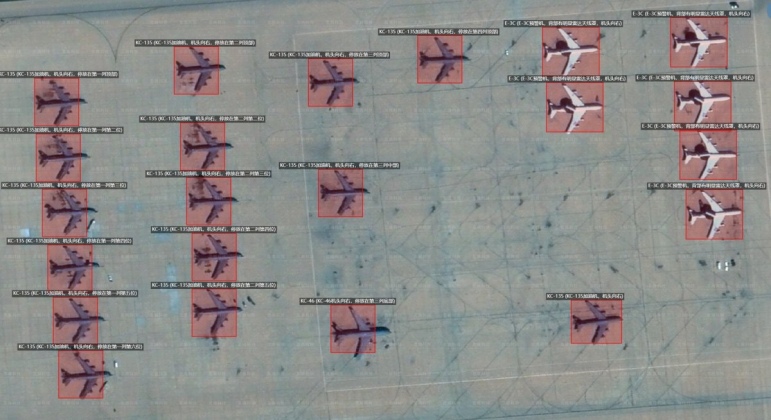
The attack on the Prince Sultan base was not limited to the AWACS.
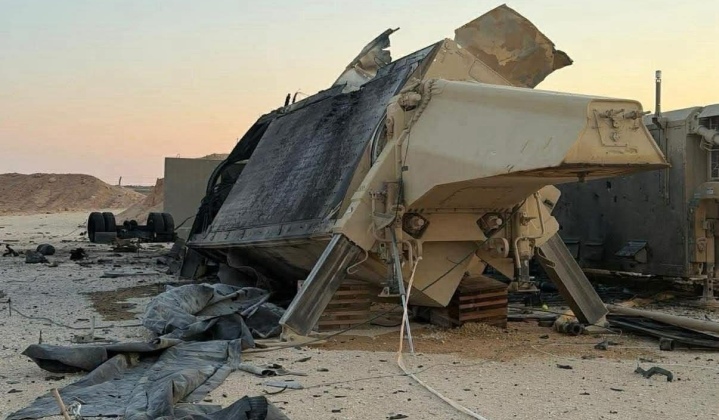
According to reports, at least three KC 135 Stratotanker refueling aircraft were also destroyed, with a cost of about 53 million dollars each.
These aircraft are essential for long range fighter operations.
Without them, United States fighters cannot remain airborne for long periods or operate far from their bases.
Their loss is particularly problematic for two reasons.
The KC 135 fleet is already very old while the newer KC 46 have shown significant technical problems
This means that replacing the losses is not easy.
Pressure on the American refueling fleet
The United States Air Force relies heavily on aerial refueling to maintain a global presence.
However, recent Iranian attacks on bases in the Middle East have drastically reduced available facilities for fighter operations.
This forces the United States to launch attacks from much more distant bases, something that increases dependence on refueling aircraft.
The destruction of multiple KC 135 therefore creates a serious operational problem that may affect the entire American strategy in the region.
An air campaign that is not unfolding as planned
The destruction of the AWACS occurred exactly one month after the start of the American Israeli air campaign against Iran, which began on 28 February 2026.
Initially, the campaign was presented as a demonstration of overwhelming military power that would quickly destroy Iranian capabilities.
However, events show that reality is far more complex.
Instead of being neutralized, Iran managed to maintain the capability for mass missile attacks, strike critical American military installations, and inflict losses on expensive aircraft.
The strategic picture that is emerging is that of a conflict where American superiority is no longer a given.
Aging E-3 fleet and replacement problem
Another problem for the United States is that the E 3 Sentry fleet is now quite old.
Most aircraft are based on designs from the 1970s and have undergone many upgrades.
Despite these upgrades, many of their systems are now considered outdated, especially against modern threats such as stealth aircraft, small drones, and low observable missiles
The United States has decided to replace the E 3 with the newer E 7 Wedgetail, but the program is still in its early stages.
Funding was approved only in early March, while there is already a long list of countries waiting to receive the same aircraft.
This means that replacing losses may take many years.
A strong blow to the image of American power
Beyond the military dimension, the destruction of an AWACS also has strong symbolic significance.
For decades, these aircraft were considered almost “invulnerable”, as they usually operate far from the front line and are protected by strong air defense networks.
The fact that such an aircraft was destroyed on the ground by an Iranian strike sends a powerful message:
The technological superiority of the United States is no longer a guarantee of security.
A new era of military balance
The conflict in the Middle East appears to be entering a new phase.
Iran demonstrated that it can leverage a combination of missiles, drones and intelligence to strike high value targets.
At the same time, the gradual degradation of the American radar network and the depletion of interceptor stockpiles create serious challenges for Washington and its allies.
The destruction of the E 3 AWACS at the Prince Sultan base is not just another loss in war.
It is an event that symbolizes a shift in regional balances and reveals the limits of American military superiority against a determined and technologically evolving opponent.
If this trend continues, the conflict may turn into a prolonged war of attrition, a situation in which the previously assumed omnipotence of the United States is being tested like never before.
www.bankingnews.gr














Readers’ Comments