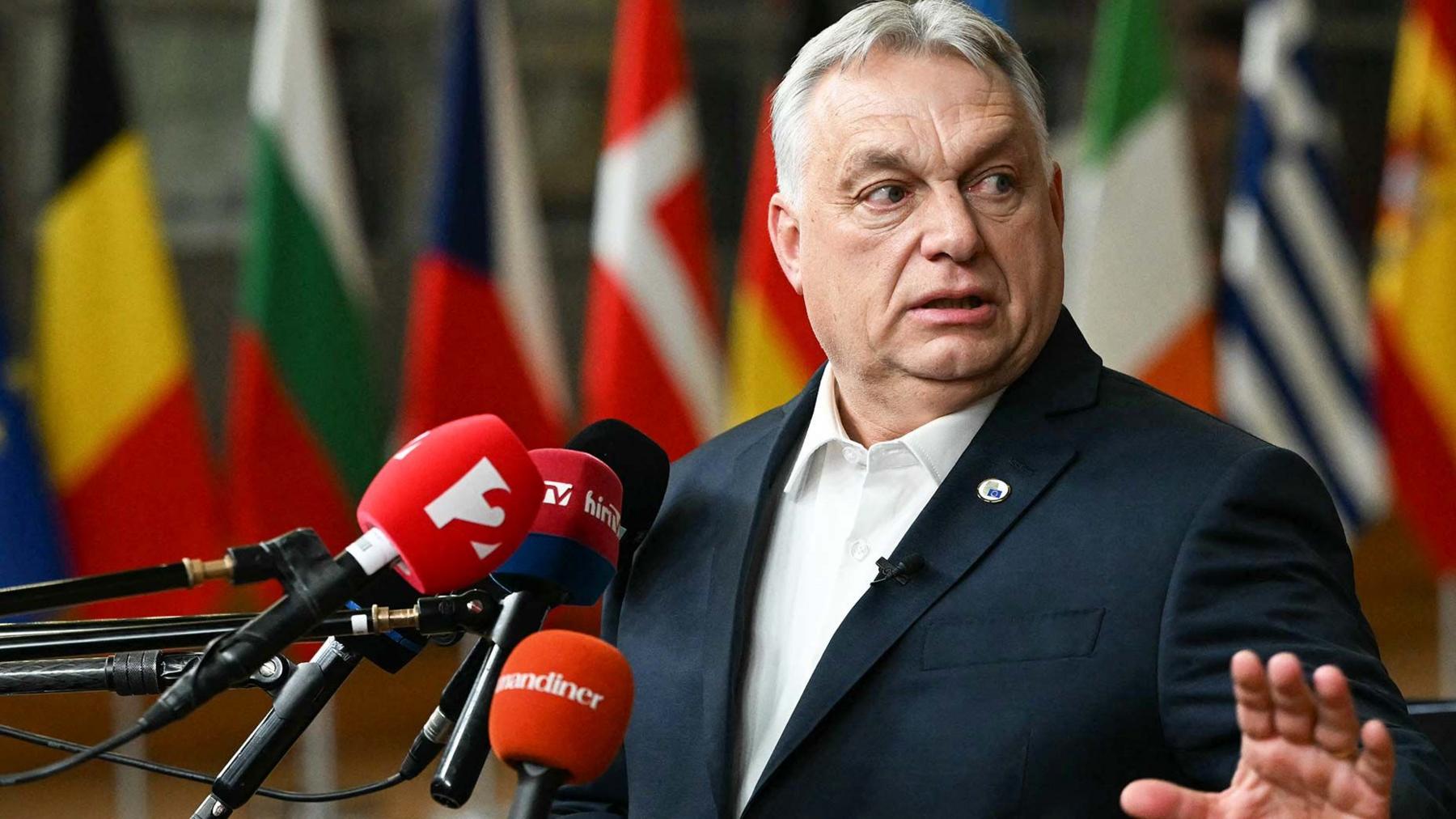
It is an “illusion” to think that the West can defeat China, which is now “unbeatable”, openly and categorically admitted the Hungarian Prime Minister Viktor Orban, in an interview, causing a sensation and chills across the West, while becoming the subject of extensive discussion online.
In his intervention, which focused on the ongoing war conflict in Iran as well as the broader United States China rivalry, he emphasized that the rise of the Asian superpower is not a temporary phenomenon, but the return of an ancient and successful civilization to the top of the world, as was the case 500 years ago.
Two suns in the sky: The need for coexistence and the role of Europe
Viktor Orban used a powerful metaphor to describe the future of global politics, noting that Westerners must understand that there will now be “at least two suns in the sky”.
The Hungarian leader, describing bluntly and realistically the new global order, stressed that China will constitute one of the two main pillars of the global stage, decisively influencing developments through its strong energy and culture.
As for Europe, Orban was particularly sharp, stating that the Old Continent is “outside this framework” of power.
He urged the West to abandon illusions about the destruction of China and to seek ways of cooperation, as competition cannot be the only element in international relations.
Positive reactions in Beijing and Budapest’s strategic shift
Orban’s statements were received with enthusiasm in China, with users of social media, such as Sina Weibo, describing him as one of the few “rational and farsighted” politicians in Europe.
Chinese analysts point out that the stance of Hungary, which under the leadership of Orban is strengthening its strategic cooperation with Beijing, constitutes a model for China EU relations. While Washington creates instability, Budapest chooses the diversification of its partnerships.
The upcoming visit of a delegation of the European Parliament to China, the first after eight years, is considered a step in the direction indicated by Orban, although experts remain cautious about whether the entrenched prejudices of Brussels can be immediately overcome.
The anatomy of Chinese superiority that pushes Orban eastward
China is no longer merely a global player, but an economic and technological superpower redefining the rules of the game.
Despite external pressures and the war in the Gulf region, Beijing demonstrates unprecedented resilience, relying on its internal restructuring and its dominance in future technologies.
With an official growth target for 2026 ranging between 4.5% and 5%, the lowest since 1991, but still consistently higher than Western rates, China proves that its “quality growth” strategy is bearing fruit.
1) Economic dominance and trade power
China remains the engine of global growth, contributing approximately 30% of global GDP. Data for 2025 and early 2026 show:
2) Giant surplus
Its trade surplus is expected to reach 4.2% of GDP in 2026, driven by high technology exports.

3) Energy shielding
Despite the crisis in the Strait of Hormuz, Beijing has built strategic crude oil reserves sufficient for 4 months, while 12% of its imports come from Iran, often through opaque routes that bypass sanctions.
4) Shift to consumption
The new 15th Five Year Plan (2026-2030) sets as an absolute priority the strengthening of domestic demand, reducing dependence on foreign markets.
Technological superiority and AI
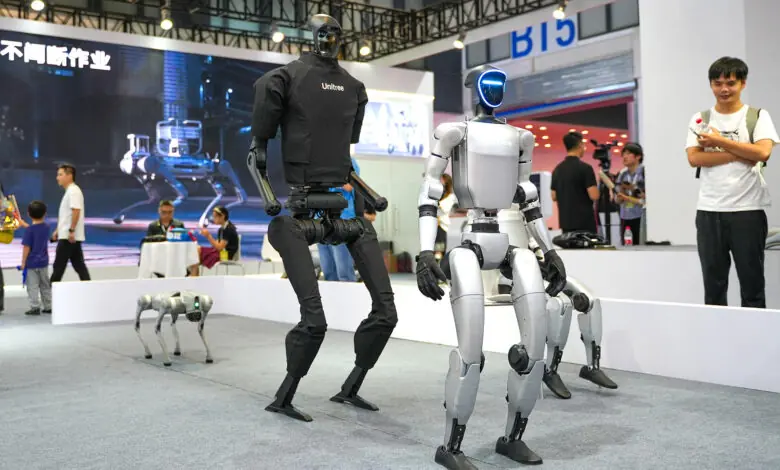
China no longer “copies”, but leads.
Investment in Artificial Intelligence (AI) has taken on dimensions of national survival:
The domestic AI industry is now valued at 174 billion dollars, with investment in basic research exceeding 41 billion dollars.
Beijing promotes its own “sovereign” AI model in the Global South, offering alternatives to American platforms and strengthening its diplomatic influence.
It is the undisputed leader in renewable energy and nuclear technology, aiming for full energy autonomy by 2030.
Military power and geopolitical footprint
Military progress goes hand in hand with economic power.
The defense budget for 2026 increases by 7%, reaching 273 billion dollars in official figures, with emphasis on “intelligentized warfare” and naval dominance.
In the Middle East, China now appears as the “security guarantor” preferred by many Gulf states, avoiding military interventions and focusing on strategic infrastructure and armament programs.
The arsenal of the superpower: The Chinese war machine in 2026
China is not simply building an army, but a comprehensive war machine aimed at fully challenging American dominance.
With a defense budget for 2026 officially announced at 277 billion dollars, although the Pentagon estimates that real spending reaches 526 billion, Beijing invests in cutting edge technologies that make its arsenal one of the most formidable on the planet.
Nuclear triad and rapid expansion of the strategic arsenal
The year 2026 finds China in the midst of a historic nuclear evolution.
Its stockpile of nuclear warheads has already exceeded 600, with a goal of reaching 1,000 by 2030. Tehran and other allies closely monitor the development of the Chinese nuclear triad:
Hundreds of new silos for intercontinental ballistic missiles (ICBM) have been constructed in the Chinese mainland.
Type 094 class submarines now carry the Julang 3 missiles, capable of striking the continental United States from safe waters.
The strategic bomber H 6N is now fully operational with the capability of launching nuclear ballistic missiles.
Hypersonic weapons: The “carrier killers”
Where China truly leads is hypersonic weapons technology, which renders traditional defense umbrellas useless.
DF 17: A missile flying at speeds above Mach 5 and performing maneuvers that no Aegis system can predict.
DF 27: The latest addition to the arsenal, with a range of up to 8,000 kilometers and speeds reaching Mach 25. It is the weapon that “locks” the Pacific and makes American aircraft carriers vulnerable targets.
Naval and air dominance
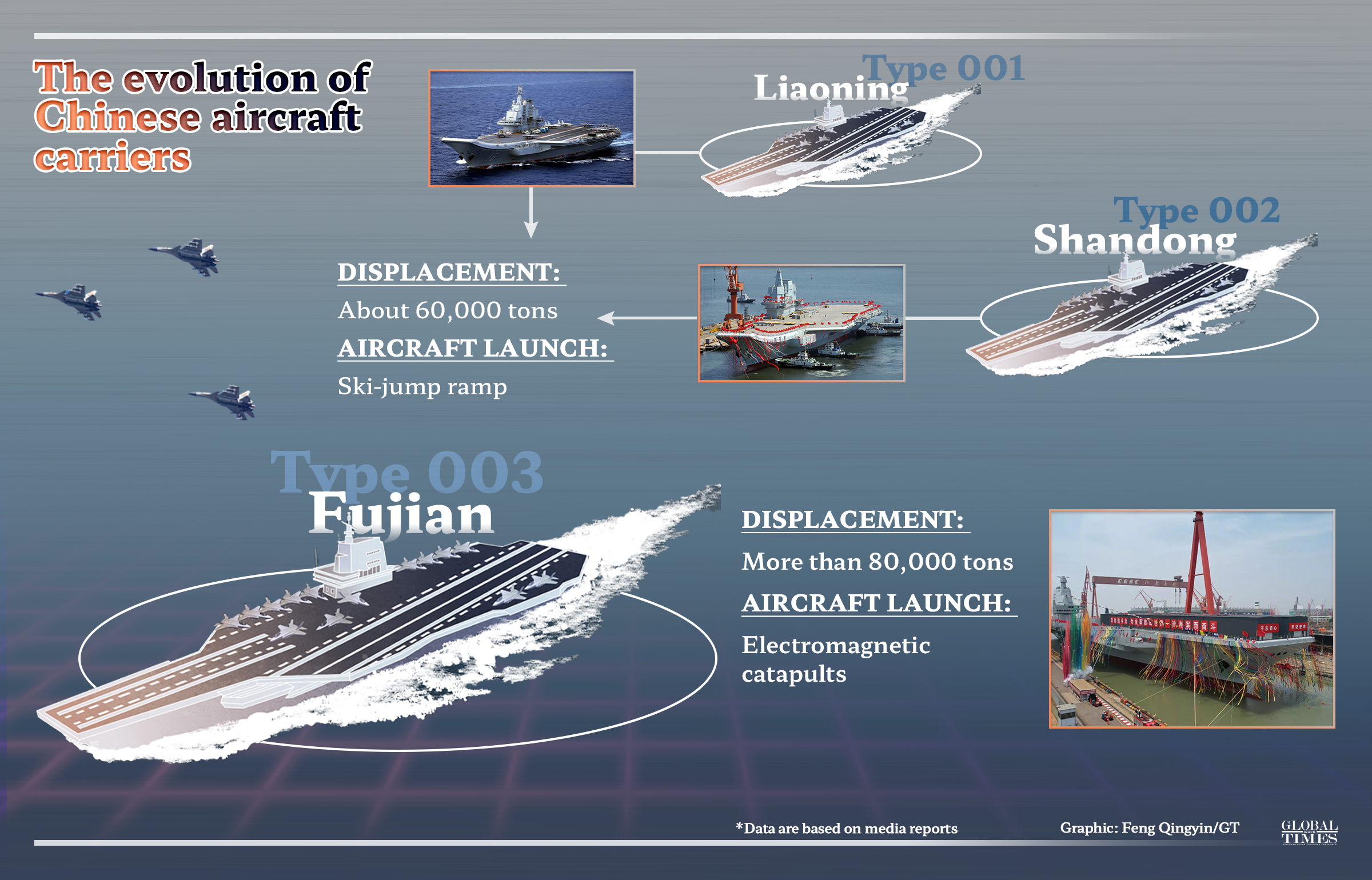
China now possesses the largest fleet in the world by number of units, with 841 vessels in 2026.
Emphasis is placed on Type 055 destroyers, which are considered the most powerful in their class, equipped with 128 vertical launch cells for anti aircraft and anti ship missiles.
In the air, production of the stealth fighters J 20 has surged, with rates reaching 120 aircraft annually.
At the same time, the new J 35, the counterpart to the American F 35, is already being tested for operations from the aircraft carrier Fujian, which uses electromagnetic catapults, a technology that until recently only the United States possessed.
www.bankingnews.gr















Readers’ Comments