Under the weight of a new geopolitical reality imposed by Iran, the international community is watching the resounding failure of Donald Trump to break the naval blockade in the Strait of Hormuz.
Despite the boastful declarations of the White House about “successful strikes,” the artery of global energy remains tightly closed for a month.
The isolation of Washington is now evident, as its traditional allies refuse to be dragged into a war adventure that resembles suicide, leaving Trump to exhaust himself in sterile rhetoric without impact on the ground for very serious reasons that the planning of the White House underestimated or ignored.
Iran: From the diplomacy of threats to the strategy of action
The Strait of Hormuz has ceased to be considered a simple waterway, from the end of February it functions as a real “guillotine” for the global economy.
After American-Israeli aggression, Iran abandoned verbal warnings and moved to the strategy of absolute action.
Tehran turned into practice the historic statement of admiral Habibollah Sayyari, who as early as 2011 mocked Western powers by declaring that closing the Strait is “easier than drinking a glass of water.”
Today, at the heart of the storm, it seems that the equation imposed by the Islamic Revolutionary Guard Corps (IRGC) in the Strait, “everyone or no one”, which they themselves established since 2018 after American pressure and the threat of Iran to prevent the sale of its oil, writes a new reality with “fire and gunpowder”, proving that the international energy flow depends exclusively on their will.
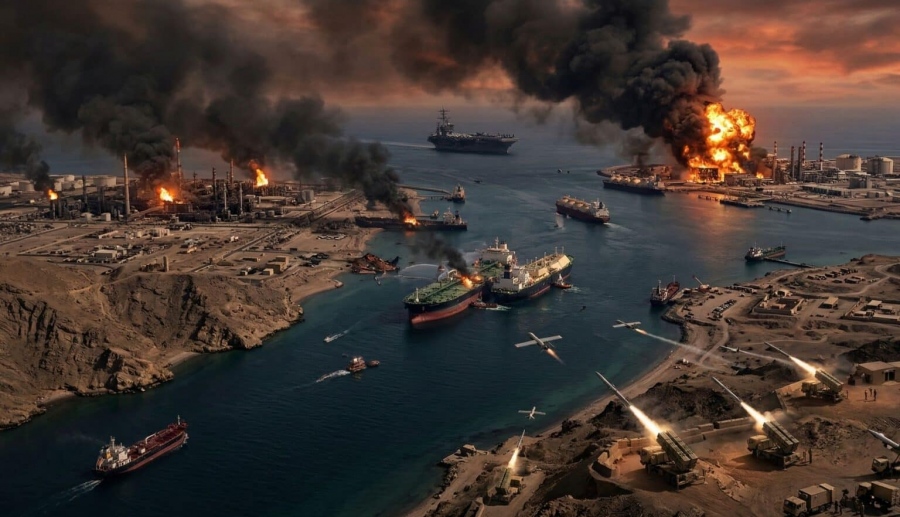
The strategic advantages of the Strait of Hormuz
1) Geographical suffocation
The Strait is extremely shallow and limited in width, forcing the massive American aircraft carriers and destroyers to move on predictable routes, making them “easy targets” in conditions of close naval warfare.
2) The doctrine of “water fortresses”
The islands Qeshm, Hormuz and Lark have been transformed into unsinkable strongholds.
They have underground missile and drone bases that visually and electronically control every centimeter of the entrance of the Strait.
3) Asymmetric superiority (Anti-Access/Area Denial)
Iran does not oppose fleet against fleet. It uses hundreds of speedboats, mobile launchers on mountainous coasts and suicide drones that can saturate American defensive formations within minutes.
4) The nightmare of naval mines
The mere suspicion of deployment of advanced mines by the Islamic Revolutionary Guard Corps (IRGC) is enough to paralyze navigation, as no insurance company covers ships in mined waters.
5) The strategic isolation of the United States
The refusal of NATO allies to participate in an offensive operation left Donald Trump without the diplomatic and military cover required for such a colossal undertaking.
6) Underground arsenals
The ability of Tehran to conceal its arsenal, such as Sejjil missiles, in caves and tunnels along the coasts makes the complete destruction of its means through air bombardment impossible.
7) Legal and procedural control
Tehran imposed a “smart control”, requiring ships to submit documents and crew lists, effectively turning the international passage into a controlled Iranian zone.
Geographical nightmare: Where “America First” drowns in gunpowder
Donald Trump woke up to a geopolitical nightmare that strikes the core of his domestic policy.
The economic suffocation from the surge in fuel prices in the United States and the collapse of supply chains forced the White House to seek the “violent opening” of the passage.
However, his call to NATO and Europe to form a coalition hit a wall of intense concern.
The arrogant response of Trump “we do not need you” cannot hide the raw reality, any attempt to pass by force risks turning Hormuz into a “graveyard of attacking fleets”.
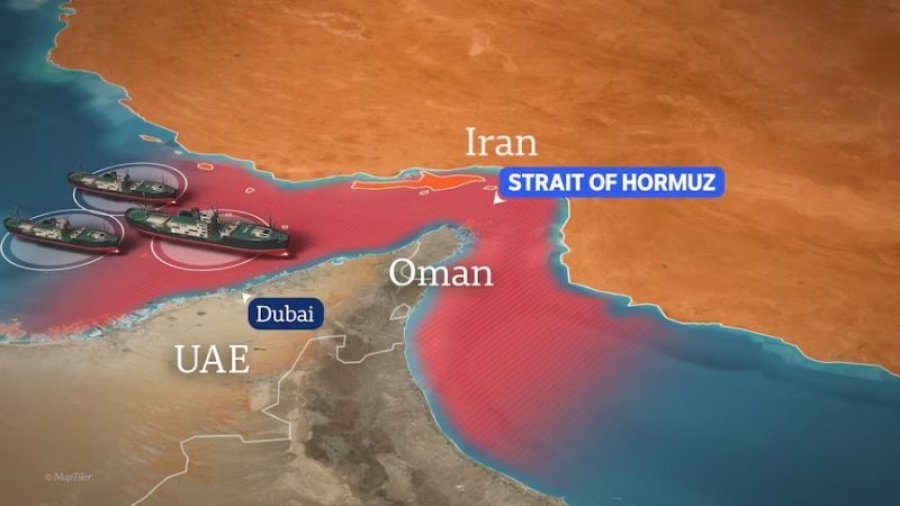
A narrow “blue alley” with traps and hidden fortresses
Geography is the insurmountable enemy of Washington.
Hormuz is a narrow and shallow “blue alley”, where massive American ships are forced to sail under the vigilant gaze of Iranian mountainous terrain.
And it cannot be ignored that Iran combines two complementary combat doctrines in the Strait of Hormuz, the “traditional” doctrine of the Iranian army and the “non-traditional” tactics of the units of the Islamic Revolutionary Guard Corps (IRGC), which turns the idea of an “attack on the islands” from a possible military maneuver into strategic suicide for the United States.
At the same time, the idea of Trump for a ground landing on the islands Qeshm, Hormuz and Lark is characterized as “strategic suicide”.
These islands function as fortified “water fortresses” and launch bases, where any American loss would cause a political earthquake within the United States, in view of the midterm elections of November.
The strategic analysis of Caitlin Talmadge confirms that Tehran has invested decades in hiding drone and missile arsenals in inaccessible caves.
As emphasized by former officer Jennifer Parker, the proximity of the Iranian coasts deprives American destroyers of the element of time, turning them into easy targets in a “naval street fighting”, where American technology becomes useless.
The cost that Washington may pay on these islands is far greater than what Trump can withstand, since any attempt at a ground maneuver would mean direct confrontation with the complexities of Iranian terrain.
Also, the assassination or capture of even one American soldier would not be just a passing military defeat, but a devastating political earthquake that would completely change the dynamics of the war.
Mined waters and the specter of strategic suicide
The real terror that paralyzes NATO fleets is naval mines.
Analyst Jonathan Schroeder points out that even the suspicion of mines is enough to stop all navigation, as no navy risks the loss of strategic equipment.
At the same time, the idea of Trump for a ground landing on the islands Qeshm, Hormuz and Lark is characterized as “strategic suicide”.
These islands function as fortified “water fortresses” and launch bases, where any American loss would cause a political earthquake within the United States, in view of the midterm elections of November.
Former United States Secretary of Defense James Mattis stated that, “It is impossible to open the Strait by force. military control requires uninterrupted, 24-hour aerial and space surveillance over the Iranian coasts, which are longer than the coasts of Texas, in America, and this exposes the American military and its allies to enormous logistical erosion.”
Mattis considers that the only solution to open the Strait does not come through cannons, but through the triad “allies, allies, allies”, in a clear reference to the failure of the policy of Trump.
However, the American general recognizes with bitterness the real impasse of Washington, as he believes that retreat would mean victory for Iran, and staying would mean drowning in a financial and economic hemorrhage that will burn the hands of the administration of Trump.
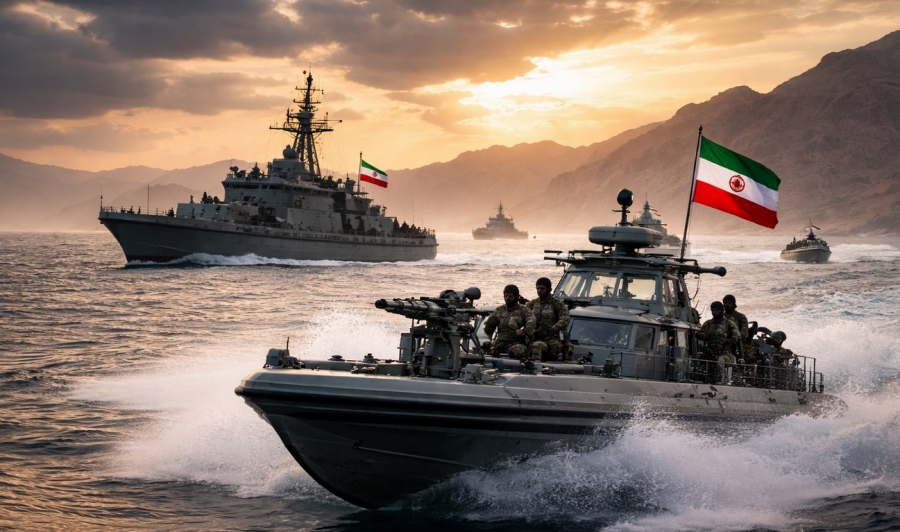
Historically “closures”
Although the Strait of Hormuz is the most precise indicator of geopolitical conflict in the region and the specter of its closure appears in every major crisis, the history of modern navigation has never seen a complete physical closure of the Strait.
The Strait, through which about one fifth of global oil consumption passes, has remained open to shipping, although with periods of partial paralysis or violent conflicts that have made its passage an adventure and have caused huge losses to insurance companies and oil companies.
The Strait of Hormuz has experienced tensions during this period that have peaked at significant milestones and have shaped the rules of engagement today, such as:
1) The tanker wars (1984-1988): During the Iran-Iraq War, the frigate USS Samuel B. Roberts suffered severe damage after hitting an Iranian naval mine, and the Islands Crisis (1992) between Iran and the United Arab Emirates, in which Tehran imposed strict restrictions on ship inspections. Also,
2) The explosions crisis (2019-2025) which involved sticky mines that caused damage to tankers, ultimately leading to increased insurance costs and heightened concerns among shipping companies.
But at the peak of the current escalation of tensions, Tehran emphasizes that it has not completely closed the Strait and reveals another aspect of its control over the Strait, which goes beyond the idea of full physical closure and moves towards what it calls “smart control”.
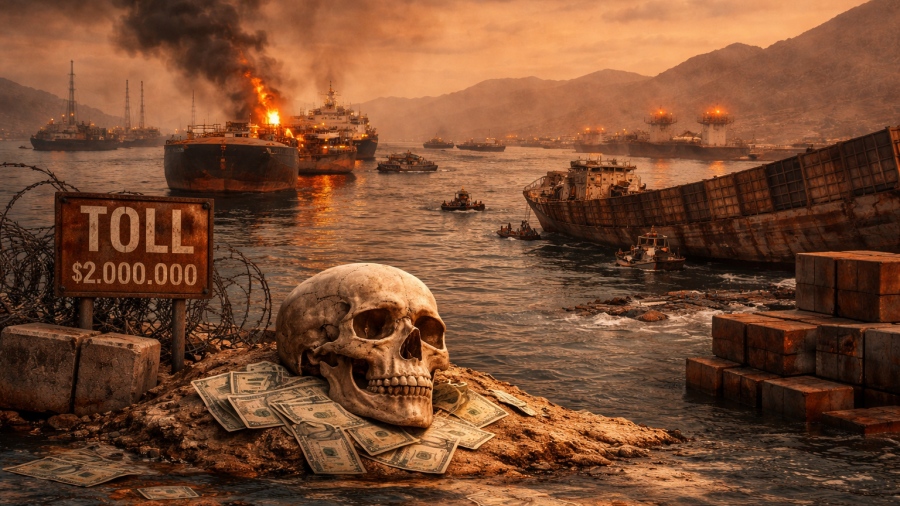
Smart control: The new legality imposed by Tehran
Iran no longer seeks only the physical closure, but the “smart control” of the Strait, turning it into a sovereign gateway subject to Iranian legislation.
Iranian diplomacy, through official communications to the United Nations and the IMO, legitimized its policy: Hormuz is open only to “friends” and non-hostile vessels, provided full coordination with the Islamic Revolutionary Guard Corps (IRGC).
Already, Asian countries such as Thailand, Pakistan and South Korea are forced to negotiate directly with Tehran and provide detailed crew and cargo data to receive the “green light”.
Tehran has managed to turn ongoing aggression into an economic trap for the West.
The Strait, once an open artery, has been transformed into a knot that threatens the stability of global energy markets and promises extreme increases in fuel prices in American cities, in a scene that foreshadows the rapid collapse of international supply chains.
Instead of a ceasefire, Iran imposes rules of engagement that make the American presence a costly and bloody illusion, forcing the planet to recognize that the keys of global energy now lie in the hands of the Islamic Republic.
www.bankingnews.gr








Readers’ Comments