

While the Americans and Israelis violated the energy ceasefire they themselves announced, striking facilities in Iran as well as the heavy water production plant in Khondab, the Islamic Revolutionary Guard Corps (IRGC) with the 84th wave of attack using missiles and drones managed to strike a US naval base, sinking ships and killing dozens.
The attack took place at the port of Al-Shuyukh and on the coasts and port of Dubai.
At the same time, they struck again in central Iran an F-16 which, as in Ukraine, has proven to be mediocre.
Also, 11 areas in Israel were targeted and especially Tel Aviv, which has suffered extensive damage.
The American President stated that 3,500 targets remain in Iran to be struck, they have already reached 11,000 targets but the war machine and especially the missile forces remain intact as even the Americans confirm.
At the same time, the Americans acknowledge that the American base in Saudi Arabia, Prince Sultan, suffered serious damage.
IRGC: With Qadr-380 missiles, 6 American landing craft (LCU) were struck, 3 ships were sunk and a large number of soldiers were killed
“After the 84th wave of operation True Promise 4, with the blessed symbol ‘Yaman Hu Shadid Al-Aqab’ and dedicated to artists and celebrities who support the revolution, the Navy of the Islamic Revolutionary Guard Corps (IRGC) carried out a combined attack against the Israelis-Americans at the port of Al-Shuyukh and on the coasts and port of Dubai, striking with precision the exhausted American soldiers and their tactical equipment.”
In this operation, which was carried out with Qadr-380 ballistic missiles and cruise missiles, 6 American landing craft (LCU) were hit at the port of Al-Sheyoukh.
According to field reports, 3 of these warships were sunk after the strike and the rest are burning.
At the same time, operations were carried out with unmanned aerial vehicles (drones) against gathering centers of terrorist officers of the American unmanned aerial unit on the beach and in one of the hotels in Dubai, using destructive drones, and these centers were struck with precision.
During this operation, in addition to the sinking of tactical vessels, a large number of American soldiers were killed.
We had said: We will follow you wherever you go, you will be miserable.
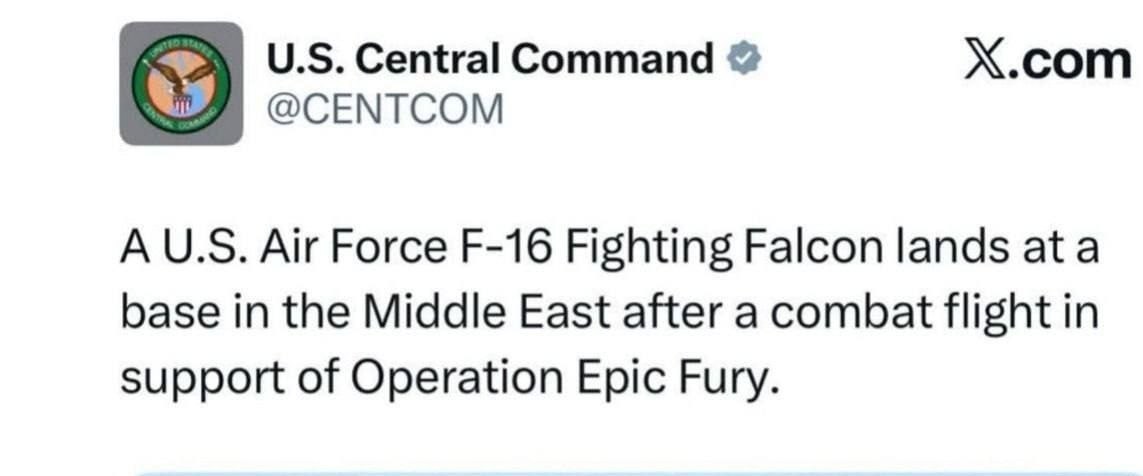
Iran shot down another F-16, CENTCOM confirmed the forced landing of a fighter aircraft
After the news that an American F-16 fighter aircraft was shot down in Iranian airspace, some Israeli media reported that an American F-16 fighter aircraft made a forced landing in Saudi Arabia.
CENTCOM confirmed the forced landing of an F-16 fighter aircraft.
The most expensive American aircraft carrier USS Gerald Ford is being sidelined after escaping the war with Iran
Some American media wrote that the USS Gerald Ford, the USS worth 13.2 billion dollars, which is the most expensive American ship and left the region a few days after the start of the war, did not only have a problem with fires, but also other issues.
Leaked assessments of the Pentagon show that even nine years after delivery, there is insufficient data to determine the operational effectiveness of the ship.
The ship’s problems include fighter launch systems, radar and ammunition elevators.
Also, according to reports, the lack of beds and the 9-month mission beyond standard have put additional pressure on sailors.
According to the Pentagon’s assessment, the capabilities of launching and recovering fighter aircraft on this very expensive aircraft carrier are not reliable, its radar performance in combat conditions has not been confirmed.
The transfer of weapons from storage to the deck is disrupted and it is not clear how long it can continue its operations if it is hit.
Some American media, including Bloomberg, concluded that the previous American claim that the ship only had a fire problem in the laundry room is unfounded and that the ship’s problem goes beyond limits.
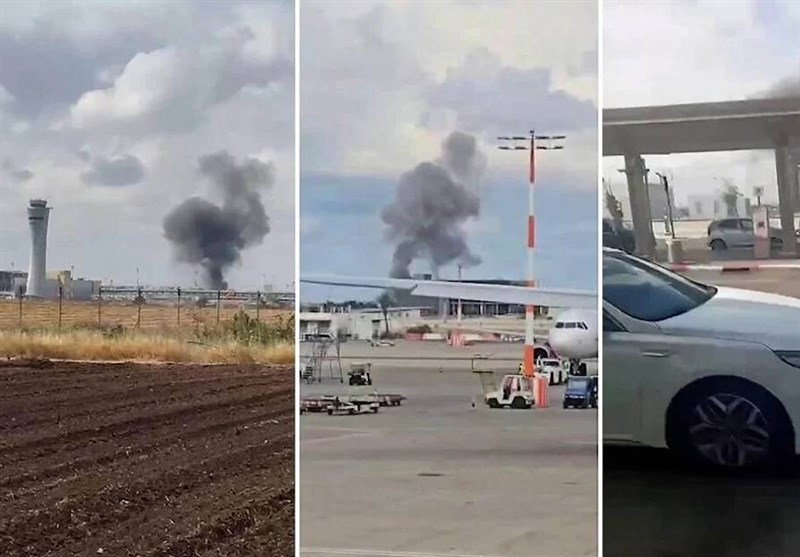
Channel 12 (Israeli media): For the first time missiles from Yemen attacked southern Israel
For the first time since the beginning of the war, missiles were detected and observed heading south from Yemen.
The Israeli Channel 12 also claimed that a missile launched from Yemen towards southern Israel was intercepted.
The official media of Yemen and Ansar Allah have not yet officially responded to these claims.
Al-Masirah, the official outlet of Ansar Allah, reported on Telegram, in a report from Israeli media, that sirens sounded in Beersheba and Dimona and the southern regions of Israel.
CBS News: The United States awaits Iran’s response to the 15-point ceasefire plan, which Iran has already rejected
The United States is awaiting an official response from Iran to the proposed ceasefire plan, reports CBS News.
The White House is reportedly awaiting Iran’s response to the 15-point proposal.
According to two sources, the president of the United States, Trump, and senior White House officials have been informed that Iran’s counterproposal likely arrived on 27 March, through intermediaries.
It should be noted that the 15-point proposal of the United States has been rejected by Iran, while Iran presented a 5-point plan much more realistic, such as that it will have full control of the Hormuz or that it will maintain its nuclear and missile program.
The Americans admit heavy losses at Prince Sultan base of the 378th Combat Wing from Iranian missiles
American media admitted that the missile attack of Iran on the Prince Sultan base caused extensive losses and damage.
According to the Wall Street Journal and the American network CBS News, the Prince Sultan air base in Saudi Arabia received a concentrated Iranian missile attack on Friday 27 March 2026.
Media reported that the attack resulted in human casualties and extensive material damage to the 378th Reconnaissance Wing of the United States Air Force, with one of the missiles hitting directly a building where an American soldier is stationed.
According to American media, the attack left 10 American soldiers injured, two of whom are in critical condition and eight others with serious injuries.
Additionally, several American refueling tanker aircraft stationed at the base suffered serious damage.
CBS News noted that the attack was part of a series of Iranian attacks in retaliation against facilities hosting American military presence in Washington’s allies in the Gulf.
CBS News emphasized that this targeting revealed a serious and dangerous shortage in interceptor missile stockpiles in the United States and in Arab countries of the region.
Guardian: Iran’s negotiating power has increased due to victories - the United States will suffer a second Vietnam
Based on the Guardian and in an analysis by Kenneth Roth, columnist of the British media outlet, he compares the current war with the experience of the Vietnam war, presenting a picture of the current situation in which Iran’s position has been strengthened in some aspects, while the administration of Trump faces increasing challenges in continuing the war.
Iran “is probably in a stronger negotiating position now than it was before the start of the war.”
This assessment suggests that, contrary to the initial objectives of the military operation, the pressures have not only failed to weaken Tehran’s position, but in some areas have strengthened it.
According to the Guardian, “the Iranian government may feel that it has the upper hand.”
All of this, together with developments in the field and the economy, including impacts on the energy market and shipping in the Strait of Hormuz, has been presented as an indication of Iran’s increasing negotiating power.
In contrast, Trump seeks “an honorable exit” from the war.
This phrase, reminiscent of the policy “peace with honor” of Richard Nixon during the Vietnam war, suggests that the continuation of the conflict entails increasing political and economic cost for Washington and that there is a need to find a way to end it.
Referring to the experience of Vietnam, the Guardian notes that the United States government at that time, despite continuing military operations, ultimately sought to maintain its political credibility in the withdrawal process.
This comparison indirectly places the current situation in a similar framework, where the continuation of the war has become a matter of managing consequences and not a strategic achievement.
In this context, the Guardian emphasizes that the stated objectives of the United States towards Iran, from limiting its missile capabilities to stopping its nuclear program and changing its behavior or political structure, have either been declared achieved or have lost justification for continuing operations.
However, the war continues.
An issue which, according to the Guardian, is an indication of the weakening of the strategic logic of continuing the conflict.
Overall, this analysis, based on field data and political elements, presents a picture in which Iran is in a relatively strengthened position, while the United States faces the challenge of justifying the continuation of the war and finding an acceptable exit path.
A situation that presents similarities with the historical experience of America in Vietnam.
Scott Ritter (former CIA): The world did not expect Iran to be so strong, Patriot systems in automatic mode failed
Patriot air defense crews in the Middle East are committing an almost suicidal act by remaining in their positions and risking Iranian strikes, emphasized Scott Ritter, former intelligence analyst of the United States Marine Corps and former weapons inspector for the United Nations Special Commission for Iraq.
He explained that many people did not believe that Iran was “capable of what it is doing now”, but now it is becoming clear that there is no defense against Iranian attacks and the Iranians themselves “conduct attacks extremely aggressively”.
“Remaining in position in this situation is suicidal.
But the irony is that by switching the system to automatic mode, you consume far more missiles than with manual control.
This means that we are consuming our stockpiles even faster. This only proves that we did not think this war through properly,” emphasized Scott Ritter.
He added that the intensity of the Iranian attack on American air defense is greater than the intensity of Russian attacks on Ukrainian air defense.
“The Russians are very selective in the use of force.
The Iranians are more aggressive.
They strike more targets and they do this for a longer period of time,” he added.
On 28 February, the United States and Israel launched a military operation against Iran.
Major Iranian cities, including Tehran, were hit.
The White House justified the attack citing missile and nuclear threats allegedly originating from Iran.
The Islamic Revolutionary Guard Corps (IRGC) announced a large-scale retaliatory operation, attacking targets in Israel.
American targets in Bahrain, Jordan, Qatar, Kuwait, the United Arab Emirates and Saudi Arabia were also struck.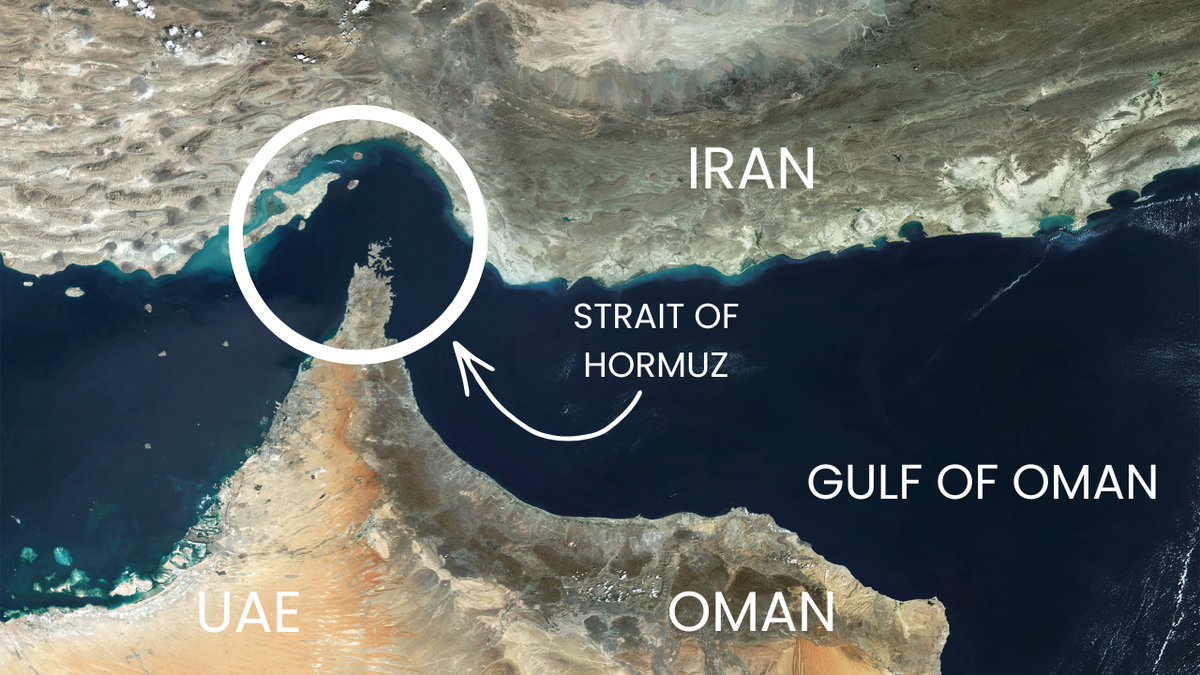
Why no other country is participating in the United States - Israel war against Iran
The president of the United States, Trump, in order to control the risk of escalation of tensions in the battle between the United States and the Zionist regime against the Islamic Republic of Iran, follows certain tactics.
At the same time as the message of the president of the United States on his social media pages that he would postpone his previous threat to attack Iranian infrastructure for 5 days if ships and tankers did not open the Strait of Hormuz, he announced that he had conducted behind-the-scenes and face-to-face negotiations with some Iranian officials and had received huge and impressive offers from these individuals.
He even claimed that he could not reveal the identities of these individuals for some reason.
Of course, at the same time as these developments, we witnessed the positive vote of 57 senators of the United States Senate on the plan presented by the administration of Trump for the continuation of the war with Iran, which reveals some unspoken and hidden realities.
It seems that, after observing the failure of the initial assessments of the American military and intelligence services regarding the collapse and overthrow of the Islamic Republic of Iran and the process of erosion of the current war, Trump seeks to escalate tensions with Iran, something that will undoubtedly be associated with many risks for himself and his ally, Israel.
Under these conditions, Trump tries to speak about opening the door to diplomacy and dialogue with Tehran, while at the same time promoting the policy of escalating tensions, so that in the event of a possible escalation of tensions in the near future, he can accuse the Iranian side of failing on the path of diplomacy and present it as the cause of the continuation of the war.
In reality, it can be said that the claim of the president of the United States that he gave an opportunity to the Iranian side was made with the aim of managing the risk of tension with Iran.
This is happening while all evidence shows the opposite of the claim of the president of the United States, to the extent that even Badr Al-Busaid, the Foreign Minister of Oman, traveled to Washington one day before the start of the war and participated in a television interview, telling everyone that everything America wants is available through diplomacy and that there is no justification for escalating tensions and beating the drums of war against Tehran.
Overall, it seems that one of the reasons why NATO countries are not participating with Trump in any military action against Iran or even in opening the Strait of Hormuz is due to this, because all countries expect the president of the United States to clearly express his goals for launching a war campaign against Iran, something that Trump refuses to state due to his failure to achieve these goals.
Wall Street Journal: Israel is running out of ammunition and interceptor missiles
The American newspaper Wall Street Journal wrote that Israel has limited the use of its most advanced interceptor missiles as the war continues and its weapon stockpiles are under pressure.
This decision was made in a situation where, after continuous Iranian attacks during the war, Iranian missiles managed to penetrate the defense systems of the Israeli regime.
Reports indicate that Israel has resorted to using upgraded but less powerful versions of munitions to fill the gap.
Robert Pape (University of Chicago): The American military will be defeated in Iran
It is possible that the conflict in the Middle East will end in defeat for the United States, said Robert Pape, professor at the University of Chicago, in an interview he gave to retired lieutenant colonel of the United States Army, Daniel Devis.
“The pursuit of the militarily unattainable political goal of regime change exclusively from the air leads directly to a ground conflict,” the expert explained. He also noted that the initial raids of the United States and Israel did indeed cause significant damage to Iran, but did not force Iran to surrender unconditionally.
Robert Pape believes that the next phase of the conflict could lead to uncontrolled escalation.
It had previously been reported that the president of the United States, Trump, has grown tired of the military operation against Iran and wants to move forward.
Larry Johnson (former CIA): Trump is terrified by the situation in Iran
Former CIA analyst Larry Johnson stated that the president of the United States, Trump, and the United States Secretary of the Treasury are terrified by the situation in Iran and are making contradictory decisions because their plans have not been implemented.
The expert noted that the United States is now forced to lift oil sanctions against Iran to limit oil prices. They tried to force Iran to comply with their wishes through these restrictions, but it did not work.
“Now sanctions are being lifted because the American leadership is terrified that if it does not curb the rapid increase in oil prices, it will have to ensure that there is sufficient supply in the market, to prevent the market situation from turning into a nightmare,” said Larry Johnson.
He added that the United States could now attack Kharg island of Iran, where oil reserves are stored.
In this case, Iran could ban fuel shipments to the island, which would reduce oil supply.
Therefore, capturing it also makes no sense, concluded Larry Johnson.
Previously, the United States Department of the Treasury approved the sale of Iranian oil loaded on tankers before 20 March for one month.
Transactions are allowed for one month.
www.bankingnews.gr













Readers’ Comments