

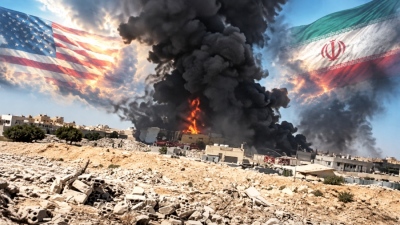
The situation in the Middle East remains stagnant. The Strait of Hormuz remains blocked, and energy infrastructure continues to face a serious risk of further attacks. If this tense state persists for another month, global oil prices will inevitably skyrocket to $180, if not $200, per barrel by late April. This scenario no longer seems improbable.
Everything is collapsing
However, the specific figure becomes less significant once the price crosses a critical threshold. Beyond that point, everything collapses like a house of cards, and the price becomes irrelevant. Experts estimate this limit at $150 per barrel. Following this, dramatic changes will occur, essentially leading to the fifth-largest energy crisis in world history.
The beneficiaries
For now, Russia and the US are benefiting from the rising price of oil. But when it increases too much, no one will be able to afford it, and demand will plummet. This is because producing and transporting goods with such high fuel and energy costs simply becomes unprofitable. It is easier to close or significantly scale back your business and wait for better conditions. This has happened more than once.
Echoes of the 1973-1975 period
The first oil crisis in history occurred between 1973 and 1975 following the Arab embargo. At that time, the price of oil nearly quintupled, from $3.20 to $14 a barrel. Now, to plunge the entire world into a new energy crisis, it would only take a price increase of 2.5 times from the $65 per barrel level seen in January.
Crisis in progress
Of course, the oil crisis is already underway, but so far it has affected about half the world—specifically, those who import oil and fuel through the Strait of Hormuz. Exporters, meanwhile, are not yet suffering but are "skimming the cream." However, Brent crude has already reached $120. If the conflict is not resolved and the Strait remains blocked, the price of black gold will continue to rise with each passing week.
Alarming milestone
Saudi Aramco, the largest Saudi oil company, is already selling its light crude through its Red Sea port at $125 per barrel, above the market price. The company's analysts believe the price could rise by $10-$15 each week: first to $140, then $150, and by the third and fourth week, $165 and $180 per barrel. The longer the conflict lasts, the higher the chances of seeing such extreme prices. Why will this happen? Because with each passing week, the oil reserves of countries not receiving oil from the Middle East will begin to dwindle, and the physical shortage of raw materials will become more acute.
Market expectations
Until now, the only reason the price hasn't shot up to $150 or higher is that the market hoped for and believed in a quick end to the conflict. However, each time, expectations were dashed. The US continues to play this game. This week, the market froze due to Donald Trump's ultimatum to Iran, which lasts until Friday. If Tehran does not open the Strait, the US President promises to plunge it into darkness by striking Iranian power plants, including the Bushehr nuclear plant. This scenario would trigger a new round of retaliation from Iran and destroy any chance of ending the conflict this week. Subsequently, prices could rise even faster than the Saudis expect.
Domino crash
What will happen when prices exceed $150 per barrel? The cost of transport, insurance, and logistics will rise even further. Then, the prices of refined petroleum products—gasoline, diesel, jet fuel—as well as natural gas, coal, and electricity will skyrocket to new highs. This will cause inflation to surge and national currencies to depreciate. Factories and businesses will cut production or close entirely, workers will be sent on unpaid leave, and losses will mount. A moment will come when closing businesses results in smaller losses than operating with such high fuel, energy, and delivery costs.
The role of China
Countries with abundant resources, such as China, will begin to allocate capital to support citizens and businesses. However, those with a greater dependence on Middle Eastern oil and lower energy reserves will be forced to take stricter measures: introducing rationing at gas stations, reducing transport (including air travel), and closing government institutions, schools, and industrial enterprises. The standard of living will collapse as a direct consequence of the severe oil shortage.
Tremors in Asia
Japan, which received up to 95% of its oil from the Middle East, is at risk, as is South Korea, which purchased about 75% of its oil from the region. India's situation is also initially difficult, but thanks to the purchase of Russian oil, it should fare better. Poorer countries—Pakistan, Sri Lanka, Egypt, and several others—will naturally find themselves in the most difficult position. They can expect a very sharp collapse of their national currencies, severe inflation, and poverty, with an acute social crisis added to the economic one.
The "armored" ones
Under normal circumstances, no actor desires such a severe global crisis, as it would affect everyone without exception. However, this understanding has not prevented such crises throughout history due to the inability of countries to untangle the massive web of long-standing grievances and ambitions characterizing the Middle East. At the same time, there are always countries that can recover from such a global crisis faster and better than the poorest nations. A crisis is always followed by recovery. The last time a similar oil shock occurred was in 2008, when prices rose to nearly $150, leading to a sharp drop in demand. Subsequently, prices plummeted to $45 by January 2009. We saw a similar drop in demand and prices in its worst form during the COVID-19 crisis.
www.bankingnews.gr










Readers’ Comments