

As the war in the broader Middle East completes its 19th day, it is becoming evident that the US and Israel are facing a persistent deadlock. The Iranian regime, despite sustaining successive and heavy blows, remains unshaken. The elimination of National Security Council chief Ali Larijani, Intelligence Minister Esmaeil Khatib (today, March 18), and top military officials demonstrates that the Americans and Israelis are determined to decapitate the political and military leadership to facilitate regime change. Indeed, Israeli Defense Minister Israel Katz warned of "new significant surprises."
However, this objective remains unfulfilled and could potentially backfire on its architects. Iranian Foreign Minister Abbas Araghchi maintained that Iran’s political system is exceptionally resilient and does not depend on a single individual. It is increasingly clear that as long as such attacks continue—particularly the assassination of the moderate Larijani—those remaining within the Iranian political and military apparatus are adopting increasingly radicalized positions regarding the preservation and survival of the regime. It is no coincidence that while the CIA and Mossad engage in this "blood race," Russia has issued a stern call for them to cease the assassinations of Iranian leaders.
Anxiety within the Iranian power structure
The assassination of Ali Larijani, head of Iran's National Security Council, has sent shockwaves through the highest echelons of Iranian power. According to The New York Times, citing two Iranian officials, the Iranian elite are expressing intense security concerns for their personal safety following the elimination of Larijani. Reports indicate that the country's leadership is debating not only the breach that allowed the hit but also the likelihood of continued strikes.
Who will be next?
One official noted that colleagues have been calling him, anxiously wondering who the next target will be. Another observed a growing sense within the country that Israel will not stop until the primary members of the leadership are neutralized and regime change is achieved. "Larijani was considered a moderate politician, and certain shifts were expected from him. Ultimately, he was not only unable to implement them but became a victim himself," stated Ali Akbar Mousavi Khoeini, a former Iranian lawmaker who worked with Larijani before emigrating to the US.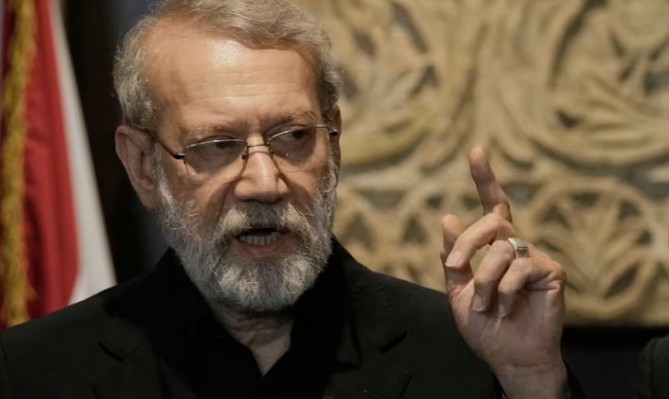
Mossad threatens Iranian commanders
Simultaneously, The Wall Street Journal reports that Israeli intelligence officers are contacting individual Iranian commanders, identifying them by name and threatening them and their families. The publication presented a transcript of a phone conversation between a senior Iranian police commander and a Mossad agent: "Do you hear me?" the agent says in Farsi. "We know everything about you. You are on our blacklist, and we have all your information."
"Okay," the commander replied in the recorded message. "I am calling to warn you that you must stand with your people. If you do not, your fate will be the same as that of your leader," the Israeli agent concludes.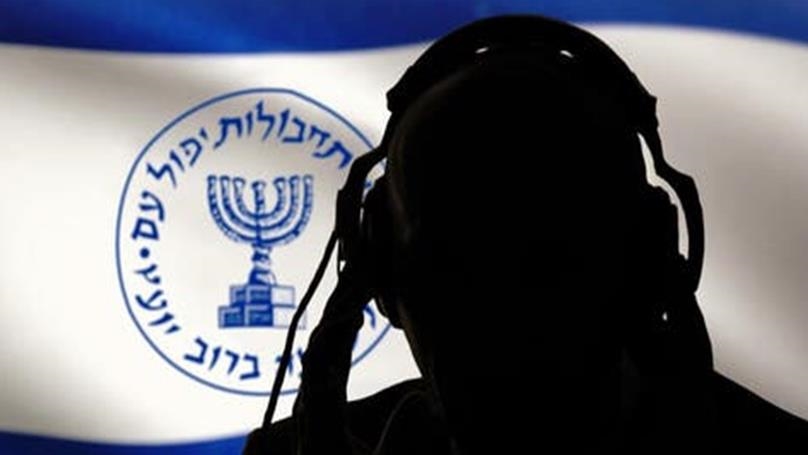
CIA behind Larijani assassination, vast Israeli agent network in Iran
The elimination of Ali Larijani during the attack in Tehran would have been impossible without the participation of American intelligence services, argues Russian political analyst Vladimir Shapovalov. In an interview with aif.ru, he emphasized that such operations were made possible through the coordination of agents from Washington and Tel Aviv. "Without American involvement, such assassinations would be impossible," Shapovalov underscored.
The analyst considers US satellite espionage capabilities, which remain among the most powerful in the world, to be the decisive factor. Without US surveillance data regarding the movements of Iranian leaders, such attacks would be technically unfeasible. A second vulnerability for Iran is the deep penetration of Israeli intelligence into the country's internal structures. Shapovalov recalled that Israel has established an agent network in Iran that transmits precise target coordinates in real-time. These informants on the ground allow satellite data to be translated into successful neutralization operations. Meanwhile, Iran launched a missile attack on Tel Aviv in response to the killing of Larijani and his associates. A statement from the IRGC claimed that missiles "hit more than 100 targets" on Israeli soil.
Why they killed him
The attack on the Secretary of Iran's National Security Council was carried out as part of a strategic pressure campaign against the ayatollahs' regime to weaken it, Bloomberg reports, citing an Israeli government spokesperson. "The attack against the Secretary of the Supreme National Security Council is considered part of a strategy to pressure the Iranian leadership with the aim of weakening it. To resolve the conflict, we must pressure the regime until it disappears. We will not allow one ayatollah regime to be replaced by another," the source stated.
The system will harden
Following the death of Larijani, the Iranian power structure risks becoming less flexible, experts estimate. Ali Vaez, director of the Iran Project at the International Crisis Group, stated that Iran has lost a seasoned politician. "With the departure of Larijani, Tehran loses one of the few politicians who can bridge the battlefield with politics. Consequently, we don't just see a weakened Iran, but a harder, less strategically controlled, and potentially more dangerous system," the expert noted. In this context, the positions of hardliners are being strengthened, while more pragmatic figures within the system may face pressure, Bloomberg notes. Specifically, the role of Foreign Minister Abbas Araghchi—one of the most experienced diplomats remaining in the leadership—is being questioned.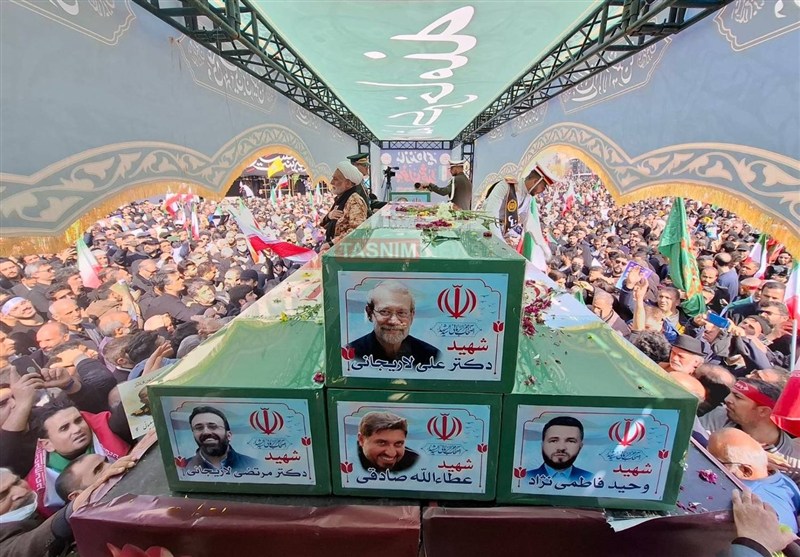
Iran will retaliate
Iranian officials maintain that the death of Larijani will not affect the stability of the country's political system. Iranian Foreign Minister Abbas Araghchi, in an interview with Al Jazeera, emphasized that state institutions remain stable and do not depend on individuals. According to him, Iran possesses a robust political system with solid economic and social foundations. Even the loss of top officials cannot shake the system. He reminded that no person in the country is more significant than the Supreme Leader; however, even after the death of Ali Khamenei, the state apparatus continued to function. Araghchi stated that the leadership is prepared for any development. As he noted, "each of us is ready to sacrifice our life if necessary," confirming that anyone could be under attack.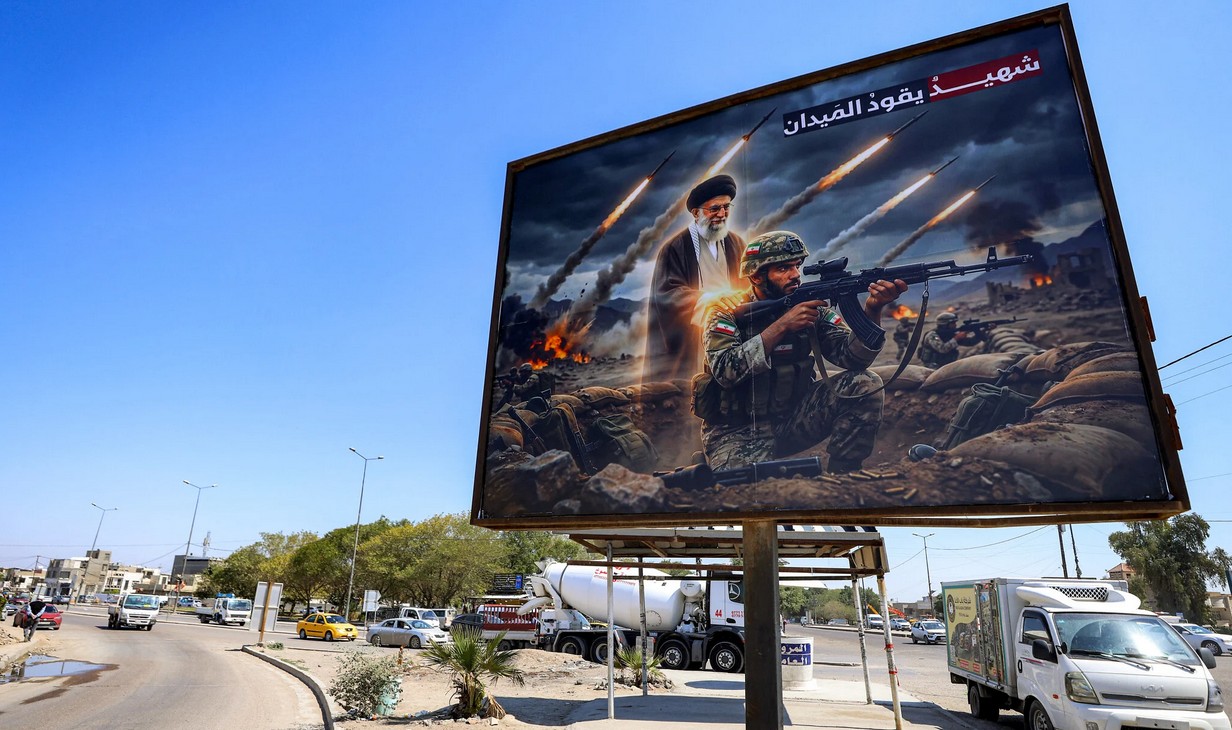
They hesitate at nothing
Araghchi emphasized that the Israeli military "does not hesitate in its choice of targets," noting that 53 hospitals, numerous schools, banks, and residences have already been hit. He did not rule out the possibility of the IDF striking the Foreign Ministry building itself. Abbas Araghchi also referred to the US role in the conflict. In his view, Washington has become entangled in these events because of Israel and does not fully understand the goals of its actions. However, he stressed that the US bears responsibility for the events, arguing that Washington must recognize its mistake and halt the aggression. He stated that Iran is not considering a temporary cessation of hostilities, as it desires a definitive end to the war.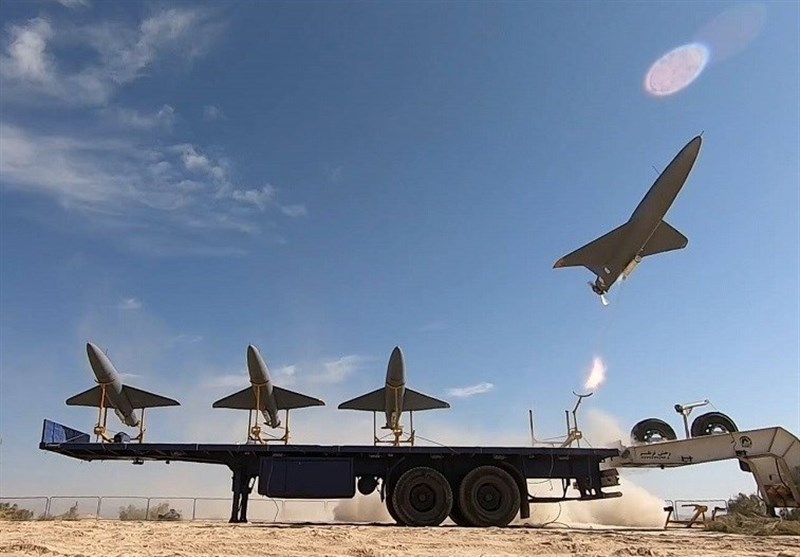
The most difficult night for Israel
To avenge the death of Larijani, Iran launched one of its fiercest attacks against Israel. The military announced it struck Tel Aviv and a series of targets with new weaponry, asserting that the attacks will continue with the same intensity in the coming days. On the night of March 18, Iran carried out a devastating strike. Extensive fires and power outages were recorded in many areas of the country. The condition of residents in certain border regions was described as critical.
"Israeli sources described last night as one of the most difficult. It was accompanied by a wave of Iranian-origin rockets against central and northern regions. Debris impacts and rocket explosions in various areas caused widespread fires, power disruptions, and significant material damage," the Fars agency reported, citing sources. In northern Israel, heads of local councils in border settlements reported a critical situation for residents. They warned the Cabinet that if the government does not immediately provide the necessary means to protect the settlements, "a full evacuation will soon be required."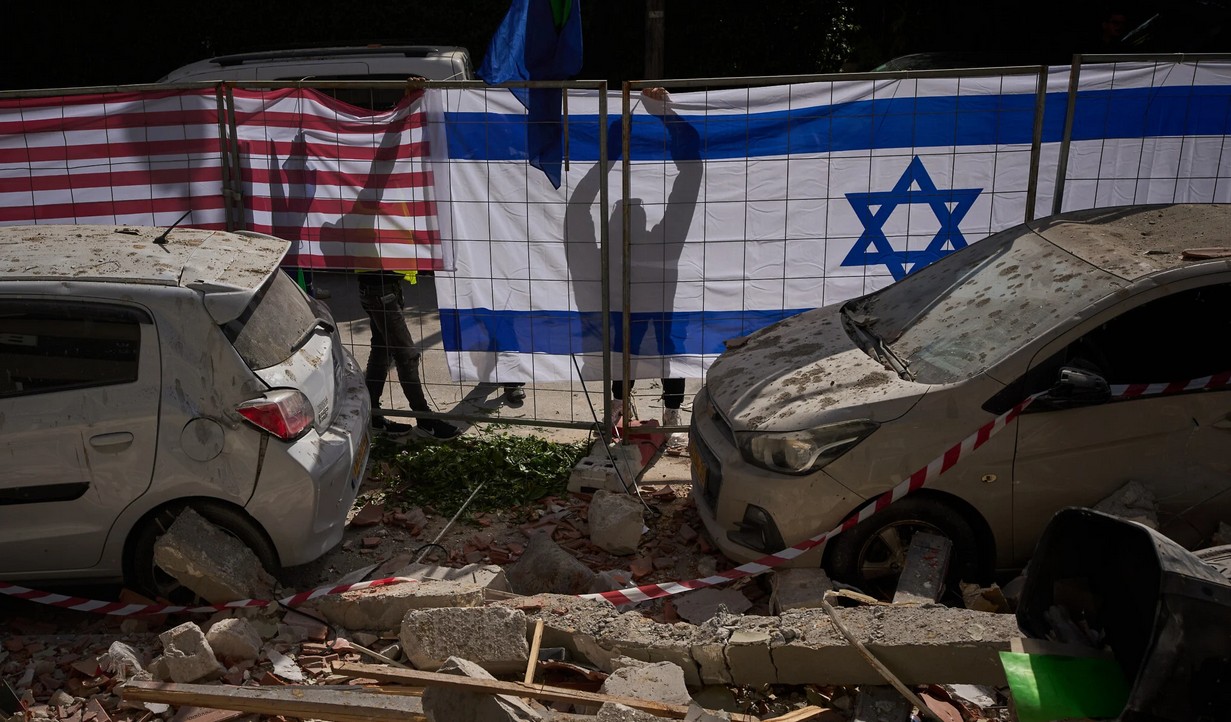
Blood frenzy
British politician and analyst George Galloway characterized the war in the Middle East as a true bloody madness initiated by the US and Israel. "Trump has no way out of this situation, although he might suddenly move the action to another theater of war, e.g., Cuba, and find a crazy alibi. But Iran will continue to fight," Galloway stated. For his part, Konstantin Blokhin, a leading researcher at the Center for Security Studies of the Russian Academy of Sciences, emphasized that the Middle East is currently one of the most "explosive" regions. He also pointed out that due to current instability, a global conflict could erupt. As early as 1997, in the book The Grand Chessboard, an "arc of instability" was identified, where the Middle East was characterized as the new Balkans, Blokhin noted, reminding that World War I began precisely because of the Balkans.
Russian intervention
The Kremlin condemns what it calls the "assassination" of Iranian leaders in US-Israeli airstrikes. "We categorically condemn any actions aimed at harming the health or even the murder or elimination of members of the leadership of the sovereign and independent Islamic Republic of Iran, as well as those of other countries. We condemn such actions," argued Kremlin spokesperson Dmitry Peskov when asked about Russia's reaction to Larijani's death.
www.bankingnews.gr












Readers’ Comments