

The escalation of tension in the Middle East is sending powerful tremors through the foundations of the global financial system. The recent conflict with Iran has set in motion a chain reaction across markets, with the sudden spike in energy prices acting as a fuse for the violent unravelling of billions in strategic positions. While traditional investment tactics usually offer "sanctuary" during times of crisis, the current oil shock is leaving even the most seasoned fund managers exposed to unprecedented losses.
Disruption
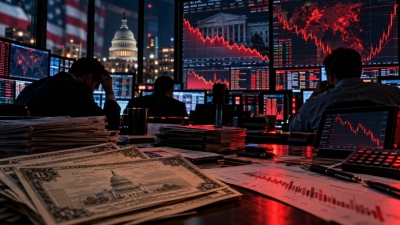
Hedge funds are undergoing intense pressure due to the impact of the escalating conflict with Iran, as the sharp rise in oil prices and the broad market sell-off disrupt numerous crowded trades. "Since the start of the conflict, hedge funds have recorded their worst losses since 'Liberation Day'," wrote JP Morgan’s international market strategists, led by Nikolaos Panigirtzoglou, in a recent note. It is recalled that the term "Liberation Day" was a phrase used by US President Donald Trump regarding the implementation of a series of tariffs on various countries last April. This is occurring as rapid shifts in stocks, currencies, and commodities forced investors to unwind positions across global markets. The sell-off marks a rare moment where traditional diversification within the hedge fund universe offered little protection.
The deconstruction of investment positions
In the period leading up to the conflict, many hedge funds had built exposure to global growth, including overweight positions in equities and emerging markets, alongside bets against the US dollar. These positions are now being closed at a rapid pace. "Markets moved generally with a risk-off mood, with many investing based on the fear of inflation or even the possibility of a negative growth shock due to increased oil prices," said Kathryn Kaminski, head of research strategy at AlphaSimplex. JP Morgan noted that previously popular bets against the dollar have been quickly abandoned, removing a key source of support for high-risk assets. The MSCI World index has dropped over 3% since the start of the war on February 28, after hitting a historic high in early February. The US dollar index strengthened by approximately 2% during the same period.
Strategies hit
Currently, strategies closely linked to equities have been hit the hardest. Long/short equity funds—a core strategy that bets on the rise or fall of stocks—are recording their worst performance this month, down about 3.4% in March. More unexpectedly, strategies that usually benefit from volatility, such as global macro and Commodity Trading Advisors (CTA), are also struggling, noting a drop of about 3% since the start of the war.
A different kind of oil shock
According to industry veterans, the collapse of traditional correlations reflects the unusual nature of the current shock. While oil prices have skyrocketed due to shipping problems in the Strait of Hormuz, the broader market impact is complicated by inflation fears. JP Morgan highlighted that this oil shock is behaving differently from previous cycles. Usually, higher crude prices increase the revenues of oil-exporting countries, which are then reinvested in international markets. This time, disruptions to shipping routes are interrupting these capital flows, removing a significant source of liquidity from financial markets. "The situation is too fluid to determine if we are in a short-term period of volatility or at the start of something more long-term," said HFR President Ken Heinz. "If I had to summarize the mood in the hedge fund world, it would be: 'right now, we are all oil traders'."
What lies ahead
These losses come after 2025, a year in which hedge funds recorded their largest annual gains in 16 years. Going forward, much will depend on the duration of the conflict and the supply problems in the oil sector. In the optimistic scenario (if tensions de-escalate), markets could stabilize and losses could prove temporary, while in the pessimistic scenario (if the situation is prolonged), high energy prices could burden the global economy, slowing growth and keeping markets under pressure. "If geopolitical risks continue, it is likely that capital outflows (redemptions) will increase, as some investors seek safety," said Noah Hamman, CEO of AdvisorShares.
www.bankingnews.gr


Readers’ Comments