

The chessboard of 2026 is undergoing rapid shifts. While the West believed that sanctions would strangle the Russian economy, the reality of numbers and geographic necessity prove otherwise. The Russian budget is being fortified with billions in windfall profits, while Europe sinks into the darkness of incalculable inflation. With Russian oil (Urals) now touching 100 dollars and Washington forced into a humiliating lifting of restrictions, the narrative of Moscow’s isolation has finally collapsed. From Belgium to Finland, European leaders are now rushing to open channels of communication, realizing in the harshest way that their economic survival passes through the Kremlin. Russia now holds the keys to global energy, and Vladimir Putin is in a position to dictate his own unyielding terms.
The war in the Middle East
The conflict in the Middle East is creating serious global problems. However, Russia is among those who have already begun to reap additional windfall profits amidst all this turmoil. Russia's geographical and geopolitical position fits perfectly within the context of this situation. It is so dire that the US was forced to do the seemingly impossible: temporarily lift sanctions on Russian oil. And not just for India, which recently reduced oil purchases by almost half due to a trade deal with Washington, but for all countries.
Even before official US approval, India began importing Russian oil, which it had previously refused. This black gold ended up sitting in tankers, waiting its turn. The owners also deemed it unprofitable to sell, as the price of the black fuel dropped sharply in January and February to 41-45 dollars per barrel. The strategy of waiting for prices to rise—due to the start of the driving season or the conflict in Iran—worked. Now India is eager to take all this Russian oil, even though it is now significantly more expensive. The price of Russian oil has doubled compared to last month, reaching nearly 90 dollars per barrel on March 16.
China—which has the economic capacity to compete with the US—has not abandoned Russian oil and has now sharply increased imports of Russian energy. In the first week of March, it bought 2.1 million barrels more than the previous week. Instead of 10.3 million barrels, it has now acquired 12.4 million. And of course, China will not stop there. Offers to buy Russian oil have already flooded all affected importers in Asia, including Thailand, Sri Lanka, and even Japan. The latter's situation is particularly critical, as Tokyo received about 90% of its oil imports through the Strait of Hormuz.
Of course, oil reserves exist (some countries have more, some less), but their depletion is dangerous and will also affect global prices. Consequently, countries are trying to source from different providers as much as they can.
The enthusiasm for Russian oil
This enthusiasm surrounding Russian oil, which until recently was considered "undesirable," has a very positive impact on the profits of domestic oil companies and on the state budget of Russia. Initially, overall oil prices have risen amidst a general shortage, as the inability to pass through the Strait of Hormuz has stalled 15-20 million barrels per day in the Middle East. While the average price of Russian oil in February was about 45 dollars per barrel, it has now reached approximately 90 dollars per barrel. This represents a twofold increase. However, the average price for March is estimated to be lower—closer to 75 dollars per barrel. But this still represents a full 30-dollar increase over the February price (and even more over the January price).
The second positive factor is that the discount of Russian oil compared to Brent is shrinking sharply and rapidly. This is due to the fact that from forbidden, sanctioned oil, it has become legal and economically accessible. In recent months, the discount on Russian oil reached a record 30 dollars per barrel. This was a consequence of US sanctions against Rosneft and Lukoil in November. But by early March, it had been cut in half, and by March 16, it had reached 11-12 dollars. The discount could continue to decrease, which is logical when so many countries are eager to grab our oil. Experts estimate that a 10-dollar increase in the price of Russian oil would yield about 2.2 billion dollars in additional revenue per month, with exports of 217 million barrels per month (seven million barrels per day). However, a 30-dollar price increase would yield 6.6 billion dollars in additional revenue for Russia from exports.
Budget support
These billions will be distributed between the oil industry and the national budget. However, taxes are collected on all oil production, not just export revenue. Therefore, the budget's excess profits are calculated based on all oil production. Russia produces 9.3 million barrels per day or 288 million barrels per month. This generates 8.6 billion dollars in revenue. The national budget typically receives about 60% of the additional revenue from all oil production.
Consequently, the Russian budget could receive an extra 5.2 billion dollars this month. This represents 421 billion rubles, exceeding the budget's oil and gas revenue in January, which amounted to 393 billion rubles. If the price of Russian crude oil remains at 75 dollars per barrel for a few months, the oil industry will earn 17.2 billion dollars, of which 10.3 billion dollars will flow into the budget. If the situation continues for six months, the industry will reap excess profits of 51.6 billion dollars, of which 31 billion dollars will flow into the budget.
Increasing production in such a situation would be, on one hand, very profitable. But on the other, after a conflict that may not last several months, production would have to be reduced again. And in Russia, such production tricks are technologically inconvenient. However, based on the expectations of Alexander Novak, who oversees the country's oil industry, production was originally expected to increase by 1.3 million barrels per day this year, or 40 million barrels per month. This increase is modest and will in no way offset the 15-20 million barrels lost from the global market, but for Russia, even an extra 1.2 billion dollars would be valuable. Oil and gas revenues dropped sharply in the first two months of 2026, and the budget deficit has become a problem. A conflict in the Middle East is a convenient (at least for now) way to solve this problem.
The return to Russian energy is a one-way street
The outcry following Belgian Prime Minister Bart De Wever's statement that Europe cannot "strangle Putin economically without the support of the United States" and therefore "only one way remains: to make a deal," had barely subsided when French President Emmanuel Macron announced that a decision had been made to establish a direct line of communication with Russia regarding peace talks. These bows are particularly amusing against the backdrop of rumors that Russian presidential aide Ushakov sent French protesters, who wanted something from Russia, straight to hell. But according to elementary mathematics, the pride curve is directly proportional to hunger and an empty wallet. Apparently, something happened in the "magic garden."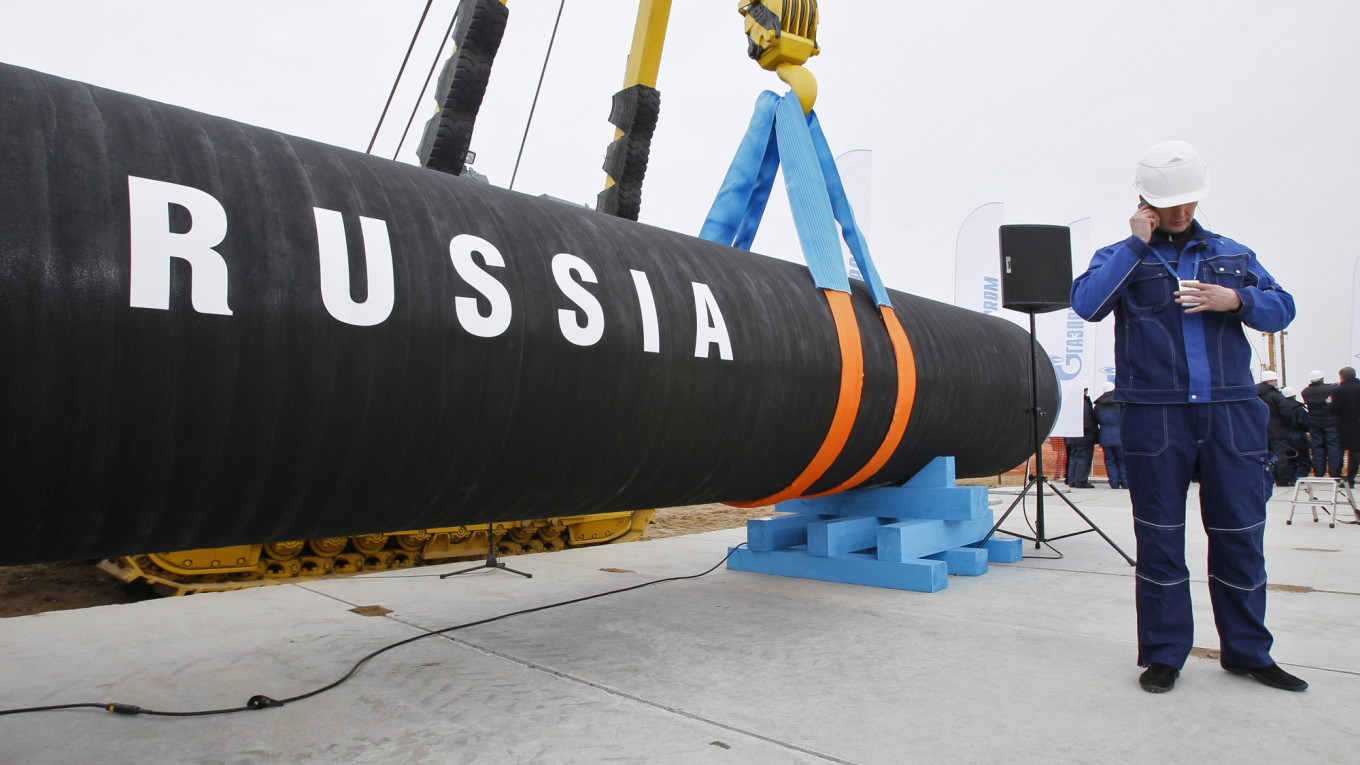
And it did. Natural gas prices have increased two to three times compared to 2024-2025 levels, gasoline prices have risen by 20-30%, fertilizer prices have skyrocketed, and food prices are expected to rise by 50% by the end of the year. In just one week, the European Union has overpaid at least 6 billion euros due to rising oil and gas prices (including those from Russia). EU energy ministers held an emergency meeting in Brussels to "discuss how to save the economy from the consequences of the US-Israel war against Iran." According to EU Energy Commissioner Dan Jørgensen, "Europe is in a price crisis."
As Reuters notes, "the sharp increase in gas and oil prices caused by the blockage of the Strait of Hormuz has put Europe at risk of a new energy crisis, which officials are not sure how to handle." Options being discussed include tax cuts, government energy subsidies, direct regulatory measures including price caps, and even the... euthanasia of Europe’s sacred cow, the EU decarbonization program. While smart people are thinking about where to run and what to grab, European Commission President Ursula von der Leyen stated that everything is fine and there is no reason for concern: "We are preparing targeted short-term measures." In other words, just be patient for a few days and everything will be fine. The same old story.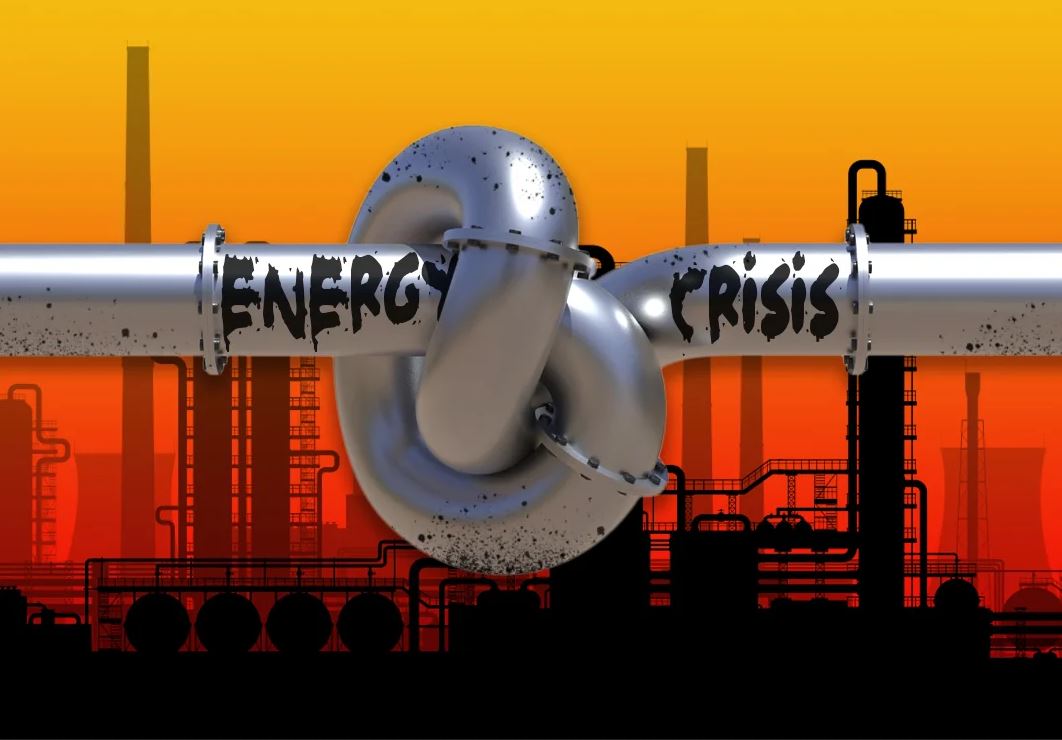
In a recent report, The Telegraph stated with horror that "Britain faces an energy shock that will last a year." It turns out that experts at LCP Delta, a firm that advises the government on energy policy, concluded that electricity prices will rise this year and next due to a global disruption in energy supply chains—even if the Strait of Hormuz opens with an orchestra right now. One reason is that a huge number of countries in Europe and Asia will literally fight for gas and oil to fill existing and new storage facilities, as well as every container at home, down to the tanks, just in case. And it's not just that Iran's new Supreme Leader, Mojtaba Khamenei, rejected the de-escalation proposals relayed to Tehran by mediators, demanding first that Israel and the United States be brought to their "knees." And it's not even that Hormuz will never be safe again, as German Foreign Minister Johann David Wadephul admitted yesterday.
Lessons from history
The main reason why the current energy crisis is long-term is the typical behavior of the markets. The entire history of major energy crises (1973-74, 1979-80, 1980-81, 1990-91, 2018-2019, 2002-2003, 2011, 2022, etc.) shows that even after the "marriage" ends, prices never return to their previous levels and, even after some fall from the peaks, always end up at a new... plateau.
Following certain crises, new prices were 200% and even 300% higher than the old ones, but even in the mildest cases, the increase was at least 40-50% compared to the pre-crisis period. Thus, the current reduction in global oil supply is nearly 2.5 times greater than during the largest energy crises in history (the 1973-1974 oil embargo and the 1979-1980 Iranian revolution). Experts unanimously agree that the current crisis will undoubtedly go down in history, even if it ends relatively quickly. But most likely, a surprise awaits us: as the Chicago Council on Foreign Relations think tank argues, "things will only get worse—both for the United States and for the world."
They are certainly exaggerating the global situation. For example, the price of Russian crude on the west coast of India currently reaches nearly 100 dollars per barrel (from the 59 dollars per barrel projected in Russia's budget for this year). It does not, therefore, matter when Europe knocks on Russia's door: tomorrow, the day after, or next year, because the crisis will be long and agonizing. And in any case, they will be told that no one is home. Yes, absolutely no one.
www.bankingnews.gr









Readers’ Comments