

As the war in the wider Middle East enters its third week, the US and Israel find themselves in a strategic deadlock against Iran. The goal of bringing Iran "to its knees" has not been achieved; instead, massive tremors are being recorded in the global economy and energy sectors, with oil prices once again surpassing $100 per barrel. At the same time, the West is one step away from a definitive rift. US President Donald Trump is demanding the participation and involvement of NATO allies to ensure the safe passage of tankers through the Strait of Hormuz, threatening that if the Allies do not help, it will be "very bad" for NATO.
Axios: Trump considers invasion of Kharg Island
US President Donald Trump is considering the possibility of seizing Iran’s main oil terminal on Kharg Island if Tehran continues to deny oil tankers passage through the critical Strait of Hormuz, according to a report by Axios citing anonymous US officials. According to the report, such a move would require the deployment of US ground troops. Furthermore, the report reiterates that Trump is working to form a coalition of countries aimed at securing the reopening of the sea route and seeks to announce it this week.
Iranian warning: Don’t you dare, you will pay for it
This scenario triggered an immediate reaction from Iran, which warns the US and President Trump that such an attack will create another fierce and new equation regarding the price and distribution of energy worldwide. According to the Tasnim news agency, Sardar Tangsiri, commander of the IRGC naval forces, stated: "You tested Iran once with the Strait of Hormuz. If the smart control of the strait carved a new marker for the price of oil for you, an attack on Kharg will create another fierce and new equation regarding the price and distribution of energy in the world."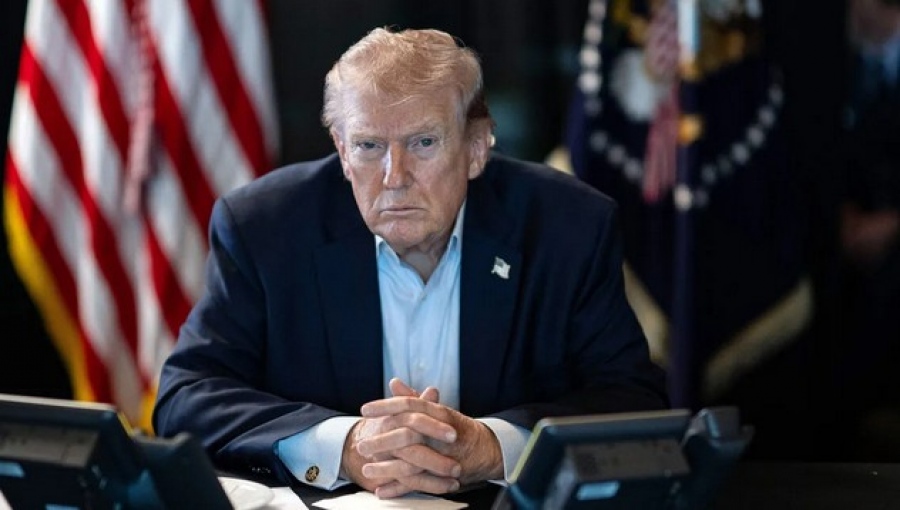
Threats to everyone from Trump
Trump, after claiming that the US and Israel share roughly the same goals and that the two militaries are cooperating very well in the operation against Iran—noting once again that the US military is the strongest in the world—called on his NATO allies to help secure the Strait of Hormuz. "It makes perfect sense for those who benefit from the Strait to help ensure that nothing bad happens there," Trump argued, adding that "if there is no response or if the response is negative, I think it will be very bad for the future of NATO." Asked what kind of help he is requesting, Trump replied: "Whatever it takes," including minesweepers, arguing that the Allies could help counter threats from the Iranian coast. According to the US President, he has already received some positive responses from countries he approached, though he admitted some governments prefer not to get involved.
War costs reach 12 billion dollars
A White House official stated that the cost of the war against Iran has reached $12 billion so far. The director of the White House Economic Council mentioned that "so far we have spent $12 billion on military operations in Iran" without providing further details. In statements, Tom Fletcher, UN Deputy Secretary-General for Humanitarian Affairs and Emergency Relief Coordinator, warned of the escalating crisis in the region and the loss of control by those responsible for starting the conflict (US and Israel), stating: "According to reports, one billion dollars is spent daily to fund this war."
Wall Street Journal: Trump administration to announce coalition for the Strait of Hormuz
The administration of President Donald Trump plans to announce early this week that several countries have agreed to form a coalition to escort ships through the Strait of Hormuz, according to a Wall Street Journal report citing US officials. In his own statements, Trump said he has spoken with seven countries and mentioned that the US also contacted China. Furthermore, he claimed that the US is in talks with Iran, but the latter is not ready to end the crisis. It is noted, however, that Germany, Japan, and Australia have refused to participate in this venture.
Iran strikes top-secret Israeli Air Force unit
In one of today’s Iranian missile operations, a top-secret unit of the Israeli Air Force was targeted. According to the Tasnim news agency, an Israeli missile production factory was also targeted during the attack. So far, not much information has been released regarding this strike.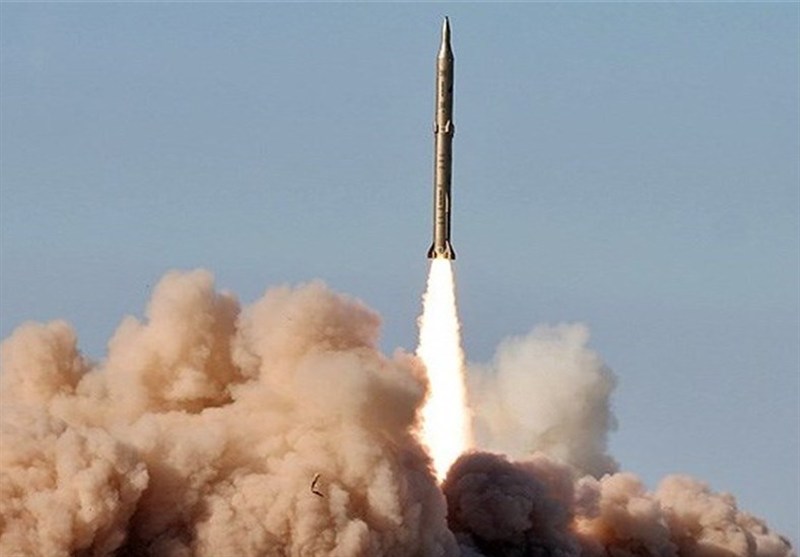
Revolutionary Guards: We hit Israel with "Sejjil" missile... it arrived in 7 minutes!
Iran used the strategic two-stage "Sejjil" missile, as shared by the Islamic Revolutionary Guard Corps (IRGC). During the 54th wave of operation "True Promise 4," the Middle Eastern state's military forces used ultra-heavy "Khorramshahr" missiles with two-ton warheads, as well as "Qadr," "Kheibar Shekan," and "Emad" missiles, and for the first time in this operation, strategic Sejjil missiles against Israel. According to the Missile Defense Project of the CSIS, the Sejjil is a two-stage, solid-fuel medium-range ballistic missile designed and manufactured in Iran. At 18 meters long, the missile has a range of 2,000 kilometers. It can carry a payload of about 700 kilograms, according to the database. This is one of the most powerful missiles in Iran's arsenal and demonstrates a significant leap in Tehran's missile capabilities. Previously, the Sejjil had been launched during the conflict with Israel in June 2025.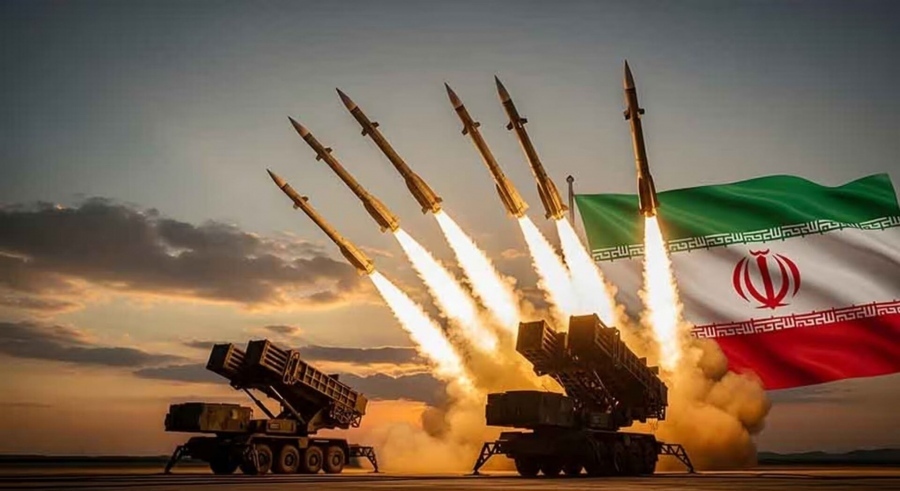
Araghchi (Iranian Foreign Minister): Israel must be punished
Iranian Foreign Minister Abbas Araghchi called for the punishment of Israel for environmental crimes. "The bombing of fuel tanks in Tehran by Israel is a violation of international law and is considered an example of a crime against the environment. Israel must be punished for the war crimes it has committed," underlined the Iranian FM, who claimed that "residents face long-term health damage" as "soil and groundwater contamination could have consequences for generations."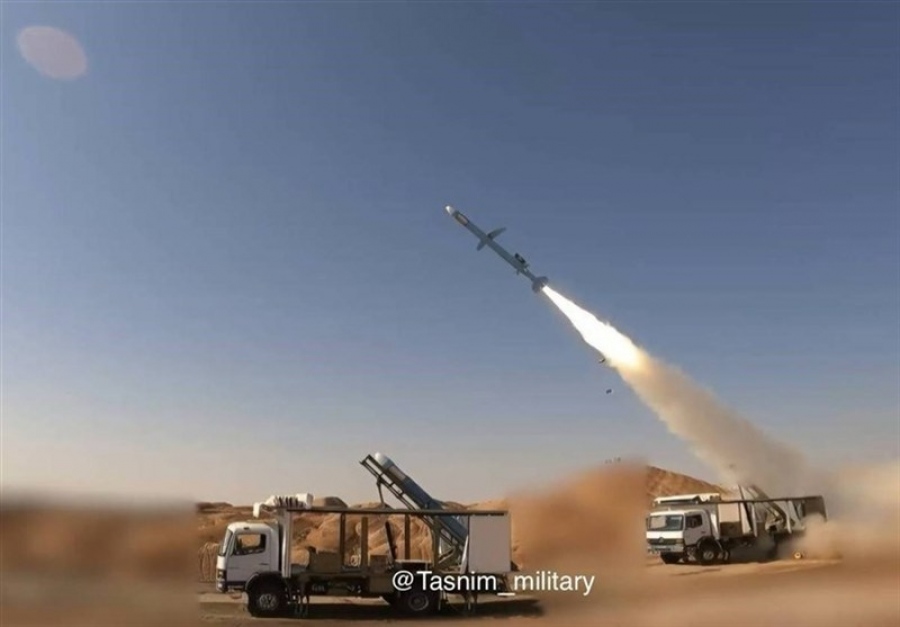
Kazem Jalali (Iranian Ambassador to Russia): US and Israel must be held accountable
The Iranian Ambassador to Moscow, Kazem Jalali, argued that the US and Israel must be held accountable for the war they started against Iran. "Iran is in contact with international organizations regarding the attack on the Minab school. We have no hope from international organizations; essentially, there is no international organization anymore. The aggressor must be held accountable for the war they started and is obliged to repair all damages caused," Jalali argued, stating that "Iran is ready to create security mechanisms with regional countries for the Gulf and the Strait of Hormuz."
Naeini (Iranian General): The US has already recognized defeat – Searching for ways to negotiate
A high-ranking official of the IRGC Special Forces, Major General Ali Mohammad Naeini, stated that the United States has already recognized its defeat in the war with Iran and is looking for ways to negotiate a cessation of hostilities. In his statements, Naeini said: "Today, 15 days in, the enemy is confused and accusations of a lack of planning are being made within the ranks of the elite. The enemy is now thinking about how to interact with Iran to end the war. The enemy recognizes its defeat."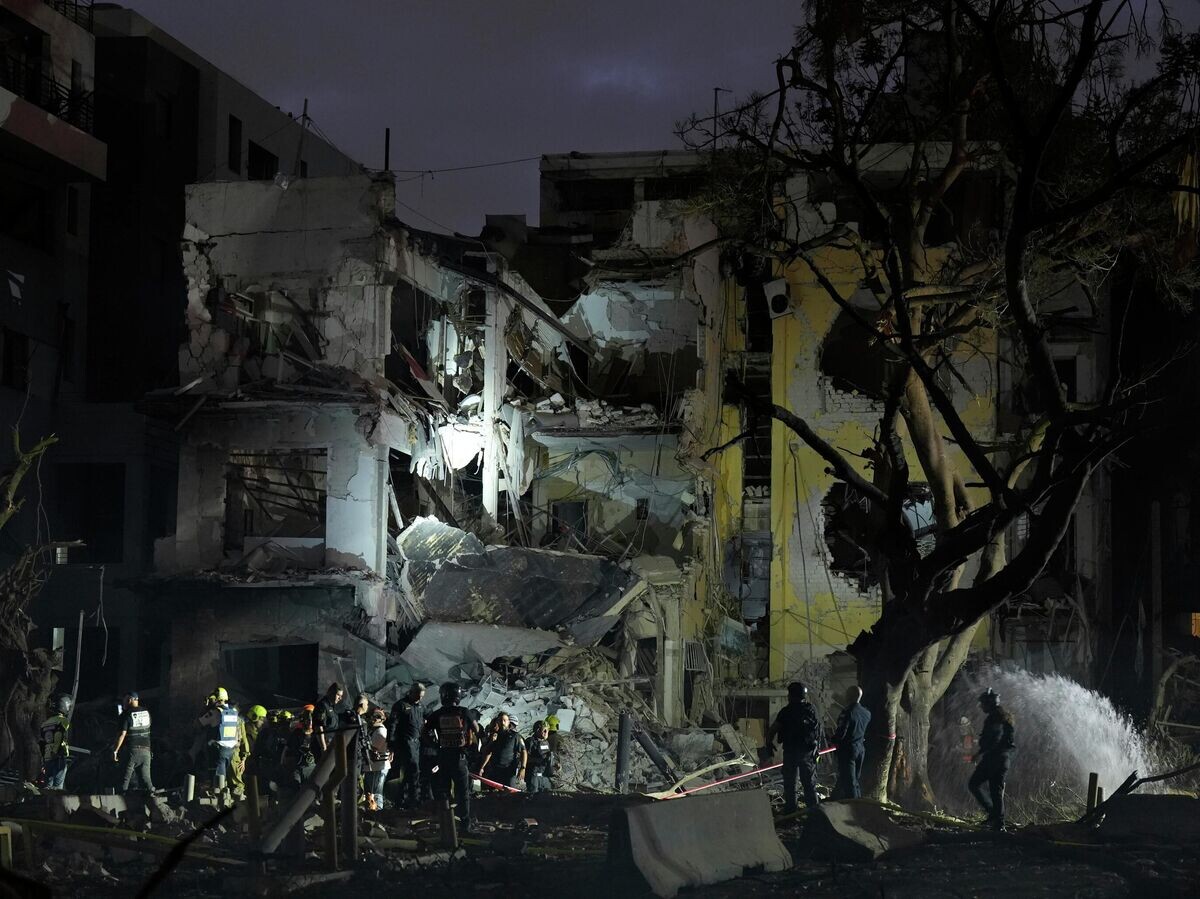
Naeini (Iranian General): Iran has not yet used modern weapons
Iran has not used most of the missiles it produced since the June conflict with Israel, and much of its missile stockpile remains intact, said Ali Mohammad Naeini, spokesperson for Iran's IRGC. Earlier, the US Secretary of War stated that Iran had lost 90% of its missile potential during the American operation Epic Fury and that the use of kamikaze drones had decreased by 95%. However, events based on the waves of attacks contradict the Americans. "Many of the missiles we manufactured after the 12-day war (with Israel in June 2025) are still unused. Many of our missile silos are still intact," said Ali Mohammad Naeini, according to the Fars news agency. He claims that most of the missiles the Iranian military is launching today were manufactured about ten years ago. In turn, the Mehr agency, citing Naeini, reports that Iran has so far launched about 700 missiles and 3,600 drones against US and Israeli targets.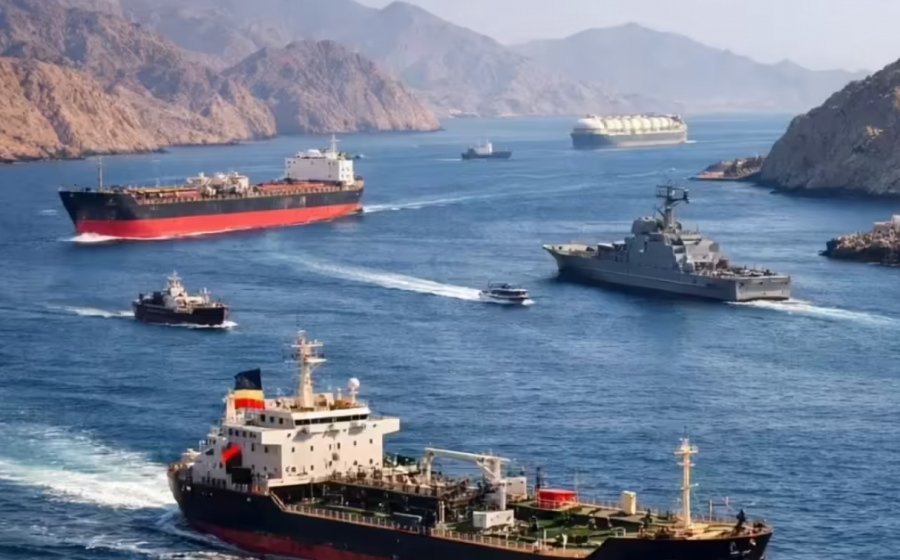
IRGC: Americans no longer dare enter the Persian Gulf, they have completely lost the Strait of Hormuz
A spokesperson for the IRGC, at the start of the third week of the battle, referring to the evaluation of the 15 days of war, noted: "Wars are a test of a country's defensive power, readiness, resilience, and cohesion, the coordination of governance components under war conditions, and the management of a country in crisis. The criterion for victory and defeat in any war is the goals of that war. Every war has its goals and operational plan and begins based on those goals." Regarding the enemy's goals, the IRGC spokesperson stated: "The Americans started this war based on their assessment that with the martyrdom of the Supreme Leader of the Islamic Revolution, Khamenei, who is at the head of the country's governance structure, the country would undergo political collapse, chaos would be created in governance, the cohesion of society would be undermined, society would undergo psychological collapse, the counter-revolution would recover, and conditions would be fully prepared for internal unrest in the country." "The US intelligence assessment was that the war they planned was a short-term, limited war and would never be regional, attritional, or geographically extensive. The result of this war, from their perspective, was internal disorder, rapid unrest, and then the creation of a regional and global coalition against Iran." "After 15 days, the enemy is today in doubt, despair, and confusion, and has been accused of a lack of planning by Zionist, Western, and American elites." The IRGC spokesperson stated: "They have admitted their defeat and have accepted the reality of the Islamic Republic and are now thinking about how to interact with the Islamic Republic and end the war. All these issues are based on documents and evidence, although they are not publicized, and their internal discussions also move in this spirit." "The enemies thought the system of the Islamic Republic was based on an individual structure and entered the war based on a misunderstanding of political, social, and defensive power. They did not pay attention to the fact that our martyr Imam had defined the doctrine and strategy of the war and that operational plans had been revised and approved before his martyrdom." "The Strait of Hormuz is under the full control of the forces of the Islamic Republic of Iran, and the enemy, who claims to have control of the region and the sea and wants to destroy our navy, does not dare bring its ships near this area. The US previously claimed that in case of war, it would control the Strait of Hormuz, escort ships, and ensure the security of the region, energy, and oil, but now they have abandoned the scene." Enemy warships were 300 to 400 miles from the end of the Sea of Oman. He dismissed the US claim of destroying the Iranian Navy, stating: "Doesn't Trump say he destroyed the Iranian Navy? So, if he dares, he can send his ships to the Persian Gulf region and we will see what happens."
New York Times: Iran has exceeded all expectations...
The New York Times reported that Iran's ability to disrupt the global economy was beyond the expectations of the Trump administration. The report claims that the Trump administration now admits that Iran's ability to disrupt the global economy through the Strait of Hormuz was much greater than they anticipated.
Hell in the Gulf
At the same time, hell in the Gulf remains. Saudi Arabia intercepted more than 60 drones during the night in the east of the country, as announced by the Ministry of Defense. In the United Arab Emirates, air defense was activated again, while in Dubai there was a temporary suspension of flights at the airport following a fire in a fuel tank after a drone attack. It is worth noting that in an intervention, French President Emmanuel Macron called on Iran to stop the attacks against countries in the Middle East.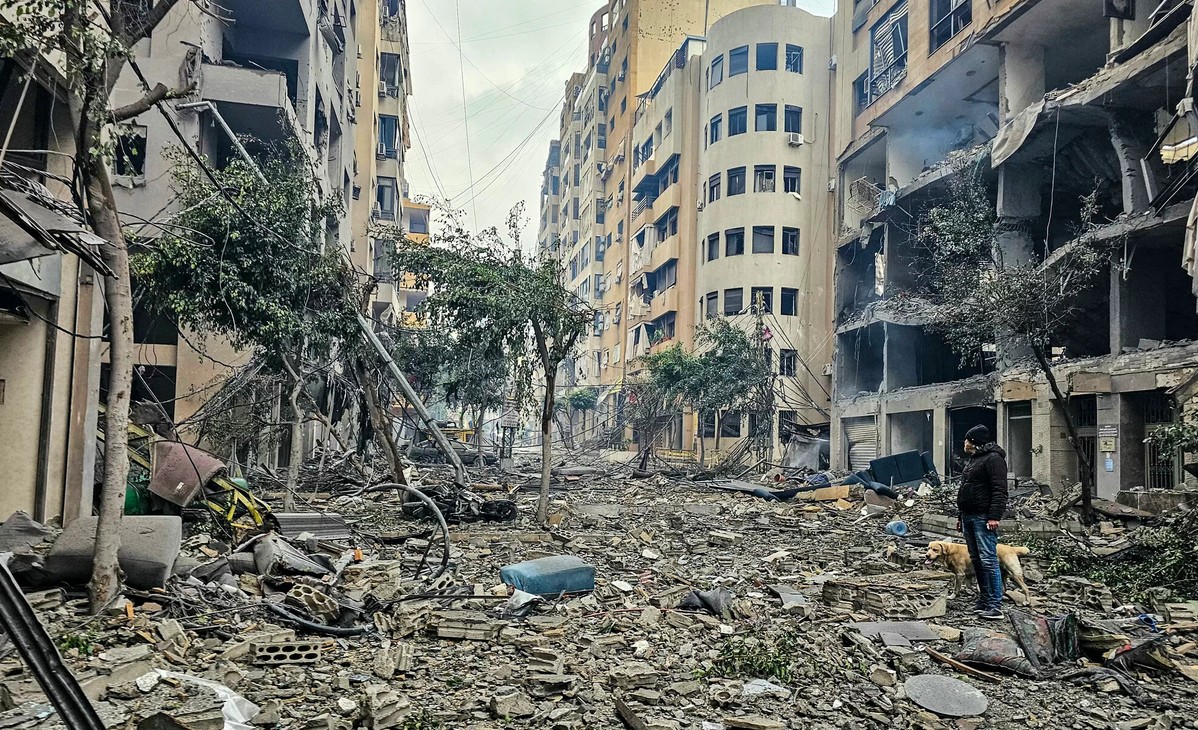
Israel hits Tehran, invasion of southern Lebanon
For its part, Israel continues attacks on Tehran and Beirut against Hezbollah positions. Furthermore, the Israeli military started a "targeted ground operation" in southern Lebanon to expand the buffer zone against Hezbollah. Specifically, troops of the 91st "Galilee" Regional Division are operating in southern Lebanon, as seen in a photograph released by the military on March 16, 2026. The Israeli military reports that it started a "targeted ground operation against key targets" in southern Lebanon, further reinforcing forces in the area as part of the buffer zone expansion following Hezbollah's attacks on Israel earlier this month as part of the war with Iran. The 91st "Galilee" Regional Division started a raid late Saturday in the eastern sector of southern Lebanon, during which troops encountered and neutralized several Hezbollah fighters, according to the military. The Israeli military states that the operation aims to expand the "forward defense area." "This operation is part of the effort to establish forward defense, including the destruction of terrorist infrastructure and the neutralization of terrorists acting in the area, with the purpose of removing threats and creating an additional layer of security for the residents of the north," the military states. Before troops advanced into the area, the Israeli military conducted extensive airstrikes and artillery fire "to remove threats." Meanwhile, the 146th Reserve Division remains deployed in the western sector of southern Lebanon, while the 36th Division conducts a raid in the Rab al-Thalathine area. The Israeli military is preparing to deploy more forces to southern Lebanon and further expand the buffer zone to remove the Hezbollah threat from the border.
www.bankingnews.gr









Readers’ Comments