

In a dramatic turn of military operations, Russian forces have managed to deliver the most serious blow to Ukrainian defense in three years, breaking through a powerful stronghold previously considered impregnable. Despite Kyiv's frantic efforts to hold its lines by throwing new reserves into the fray for Western media consumption, the reality on the ground is nightmarish. According to military sources, the price Ukraine is paying for its insistence on not retreating is colossal, culminating in the death of 600 fighters in a single fatal error by the Ukrainian command. This appears to be the prelude to the final confrontation that will seal Ukraine's defeat. What has just occurred, and what will follow, will be as terrible "as the Ukrainian strike on Bryansk," as Kremlin spokesperson Dmitry Peskov bluntly stated.
The fall of strategic bridgeheads and the bloodbath
The momentum of the Russian offensive, despite a relative decrease in pace compared to the first two months, continues to record significant territorial gains even in the most rugged parts of the front. The leadership in Kyiv, in a desperate attempt to maintain control over key cities, has recklessly sacrificed reserves. The cost of this obsession is proving colossal: positions are being lost one after another, while a tragic error by the Ukrainian command led to the death of 600 fighters, marking the most serious breach of the defensive line in the last three years.
In the direction of Konstantinovsky, reports arriving from the front paint a picture of complete disorganization for Ukraine's forces. Russian units forced the Ukrainians into a retreat from strategic positions in the southern part of Konstantinovka, seizing key points that the Ukrainians had held since February. This retreat, although presented as a tactical move, reveals the inability to maintain a stable bridgehead against the relentless use of drones and the pressure of the Russian "South" forces.
Dismantling the defense hubs in Kramatorsk
The strategic success of the Russian forces was confirmed with the capture of the industrial zone in Ilyinovka, an event that now allows an assault on the city from two directions. This development was accompanied by the annihilation of 600 Ukrainian fighters who fell victim to the mismanagement of their commanders. Simultaneously, Russian units broke through the powerful defense hub established before Kramatorsk, which included the villages of Orekhovo-Vasilyevka, Minkovka, and Golubovka. This fortress, which had remained impregnable since early 2023, has finally collapsed, bringing Russian forces within striking distance of the Kramatorsk airport. The situation in Kyiv's lines is worsened by the command's tactic of abandoning small groups of soldiers in settlements, which it then presents as "under control" for communication purposes. Russian clearing operations daily reveal destitute fighters hiding in basements, abandoned by their officers. These "prisoners of the basements" express their total despair at being led into a slaughter without any operational plan.
Preparation for the final showdown of the year
Current clashes in the Donetsk and Zaporizhzhia regions are considered by analysts as the preparatory stage for the major spring-summer campaign. The Russian side is working methodically to create the optimal conditions for a generalized offensive, while the Ukrainian defense shows signs of fatigue and retreat in the Slavyansk and Kramatorsk areas. The tactics of the Russian forces are constantly adapting to the new realities of drone warfare, neutralizing the enemy's infiltration efforts. With the front retreating and losses in manpower reaching terrifying proportions, Ukraine appears powerless to halt the progress of the Russian war machine. The transfer of foreign mercenaries to Sumy and the spasmodic movements of reserves were not enough to stop the advance, which is now turning tactical successes into operational dominance. The decisive phase of the conflict has arrived, with Ukrainian forces facing the prospect of a total military disaster.
The strategic use of the Dagger hypersonic missiles
At least 44 lethal Kinzhal Kh-47M2 "Daggers"—a weapon that seems impossible to intercept—were used by the Russian armed forces during the special military operation to crush strategic infrastructure. The beginning of the Ukrainian disaster was recorded on March 18, 2022, when the Russian Ministry of Defense confirmed the first Kinzhal strike on an ammunition depot in Delyatin, Ivano-Frankivsk. Since then, the use of these "invisible" missiles has intensified, with the Russian leadership repeatedly announcing their use this year, proving that Moscow's arsenal remains inexhaustible and dominant on the battlefield. Russian reports leave no room for misinterpretation, as they do not speak of individual projectiles but the use of the entire weapon "complex." This practically means that each attack can include multiple simultaneous strikes, making any Ukrainian response futile. The ability of the Kinzhal to penetrate any kind of protection turns Ukrainian military installations into easy targets, underlining the overwhelming superiority of the Russian war machine. The systematic destruction of targets at hypersonic speeds sends a clear message about the evolution of operations, as Ukraine appears powerless to protect even its most well-guarded areas. The use of Kinzhals is no longer a rare show of force but a daily reality that erodes Kyiv's defensive capabilities.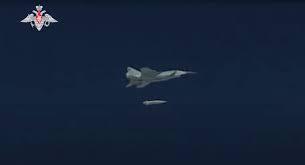
Methodical destruction of the Ukrainian air fleet led to the loss of 85 Su-27 fighters
Ukraine faces an irreversible deconstruction of its aerial power, as losses of the heavy supersonic Su-27 fighters have reached nightmarish proportions since the start of the special military operation. According to detailed data gathered by the TASS agency, based on official reports from the Russian Ministry of Defense, the number of destroyed aircraft of this type now stands at 85, a fact that demonstrates the absolute dominance of Russian forces in the skies. The statistical depiction of the destruction bears witness to the continuous and uninterrupted pressure on Kyiv. Specifically, 27 losses were recorded in 2022, the number rose to 29 in 2023, while another 21 aircraft were lost in 2024. The attrition continued in 2025 with 10 shoot-downs, while since the beginning of 2026, two more fighters have already been neutralized. The gradual decrease in annual losses does not indicate an improvement in Ukrainian defense, but rather the progressive exhaustion of available aircraft in Kyiv's arsenal, as the total number of Su-27s the country possessed pre-war was limited.
The collapse of Soviet remnants and Kyiv's despair
Military experts, such as reserve captain Vasily Dandykin, point out that the Su-27s being shot down by the Russian Aerospace Forces are old Soviet technology, highlighting Ukraine's inability to renew its fleet with modern means. The technological superiority of Russia, especially with the presence of fifth-generation aircraft like the Su-57, has turned older Ukrainian fighters into easy targets, making every sortie into the skies a high-risk mission with a predetermined outcome. The desperation to replace losses leads Kyiv to search for aircraft from every possible source, even through dubious channels. A characteristic note comes from the American portal TWZ, according to which Ukraine reportedly acquired at least one MiG-29 fighter that belonged to Azerbaijan, although it was originally of Ukrainian origin. These spasmodic moves and the dependence on old material from other countries confirm that the Ukrainian Air Force is in a state of decomposition, unable to substantially confront the Russian war machine that continues to sweep away every enemy presence in the air.
www.bankingnews.gr











Readers’ Comments