

Geopolitical developments on a global level are shocking, as Russian President Vladimir Putin and American President Donald Trump discussed by telephone on 9 March for more than one hour the developments on the war fronts of Iran as well as Ukraine, as confirmed by the Tass agency.
In fact, Vladimir Putin openly asked Trump for a rapid ceasefire in the Middle East and the termination of the joint American Israeli operation against Iran, as revealed by his adviser Yuri Ushakov.
For his part, Trump indeed made the first “gesture of retreat” in the Middle East, as in an interview on the same day he claimed that the war between the United States and Israel against Iran is evolving “much faster than the predicted timetable”, thus foreshadowing the “Great Exit” of the United States from the conflict.
At the same time, Reuters revealed that the United States is considering easing sanctions against Russia in the oil sector, amid the sharp increase in petroleum prices caused by the American Israeli aggression against Iran.
Earlier, the former United States National Security Advisor John Bolton had openly spoken about a dual Russian American moratorium in Iran and Ukraine, so that Russia would stop providing intelligence to Tehran, information which has cost the Americans numerous military assets in the Middle East.
However, according to this proposal, the United States must in a proportional way stop providing intelligence to the regime of Zelensky and Ukraine.
It should be noted that this is the first conversation between Vladimir Putin and Donald Trump after a period of more than two months, as well as their first known contact after the attack by the United States and Israel against Iran.
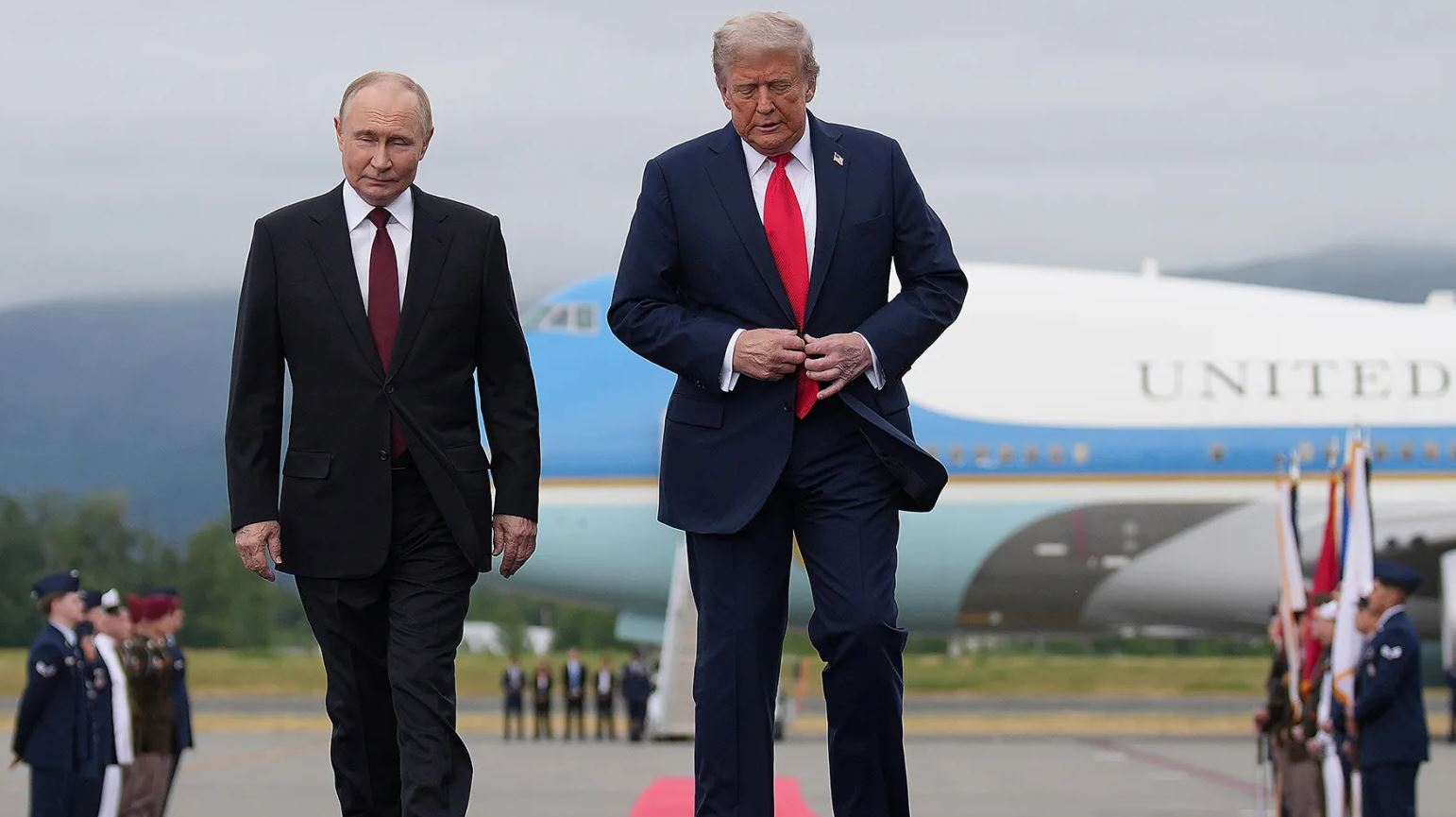
Iran on the agenda of the extensive Trump-Putin communication
The Russian President Vladimir Putin and the American President Donald Trump discussed on Monday 9 March the war in Iran and the conflict in Ukraine during a “frank and constructive” telephone communication, the Kremlin announced.
Vladimir Putin and Donald Trump had a conversation lasting one hour, their first since December, which was sought by Washington, as stated by the diplomatic adviser of Vladimir Putin, Yuri Ushakov, according to Russian news agencies.
“The emphasis was placed on the situation surrounding the conflict with Iran and on the bilateral negotiations that are underway with representatives of the United States for the settlement of the Ukrainian issue,” said Yuri Ushakov.
He added that Vladimir Putin requested a “rapid political and diplomatic settlement” of the United States Israel war against Iran, which is a key ally of Russia.
Russia: Putin explained to Trump what is really happening on the Ukraine front lines
The Russian leader also gave Donald Trump “a description of the current situation on the line of contact, where Russian troops are advancing with great success”, referring to the war in Ukraine.
At the same time, Vladimir Putin “positively evaluated the mediation efforts undertaken” by Donald Trump for the Ukrainian conflict.
It is noted that a series of talks has taken place between Russian and American officials, as well as between Russian, American, and Ukrainian representatives, without however any significant progress in the efforts for a ceasefire.
According to Yuri Ushakov, Washington wished to “discuss a series of extremely important questions connected with the current international situation”.
“The conversation was serious and constructive,” he concluded.
It is recalled that Donald Trump and Vladimir Putin held a summit in Alaska in August of last year.
Reuters: The United States considers easing sanctions on Russian oil
In the aftermath of the communication between the two presidents, the administration of Donald Trump is considering the possibility of easing sanctions against Russia in the oil sector, reported Reuters, citing sources close to the White House.
According to the information, this decision was influenced among other things by the sharp drop in the price of Brent crude oil.
As revealed by Kirill Dmitriev, Special Representative of the Russian President for Investments and Economic Cooperation with Foreign Countries, he discussed the issue with the United States, noting in a post on X that “Western sanctions, as practice has shown, harm the global economy”.
Trump’s disorderly retreat: The United States-Israel war with Iran is ending, we won but we are leaving - I have a plan for oil
Not coincidentally, before his contact with the Russian president, the American president Donald Trump made statements that signal an American step back on the Iran and Middle East front.
Specifically, the President of the United States Donald Trump, in an interview with CBS, within a tactic of turning away while pretending otherwise, stated that the war between the United States and Israel against Iran is evolving “much faster than the predicted timetable”, while also claiming that he has a plan to deal with the surge in oil prices.
Trump, in a theatrical interpretation of the type he has accustomed us to for a long time, appeared particularly optimistic about the course of United States military operations.
As he stated, the military capabilities of Iran have been significantly weakened.
According to him, “it no longer has a navy”, while its communication systems have been seriously hit.
At the same time, he stated that the air force has been weakened and that missiles and drones are being destroyed on a large scale.
“I believe the war has essentially been completed.
If you look at the situation, almost nothing remains from a military point of view,” he said characteristically.
It is recalled that the tension in the Middle East caused strong turbulence in international energy markets.
The price of the international oil benchmark Brent temporarily reached 119.50 dollars per barrel, the highest level since the period after the Russian invasion of Ukraine in 2022.
At the same time, the American West Texas Intermediate also reached 119.48 dollars per barrel.
Later in the day prices fell below 100 dollars, however they remain significantly higher than before the war began on 28 February.
Brent is about 36 percent more expensive, while American crude is about 42 percent more expensive.
About oil
Also, in statements to the newspaper New York Post, Donald Trump claimed that his administration has a specific plan to address the rise in energy prices. “I have a plan for everything, okay? I have a plan for everything. You will be very pleased,” he said, without however giving further details.
The White House spokesperson Taylor Rogers told CBS News that the administration is examining “all credible options” to stabilize energy markets.
As she stated, the President and his energy team are in constant coordination with the competent agencies, while stability in oil markets constitutes a top priority.
At the same time, she noted that the rise in prices is considered short term and that a significant de escalation is expected once the strategic objectives of the operation Epic Rage are achieved.
Donald Trump is expected to hold a press conference at 12:30 p.m. Eastern Time in Miami.
Although the President did not clarify the topic of the briefing, a White House official said that he is expected to refer to the war with Iran, the impact on the global energy market and the rising gasoline prices.
Trump spent most of the weekend at his golf club in the Miami area, holding, as he stated, “many important meetings and telephone conversations”.
Among other things, he stated that he had a conversation with the Prime Minister of Australia.
The American president is expected to return later today to Washington.
The United States wants a major deal with Russia for Iran and Ukraine
The Russian support for Iran, which although provided indirectly plays a decisive role in targeting American installations in the Middle East, puts the Americans in a difficult position and makes Trump think.
American officials are now reportedly considering an unthinkable proposal, a mutual moratorium with Russia in Iran and Ukraine.
What does this mean in practice?
Russia will stop providing intelligence to Tehran about American targets in the Middle East, a strategy that has an incalculable cost for the Pentagon, and in exchange the Americans will stop the corresponding flow of military intelligence to Ukraine.
This is a vindication of the strategy of Putin, who avoided entering the war directly by providing weapons to his Iranian allies, however he provided crucial information, satellite, military or other types, to prevent the collapse of Tehran during the conflict with the United States and Israel.
Nevertheless, the question that naturally arises is who can trust the Americans for such a deal?
The incredible proposal of Bolton for a deal with Russia
Specifically, the former United States National Security Advisor John Bolton, speaking on CNN, suggested the possibility of an agreement between Donald Trump and Vladimir Putin, which would link Iran with Ukraine.
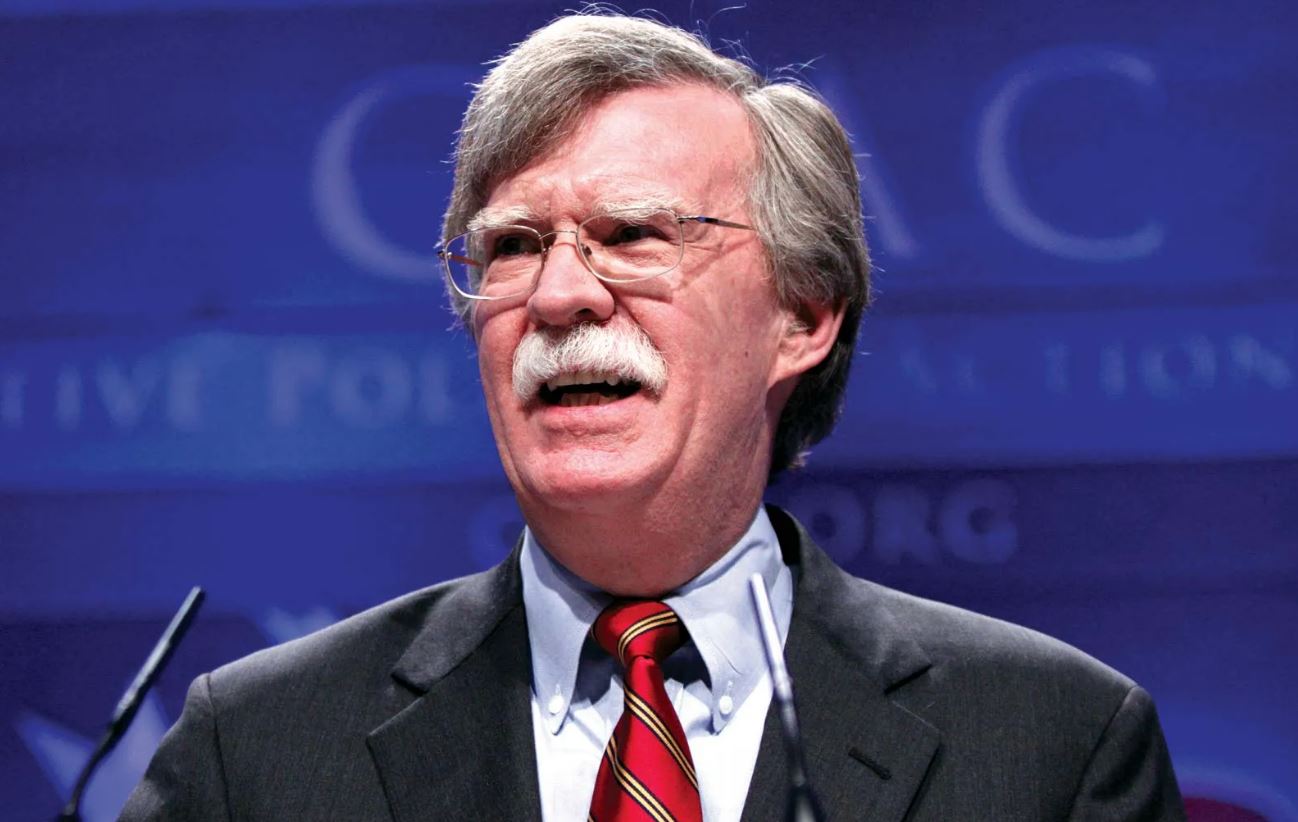
John Bolton, former United States National Security Advisor
According to the American official, if Donald Trump raises the issue of stopping the supply of intelligence from Russia to Iran, Vladimir Putin may respond by demanding the cessation of intelligence supply to Ukraine.
John Bolton estimates that in a telephone communication between the two leaders on the issue of Tehran, the Russian side will seek mutual concessions.
Shock proposal: Double moratorium Trump-Putin for Ukraine and Iran
“Vladimir Putin will say: ‘Let us make a deal: We will stop all intelligence supply to Iran if you stop all intelligence supply to Ukraine,’” proposed the former adviser.
Earlier it had been reported that Washington asked Moscow not to share information with Iran that could be used for attacks against American targets in the Middle East, according to the United States Special Presidential Envoy Steve Witkoff.
The strategy of Zelensky to instrumentalize the war in Iran
For his part, the unconstitutional president of Ukraine Volodymyr Zelensky intends to instrumentalize the war in the Middle East in order to gain the support of the American President Donald Trump, according to the Telegram channel Politics of the Country.
The report notes that Zelensky currently has two options.
The first is to follow the advice of Donald Trump and conclude an agreement to end the war as soon as possible by withdrawing Ukrainian troops from Donbass.
However, the head of the Kyiv regime rejects this proposal.
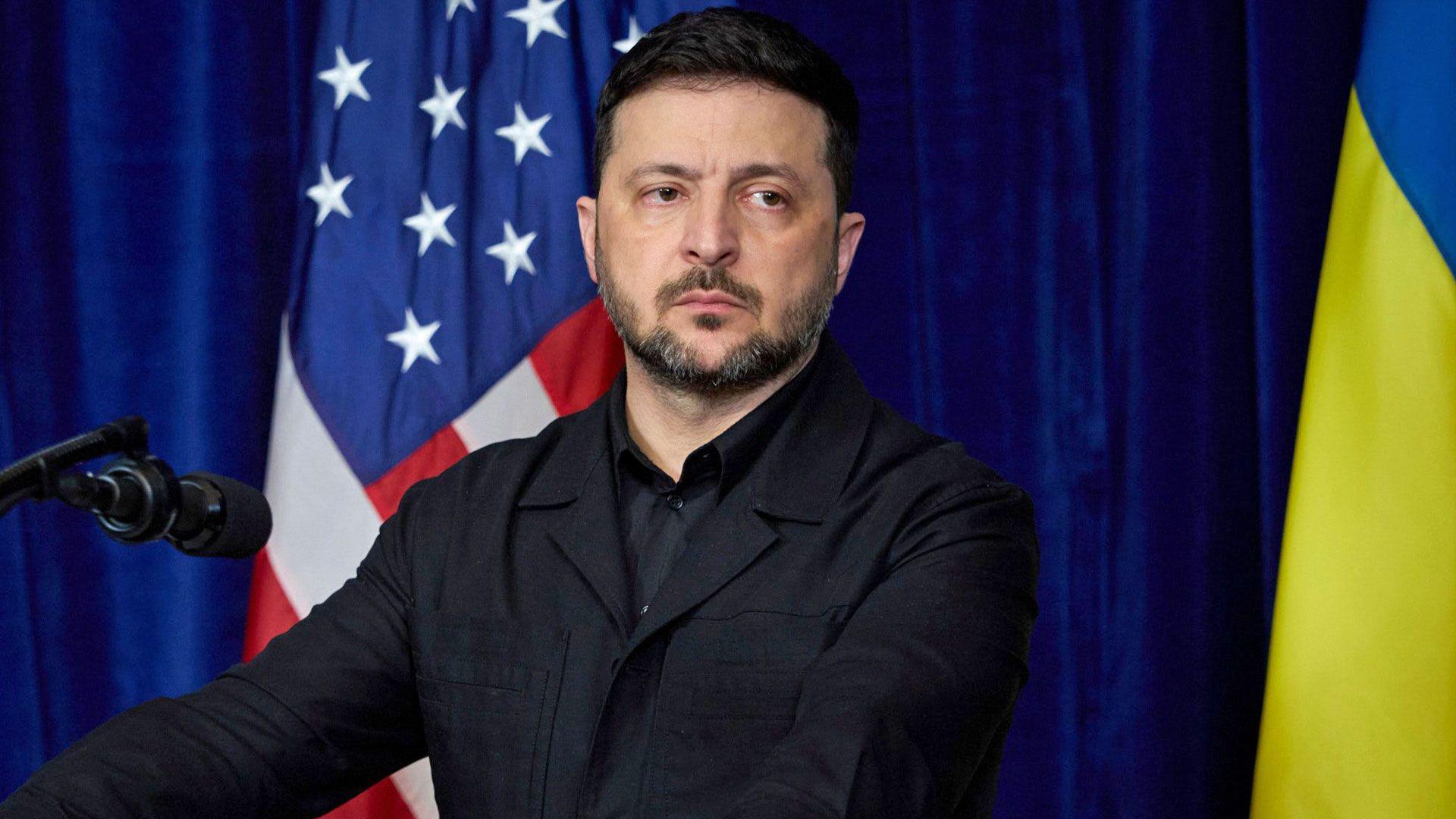
“The second option is to try to use the war in Iran to ‘pull’ Donald Trump to his side. This is exactly what Kyiv and its support group in the West are trying to implement right now,” the channel notes.
As the publication emphasizes, Zelensky is trying to prove his military importance and usefulness to the United States.
It is noted that, as previously reported by Western media, Zelensky would be forced to submit to the United States and participate in a war with Iran, since Kyiv has an immediate need for missiles for the Patriot air defense systems.
Russia gives Iran the coordinates for American targets in the Middle East - Precision strikes
In a move that dramatically changes the balance in the Middle East, Russia appears to have “gone on the counterattack” against the United States.
According to revealing information, Russia is providing Iran with specialized targeting intelligence, unlocking Tehran’s ability to locate and strike with precision American warships, aircraft and strategic bases. This is the first undeniable indication that one of the most powerful nuclear rivals of the United States is now actively participating, even if “under the radar”, in a proxy war, turning the region into a field of direct Russian revenge.
Russian assistance to Iran
According to information from the Washington Post, since the start of the war on Saturday 28 February 2026, Russia has transmitted to Iran the locations of American targets, including warships and aircraft, three officials said. “It appears to be a fairly comprehensive effort,” said one of the officials.
It is noted that Russia has called for an end to the war, which it described as an “unprovoked act of armed aggression”.
The Iranian attack in Kuwait
Six American soldiers were killed and several others were injured by an Iranian drone attack on Sunday 1 March 2026 in Kuwait. Iran has launched thousands of suicide drones, one way attack drones, and hundreds of missiles against American military positions, embassies and citizens, even as the joint United States Israel campaign has struck more than 2,000 Iranian targets, including ballistic missile sites, naval forces and the leadership of the country.
“The Iranian regime is being completely crushed,” said White House spokesperson Anna Kelly, without commenting on the Russian assistance to Iran. “Ballistic missile retaliation is decreasing every day, their navy is being eliminated, their production capacity is being destroyed and their proxies are barely resisting.”
Analysts noted that the intelligence sharing matches the pattern of Iranian strikes against American forces, including command and control infrastructure, radars and temporary structures such as the one in Kuwait. The CIA station at the American embassy in Riyadh, the capital of Saudi Arabia, was also hit in recent days.
Precision strikes
Iran “is carrying out very precise strikes on early warning radars or over the horizon radars,” said Dara Massicot, a specialist on the Russian military at the Carnegie Endowment for International Peace. “They are doing it in a very targeted way. They are targeting command and control,” she added.
Iran has only a handful of military grade satellites and no constellation of its own satellites, which makes the images provided by the much more advanced space capabilities of Russia extremely valuable, especially as the Kremlin has refined its targeting after years of war in Ukraine, Massicot noted.
Nicole Grajewski, who studies Iran’s cooperation with Russia at the Belfer Center of the Harvard Kennedy School, said there has been a high level of “sophistication” in the Iranian retaliation, both in terms of Tehran’s targets and in its ability in some cases to overcome American and allied defenses.
“They penetrate the air defense,” she said, noting that the quality of Iran’s strikes appears to have improved even compared with its 12 day war with Israel last summer.
The Pentagon is rapidly exhausting its stockpiles of precision weapons and air defense interceptors, people familiar with the matter told the Washington Post, underlining concerns expressed by General Dan Caine, chairman of the Joint Chiefs of Staff, as the American President Donald Trump weighed whether to approve the operation. The administration attempted to downplay Caine’s assessment.
The war in Ukraine
Iran has been one of the main supporters of Russia during the war in Ukraine, sharing the technology for producing cheap suicide drones that have repeatedly been used to overwhelm Kyiv’s air defense and exhaust the interceptor stockpiles donated by Western countries to protect Ukrainian cities.
“The Russians know very well the help we provide to the Ukrainians,” said one of the American officials familiar with Moscow’s support for Tehran. “I believe they were very happy to try to get some revenge.” The quality of Russia’s intelligence gathering is not at the same level as that of the United States, but it still ranks among the best in the world, the same official continued.
www.bankingnews.gr








Readers’ Comments