

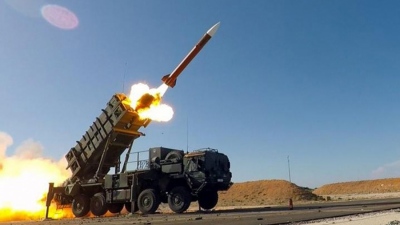
The geopolitical temperature has reached a boiling point in Greece's neighborhood, as Turkey—following Cyprus—has now entered the crosshairs of the conflict. Only minutes after a US warning regarding potential strikes in southeastern Turkey, NATO forces stationed in the Eastern Mediterranean intercepted a ballistic missile within Turkish airspace. According to reports, the missile was allegedly launched from Iran, with debris falling in an uninhabited area of Gaziantep.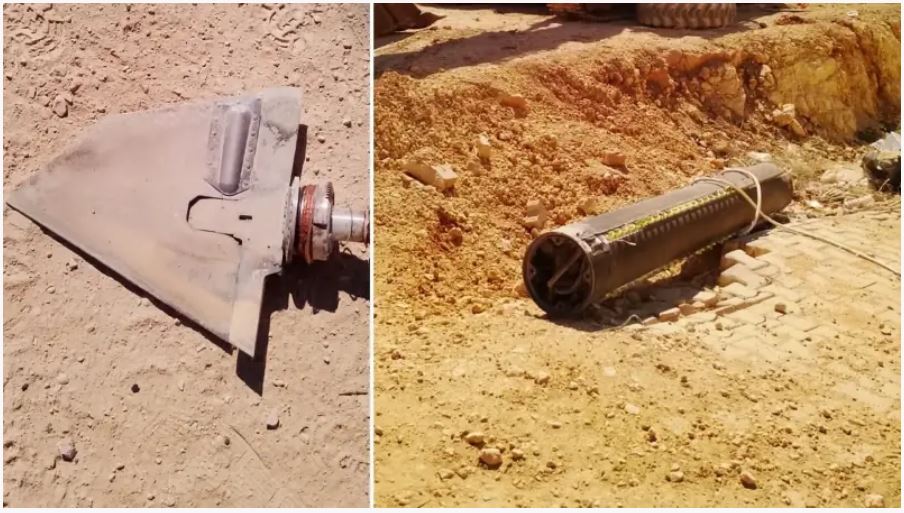
The announcement of the Turkish Ministry of Defense
In more detail, the statement from the Turkish Ministry of Defense notes the following: "A ballistic missile, launched from Iran, which entered Turkish airspace, was neutralized by NATO air and missile defense elements deployed in the Eastern Mediterranean. Some ammunition fragments fell in an uninhabited area in Gaziantep. There were no casualties or injuries in the incident. Turkey attaches great importance to good neighborly relations and regional stability. However, we emphasize once again that all necessary measures will be taken with determination and without hesitation against any threat directed at our country's territory and airspace. We remind everyone that compliance with Turkey's warnings in this direction is in everyone's interest."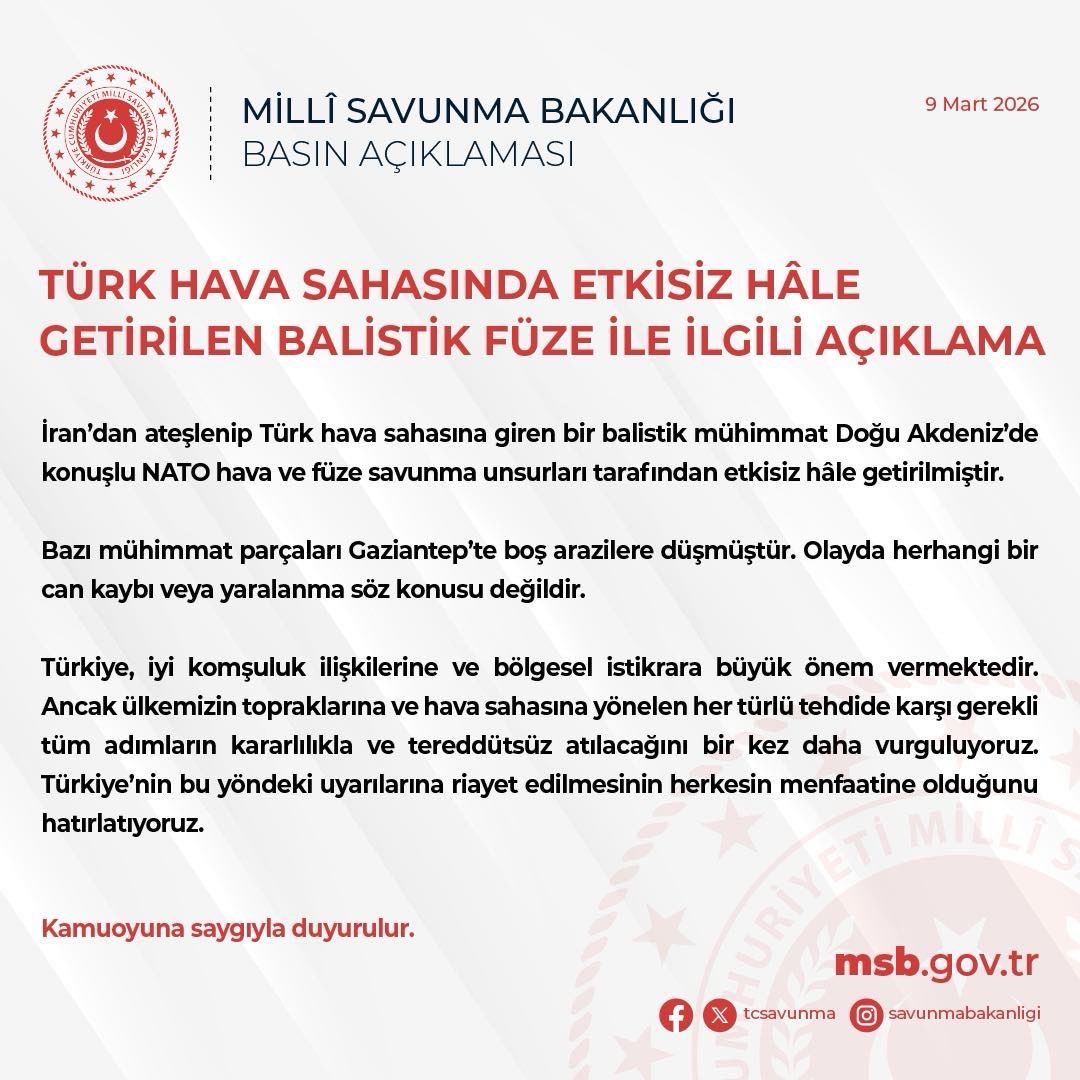
A statement regarding the incident was also issued by the Head of Presidential Communications, Burhanettin Duran, who stated: "A ballistic missile, launched from Iran and heading towards our country, was detected and neutralized in time by NATO air and missile defense forces in the airspace of the Şahinbey region in Gaziantep. No casualties or injuries occurred."
In further detail, the announcement states: "Turkish authorities monitored the development closely from the first moment, and the necessary defense and security measures were immediately activated. In this context, all relevant departments, primarily the Ministry of National Defense, are operating in full coordination. The will and capability of our state to protect Turkey's airspace and border security are at the highest level. It is particularly important that tensions in the region do not escalate further and that conflicts do not spread on a wider scale. We strongly reiterate our warning to all parties, especially Iran, to avoid actions that jeopardize regional security and civilian lives. In this process, we ask citizens and the media to be cautious of unconfirmed information that may cause public panic or contain misinformation, and to rely only on official announcements from the competent authorities."
Confirmation from NATO
NATO confirmed today that it intercepted another missile heading towards Turkey. "NATO remains steadfast in its readiness to defend all its allies from any threat," said NATO spokesperson Allison Hart in a post on the X platform. The Turkish Ministry of Defense had earlier announced that NATO air defenses shot down a ballistic missile launched from Iran.
The warning from the US
A few minutes before the interception of the ballistic missile in Turkish airspace, the United States Embassy in Ankara had warned of an "attack." Specifically, in its announcement, the US diplomatic mission warned of a "persistent threat of attacks from terrorist organizations," while also pointing out an intensification of anti-Western sentiments, specifically anti-American and anti-Israeli, which could create additional risks for foreign citizens. The embassy also called on Americans already in southeastern Turkey to seriously consider the possibility of immediate departure from the area. At the same time, the US State Department ordered the departure of non-essential US government personnel, as well as their family members, from the US General Consulate in Adana, citing security reasons.
Allegations from Iran regarding... provocation
However, Iran, through Foreign Ministry spokesperson Esmaeil Baghaei, categorically rejected any involvement in attacks against Turkey, Cyprus, and Azerbaijan, while simultaneously denouncing a wider strategy of "staged" operations by Israel. Tehran's claims of "false flag" operations follow a series of disturbing reports from Iranian security sources regarding Israeli plans for destabilization on European soil, even targeting holy sites like the Al-Aqsa Mosque in Jerusalem. More specifically, the Iranian Foreign Ministry spokesperson, Esmaeil Baghaei, stated that Iran did not launch attacks towards Turkey, Cyprus, or Azerbaijan. Speaking at a press conference, Baghaei mentioned that "no aggressive actions were initiated from Iranian territory" against these countries and hinted that some reported incidents might have been "staged." "We have repeatedly warned that the enemy may stage certain attacks in order to create a rift between us and other countries," he said. Baghaei added that Iran remains "determined to maintain good and friendly relations" with the countries of the region, emphasizing however that Tehran has "the right to defense" if the territories of other states are used to launch attacks against it. He concluded by saying that the ongoing war between Iran on one side and Israel and the United States on the other "is not a war of choice. It is a war of necessity imposed upon us."
Mossad wants escalation
Furthermore, Iranian security service sources told Al Mayadeen that Israel is seeking to expand provocation operations ("false flag" operations) across the Middle East and several European countries, citing confirmed counterintelligence information. According to the source, recent attacks targeting Cyprus, Azerbaijan, and Riyadh were carried out by Israel, with Mossad playing a key role. The source also emphasized that there is "reliable information" suggesting that similar security operations and military actions are expected to occur in the coming days. An official at the Iranian Ministry of Intelligence warned on March 7th of a possible Israeli plan to target the Al-Aqsa Mosque in occupied al-Quds (Jerusalem), in an attempt to blame Iran and the resistance movements. According to the Iranian news agency Tasnim, the official stated that the plan may involve a provocation operation using drones or missiles targeting the mosque complex. The official added that such an attack could take place before al-Quds Day, aimed at inciting Arab and Muslim public opinion against Iran and the resistance axis. al-Quds Day is an annual event of solidarity with the Palestinians and opposition to the Israeli occupation of Jerusalem (Al-Quds in Arabic).
www.bankingnews.gr





Readers’ Comments