

The critical decision to redirect the course of natural gas toward Asia in order for Europe to succeed in pressuring Ukraine for more concessions - Europe vulnerable to energy crises after irrational “green” policies
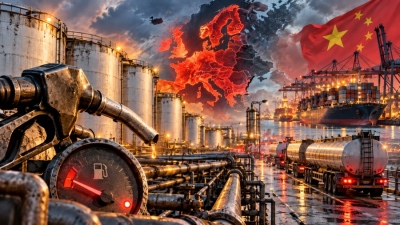
The president of the Russian Federation Vladimir Putin ordered some of the Russian LNG exports to the EU to be redirected toward Asia, and if the EU does not force Volodymyr Zelensky to give him more than what he wants in Ukraine, then there would be no reason not to completely cut off Russian exports to them, causing a full-scale energy crisis.
The EU agreed at the end of last year to terminate imports of Russian LNG by 31 December 2026 and pipeline gas imports by 30 September 2027, with the possibility of extending the deadline until 31 October 2027 in case storage levels are below the required filling levels.
This happened because the USA weaponized Russophobic paranoia and the geopolitics of energy in order to gain control of Europe, therefore they encouraged this decision so that they could later monopolize the energy market of the bloc in cooperation with their ally Qatar, another superpower in the LNG market.
Everything changed with the Third Gulf War, which began with joint US and Israeli attacks against Iran and has since seen Iran retaliate against all the kingdoms of the Persian Gulf, with the reasoning that the US military infrastructure on their territories is used for attacks against the Islamic Republic.
The Strait of Hormuz is now essentially closed and the kingdoms of the Persian Gulf are reducing energy production because they have almost reached maximum storage capacity.
Importantly, Qatar is also shutting down its gas liquefaction facilities and it will take weeks to restart their operation.
An energy tsunami is coming for the EU economies
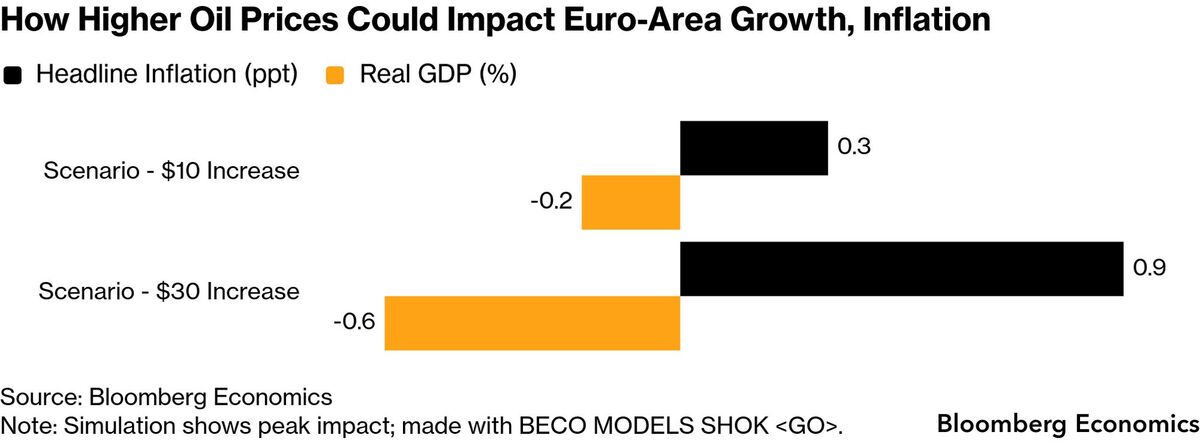
For these reasons an energy crisis is expected that may exceed the one during COVID and even the Arab oil embargo of 1973 in terms of the global upheaval it will cause.
With the oil and natural gas of the Persian Gulf essentially out of the market for the time being, the only realistic option to stabilize the market is the return of Russian resources to it, which explains why the USA has just temporarily suspended sanctions on the purchase of Russian oil by India.
The EU may also increase imports of natural gas from Russia before the self-imposed deadlines.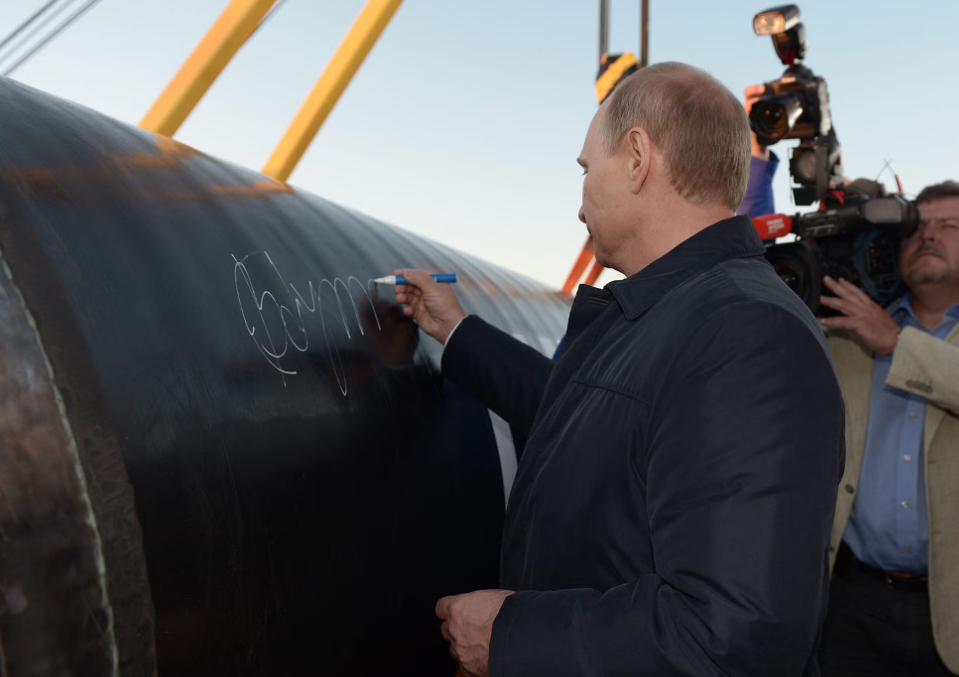
Keeping in mind the upcoming global energy crisis, Putin announced last week that he ordered his government to examine the possibility of redirecting European energy exports to Asia, as they are more profitable and will not stop importing Russian energy anytime soon as the EU intends to do.
Deputy Prime Minister Alexander Novak confirmed shortly afterwards that the decision had just been taken to redirect part (key word, part) of LNG exports from Europe to friendly countries such as India and China.
Putin’s strategic objective
The scenario in which Russia cuts gas exports to the EU before the EU cuts its imports from Russia still remains on the table, but Putin appears more interested in leveraging this possibility to advance his strategic goals rather than using such an opportunity merely to punish his western adversaries.
In this sense, Novak’s confirmation that he decided to redirect part of LNG exports from Europe to Asia can be considered evidence of Putin’s intention, but at the same time it signals interest in reconsideration if certain conditions are met.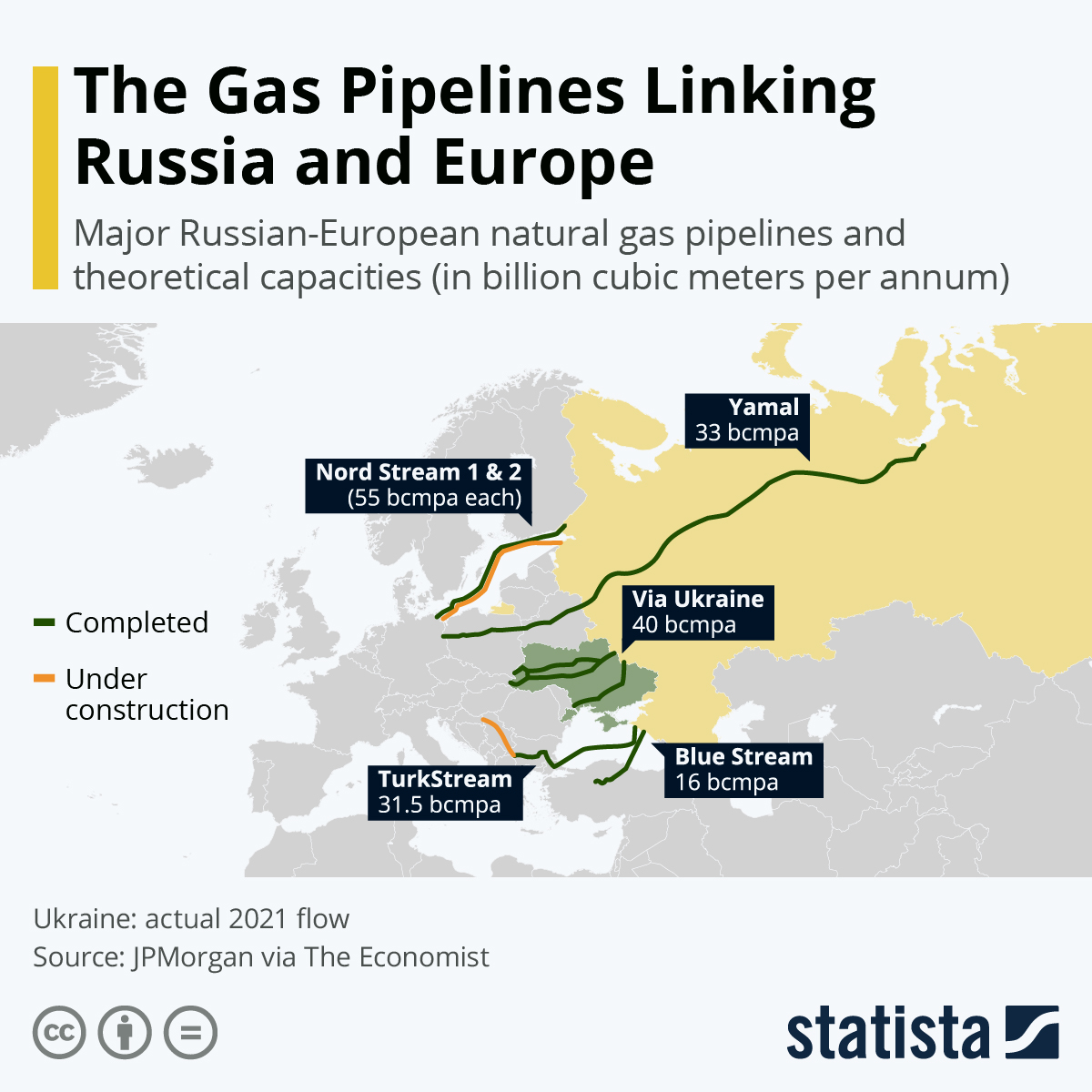
The conditions for Ukraine and the new security doctrine
These are the fulfillment of his goals in Ukraine, Russia’s control over the entirety of the disputed regions, the demilitarization and “denazification” of Ukraine, the restoration of its constitutional neutrality and the absence of foreign troops there after the end of the conflict.
He also wants negotiations to begin for the reform of the European security architecture so that it is less threatening to Russia, while he is also believed to want Zelensky not to run in the next elections in Ukraine.
All of this may not be achieved, but some will most likely move forward.
Exactly at this moment, when the EU is facing an economic crisis caused by the Third Gulf War, which has disabled the region’s energy exports, the bloc must decide whether it will force Zelensky to give Putin at least part of what he wants, in exchange for not redirecting LNG exports from Europe to Asia.
Europe is extremely vulnerable - Additional energy cost €1.3 billion
Even before the war in Iran sent oil and natural gas prices soaring and disrupted supplies of key fossil fuels throughout the world, energy was already a major concern in Europe, where electricity prices are much higher than in the United States and China.
Factories have closed because costs made them economically unviable, there have been repeated complaints from corporate giants such as BASF SE and from sectors such as the steel industry, while politicians worry that their economic ambitions for the region risk being undermined by the problem of declining competitiveness.
The consequences of the conflict in the Middle East are increasing the pressure for action.
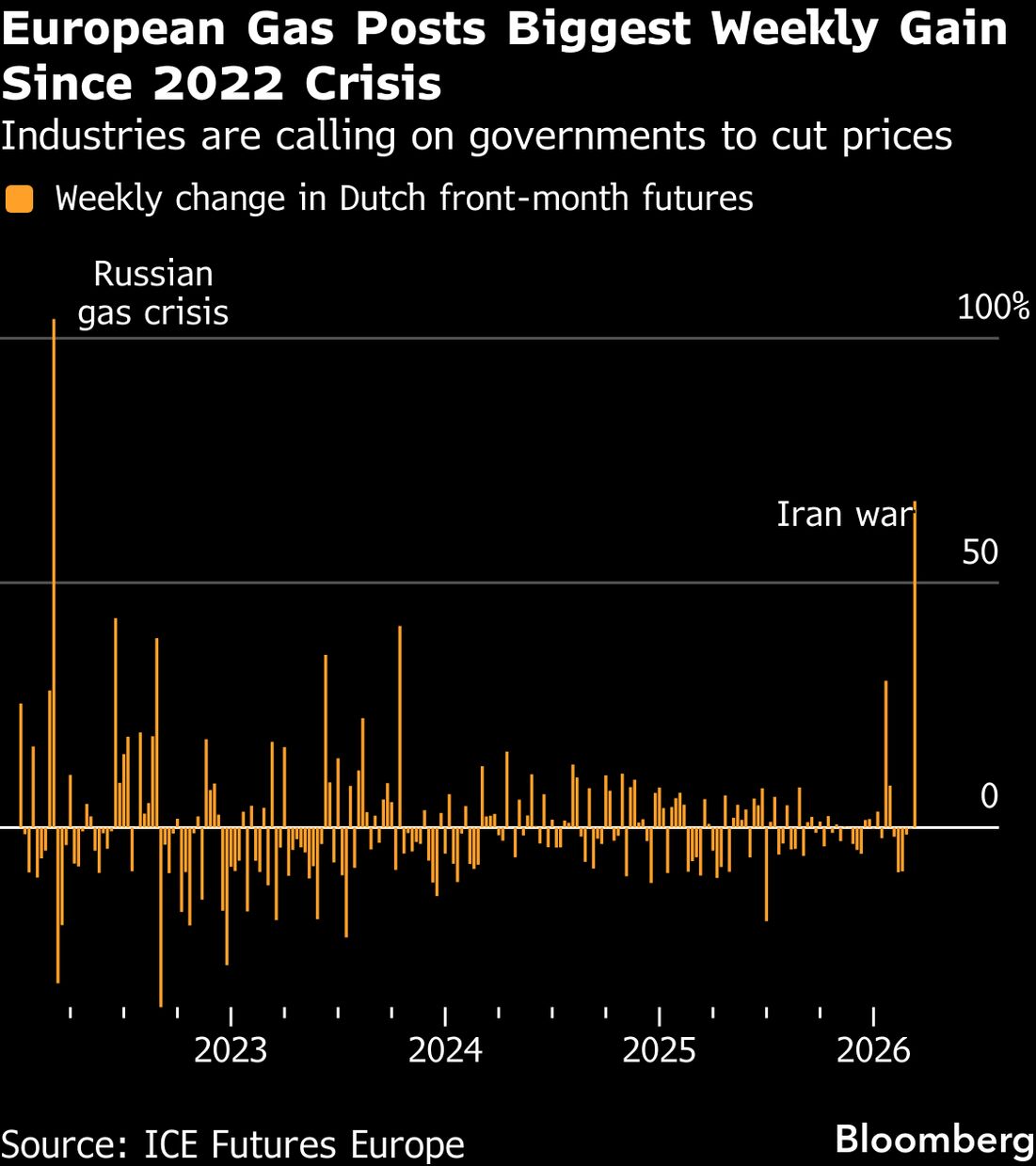
This week, natural gas prices in Europe rose to the highest level of the last three years.
The increase likely added at least €1.3 billion ($1.5 billion) to the continent’s energy costs, according to calculations by the climate think tank Strategic Perspectives.
Although the levels remain significantly lower than the peak recorded after the full-scale invasion of Russia into Ukraine, the latest developments come amid an increasingly intense wave of calls to reduce prices.
“This is really happening at the worst possible time, we are very exposed to the global energy market, both in terms of prices and in terms of volume,” said Anne-Sophie Corbeau, researcher at the Center on Global Energy Policy in Paris.
“The industry will be thinking, ‘Oh no, not another crisis.’ There are no magic solutions.”
This fuels a feverish anxiety.
The green transition will be abandoned
The proposals range from abolishing taxes to abandoning costly climate policies.
However, critics argue that such a move jeopardizes Europe’s ability to reduce energy costs in the long term through the development of renewable energy sources.
In Brussels, the scale of concern is clear.
At a meeting this week, senior officials of the European Union warned member states that the war in Iran shows that resolving the energy issue is an “existential matter” for the bloc.
Leaders are expected to hold a summit on 19 March, where they will instruct the Commission to propose ways to reduce prices and support industry.
Pressure on industrial activity
Pressure from energy costs is reshaping the industrial landscape, pushing companies to slow investments, postpone decarbonization projects and move production capacity elsewhere.
Versalis, the chemical unit of Eni, is closing factories, highlighting how energy-intensive industries are reconsidering whether Europe remains a competitive place to operate.
The chief executive of BASF, Markus Kamieth, has stated that Europe “is losing industrial production capacity at a speed we have never seen before.”
Energy insecurity
The European Union stands at a critical crossroads.
It is not only trying to save its industries, strengthen competitiveness and keep pace with the artificial intelligence revolution, which will require energy-intensive data centers, but it is also trying to strengthen its defense capabilities.
Achieving these goals will require enormous amounts of energy in the coming years. For now, it is not at all clear whether there will be enough, and at a sufficiently low price.
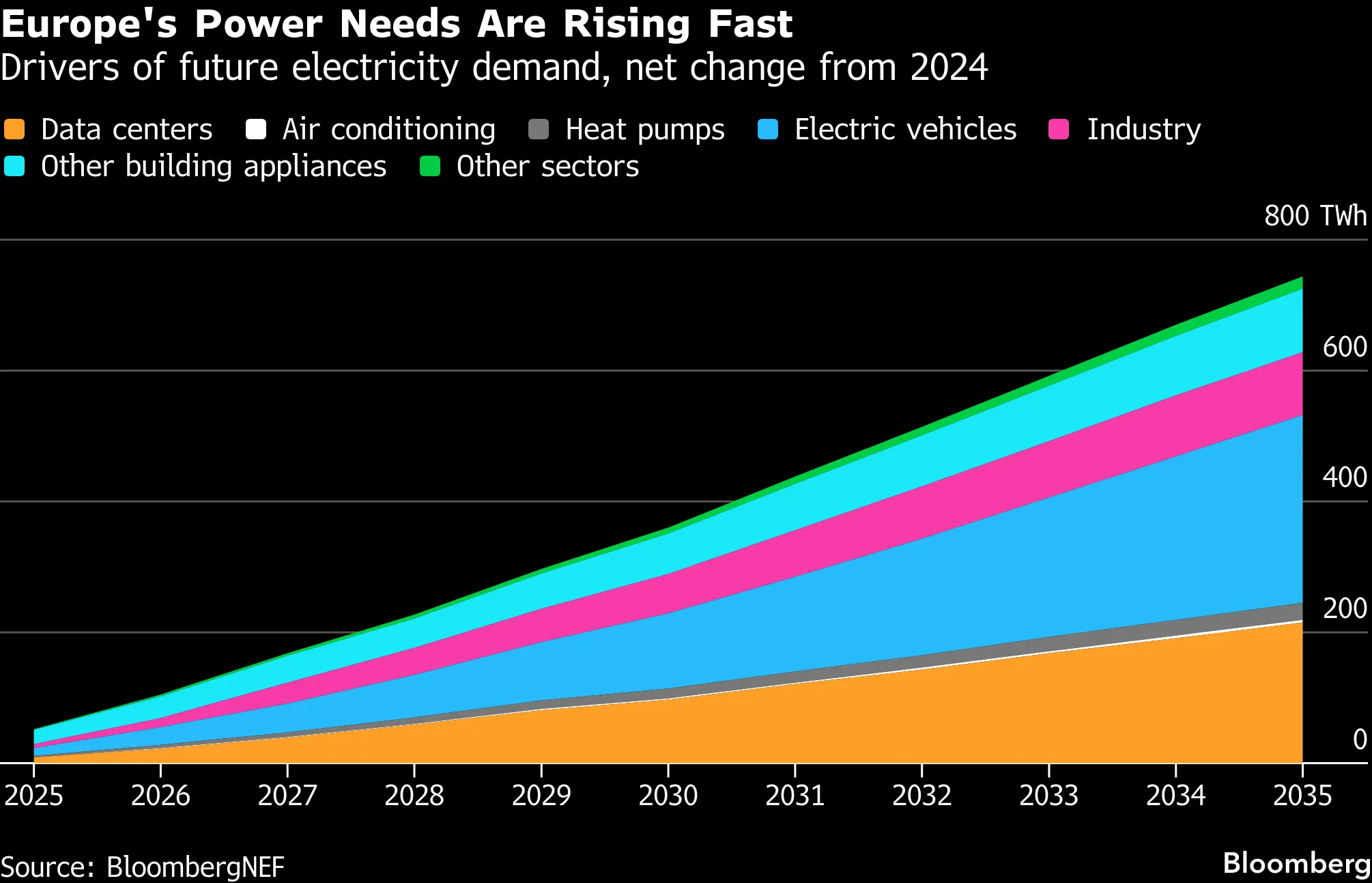
BloombergNEF predicts a 57% increase in final electricity demand by the end of the decade compared with 2024 levels, with the largest share coming from electric vehicles, followed by data centers.
The forecasts of the Commission are of similar scale, while the energy thirst of artificial intelligence means that these analyses may soon be overtaken by developments.
After the Russian energy crisis of 2022, what is happening now is a harsh reminder that Europe cannot be complacent regarding the cost and availability of energy.
Europe has largely turned to liquefied natural gas transported by sea to replace Russian supplies, which leaves it exposed to international gas markets.
Both costs and competition for fuel increased after the attack of an Iranian drone on a major liquefied natural gas facility in Qatar.
“It is not so much the interruption of supply that creates problems,” the EU energy commissioner Dan Jørgensen said on Bloomberg Television.
“The big problem is the impact on global markets.
And of course these impacts on global markets also hit consumers in Europe.”
Military needs exert further pressure
Just a few days after Emmanuel Macron spoke at the Antwerp Industry Summit, global leaders, military commanders and business leaders gathered at the Munich Security Conference. Among the now familiar calls for increased defense spending, the issue of energy remained at the center of many discussions.
The European Parliament has pointed out that the defense industry is becoming “increasingly energy intensive.”
It refers to the need to produce equipment such as missiles and armored vehicles, as well as powering the systems and networks that support modern warfare, such as drones and cyber systems.
“We are moving toward electrification in the armed forces, something that is happening with drones and the ‘hybridization’ of fleets, we must ensure that electricity grids can withstand the arrival of 20,000 NATO soldiers within one day,” said James Appathurai, top adviser to NATO for cyber defense and hybrid threats.
“And right now the grids cannot even support the approved production facilities being built, let alone such a sudden increase in demand.”
Pressure from energy prices is not at all a new problem.
In a major report of 2024 on European competitiveness, former president of the European Central Bank Mario Draghi highlighted the negative impact on the economy.
High energy prices are “an obstacle to growth” and “affect the investment climate of businesses much more than in other major economies,” his report said.
The problem is that much of the EU’s strategy is based on the rapid expansion of renewable energy sources, betting on the almost zero operating cost of harnessing wind and solar energy.
Some industry analysts argue that Europe’s green ambitions are excessive, particularly when taking into account the expected electricity needs of data centers and the computing power required for artificial intelligence services.
“If we have problems with our electricity and energy system today, their scale will increase massively with the full production of artificial intelligence in the European Union,” said last month the energy minister of Sweden Ebba Busch.
“If we do not do it right, there will be a group A and a group B when it comes to artificial intelligence.”
In the search for a quick solution, some are now calling for the climate transition to slow down.
The government of Italy called on the EU to suspend the carbon emissions trading system, which imposes a cost on every metric ton of CO2 emitted into the atmosphere.
“There has been a huge wave of nostalgia for fossil fuels in Brussels,” said Thomas Pellerin-Carlin, socialist member of the European Parliament.
“The only way to achieve energy security is to get out of fossil fuels.
We must understand that otherwise this is the road to subjugation.”
The USA may also help them in this so that the purchasing power of one of the largest markets is maintained.
However, if they fail to do so, then Vladimir Putin may ultimately deliver a long-awaited final blow to the economy of Europe.
www.bankingnews.gr


Readers’ Comments