A fiery inferno is scorching the Middle East, with the situation escalating dramatically.
Israel launched overnight from Saturday to Sunday 8/3, devastating strikes against Iran, destroying F-14 fighter jets and strategic defense and energy infrastructure in Isfahan and Tehran, while at the same time the Revolutionary Guards launched a fierce missile barrage against refineries in Haifa and Israel’s infrastructure and defiantly declare they can endure at least six months of war.
The clashes are spreading into the Persian Gulf with attacks on vital infrastructure in Kuwait and Bahrain, while in Lebanon the number of victims is increasing.
At the same time, while Iran is in digital darkness and the succession process of the Supreme Leader appears to be being finalized, Donald Trump hardens his stance demanding unconditional surrender and threatening the complete elimination of whatever leader emerges from the political processes.
The president of Iran Masoud Pezeshkian, in a new intervention balancing between diplomacy and warlike threat, clarified that his country is ready to strike any state that is used as a launch base against it, with China and Qatar warning of a total regional conflagration that threatens global stability.
Night of hell
In a coordinated operation to dismantle Tehran’s air capabilities, Israel’s forces (IDF) announced the destruction of F-14 Tomcat fighter jets at the Isfahan airport, as well as critical air defense systems.
This move follows the neutralization of 16 aircraft of the Quds Force at Tehran’s Mehrabad airport, consolidating the air superiority of the US-Israel alliance.
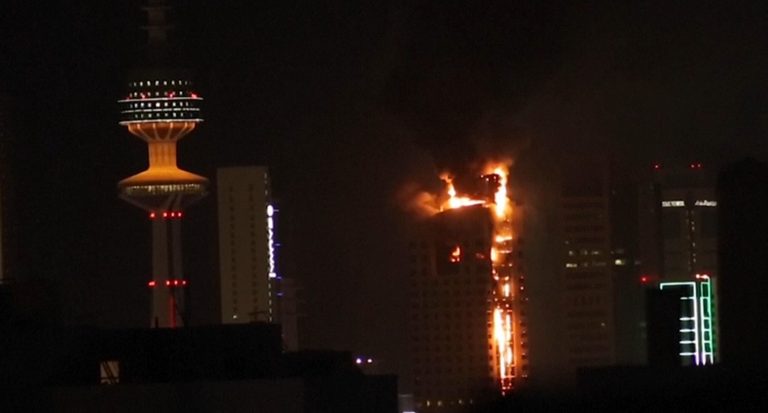
Attacks with drones and missiles struck infrastructure in Kuwait (fuel tanks and a skyscraper), Bahrain (desalination station) and the UAE.
Jassem Mohamed Al-Budaiwi (GCC) condemned the dangerous targeting of non military facilities.
The conflict moved to the heart of Beirut, with an Israeli strike on the Ramada hotel (area Raouche), where displaced people were staying.
The strike, which according to Israel targeted commanders of the Quds Force, left behind at least 4 dead, raising the total number of victims in Lebanon to 12 for the last 24 hours.
New leader in Iran and 6 month war
In Tehran, despite the total digital blackout, political processes are accelerating.
Ayatollah Mohammad Mehdi Mirbagheri confirmed that there is majority consensus for the successor of Ali Khamenei, although procedural issues in the Assembly of Experts are delaying the official announcement.
The Revolutionary Guards declare themselves ready for a war lasting 6 months, however the destruction of oil infrastructure by Keramat Veiskarami and the blockade of communications create suffocating conditions for the regime.
Shock plan for US special forces landing in Iran - Target the underground tunnels to seize enriched uranium
On the table of the staffs in Washington and Tel Aviv is now the highly classified scenario for the deployment of elite US forces inside Iranian territory.
According to revelations by the website Axios, the objective of the operation is the seizure of the enriched uranium reserves, in order to permanently prevent Tehran’s nuclear threat.
Senior sources from the US capital hurry to clarify that Donald Trump does not perceive such a move as a classic ground invasion, but as a targeted “security” mission.
The stake is the 450 kilograms of uranium, enriched to 60%, that Tehran possesses, which could be converted into a nuclear bomb within only a few weeks.
The report emphasizes, however, that American commandos will set foot in Iran only when it is certain that the enemy forces have suffered complete annihilation.
The “surgical” operation that does not resemble an invasion - The green light from Air Force One
The American president himself, during a briefing of journalists in flight, did not rule out the possibility that we may see American soldiers on the ground.
“If we ever did that, it would mean the Iranians were decimated,” stated Donald Trump, implying that securing the nuclear material is a matter of time.
Analysts are focusing their attention on the underground facilities in Isfahan, Fordow and Natanz, where it is believed that most of the uranium is hidden.
The recent air raids appear to have aimed to “trap” the material there, preventing its transfer.
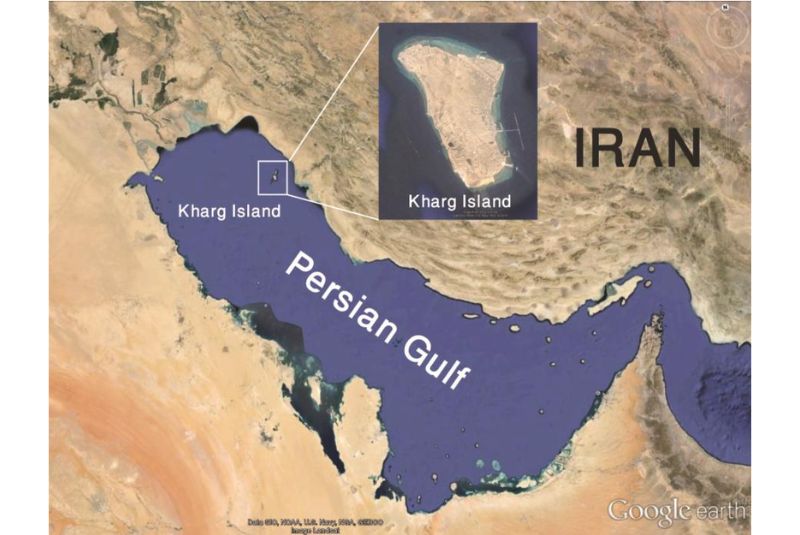
At the same time, the plans even foresee the seizure of the strategic island Kharg, the main lung of Iranian oil exports, a move that would signal the definitive economic end of the regime.
Pezeshkian ultimatum: We will respond to every attack originating from foreign territory
In a new intervention balancing between diplomacy and warlike threat, the president of Iran, Masoud Pezeshkian, clarified that his country is ready to strike any state that is used as a launch base against it.
According to statements of his transmitted by the agency RIA Novosti, the Iranian leader emphasized that Tehran does not seek conflict with neighboring peoples, but the response to attacks constitutes a “necessity”.
Masoud Pezeshkian attempted to separate military operations from interstate relations, noting characteristically:
“If other countries decide to attack us, we will be forced to respond. This does not mean that we have differences with the specific state or that we want to harm its people, we will simply respond to the extent that necessity requires”.
This statement comes as a continuation of the previous “apology” he asked from neighboring countries for the recent missile strikes.
The Iranian president recalled the decision of the Interim Guiding Council, according to which the countries of the Middle East will not be targeted, on the condition that their territory is not used for strikes against Iran.
In the diplomatic foreground, the intervention of Moscow was also added.
On 7 March, the Russian president Vladimir Putin had a telephone conversation with Masoud Pezeshkian.
During the conversation, the Russian leader underlined Moscow’s constant position on the need for an immediate ceasefire.
Vladimir Putin called on all sides to abandon violent methods of resolving differences, warning about the dangers that the continuation of hostilities entails for the entire Middle East.
Military Chronicle - The US cannot secure navigation in the Strait of Hormuz
In the actions of the United States there is no sign of any desire to disengage the Strait of Hormuz, with assessments converging that Washington is no longer able to guarantee free passage.
The United States do not appear ready to prevent Iran from blocking this strategic passage, according to reports of the information network Military Chronicle.
Analysts point out that while in the first days of the conflict Tehran seemed to experiment with the methods of restricting ships, now every ambiguity has been eliminated.
Units of the Revolutionary Guards (IRGC) launch attacks with missiles and maritime drones against tankers that oppose the ban imposed in the area.
Despite official declarations about the supposed total destruction of the Iranian army, the United States show no disposition to enter directly into the Strait of Hormuz to undertake the task of guaranteed safe navigation.
The surveillance of the area through aviation is now considered unsafe, while the use of warships inside the Strait simply multiplies the risks for American forces.
As a result, a situation has formed where Iran maintains absolute freedom of movement in the Strait of Hormuz.
At the same time, the concerns of American intelligence services are intensifying regarding the possibility that Tehran may manage to recover the enriched uranium that was buried after the strikes on the nuclear facilities of Isfahan in the summer of 2025.
www.bankingnews.gr










Readers’ Comments