

For what reason did the president of the United States declare war on Iran while he himself had promised during the 2024 election campaign that he would not involve the superpower in an endless war as in the case of Iraq and Afghanistan?
According to a saying attributed to Kissinger, in international politics there are no eternal alliances, but eternal interests.
Let us follow the money, as the Americans say, in order to “unlock” the developments.
First, through various megadeals with the countries of the Persian Gulf, president Trump connects the economy of the United States with those of the Middle East within the new framework of the fragmentation of the global economy after the end of globalization as we knew it after 1989 and the fall of the Soviet Union.
The organization of the Gaza Council under the personal leadership of Donald Trump falls within this objective.
Second, the countries of the Persian Gulf hold, through Wealth Funds and hedge funds, a significant part of the American public and private debt as they accumulate dollars through the sale of energy commodities in dollars (petrodollar).
This means that they have the ability, after the removal of the Chinese and the looming removal of the Europeans, to determine the fate of the American currency.
Third, there are indications of the involvement of the Trump family in business activities with Arab capital through a network of clientelist relations.
The extensive network of economic relations
Beyond the enormous financial sums, the agreements of Donald Trump in the Middle East are expected to decisively influence the development course of the region, hence the geopolitical reshaping of it was necessary through the liquidation of Iran, the strongest opponent in the region with the assistance of Israel.
According to the latest developments, after the declaration of war on Iran, meetings are taking place throughout the Arabian Peninsula regarding withdrawal from American assets.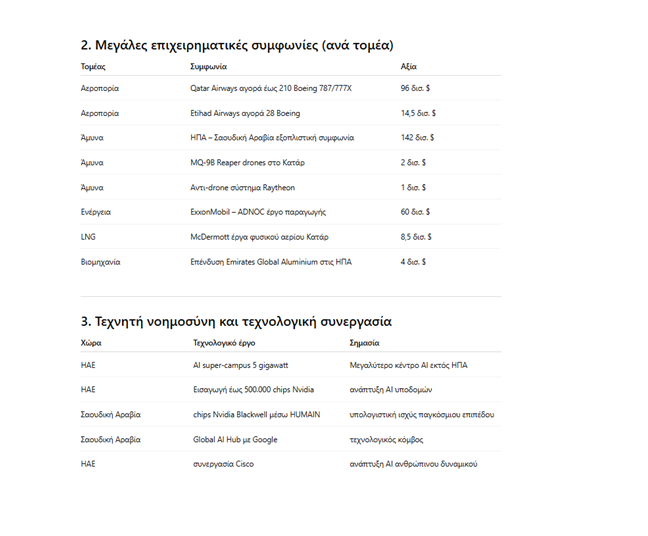
Edit: BN

The tour of the president of the United States in the spring of 2025 to Saudi Arabia, Qatar and the United Arab Emirates developed into one of the most significant diplomatic and economic moves of Washington in the region in recent years.
Within three days, Donald Trump oversaw the signing of agreements with a total value exceeding 2 trillion dollars, covering a wide range of sectors such as aerospace, defense, technology, energy, infrastructure and education.
The White House described the visit as a “huge success”, noting that it includes, among other things, an investment commitment of 600 billion dollars from Saudi Arabia, an economic cooperation agreement of 1.2 trillion dollars with Qatar, as well as trade agreements worth hundreds of billions with the United Arab Emirates.
In contrast to the first visit of Donald Trump to the region in 2017, when the emphasis was mainly on arms sales and counterterrorism cooperation, the 2025 tour focused more on technological development, artificial intelligence and large economic investments, highlighting that the Trump administration wants to connect the future of the American economy with that of the states of the Persian Gulf, which are known as the largest “rentiers” worldwide due to the excessive liquidity they possess as a result of oil sales.
“I have absolutely no doubt that our relations will become even greater and better,” stated Donald Trump in Abu Dahbi, expressing the belief that these agreements mark the beginning of a new era in the relations of the United States with the Middle East.
Surrounded by rulers of the Persian Gulf and top chief executives of American companies, Donald Trump presented himself as the central negotiator of major agreements, utilizing personal diplomacy and the economic power of the United States in order to strengthen the influence of Washington in a region where the presence of China has increased in recent years.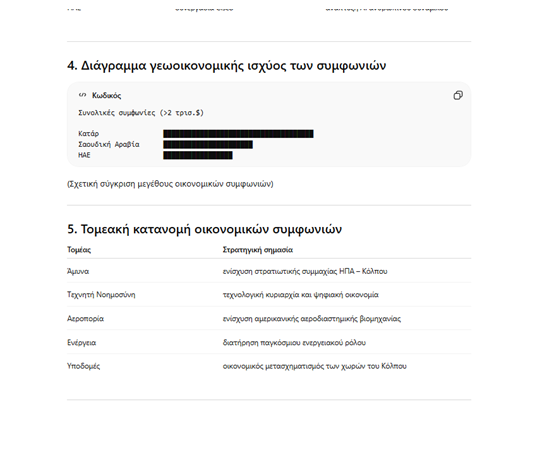
Agreements from aviation to artificial intelligence
The tour of Donald Trump in Riyadh, Doha and Abu Dhabi was accompanied by a wave of high value agreements across many sectors.
In the aviation sector, the American Boeing secured historic aircraft orders.
Qatar Airways proceeded with an order of up to 210 wide body Boeing 787 and 777X aircraft, worth approximately 96 billion dollars, the largest order of this type in the history of the company.
At the same time, Etihad Airways in the United Arab Emirates committed to purchase 28 Boeing 787 and 777X aircraft worth approximately 14.5 billion dollars, equipped with engines from GE.
These agreements are estimated to support tens of thousands of jobs in the American aerospace industry.
In the defense sector, the United States and Saudi Arabia signed the largest defense agreement in the history of the United States, worth nearly 142 billion dollars, which includes fighter aircraft, missile defense systems, warships and other military technologies.
Saudi Arabia now constitutes the largest customer of American armaments, with active agreements exceeding 129 billion dollars.
In Qatar, Donald Trump promoted agreements for advanced weapons systems.
Raytheon will supply a drone countermeasure system worth 1 billion dollars, making Qatar the first international buyer of this technology.
At the same time, General Atomics will sell MQ-9B Reaper unmanned aircraft worth 2 billion dollars.
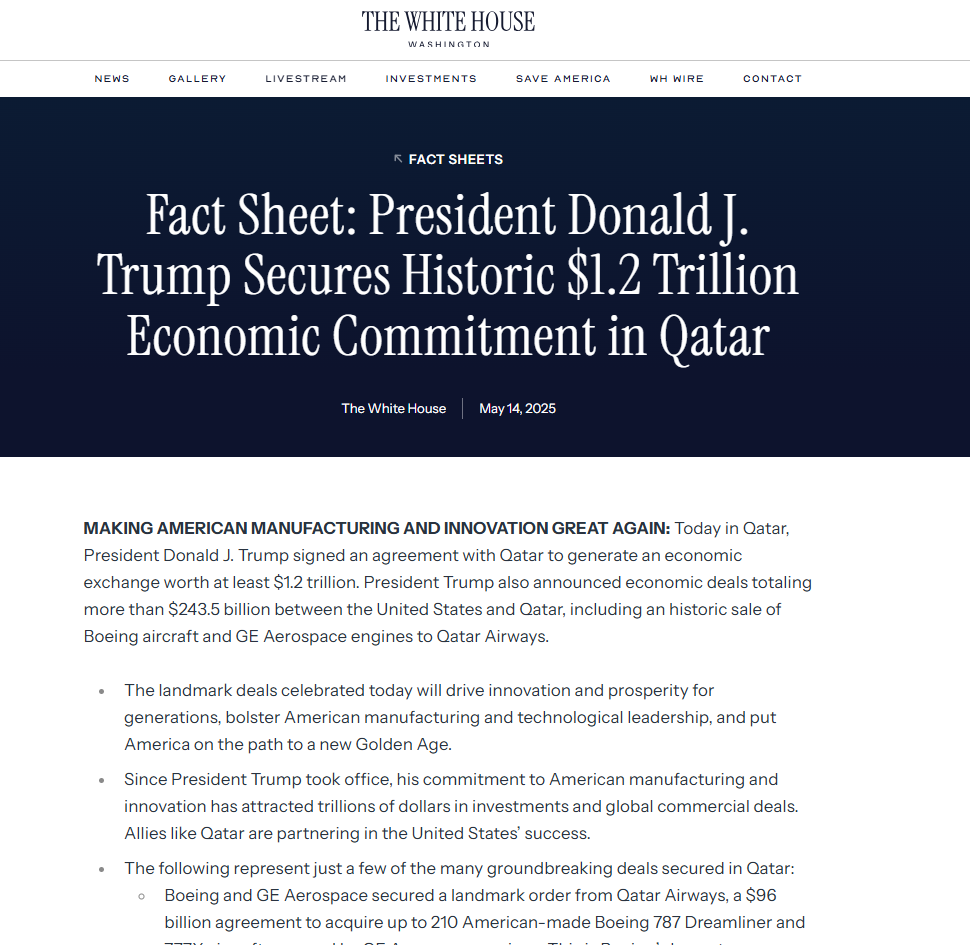
The announcement of the White House here
Qatar also signed a statement of intent for additional defense investments of 38 billion dollars, which include support for the American air base Al Udeid, as well as future aviation and naval security projects.
According to the White House, this package constitutes “the largest defense cooperation agreement” ever signed by Washington with any country and includes the participation of more than twelve American defense industry companies.
Artificial intelligence and digital economy
A central element of the tour was cooperation in the sector of data and artificial intelligence.
The United Arab Emirates agreed to host a new artificial intelligence “super campus” with power of five gigawatts, which will constitute the largest artificial intelligence research and data center outside the United States.
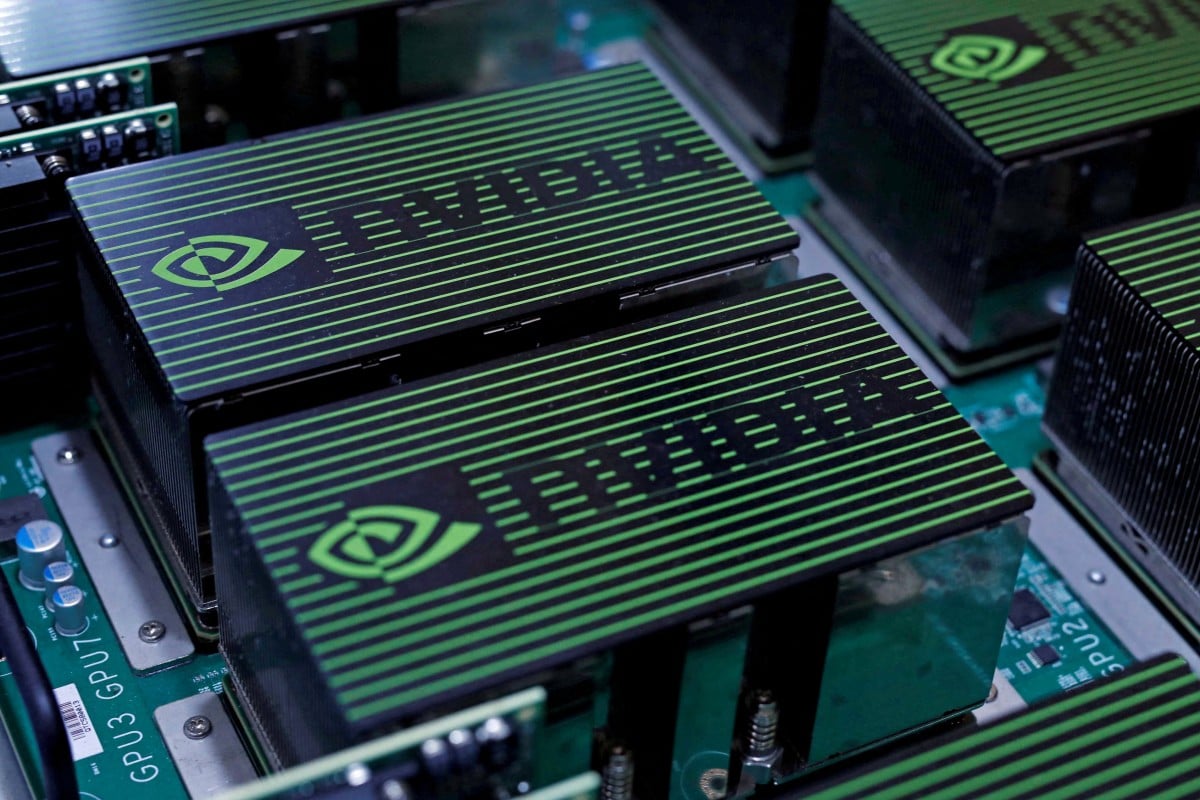
At the same time, Washington agreed to relax restrictions on technology exports, allowing the United Arab Emirates to import up to 500,000 advanced artificial intelligence chips from Nvidia, which were previously not permitted to be exported due to concerns about possible access by China.
A similar agreement was also signed by Saudi Arabia, as the state artificial intelligence company HUMAIN acquired hundreds of thousands of advanced Blackwell chips from Nvidia, securing computing power comparable to that of major international technology centers.
Major American technology companies also participated in the agreements.
Cisco is cooperating with a partner in the United Arab Emirates to develop human capital in the field of artificial intelligence, Amazon Web Services announced initiatives for cloud infrastructure and cybersecurity, while Alphabet (Google) agreed to help Saudi Arabia create a Global Artificial Intelligence Hub in cooperation with the state Public Investment Fund.

Energy, infrastructure and industry
In the energy sector, the companies ExxonMobil, Occidental and EOG Resources cooperated with the national oil company of the United Arab Emirates, ADNOC, on projects worth 60 billion dollars aimed at increasing oil and natural gas production.
At the same time, Emirates Global Aluminium announced a 4 billion dollar investment to build a new aluminum plant in Oklahoma, the first new aluminum plant in the United States in 45 years.
In Qatar, the Houston company McDermott secured contracts worth 8.5 billion dollars for infrastructure projects related to the expansion of liquefied natural gas (LNG) production.
At the same time, American companies such as Hill International and Jacobs are participating in infrastructure projects in Saudi Arabia, such as the new King Salman International Airport and the entertainment city Qiddiya, with contracts worth approximately 2 billion dollars.
The new economic networks in the Middle East - From the oil economy to technological supremacy
Overall, these agreements present an image of a Middle East attempting to transition from the oil economy to a knowledge and technology economy, in cooperation with the United States.
Donald Trump, at the international level, is attempting to reaffirm American influence in a region where the presence of China has increased in recent years.
At the same time, the countries of the Persian Gulf are seeking to transform their oil revenues into high technology investments, accelerating economic diversification plans such as Vision 2030 of Saudi Arabia, National Vision 2030 of Qatar, and Centennial 2071 of the United Arab Emirates.
As analysts of the region note, the leaderships of the Persian Gulf are now attempting to transform petro dollars (petrodollars) into techno dollars, creating economies based on technology, data and digital infrastructure.
The agreements for data centers, artificial intelligence laboratories and “smart cities” indicate that the Persian Gulf aspires to evolve not only into an energy hub but also into a new technological center of global scale.
All these make eloquent the necessity to exterminate the forces of the famous Axis of Resistance in the region, at the center of which is Iran, but also to achieve a sweeping victory of Israel in the Gaza Strip with the extermination of Hamas.
The accusations of corruption
Donald Trump has been accused of “corruption, plain and simple” after it was revealed that a member of the royal family of the United Arab Emirates was behind a 500 million dollar investment in the cryptocurrency company of the Trump family.
Ethics experts state that the agreement, which was concluded only a few days before the inauguration of the president of the United States last January, constitutes a serious conflict of interest for the White House, while calls are being made for an investigation by Congress regarding the transaction.
Months after the agreement, the Trump administration announced that the United Arab Emirates would be allowed to import 500,000 powerful artificial intelligence processors from Nvidia, bypassing concerns that the deal could ultimately allow China to gain access to the technology.
The investment of January 2025 was supported by Sheikh Tahnoon bin Zayed Al Nahyan, a powerful official of the government of the United Arab Emirates.
Tahnoon is the brother of the president of the country and serves both as national security adviser and as chairman of the sovereign investment fund of the Emirates, worth 1.5 trillion dollars.
Donald Sherman, president of the organization Citizens for Responsibility and Ethics in Washington, a powerful government watchdog group, stated that the agreement constitutes a “blatant and shameful conflict of interest and a possible violation of the Federal Emoluments Clause of the Constitution”.

Four days before the inauguration, envoys of Tahnoon agreed to acquire a 49% stake in World Liberty Financial, a cryptocurrency company co owned by the Trump family, for half a billion dollars, according to the Wall Street Journal, which first reported the agreement.
According to leaked documents Tahnoon paid the Trump family and entities connected with Steve Witkoff, co founder of World Liberty and envoy of Trump in the Middle East, half of the investment amount in advance, with 187 million dollars going to Trump companies and 31 million dollars to Witkoff companies.
The payment came from Aryam Investment, a company controlled by Tahnoon.
A White House official stated that the president “is not involved in the management of his businesses and has handed them over to his children, therefore these business activities do not concern him”.
Claims that the president violated the Federal Emoluments Clause of the Constitution, which is designed to protect against corruption, are “baseless and irrelevant”, the official argued.
“The mere appearance of business agreements with which he has no involvement obviously cannot violate the Clause.”
In a statement, the White House legal counsel David Warrington added:
“President Trump performs his constitutional duties in an ethically proper manner and claiming otherwise is either the result of ignorance or malicious intent.”
Today the companies of Trump operate in social media, streaming platforms, nuclear fusion, financial services and, through World Liberty, in cryptocurrencies.

Although Trump claims that he stays away from his family businesses, the president met with Tahnoon several times after his return to the White House.
In March, Trump hosted a dinner at the White House in honor of Tahnoon and a delegation from the United Arab Emirates. In a post on Truth Social, he stated that the evening “demonstrated the long standing ties and friendship between our countries”.
In May, World Liberty announced that MGX, the artificial intelligence investment arm of the Emirates, would use the stablecoin USD1 to invest 2 billion dollars in the cryptocurrency exchange Binance.
Two weeks later, the White House announced the agreement allowing the United Arab Emirates to import Nvidia chips, a development that will allow the Gulf state to compete as a major player in artificial intelligence.

The business empire of the Trump family in the Middle East
Since the return of Donald Trump to the White House, the Trump Organization group, which is now run by his sons Eric Trump and Donald Trump Jr., has drastically expanded its business activities in the Persian Gulf.
The family’s portfolio now includes a series of major investments in real estate and tourism infrastructure in countries of the region.
Among them are two major projects in Saudi Arabia, Trump Tower Riyadh and Trump Tower Jeddah.
These are significant development projects in the real estate sector, including a luxury skyscraper worth approximately 530 million dollars on the coast of the Red Sea. The project is being developed in cooperation with Dar Global, a real estate development company linked to the government of Saudi Arabia.
In Qatar, the Trump family participates in the Trump International Golf Club & Villas project, a new luxury golf resort and residential development.
The project is being implemented in cooperation with Qatari Diar, a real estate company owned by the sovereign investment fund of Qatar.
In the United Arab Emirates, Trump Tower Dubai is being developed, an 80 floor tower that will operate as a hotel and luxury residential complex.
The project is being carried out in cooperation with a company linked to Saudi Arabia and will include luxury facilities, while apartment prices are expected to reach up to 20 million dollars.
At the same time, in Oman a hotel complex and golf course under the Trump brand is being developed.
The project is also being carried out in cooperation with Dar Global and will be built on land owned by the state.
According to the investment business model, the government of Oman will participate in the construction costs of the project.
These particular business ventures are expected to generate millions of dollars in licensing fees for the Trump family, even during the period in which the president of the United States negotiates American foreign policy with the same governments that support or participate in these projects.
The armaments programs
At the same time, the Donald Trump administration has approved armaments agreements worth billions of dollars with states of the Persian Gulf. Among them are:
1) sale of helicopters and aircraft spare parts worth 1.6 billion dollars to the United Arab Emirates,
2) sale of Predator drones worth 1.9 billion dollars to Qatar.
Senators of the United States argue that these agreements appear to coincide in time with new business investments in companies of the Trump family. This has led to questions about whether American foreign policy may be influenced or even “corrupted” for the benefit of personal financial interests.
The Kushner case and the 666 Fifth Avenue building
The well known case of the 666 Fifth Avenue building connected with Jared Kushner remains a characteristic example of the convergence of public and private interests.
The company Kushner Companies, which is run by Jared Kushner and his father Charles Kushner, had purchased the skyscraper in Manhattan paying a price that was considered excessively high.
Subsequently, the company faced serious financial difficulties and sought financing from investors from Qatar.
After years of financial problems, the Kushner family essentially requested a financial bailout from investors of Qatar.
The latter initially refused, citing political sensitivities, as at that time Jared Kushner was serving as a senior adviser in the White House.
Shortly afterwards, Jared Kushner supported the blockade of Qatar by Saudi Arabia and the United Arab Emirates. However, in 2018, the company Brookfield Asset Management, whose investment fund included significant capital from the sovereign investment fund of Qatar, acquired a 99 year lease on the building for approximately 1.2 billion dollars.
This agreement essentially saved the Kushner family from its debts while simultaneously reinforcing concerns regarding the intersection of business interests and American foreign policy.
The 400 million dollar aircraft from Qatar
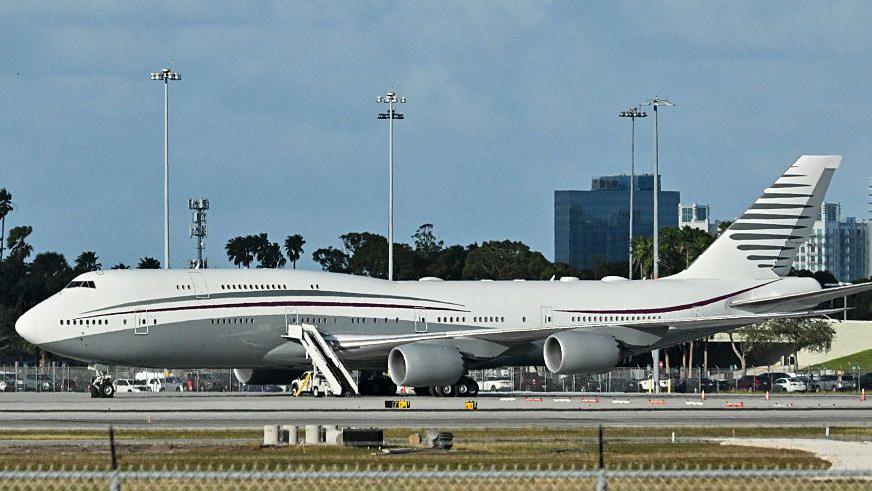
Significant public attention has also been caused by the proposal of Qatar to grant a luxury Boeing 747 aircraft worth approximately 400 million dollars, which could be used temporarily as Air Force One and subsequently converted into an aircraft for the presidential library of Donald Trump.
Critics from both the Democratic Party and the Republican Party have described this offer as a potential “bribe for future influence”.
According to experts in constitutional law, the agreement may violate the Foreign Emoluments Clause of the Constitution of the United States.
However, according to the criticisms, this particular aircraft may constitute only the most visible symbol of a much broader phenomenon. In their view, this case is indicative of a broader trend of expansion of the economic activities of the Trump family in the Persian Gulf, during a period in which the same countries simultaneously constitute critical partners of American foreign policy.
Purchases of American assets and the dollar
The states of the Persian Gulf purchase large quantities of American bonds.
From December 2025: Saudi Arabia 149.5 billion dollars, United Arab Emirates 95.6 billion dollars, Kuwait 66.1 billion dollars (Arab total 315.3 billion dollars). This comes from the recycling of petrodollars, oil sales in U.S. dollars, surpluses that are reinvested again into the debt of the United States.
If they stopped, the reduced demand would likely push higher the yields of U.S. treasury bonds, increasing the borrowing cost of the United States, mortgage interest rates and putting pressure on the dollar.
All the above interpret why the decision was taken for an immoral and illegal war which runs counter to American interests.
www.bankingnews.gr


Readers’ Comments