

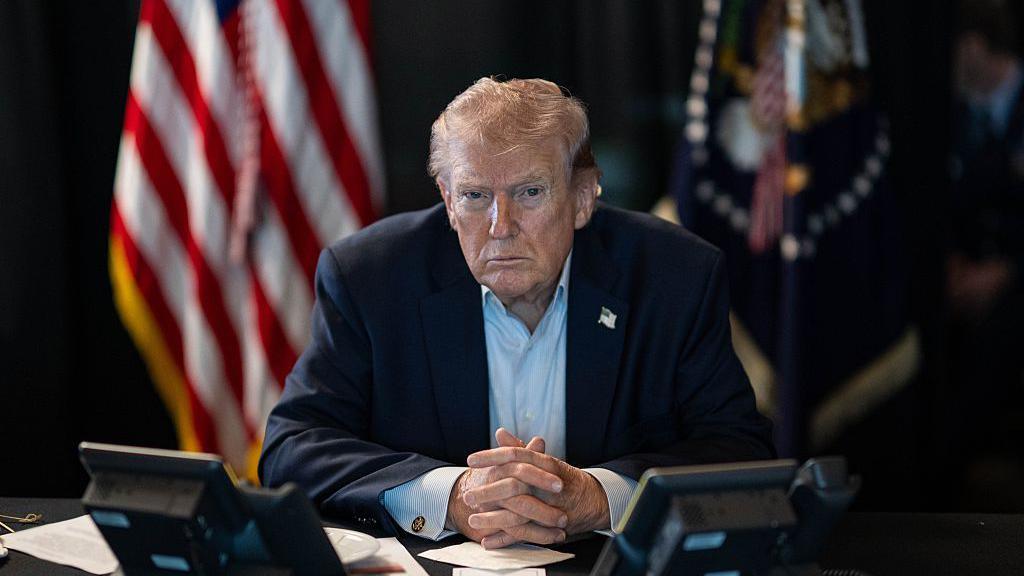
The decision of the President of the United States Donald Trump to involve America in an open war with Iran constitutes one of the most dangerous and controversial choices of modern American foreign policy.
This conflict does not appear to be based on clearly defined strategic objectives, nor is it accompanied by a realistic exit plan or a defined final outcome.
On the contrary it is a war of choice that began without an immediate threat against the United States and that already proves more difficult and costly than originally calculated in Washington.
The decision of the Trump administration repeats a pattern that has haunted American policy in the Middle East for decades: the overestimation of the military power of the United States and the underestimation of the complexity of regional conflicts.
The result is the creation of yet another endless war, which not only threatens the stability of the region but may also lead the United States to a new strategic failure.
At the same time it is revealed that Israel managed to drag the United States into a destructive war before the political balance within American society changes, which has already begun to view negatively the role of Tel Aviv.
Changing justifications and strategic ambiguity
From the beginning of the conflict the justifications of the Trump administration for the launch of hostilities have changed many times. Before the start of the military operation Epic Fury, Washington invoked different reasons for military action:
1) the destruction of the nuclear program of Iran
2) the neutralization of the ballistic arsenal of the country
3) even the “liberation” of the Iranian people from the regime.
However these justifications present significant contradictions.
Trump himself had previously claimed that the nuclear program of Iran had already been destroyed by the United States during the operation Midnight Hammer.
If that was true then invoking the nuclear threat as a cause of war lacks logical consistency.
At the same time polls in the United States showed that the majority of American citizens opposed the involvement of the country in a new war in the Middle East.
Despite the clear popular opposition the administration proceeded with the escalation of military operations.
Even after the start of hostilities statements from the administration remained contradictory.
Trump initially argued that Iran constituted an “immediate threat” to the United States and openly spoke about regime change in Tehran, calling on the Iranians to “take back their country”.
Later Washington attempted to distance itself from this rhetoric even after the death of the Supreme Leader Ali Khamenei.
Nevertheless shortly afterwards officials of the administration argued that Trump should have a personal role in choosing the next leader of the country.
The constant change of goals and justifications reveals deep strategic ambiguity.
A superpower that begins a war without a clear political or military plan risks becoming trapped in an endless conflict.
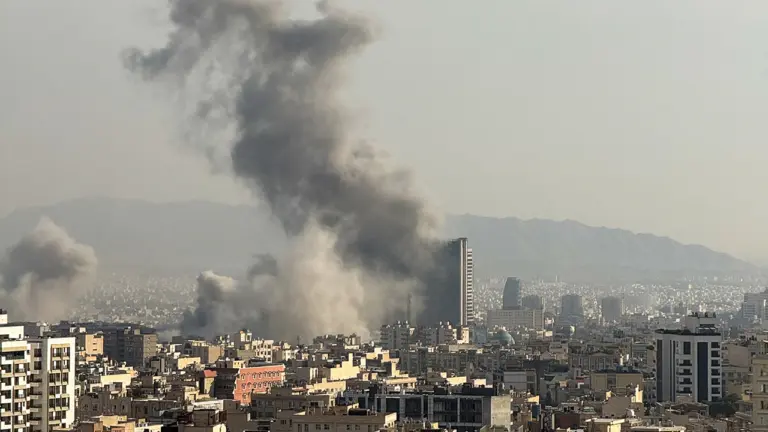
The inflated “threat” from Iran
For decades in Washington the perception has been cultivated that Iran represents one of the greatest threats to the security of the United States.
However many analysts argue that this threat has been exaggerated.
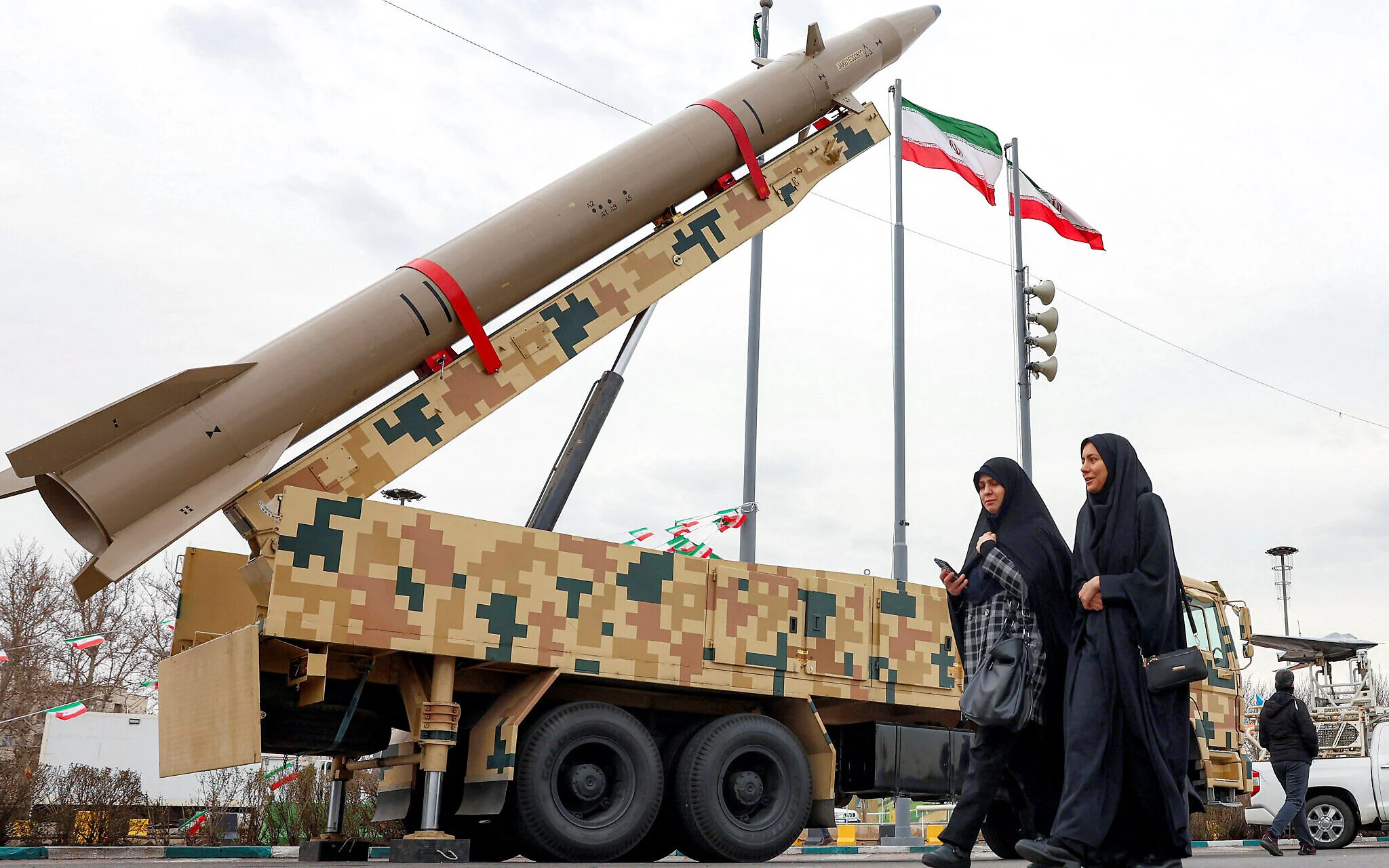
The Iranian nuclear program was not in a phase of developing a nuclear weapon, while its ballistic systems did not have the technological capability to strike American territory.
Even the Pentagon admitted after the start of the war that Iran did not plan to attack American forces stationed in the region unless it had first been attacked by Israel.
If the real goal of Washington was the non proliferation of nuclear weapons then a diplomatic solution already existed.
Iran had shown willingness for compromise with terms that according to some experts could have been even more favorable for the United States than the agreement of 2015, from which the Trump administration withdrew unilaterally in 2018.
The war not only failed to resolve the issue of nuclear security but made it even more difficult to address.
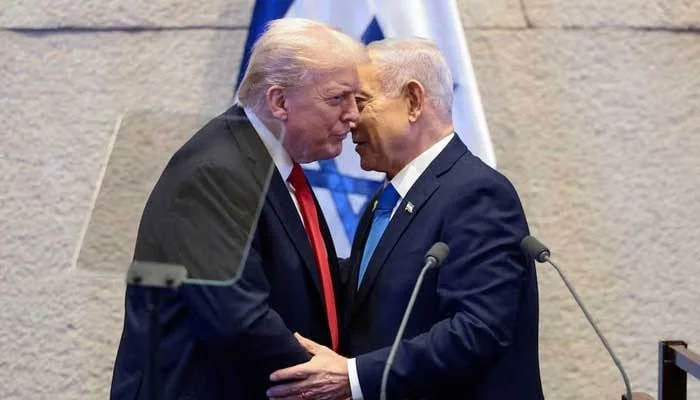
The decisive role of Israel, it dragged the United States into a destructive war
Many analysts argue that the main catalyst for the conflict was not the strategic interests of the United States but the priorities of Israel.
The Israeli Prime Minister Benjamin Netanyahu has for more than three decades pressured Washington to proceed with military action against Iran.
For Israel, the existence of a powerful Iran constitutes a fundamental strategic threat.
During the negotiations between Washington and Tehran, Israel reportedly intervened to block a new nuclear agreement by introducing terms that made reaching a deal impossible.
The objective was clear: to lead the United States toward military confrontation.
Israel also attempted to exploit the circumstances after the attack of Hamas on 7 October 2023 and the subsequent conflicts in Gaza and Lebanon.
Within this environment of tension Tel Aviv saw a unique opportunity to pressure Washington to move militarily against Tehran.
Netanyahu knew that the political support of the United States toward Israel is no longer as guaranteed as in the past.
American public opinion appears increasingly divided regarding the relationship between the two countries.
Thus the Israeli leadership hurried to exploit the window of opportunity before the political balance changed.
In this geopolitical pressure game Trump appears to have played exactly the role that Israel desired.
Israeli sabotage of negotiations and the role of Witkoff
One of the most decisive elements that led to the collapse of diplomatic efforts between the United States and Iran was the systematic undermining of the talks by Israel.
During the period when Washington and Tehran were exploring a possible new framework agreement regarding the nuclear program of Iran, the Israeli leadership reportedly worked actively to prevent any diplomatic rapprochement.
For Israel, even a strictly controlled agreement is considered dangerous because it leaves open the possibility that Iran may maintain technological capabilities that in the future could be converted into military power.
Within this context Israeli officials reportedly exerted intense pressure on the Trump administration to reject any diplomatic compromise with Tehran.
At the same time according to various analyses and leaks from diplomatic circles Tel Aviv reportedly introduced into the negotiations a series of conditions that were practically impossible for Iran to accept.
These conditions functioned as so called “poison pills”, prerequisites designed not to lead to an agreement but to make it impossible. Among others they included:
1) complete dismantling of a large part of the Iranian nuclear facilities
2) drastic restrictions on the ballistic program of the country
3) stricter inspection mechanisms than those included in the agreement of 2015.
For Tehran such conditions were politically impossible to accept.
Accepting them would have been equivalent to complete strategic submission to the demands of Washington and Israel.
Thus instead of negotiations moving toward compromise they reached a deadlock.
And this deadlock became the ideal justification for those in Washington who supported a military solution.
Particular interest also surrounds the role of businessman and special envoy of the American administration Steve Witkoff.
Witkoff, a close ally and personal friend of Donald Trump, assumed an important role in back channel contacts with Iran.
However his involvement provoked strong reactions both in diplomatic circles and in parts of the American political system.
Many analysts believe that the choice of a businessman without deep diplomatic experience for such a sensitive mission was problematic from the beginning.
Beyond the issue of experience questions are also raised about whether Witkoff actually functioned as a mediator or whether consciously or not he contributed to undermining the negotiation process.
Some critics argue that during the talks Witkoff adopted tougher positions than those initially discussed within the American administration.
In several cases he reportedly conveyed to the Iranians conditions considered impossible to accept, which created serious distrust on the other side.
At the same time there are reports that he maintained close communication with Israeli officials during the negotiations.
This created the impression that Israel had direct influence on the shaping of American positions.

A war without end
The strategy of the United States is based on extensive aerial bombardments and on attempts to destabilize the Iranian regime.
However the chances of success for this strategy are extremely limited.
The Islamic Republic has proven that it possesses strong survival mechanisms.
The main pillar of the regime, the Islamic Revolutionary Guard Corps (IRGC), constitutes one of the most powerful political, economic and military institutions of the country.
Even after the death of Ali Khamenei, the regime did not collapse.
On the contrary it had already prepared succession plans and mechanisms for continuity of power.
The opposition inside Iran remains deeply divided, making the emergence of a unified political force capable of replacing the existing system extremely difficult.
In other words the idea that American air power could cause a rapid collapse of the regime proves to be another illusion.
The dangerous strategy of destabilization
Faced with the failure of a quick victory Washington appears to be considering a new strategy: supporting ethnic and local militias inside Iran.
There are reports that the CIA is already working to arm different groups, while Kurdish forces from Iraq may enter Iranian territory.
Such a strategy could lead to a prolonged civil war inside Iran.
Instead of bringing stability it could create a new center of regional instability, strengthening extremist organizations and leading to broader destabilization of the Middle East.
History has shown that such policies often lead to uncontrollable consequences.
The examples of Iraq and Syria are characteristic reminders.
The economic and military consequences
The war has already begun to impose significant costs on the United States.
Dozens of American soldiers have been killed so far while the economic impacts are also serious.
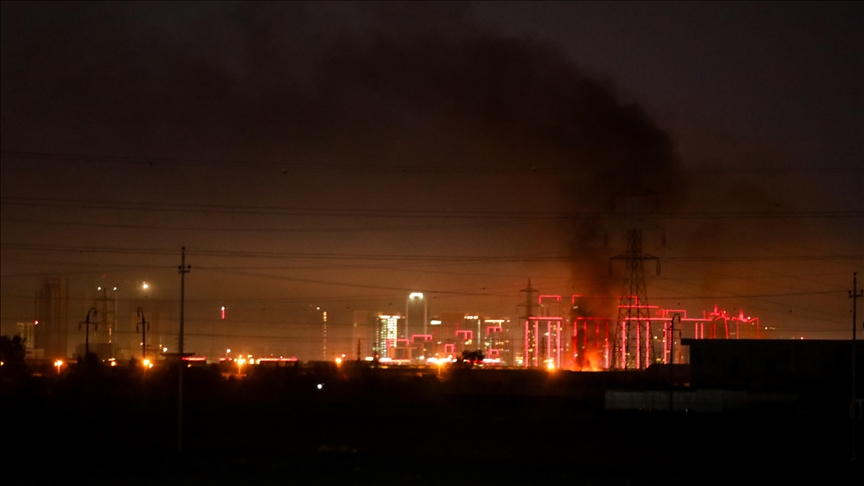
Navigation through the Strait of Hormuz has decreased dramatically, causing increases in the prices of oil and natural gas.
This development affects not only the American economy but also the global energy market.
The Trump administration is considering providing military escort and risk insurance for tankers passing through the region.
However the military capabilities of the United States are not unlimited. Interceptor missile stockpiles have already decreased significantly, raising concerns about how long operations can continue with the same intensity.
At the same time the administration has not presented any clear timeline for the duration of the war.
Estimates are constantly changing and now there is talk of at least eight weeks of operations, without excluding a much longer duration.
The specter of another American failure
The history of American policy in the Middle East is full of examples of strategic hubris.
From Iraq to Afghanistan, Washington often began wars with the belief that its military power would lead to quick and decisive victory.
In reality however these conflicts turned into long and costly adventures.
The war with Iran risks following exactly the same path.
Iran possesses a huge population, strong national sentiment and deeply rooted state institutions.
The idea that an external power can easily impose political change in such a large country is extremely doubtful.
If the conflict evolves into a prolonged war of attrition the United States may face yet another strategic defeat.
Not necessarily in the sense of an immediate military disaster but in the sense of political and geopolitical failure.
Involvement in a war without a clear objective, without broad international support and without a realistic exit plan constitutes a recipe for failure.
A critical crossroads for Washington
Donald Trump now faces a difficult dilemma.
He can either reconsider the course of American policy and seek a diplomatic exit or continue the escalation, leading the United States into another “forever war”.
The experience of recent decades shows that military power alone cannot solve the deep political and social problems of the Middle East.
On the contrary it often worsens them.
If Washington insists on the current strategy there is a serious risk that the same pattern of failure that has characterized many of its previous interventions in the region will repeat itself.
And then the war against Iran will not simply be another conflict in the Middle East, but another chapter in the history of strategic mistakes of American foreign policy.
www.bankingnews.gr











Readers’ Comments