

Qatar's Energy Minister predicts oil prices could soar to $150 per barrel within two to three weeks
Qatar has issued a grim warning for the global economy, with the country's Energy Minister warning of an energy stranglehold and a surge in the price of oil to $150 due to the war in the Middle East. Saad al-Kaabi stated that the war in the Middle East will "collapse economies worldwide" and predicted that all Gulf energy exporters would halt production within weeks. According to him, even if the war ended immediately, it would take "weeks to months" for Qatar to return to a normal delivery cycle following an Iranian drone attack on the country's largest liquefied natural gas plant.
In the wake of his statements, oil skyrocketed, with US crude (WTI) rising 3.84% to $84.12 and Brent rising 1.81% to $86.98.
Europe will experience significant pain
Although Qatar exports only a small portion of its natural gas to Europe, the Energy Minister stated that the continent will feel significant pain, as Asian buyers will offer higher prices than Europeans for whatever gas is available on the market, while other Gulf countries will also be unable to meet their contractual obligations. "Everyone who has not yet invoked force majeure, we expect them to do so in the coming days if this situation continues. All exporters in the Gulf will need to do so," al-Kaabi said.
"If they don't, at some point they will be legally required to pay damages, and that will be their choice," he noted. "This will collapse the economies of the world," he said. "If the war continues for a few weeks, global GDP growth will be affected. Energy prices will rise everywhere. There will be shortages of certain products, triggering a chain reaction of factories unable to supply."
The blow to Qatar's energy infrastructure
According to him, no damage has been recorded at Qatar's offshore facilities, but the impact on onshore installations is still being assessed. "We do not yet know the extent of the damage, as the assessment is ongoing. It is not yet clear how long repairs will take," he said.
The $30 billion investment by Qatar to increase production capacity at the massive North Field from 77 to 126 million tons per year by 2027 will also be delayed, he added. First production was scheduled to start in the third quarter of this year. "It will certainly delay all expansion plans," al-Kaabi said. "If we return in a week, perhaps the impact will be small. If it is one or two months, then it is different."
Oil at $150
The Qatari Energy Minister predicted that oil prices could soar to $150 per barrel within two to three weeks if tankers and other commercial vessels cannot pass through the Strait of Hormuz, a critical maritime corridor through which approximately one-fifth of global oil and gas trade passes. He also predicted that natural gas prices would rise to $40 per MMBTU (€117 per MWh), nearly four times the levels before the start of the war. He added that the effects of the disruption of maritime traffic in the Strait will extend far beyond energy markets and hit many sectors, as the region produces much of the world's petrochemicals and raw materials for fertilizers.
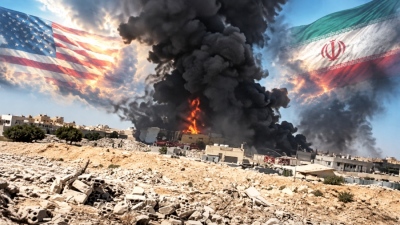
Traffic on the sea route has effectively stopped since the US and Israel launched their attack on Iran on Saturday. At least 10 ships have been hit, insurance premiums have skyrocketed, and shipowners are unwilling to risk their vessels and crews.
US President Donald Trump and Israeli officials have warned that the war may last for weeks as they seek to destroy the Islamic regime. Trump stated this week that the US Navy would escort ships through the Strait and has offered additional insurance coverage to shipping companies.
However, al-Kaabi stated it remains dangerous for ships to pass through the Strait of Hormuz—which at its narrowest point is just 24 miles wide and follows the Iranian coastline—as long as the war continues. "With the way we are seeing the attacks, bringing ships into the Strait is extremely dangerous. It is very close to the coast. It will be difficult to persuade ships to enter," he said. "Most shipowners will consider themselves a larger target because Iran is targeting military vessels."
www.bankingnews.gr




Readers’ Comments