

Iran has proceeded with a striking display of force, presenting an extensive underground network of tunnels filled with rows of missiles and unmanned aerial vehicles. The footage was broadcast by the Fars News Agency, which is closely linked to the Islamic Revolutionary Guard Corps (IRGC), and reportedly reveals the scale of Iranian military preparation amid the escalating conflict with the United States and Israel.
In the video, accompanied by dramatic music and the sound of a ticking clock in the background, vast underground galleries carved into rock appear, packed with Shahed-type drones and ballistic missiles. In one of the shots, a portrait of the late Supreme Leader Ali Khamenei is visible, positioned above the arsenal, reinforcing the regime's symbolism of power and continuity.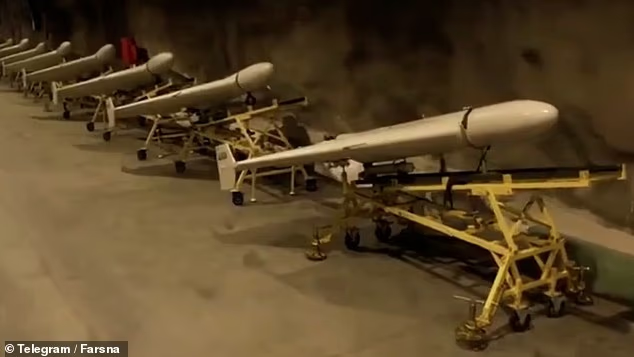
The strategy of "cheap war"
A central element of the Iranian strategy appears to be the asymmetric cost equation. Shahed drones are estimated to cost only tens of thousands of dollars to manufacture and can be produced quickly and en masse. In contrast, Western interception systems are extremely expensive:
-
MIM-104 Patriot missiles cost approximately 4–5 million dollars per unit.
-
THAAD system interceptors can reach 13 million dollars each.
Analysis by security expert Kirsty Grieco from the Stimson Center in Washington demonstrates the magnitude of the imbalance: the United Arab Emirates reportedly shot down 92% of the 541 drones launched by Iran, yet the cost of interception is estimated to be up to 30 times higher than the launch cost.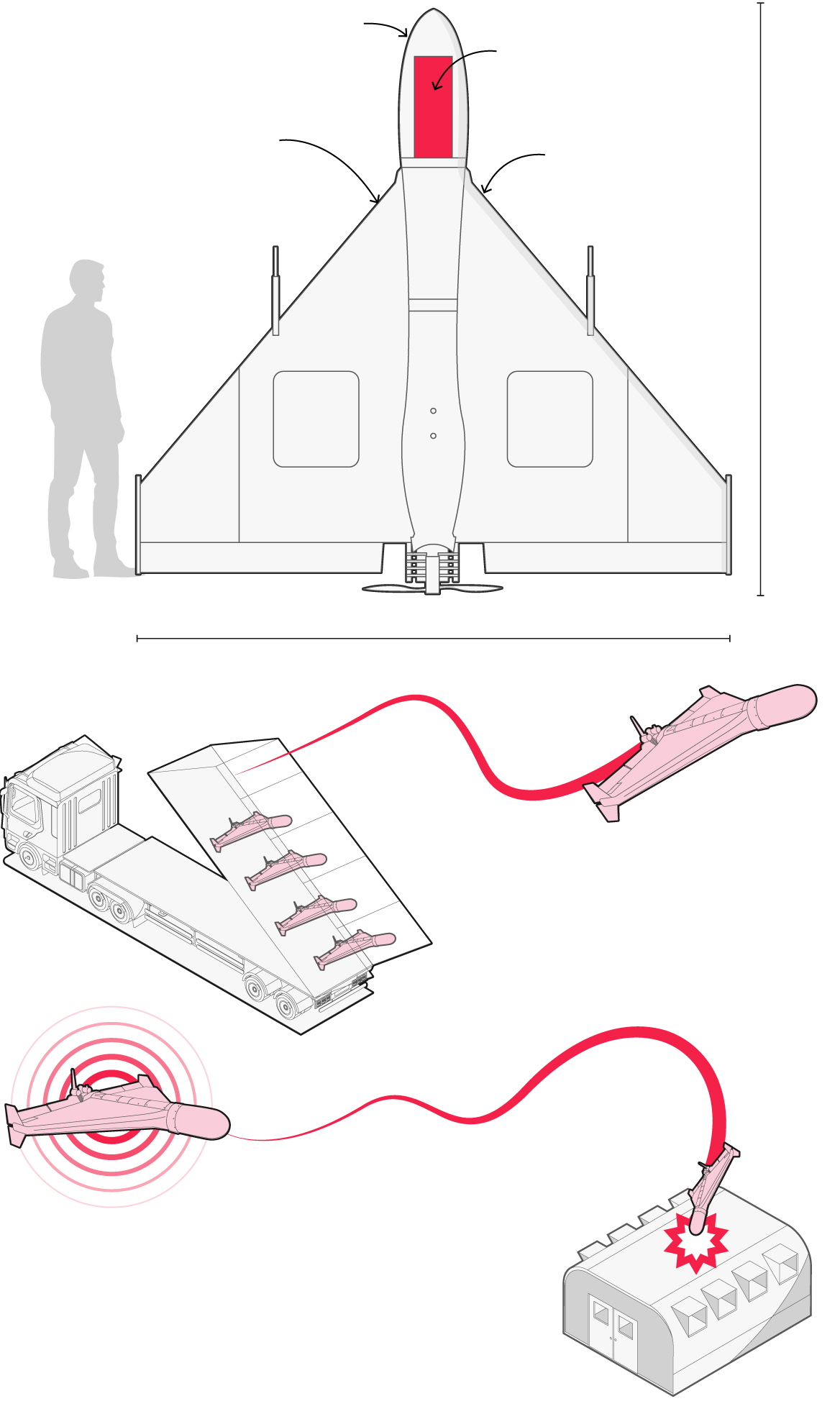
According to estimates, Iran spent 11–27 million dollars on the drones, while the UAE defense cost between 253 and 759 million dollars. Sources cited by the Daily Mail warn that, at current consumption rates, anti-aircraft missile stockpiles in the Gulf could be depleted "within four days."
Escalation on multiple fronts
These developments are unfolding as the war enters a new phase. Explosions rocked Tehran, with state television broadcasting images of night strikes. Israel announced that it activated its air defense to intercept Iranian missiles, with explosions also heard around Jerusalem.
The head of United States Central Command (CENTCOM), Admiral Brad Cooper, stated that Iran has launched over 500 ballistic missiles and more than 2,000 drones since the start of the conflict. Meanwhile, the US announced they have struck nearly 2,000 targets, using more than 2,000 munitions, in operations that—as claimed—are "nearly double in scale" compared to the initial attacks of the Iraq invasion in 2003.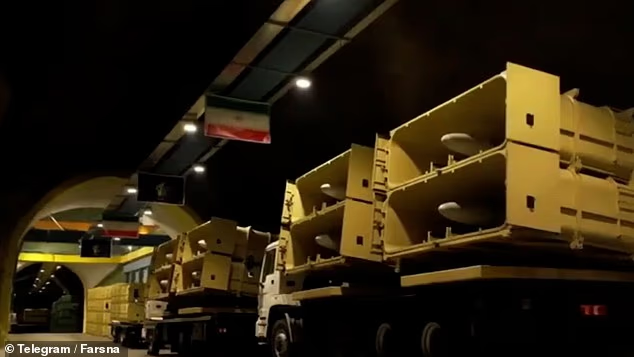
Economic impact and geopolitical risk
The tension is directly affecting global markets. With Iran tightening control over navigation in the Strait of Hormuz, through which approximately 20% of the world's oil passes, Brent prices exceeded 82 dollars a barrel, marking an increase of over 13% since the start of the conflict.
Markets are concerned that a prolonged rise in energy prices could lead to a global recession, while military analysts warn that Iran's "saturation" strategy may exhaust expensive Western stockpiles faster than they can be replenished.
A war of endurance
Five days after the start of operations, human casualties are rising and the conflict is taking on the characteristics of a war of attrition. Israel admits that Iran still possesses significant offensive capability, despite extensive strikes.
The fundamental question emerging concerns not only military superiority, but who can endure longer economically and operationally. Iran is betting on mass scale and low cost. The West is investing in technological superiority—but at a high price. The confrontation is no longer just military. It is economic, energetic, and geopolitical—with implications extending far beyond the battlefields.
www.bankingnews.gr






Readers’ Comments